 Bellingham
 Why Birchwood Roofs Take a Different Kind of Beating
Birchwood sits close enough to the water and the tree cover that its roofs deal with a combination most inland neighborhoods don't: salt-laden air off Bellingham Bay, long stretches of driving rain, and a moss season that can run eight months or more in a wet year. None of those things alone is unusual for Whatcom County. Together, on the same roof, year after year, they wear down fasteners, degrade shingle granules, and create the damp, shaded conditions moss needs to take hold. A storm doesn't have to be dramatic to do damage here — a few days of sideways rain and wind gusts through the tree canopy is often enough to lift shingles, drive water under flashing, or knock branches loose onto a roof plane that was already weakened by moss and moisture.
That's the context we work in whenever we're called out to a Birchwood property after a storm. The repair isn't just "put the shingle back" — it's understanding what the roof was already dealing with before the wind picked up.
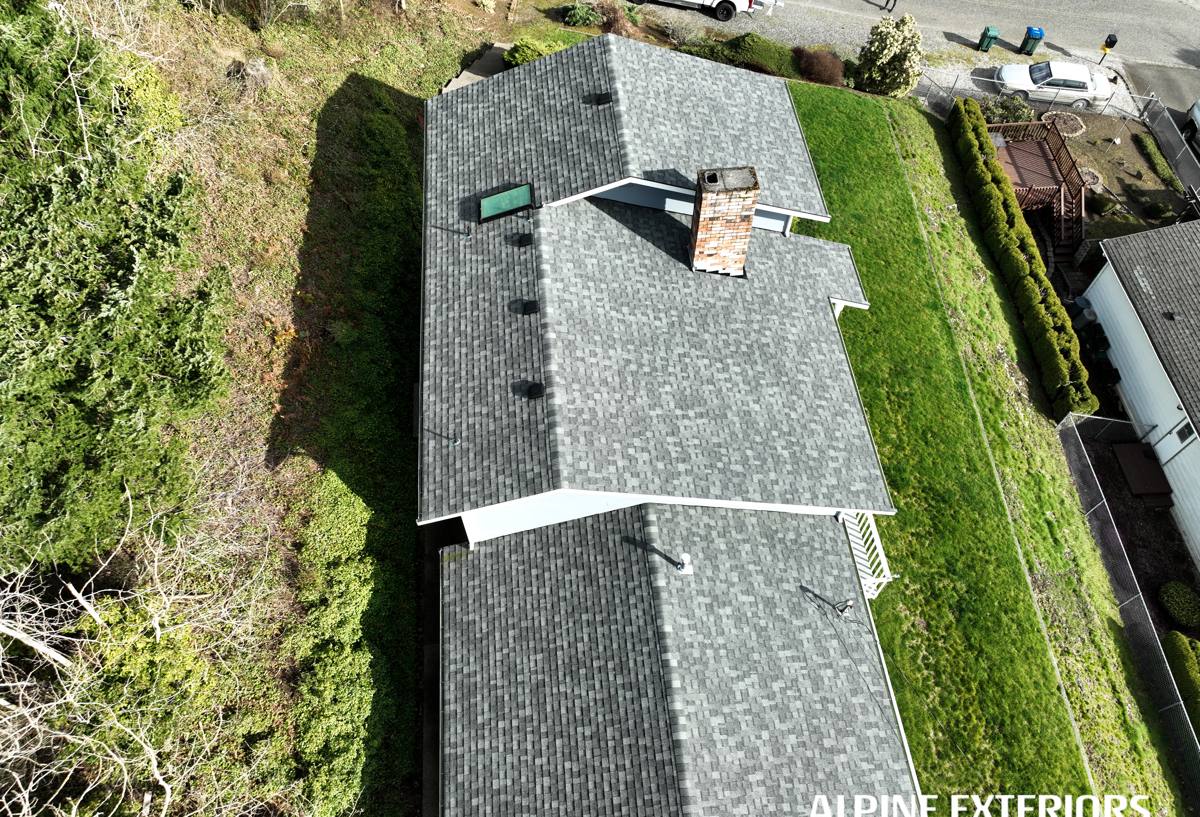
What Actually Counts as Storm Damage
Homeowners often picture storm damage as a hole in the roof or a tarp blowing across the yard. In practice, most of what we find after a storm in this area is less obvious and more common:
- Wind-lifted or creased shingles where the sealant strip has failed, often along ridge lines or roof edges facing the prevailing weather
- Water intrusion at flashing points — chimneys, vent pipes, valleys — where a storm pushed rain past a seal that was already marginal
- Branch and debris strikes that crack or puncture shingles, especially on roofs close to mature trees
- Granule loss from wind-driven rain, which shows up as bald patches and accelerates aging on that section of roof
- Moss mats that trapped water during heavy rain and forced it under the shingle edge instead of off the roof
That last one is worth calling out specifically for this neighborhood. Moss isn't cosmetic — it's a water management problem. A storm that would shed cleanly off a moss-free roof can back up behind a moss mat and find its way into the deck.
Why Waiting Costs More Than the Repair
A roof leak from storm damage rarely announces itself right away. Water can travel along the underside of the deck or down a rafter before it ever shows up as a stain on a ceiling, which means the visible sign of a problem is often weeks behind the actual entry point. In a climate that stays damp as long as ours does, that lag matters. Wet sheathing doesn't get a chance to dry out between rain events, and that's when you start seeing soft spots in the decking, mold on the underside of the roof, and insulation that's lost its effectiveness. What would have been a straightforward shingle and flashing repair right after the storm turns into a deck replacement and interior repair a few months later.
We'd rather look at a roof the week after a storm and tell a Birchwood homeowner it's fine than get called out in spring to deal with what a small leak became over a wet winter.
What a Correct Storm Damage Repair Involves
Inspection Before Anything Else
We start on the roof, not on the ground. Storm damage assessed from the driveway misses a lot — lifted shingle tabs, cracked sealant, and granule loss are hard to judge accurately from below. We check the obviously affected area first, then walk the rest of the roof, because storms rarely damage just one spot and a second problem area is common.
Temporary Protection When Needed
If there's an active leak or exposed decking, the first priority is keeping water out — tarping or temporary sealing — before we scope the permanent repair. This isn't billed as the fix; it's a stopgap so the interior of the house isn't taking on more damage while the repair is scheduled.
Matching Materials, Not Just Patching
A repair that uses shingles or flashing that don't match the existing roof in profile, color, or age creates two problems: it looks patched, and mismatched materials can shed water differently than what's around them. We source materials that match as closely as possible, and where an exact match isn't available, we place the repair where the difference will be least visible and least likely to create a new water path.
Flashing and Underlayment Get Checked, Not Assumed
Most of the leaks we trace back start at flashing, not the shingle field. A storm repair that replaces damaged shingles but ignores the flashing underneath is treating the symptom. We check valley flashing, step flashing around chimneys and walls, and pipe boots as part of any storm repair, because a compromised flashing detail is often what let the storm damage become a leak in the first place.
Moss and Debris Removal Where It's Contributing to the Problem
If moss growth is holding moisture against the storm-damaged area, we clear it as part of the repair rather than leaving it to keep causing the same problem next season.
Our Process, Start to Finish
- Contact and initial description — you tell us what you're seeing (leak, missing shingles, debris strike) and roughly when the storm hit
- On-site inspection — we get on the roof, document the damage, and check adjacent areas for related issues
- Written scope and estimate — what needs to be repaired, what materials we'll use, and an honest cost range before any work starts
- Temporary protection — if there's active water intrusion, we address that first
- Repair — scheduled as soon as reasonably possible given weather windows, since roof work needs a dry stretch to be done right
- Walkthrough — we show you what was done and what to watch for going forward
Repair or Replace? How We Make That Call
Not every storm-damaged roof needs a full replacement, and not every roof is worth patching indefinitely. The right call depends on the roof's age, how widespread the damage is, and what condition the rest of the roof is in.
| Factor | Leans Toward Repair | Leans Toward Replacement |
|---|---|---|
| Roof age | Under 12-15 years, good remaining shingle life elsewhere | Nearing or past expected lifespan for the material |
| Extent of damage | Isolated to one section or slope | Multiple areas, or damage found alongside widespread wear |
| Underlying deck | Dry, solid sheathing under the damaged area | Soft or water-stained decking found during inspection |
| Moss/moisture history | Manageable with cleaning and repair | Chronic moss damage across multiple roof planes |
| Insurance scope | Adjuster scope matches a targeted repair | Adjuster scope or damage extent supports full replacement |
We'll tell you honestly which category a roof falls into. A repair that's cheaper today but ignores a roof that's genuinely near the end of its life isn't doing you a favor.
Materials Built for This Climate
For storm repairs in Birchwood, we lean toward materials and details suited to sustained damp conditions rather than just matching whatever's cheapest: self-adhering ice-and-water membrane at vulnerable points like valleys and eaves, corrosion-resistant flashing and fasteners given the salt air off the bay, and shingle products with better algae and moss resistance where a full section is being replaced. We're选择性 about zinc or copper strip options for ongoing moss control on roofs with a chronic problem, since that's a maintenance decision worth discussing honestly rather than upselling — it helps, but it isn't a substitute for periodic cleaning on a heavily shaded roof.
Working With Your Insurance
Most storm damage repairs involve an insurance claim, and the documentation matters as much as the repair itself. We photograph the damage before we touch anything, provide a written scope that lines up with what an adjuster will look for, and can walk through our findings with you or your adjuster if there's a question about what's storm-related versus pre-existing wear. We won't inflate a scope to pad a claim, and we won't downplay damage to make a sale — the goal is an accurate picture so the repair gets covered fairly.
Why a Crew That Already Works Birchwood Matters
A roof repair crew that's worked other homes in this neighborhood already knows the common roof ages and construction on Birchwood streets, has a feel for how the tree cover and drainage patterns here affect moss and moisture, and isn't guessing at how Bellingham's weather patterns typically hit this part of Whatcom County. That familiarity shows up in small ways — knowing to check a particular flashing detail that's common on homes of a certain era, or recognizing moss damage that's more advanced than it looks from the ground. It also means faster scheduling after a widespread storm event, since we're not routing a crew across the county for a single job.
After a Storm, Check These Before You Call
- Ceiling stains or damp spots, especially near chimneys, skylights, or where two roof planes meet
- Shingle granules collecting in gutters or downspouts after heavy rain
- Visibly lifted, cracked, or missing shingles from the ground (use binoculars — don't climb up yourself)
- Debris, branches, or moss buildup sitting on the roof after the storm passed
- Gutters overflowing or draining unevenly, which can point to a blockage or a roof drainage issue
- Any musty smell in an attic or upper floor, which can mean moisture intrusion before it's visible
If a home in Birchwood took a hit in the last storm — or you're just not sure whether what you're seeing is worth a look — we're happy to come out, get on the roof, and give you a straight answer. The estimate is free, there's no pressure to move forward, and you'll know exactly what we found and why before you decide anything.