 Bellingham
 Board & Batten Siding in Blaine: What the Climate Actually Demands
Blaine sits right on the water at the northern edge of Whatcom County, and that location shapes what siding has to survive here. Homes close to Semiahmoo Bay and Drayton Harbor take on salt-laden air that corrodes fasteners and finishes faster than siding sees even a few miles inland. Add the driving rain that comes off the Strait with fall and winter storms, plus the long, low-sun stretch from October through April that keeps north- and west-facing walls damp for days at a time, and you have a climate that punishes any siding system with weak seams, poor drainage, or a finish that can't take repeated wetting. Board and batten is a striking look for Blaine's mix of coastal cottages, newer builds, and farmhouse-style homes near the border — but it's also a style that lives or dies on how well the vertical joints and battens are detailed against that weather.
We work on homes throughout Blaine and the rest of Whatcom County, and the board and batten failures we get called out to inspect follow a pattern: batten strips fastened directly through unprotected seams, no drainage plane behind the panels, and finishes that chalked and cracked within a handful of winters. None of that is a board and batten problem — it's an installation and material problem, and it's entirely avoidable with the right product and the right technique.
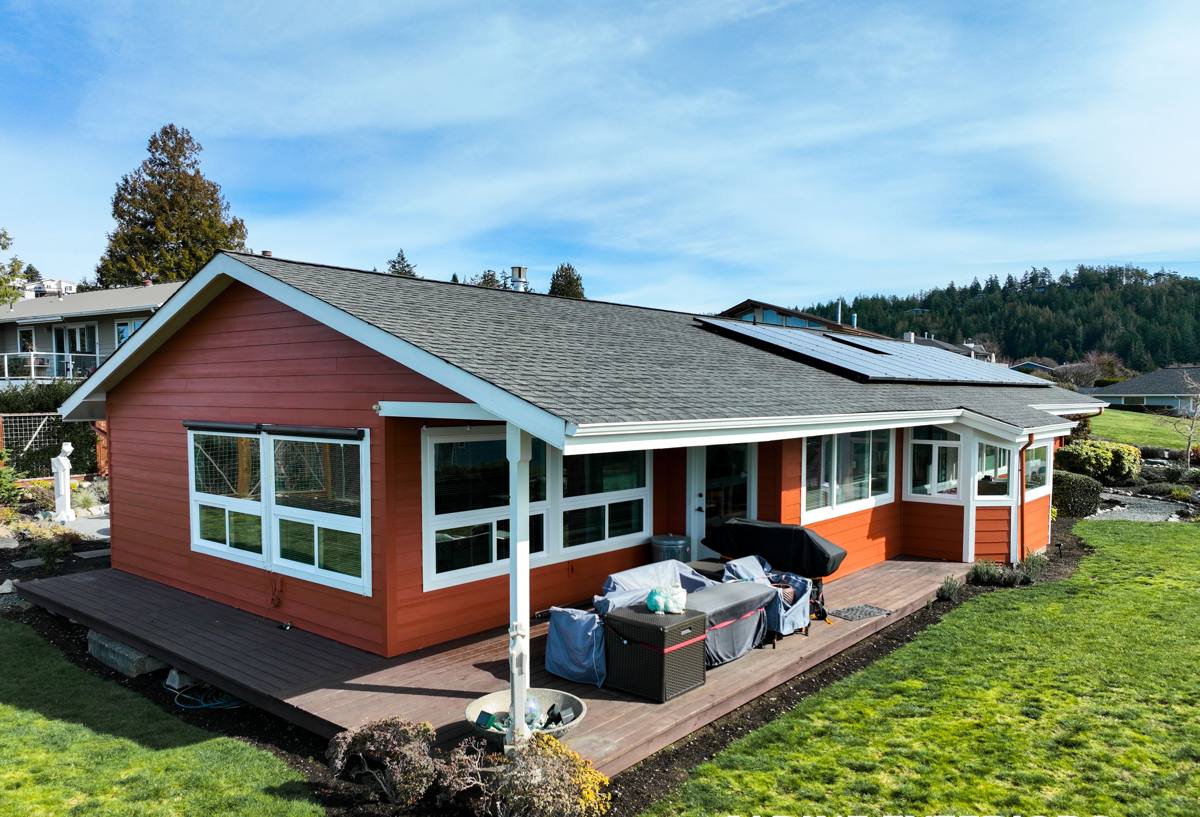
What Board & Batten Actually Is — And Why It's Different to Install Correctly
Board and batten is a vertical siding pattern: wide flat panels installed vertically, with narrower strips (battens) covering the seams between them. It's one of the oldest siding styles in North America, and it's popular in the Pacific Northwest because the strong vertical lines pair well with gable rooflines and covered porches common in this region.
The catch is that vertical siding sheds water differently than horizontal lap siding. Lap siding is designed from the ground up to shingle water downward, panel over panel. Board and batten relies entirely on the batten and the seam behind it to keep water out of that vertical joint — and on a wall exposed to Blaine's driving, wind-pushed rain, that seam is under real pressure for months at a time. Get the batten spacing, fastening, and drainage wrong, and water finds its way behind the panel where it has almost no way to dry out before the next storm arrives.
The Parts That Have to Be Right
- Drainage plane / rainscreen gap: a code-compliant water-resistive barrier plus a ventilated gap behind the panels so any moisture that gets past the surface can drain and dry.
- Panel-to-batten fastening: battens fastened independently of the panel edges, following the manufacturer's nailing pattern — not just nailed through both layers into the seam.
- Flashing at every penetration: windows, doors, hose bibs, light fixtures, and the base of the wall all need proper flashing details, since vertical siding funnels water straight down toward these points.
- Batten spacing and reveal: consistent spacing that matches the panel width and manufacturer spec, not just what looks even from the ground.
- Factory-finished material: a durable, pre-finished surface that isn't relying on field-applied paint or stain to hold up to salt air and UV.
Why We Install Board & Batten Only in James Hardie Fiber Cement
We don't install vinyl board and batten, LP SmartSide, primed spruce, cedar, or other fiber cement brands. That's not a marketing line — it's a standard we hold to because we've seen how each of those materials performs, or fails to perform, in exactly this climate.
Wood board and batten — cedar or primed spruce — needs consistent repainting or staining to survive Whatcom County's wet season, and it's a magnet for the moss and mildew that thrive in Blaine's shaded, damp conditions. Vinyl board and batten can work loose or warp under temperature swings and doesn't hold up structurally the way a rigid panel does. LP SmartSide is an engineered wood product, which means it's still vulnerable at cut edges and seams if moisture gets behind it — a real risk given how hard vertical siding leans on its seams. Other fiber cement brands exist, but we've standardized our crews, our detailing methods, and our warranty backing on one system rather than juggling installation specs across multiple manufacturers.
James Hardie's fiber cement is non-combustible, dimensionally stable across our wet winters and drier summers, and comes with a factory-applied ColorPlus finish that's baked on rather than field-painted — which matters enormously in a salt-air environment where field-applied paint fails faster. For board and batten specifically, we use Hardie's vertical panel system with Hardie trim battens, engineered as a matched system rather than mixed components from different suppliers.
What You Get With the Hardie System
| Feature | Why It Matters in Blaine |
|---|---|
| Non-combustible core | Fire resistance that wood and engineered wood siding can't match |
| ColorPlus factory finish | Baked-on finish resists fading and chalking from salt air and UV better than field paint |
| HZ5/HZ10 climate-engineered formulation | Built for high-moisture, freeze-thaw-adjacent Pacific Northwest conditions |
| Rigid panel construction | Holds a straight, flat vertical line — doesn't warp or bow like vinyl or wood in wet-dry cycles |
| Transferable warranty | Backed by the manufacturer, not just our labor |
Fighting Salt Air, Driving Rain, and Moss — By Design, Not By Maintenance
A lot of siding "durability" claims really mean "durability if you keep up with maintenance." We'd rather the system be right from the start.
Salt Air
Salt accelerates corrosion on fasteners and metal flashing, and it degrades cheaper finishes over time. We use corrosion-resistant fasteners rated for coastal exposure and detail flashing so salt-laden moisture doesn't sit against the material. Hardie's factory finish is also formulated to hold color and integrity better than field-applied coatings under this kind of exposure.
Driving Rain
Wind-driven rain off the Strait doesn't fall straight down — it gets pushed sideways into vertical seams. That's exactly why the rainscreen gap and batten fastening details matter more here than they would on a sheltered inland lot. We build in the drainage path so water that gets past the surface has somewhere to go besides your sheathing.
Moss Season
Shaded north walls and long damp stretches from fall through spring create ideal moss and algae conditions. Fiber cement doesn't feed organic growth the way wood does, and a factory finish sheds it more easily during a simple wash than a porous painted or stained surface will.
Our Process for a Blaine Board & Batten Project
- On-site assessment: we look at your home's exposure — how much of the wall faces prevailing wind and rain, where shade creates moss risk, and what the existing wall assembly looks like underneath.
- Tear-off and inspection: removing old siding lets us check sheathing for hidden moisture damage before anything new goes up — a step that can't be skipped on a coastal property.
- Weather-resistive barrier and rainscreen installation: the drainage plane goes in correctly the first time, since it's the layer you won't see again once siding is up.
- Flashing at every penetration: windows, doors, and wall penetrations get detailed before panels go on.
- Panel and batten installation: Hardie vertical panels and battens installed to manufacturer spec, with consistent reveal and proper fastening.
- Final inspection and walkthrough: we check seams, flashing, and finish before calling the job done.
What to Check Before You Hire Anyone for This Job
- Do they install a rainscreen/drainage gap behind vertical siding, or just nail panels straight to the wall?
- Are they James Hardie certified or experienced specifically with Hardie's vertical panel systems?
- Do they inspect and repair sheathing before re-siding, rather than covering up existing damage?
- Can they explain their flashing details at windows, doors, and the base of the wall?
- Do they carry manufacturer-backed warranty coverage, not just a labor guarantee?
- Have they worked on homes with similar coastal exposure in Whatcom County before?
Why a Crew That Already Works Blaine Matters
Board and batten detailing that's correct for a sheltered inland home isn't automatically correct for a home a few blocks from Drayton Harbor. Wind exposure, salt content in the air, and how much shade a wall gets all change what "properly detailed" means on that specific house. A crew that already works Blaine and the surrounding Whatcom County coastline has seen how these homes actually age in this exact climate — which walls take the worst of the weather, where moss shows up first, and where past siding jobs have failed. That local pattern recognition shows up in better decisions on your project: where to add extra flashing attention, how to sequence the rainscreen around tricky trim details, and which orientations need the most conservative detailing.
If you're planning a board and batten project in Blaine, we'd be glad to take a look at your home, walk you through what a correctly detailed installation involves, and give you a straightforward, no-pressure estimate.