 Bellingham
 Blaine's Coastal Climate Is Hard on Decks
Blaine sits right on Semiahmoo Bay, close enough to salt water that homes here deal with a version of weather most inland Whatcom County properties don't see as intensely. Salt-laden air moves inland on a regular basis, and it accelerates corrosion on anything metal — fasteners, joist hangers, railing brackets, even the heads of deck screws that were driven flush and forgotten about years ago. Add in Western Washington's long stretch of driving rain each fall and winter, plus a moss season that can run from October well into spring, and a deck here is under more sustained stress than the same structure would face in a drier, inland climate.
None of this means a deck in Blaine is doomed to fail early. It means the repair work has to account for what's actually attacking the structure, not just patch what's visibly broken. A board that looks fine on top can be hiding a joist underneath that's been sitting in trapped moisture for two winters. A railing post that wiggles slightly might be the first sign of a ledger board connection that salt air and rain have been working on for years.
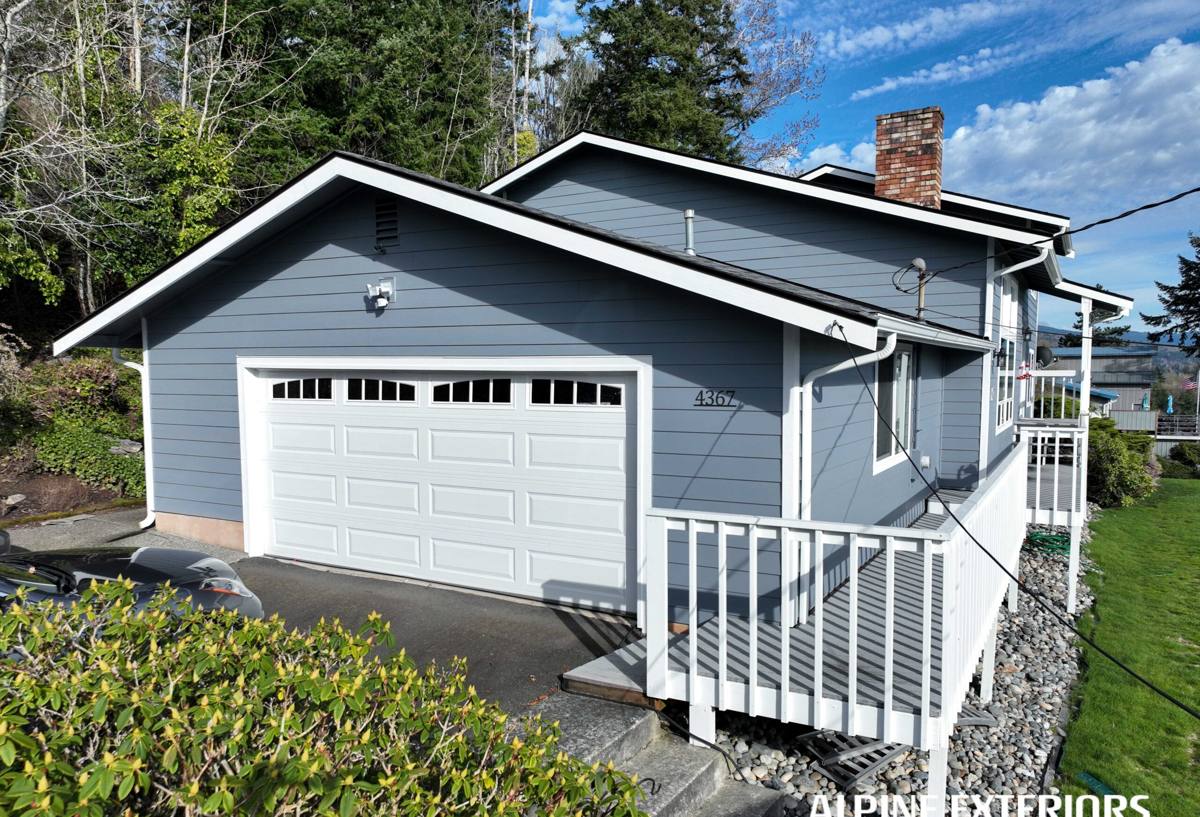
Common Deck Problems We See in Blaine Homes
Structural Issues
The most serious problems are usually the least visible. Ledger board attachment — where the deck connects to the house — is a common failure point, especially on older decks built before current flashing standards. Joist hangers and structural fasteners exposed to salt air corrode faster than the same hardware would inland, and once a hanger starts rusting through, the joist it's supporting loses its rated capacity even if the wood itself looks sound.
Surface and Moisture Damage
Decking boards cup, crack, or go soft where water sits instead of shedding off the edge. Gaps between boards that were installed too tight trap debris and hold moisture against the wood far longer than a properly spaced deck would. Under-deck framing that doesn't get airflow — a common issue on decks built close to grade or with skirting installed without vents — stays damp for days after a storm, which is exactly the kind of condition rot and mold need.
Railings, Stairs, and Hardware
Railing posts loosen as the wood around their fasteners deteriorates or the fasteners themselves corrode. Stair stringers, because they're often close to grade and get more direct splash-back from rain, tend to show rot before the rest of the deck does. Exposed hardware — hinges, gate latches, post caps — is often the first visible sign that salt air has been at work.
Signs It's Time to Call Someone
- Boards that feel spongy, springy, or noticeably softer underfoot in one area than another
- Visible rust streaking below joist hangers, brackets, or fastener heads
- A railing that flexes or moves when you lean on it
- Gaps opening up between the deck and the house at the ledger board
- Green or black staining that keeps coming back within weeks of cleaning
- Stair stringers with soft spots or visible checking near the base
- Fasteners that have backed out, are heavily rusted, or have stained the wood around them
Any one of these on its own might be minor. Two or three together, especially on a deck more than ten or twelve years old, usually means it's worth a proper inspection before the next wet season sets in.
What a Correct Deck Repair Actually Involves
Repairing a deck properly starts underneath, not with the boards you can see. A repair that only replaces surface decking without checking the framing underneath is a cosmetic fix, not a structural one — and in a climate like Blaine's, framing is usually where the real damage lives.
Inspection First
Before any repair estimate means anything, someone needs to get under the deck and check the ledger connection, joists, beams, and posts for rot, corrosion, and movement. This is also when we check flashing at the house connection, since a poorly flashed ledger is one of the most common causes of hidden water damage on decks in this region.
Framing and Structural Repairs
Any joist, beam, or post showing rot or significant corrosion damage gets sistered, reinforced, or replaced — not just covered over. Ledger board reattachment, when needed, is done with proper flashing and corrosion-resistant fasteners rated for exterior, coastal-adjacent use.
Decking, Railings, and Finish Work
Damaged boards are replaced with proper spacing for drainage and airflow. Railings are reset or rebuilt so posts are solidly anchored into framing, not just surface-mounted. Where hardware has corroded, we replace it with fasteners suited to the exposure, not whatever matches on the shelf.
Repair or Replace? What Actually Drives That Decision
Not every deck problem calls for a full rebuild, and not every deck is worth repairing piece by piece. The honest answer depends on where the damage is and how much of the structure it's reached.
| Factor | Usually Repairable | Usually Warrants Replacement |
|---|---|---|
| Location of damage | Isolated to a few boards, one railing section, or one stair run | Spread across multiple structural members (joists, beams, ledger) |
| Framing condition | Solid, dry framing under damaged decking | Widespread rot or corrosion in joists, posts, or beams |
| Age of structure | Under 15 years, built to a reasonable code standard | Older deck with outdated construction methods or undersized framing |
| Fastener condition | Localized corrosion, easily replaced hardware | Widespread rust affecting structural connections |
| Cost relative to rebuild | Repair cost is a fraction of full rebuild cost | Repairs would approach or exceed the cost of a new deck |
We'll always give you a straight answer on which side of that line your deck falls on, including when repair is genuinely the better financial move — we don't push replacement when a solid repair will hold up.
How We Approach a Deck Repair in Blaine
1. On-Site Assessment
We get under the deck, not just walk across the top of it. That means checking framing, ledger attachment, post bases, and any areas where moisture is likely collecting.
2. Clear, Written Scope
You get a plain-language explanation of what's actually wrong, what needs to be fixed structurally versus cosmetically, and what it will cost — before any work starts.
3. Repair the Cause, Not Just the Symptom
If a drainage or ventilation issue caused the rot in the first place, we address that as part of the repair. Replacing a rotted joist without fixing the moisture source that rotted it just delays the same repair a few years down the road.
4. Cleanup and Walkthrough
We clear debris and old material, and walk the finished repair with you so you know what was done and what to keep an eye on going forward.
Materials and Hardware: What Coastal Exposure Changes
The materials that make sense for a deck repair in Blaine aren't always the cheapest or the most common option — they're the ones that hold up to salt air and sustained moisture without turning into next year's repair call.
Fasteners and Hardware
Standard galvanized fasteners work in a lot of inland applications, but in salt-exposed coastal air they corrode faster than their rated lifespan suggests. For decks in Blaine, we lean toward stainless steel or heavier hot-dip galvanized fasteners and connectors at structural points, since replacing corroded hardware later means opening the deck back up.
Decking Material Trade-Offs
Both wood and composite decking have a place here, and the right choice depends on your priorities, not a blanket recommendation. Pressure-treated or cedar decking costs less upfront and can look great, but it needs regular cleaning, sealing, and moss treatment to hold up through Whatcom County's wet season. Composite decking costs more initially and needs far less maintenance, but installation has to account for proper spacing and ventilation underneath — composite doesn't dry out the way wood does, so trapped moisture underneath it can affect the framing below even if the boards themselves look fine.
Flashing and Water Management
Ledger flashing is not optional in this climate. It's inexpensive relative to the damage it prevents, and it's one of the most common things missing or improperly installed on older decks we inspect.
Moss, Algae, and Drainage: Preventing the Next Repair
Blaine's moss season is long, and moss on a deck isn't just an appearance issue — it holds moisture against wood surfaces and accelerates the exact rot and staining problems that lead to repair calls. Decks in shaded yards or under tree cover are especially prone to this. Part of doing a repair right is making sure the deck can actually shed water and dry out afterward: proper board spacing, clear gaps at the perimeter, and unobstructed airflow underneath. A deck that drains and ventilates well will need far fewer repairs over its life than one that doesn't, regardless of what it's built from.
Maintenance That Extends the Repair
A repair is only as good as the upkeep that follows it. These are the basics that make the biggest difference for decks in this climate:
- Clear leaves, needles, and debris from between boards before they trap moisture through winter
- Treat moss and algae growth early, rather than letting it establish and spread
- Check railing posts and hardware for looseness or corrosion once or twice a year
- Keep gutters and downspouts near the deck clear so runoff isn't landing directly on it
- Reseal or refinish wood decking on the schedule the product actually calls for, not just when it looks worn
- Look underneath the deck periodically, not just at the surface — that's where problems start
Why It Matters to Hire a Crew That Already Works Blaine
A repair crew that regularly works on homes in Blaine and along the Whatcom County coastline already knows which fasteners hold up here, which framing details tend to fail first, and how aggressive moss season gets on shaded decks near the water. That's not something you get from a crew that mostly works drier, inland jobs and treats every deck the same way. It shows up in the hardware we choose, where we look first during an inspection, and the kind of repair recommendations we make — recommendations built around what actually happens to decks in this specific climate, not a generic checklist.
If your deck in Blaine has soft spots, loose railings, rust stains, or you just want an honest read on its condition before another wet season, we're happy to take a look. Reach out for a free, no-pressure estimate using the form below — we'll tell you straight what we find and what it would take to fix it right.