 Bellingham
 Fiber Cement Siding Built for Blaine's Coastline
Blaine sits about as close to salt water and open weather as a Whatcom County home can get. That location is part of why people live here, and it's also why siding takes more punishment in Blaine than it does a few miles inland. Salt-laden air off the water, wind-driven rain that finds every gap in a wall assembly, and a wet season that stretches long enough to grow moss on north-facing walls all add up over the life of a house. Siding here isn't just a cosmetic layer — it's the first line of defense for the wall behind it.
We install James Hardie fiber cement siding exclusively, and Blaine is exactly the kind of environment that product line was engineered for. This page covers what local homes actually need, what a correct installation looks like, and how our process works when we're on a job in Blaine specifically.
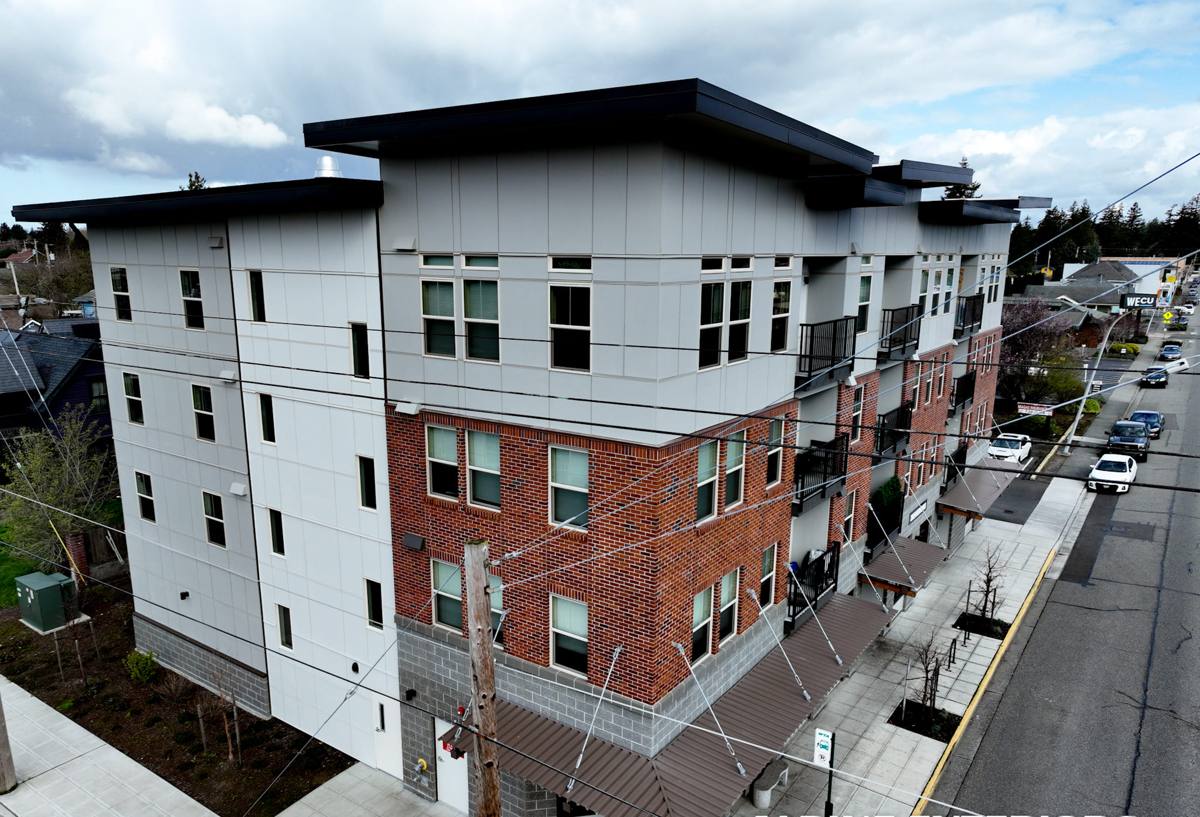
What Blaine's Climate Does to Siding
A few conditions show up again and again on homes near the water in this part of Whatcom County:
Salt Air and Corrosion
Airborne salt accelerates corrosion on fasteners, flashing, and any metal trim that isn't rated for it. It also degrades cheaper factory finishes faster than manufacturers' standard warranty language usually accounts for, since most paint and coating testing isn't done in a marine-adjacent environment.
Driving Rain and Wind-Driven Moisture
Blaine catches wind off the water that pushes rain sideways into wall assemblies, not just straight down. Siding that relies on face-sealing or loose lap tolerances to keep water out tends to let moisture behind the cladding over time — especially at butt joints, corners, and penetrations that weren't detailed correctly.
A Long Moss and Mildew Season
Cool, damp conditions persist here for much of the year, which gives moss, algae, and mildew plenty of time to establish on shaded and north-facing elevations. Porous or wood-based siding gives these organisms something to grip and feed on. Siding that doesn't absorb moisture the way wood does simply gives them less to work with.
Temperature Swings and Material Movement
Even a modest daily temperature swing causes expansion and contraction in siding materials. Products that move a lot with temperature and humidity are more prone to opening joints, popped fasteners, and finish cracking over years of cycling — which becomes an entry point for the moisture problems above.
Why We Only Install James Hardie Here
James Hardie fiber cement is cement, sand, and cellulose fiber — it doesn't absorb and swell with moisture the way wood-based products do, and it isn't vulnerable to rot or insect damage. For a coastal Whatcom County property, that matters more than it does in a drier inland climate. The ColorPlus factory finish is baked on and cured in a controlled environment rather than field-applied, which gives it more consistent adhesion and better resistance to the fading and chalking that salt air and UV exposure cause over time. Hardie's HZ5 product line is specifically engineered for climates with more freeze-thaw cycling and moisture exposure, and it's the specification we use on homes exposed to the wind and rain coming off the water.
None of this means every other siding product is unusable — it means that after years of installing and standing behind our work, this is the product system we trust enough to warranty. We don't install vinyl, LP SmartSide, or other fiber cement brands, and we're upfront about why: it's a standard we hold ourselves to, not a claim that those products can't be installed correctly by someone else.
What a Correct Installation Involves
Fiber cement siding is only as good as the wall assembly behind it and the details around it. On a coastal job in Blaine, we pay particular attention to:
- Weather-resistive barrier and rainscreen: a continuous water-resistive barrier with proper lapping, plus an air gap behind the siding so any moisture that does get past the cladding can drain and dry instead of sitting against the wall sheathing.
- Flashing at every penetration: windows, doors, vents, and hose bibs all need site-formed or manufactured flashing that directs water outward, not into the wall.
- Fastener spec and placement: corrosion-resistant fasteners driven to Hardie's blind-nailing or face-nailing spec, at the correct distance from panel edges, so panels aren't stressed or prone to popping.
- Joint treatment: factory-primed cut edges sealed correctly, proper joint gaps at butt joints, and either caulked or flashed transitions depending on the detail — not just caulk covering a gap that should have been flashed.
- Clearance from grade and hard surfaces: maintaining the manufacturer's minimum clearance from soil, decks, and patios so splashback and standing moisture don't sit against the bottom course.
- Trim and corner details: corners, fascia, and trim that shed water rather than trap it, especially on elevations facing prevailing wind and rain.
Any one of these done wrong can undercut everything else that's right about the product. This is where installation quality matters as much as the material choice.
Siding Options: What We Recommend and Why
| Product | Moisture Behavior in a Coastal Climate | Our Position |
|---|---|---|
| James Hardie Fiber Cement (HZ5) | Does not absorb/swell; factory finish resists salt air and UV fade | What we install |
| Vinyl Siding | Doesn't rot, but can warp/crack in temperature swings; seams can allow water intrusion behind the panel | Not installed by us |
| Wood/Cedar | Absorbs moisture, prone to rot and moss growth without ongoing maintenance | Not installed by us |
| LP SmartSide (engineered wood) | Treated wood strand product; edge and cut-end sealing is critical and installation-sensitive | Not installed by us |
| Other Fiber Cement Brands | Similar base material, but we haven't standardized our warranty and install process around them | Not installed by us |
What a Blaine Fiber Cement Project Looks Like
Assessment
We start by looking at the existing siding, the wall assembly behind it where visible, and the specific exposures on your property — which elevations take the most wind-driven rain, where moss has already established, and where past water intrusion may have caused hidden damage.
Scope and Product Selection
We walk through Hardie's plank, panel, and shingle options along with the HZ5 climate-engineered specification, and talk through color, texture, and trim choices using ColorPlus factory-finished colors so you're not relying on field-applied paint to hold up to salt air.
Tear-Off and Wall Prep
Old siding comes off, and we inspect sheathing for any moisture damage before it gets covered up again. This is the point where problems that have been hidden behind old siding for years typically surface — and it's much cheaper to address them now than after new siding is on.
Water-Resistive Barrier and Installation
We install the weather-resistive barrier, flashing, and rainscreen detailing before the fiber cement goes on, then install to Hardie's fastening and clearance specifications throughout.
Final Walkthrough
We go over the finished work with you, including trim details and any maintenance basics specific to your product selection.
Maintenance in a Salt-Air, High-Moss Environment
Fiber cement is low-maintenance, not no-maintenance. A few habits go a long way in a Blaine-area climate:
- Rinse salt residue and airborne debris off the siding periodically, especially on elevations facing the water.
- Keep gutters and downspouts clear so roof runoff isn't sheeting down the siding face.
- Trim back vegetation and tree cover that keeps north-facing walls shaded and damp longer than necessary.
- Watch caulked joints around windows, doors, and trim for cracking or separation, and have them resealed before they become an entry point for moisture.
- Address any moss or mildew growth early with a gentle wash rather than pressure washing, which can damage the finish or force water behind panels.
Cost Factors for a Blaine Project
Every project is different, but the main variables that move the price on a fiber cement job in this area are generally the same:
| Factor | Why It Matters |
|---|---|
| Home size and wall complexity | More corners, gables, and dormers mean more cutting, flashing, and labor time |
| Condition of existing wall assembly | Rot or moisture damage found during tear-off adds repair scope before new siding goes on |
| Product line and finish | Plank vs. panel vs. shingle profiles and premium ColorPlus colors carry different material costs |
| Trim and detail work | Custom trim, corner treatments, and flashing at multiple penetrations add labor |
| Access and site conditions | Waterfront lots, steep grades, or limited staging area can affect scheduling and labor |
We give straightforward, itemized estimates rather than vague ballpark numbers, so you know what you're paying for before work starts.
Why Local Experience in Blaine Matters
A crew that already works this stretch of Whatcom County knows which elevations on a typical Blaine property take the worst of the wind and rain, how far moss tends to creep before it's visible from the street, and what flashing details actually hold up near open water versus what merely passes inspection. That's the difference between a siding job that looks right on day one and one that's still performing correctly ten years in.
If you're weighing your options for a Blaine home, we're happy to walk the property with you, look at what's actually happening with your current siding, and give you a straightforward assessment of what it needs. Reach out for a free, no-pressure estimate — the form below gets you started.