 Bellingham
 Siding Built for Where Blaine Actually Sits
Blaine sits right on the water at the top of Whatcom County, and that location changes what a home's exterior has to put up with compared to homes even a few miles inland. Salt-laden air off Semiahmoo Bay and the Strait, near-constant onshore wind, driving rain that comes in sideways more often than straight down, and a long gray season where moss and mildew get months to work on anything that holds moisture — that's the environment your siding lives in every day. Siding installation here isn't just a cosmetic upgrade. It's the single biggest factor in whether your walls stay dry, your paint holds its color, and your home avoids the slow rot damage that shows up five or ten years down the road when nobody's looking.
We install James Hardie fiber cement siding exclusively, and Blaine is exactly the kind of coastal environment that product line was engineered for. This page covers what a correct siding installation looks like for a Blaine property specifically — not generic advice, but what actually matters given the salt air, the rain patterns, and the moss pressure this part of Whatcom County deals with.
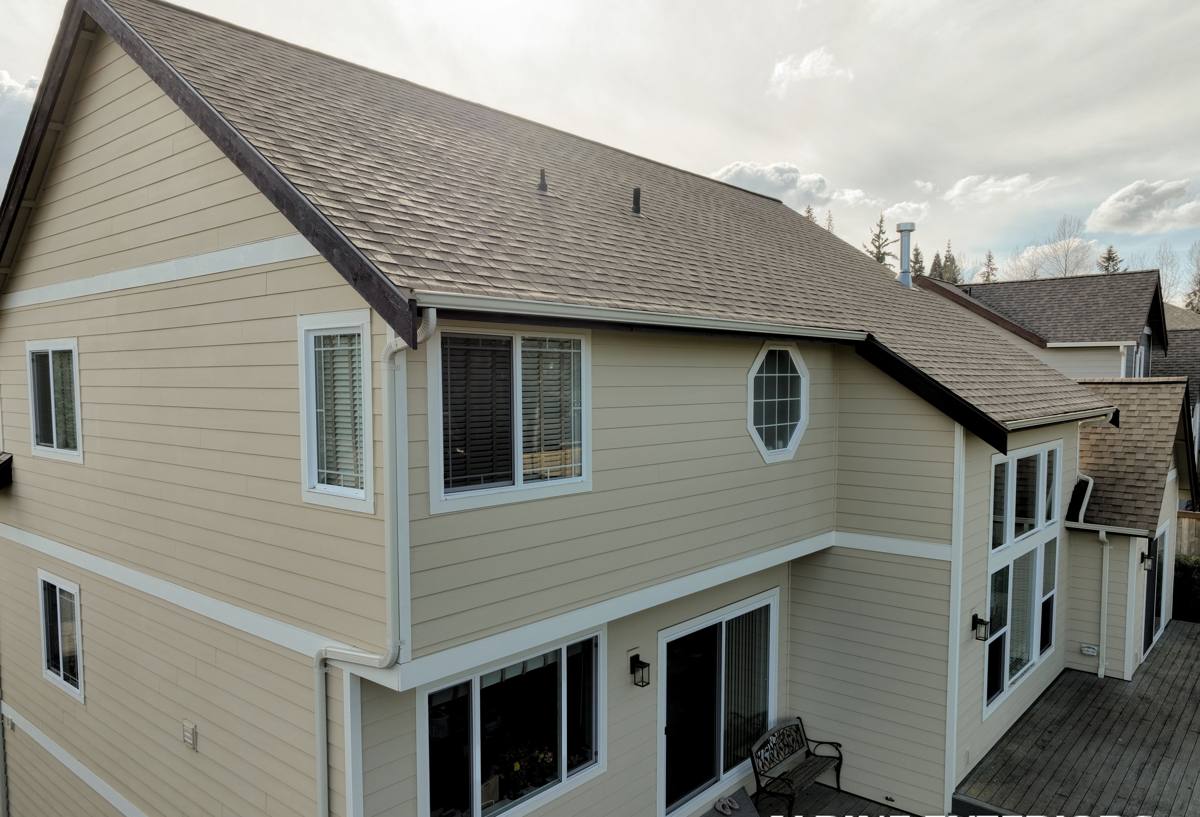
What Blaine's Climate Does to Siding
Salt Air and Corrosion
Airborne salt doesn't just affect boats and metal railings. It accelerates the breakdown of cheap fasteners, degrades certain paint finishes faster than inland exposure would, and can work its way into seams and laps where two materials meet. Fiber cement itself is inert to salt — it's not going to corrode or pit the way metal siding or metal trim can. But the fasteners, flashing, and trim details around it need to be chosen with that same salt exposure in mind, or the siding ends up looking fine while the hardware underneath it fails quietly.
Driving Rain and Wind-Driven Moisture
Blaine's exposure to wind off the water means rain doesn't just fall — it gets pushed sideways into wall assemblies, gaps, and laps that would stay dry in a calmer inland setting. This is a wind-driven rain zone, and it demands tighter installation tolerances: correct lap exposure, properly lapped and sealed flashing at every penetration, and house wrap detailing that actually sheds water rather than just blocking it. A siding job installed to "normal" tolerances in a sheltered valley can fail within a few years on a property exposed the way Blaine's waterfront and near-waterfront lots are.
The Long Moss Season
Whatcom County's wet season stretches long, and Blaine's marine exposure keeps humidity high even between rain events. That's a long runway for moss, algae, and mildew to establish themselves on any exterior surface that stays damp — north-facing walls, areas shaded by trees or neighboring structures, and anywhere siding is installed too close to grade or landscaping. Moss isn't just cosmetic; sustained moisture retention behind a moss mat is what eventually invites rot into the substrate underneath, especially on products that aren't dimensionally stable when wet.
Why We Only Install James Hardie in This Environment
We don't install vinyl, LP SmartSide, cedar, primed spruce, Cemplank, or Allura, and Blaine's climate is a big part of why. Vinyl expands and contracts significantly with temperature swings and can warp or become brittle over time with constant UV and salt exposure — and its seams are a weak point for wind-driven rain to exploit. Wood-based products, whether cedar or engineered wood like LP SmartSide, are more moisture-sensitive by nature; in a zone with this much sustained dampness and moss pressure, that means a heavier maintenance burden and a shorter realistic service life if upkeep slips even a little.
James Hardie fiber cement is non-combustible, dimensionally stable, and doesn't feed mold or rot the way wood-based sidings can. Hardie's HZ5 product line is specifically engineered for climates with more moisture and freeze-thaw cycling, which fits the Pacific Northwest coastal profile well. The factory-applied ColorPlus finish is baked on under controlled conditions and holds up better against UV and salt exposure than field-applied paint, which matters when you're not repainting every few years to keep ahead of coastal weathering. That combination — non-combustible, moisture-resistant, factory-finished, and backed by a strong transferable warranty — is why we standardized on it rather than offering a menu of lower-cost alternatives that all carry more maintenance risk in this specific environment.
What a Correct Installation Includes
The siding material is only part of the equation. Most siding failures we see on coastal Whatcom County homes trace back to installation shortcuts, not the product itself. A correct James Hardie installation in a Blaine setting involves:
- Proper weather-resistive barrier: A continuous, correctly lapped house wrap or building paper installed shingle-style so water is directed out and down, never into the wall cavity.
- Rainscreen or drainage gap where appropriate: Especially on wind- and rain-exposed elevations, a small air gap behind the siding lets any moisture that does get past the cladding drain and dry out instead of sitting against the sheathing.
- Correct fastener specification: Corrosion-resistant fasteners driven to Hardie's specified depth and pattern — not just "close enough" nailing, which is one of the most common corner-cutting shortcuts in this trade.
- Flashing at every penetration and transition: Windows, doors, hose bibs, light fixtures, and roof-to-wall intersections all need properly lapped flashing, not just caulk. Caulk is a supplement to good flashing, never a substitute for it.
- Correct lap exposure and clearances: Hardie specifies minimum clearance from grade, roofing, and decks. Ignoring these clearances is one of the fastest ways to trap moisture and invite the exact moss and rot problems this climate already makes likely.
- Factory-cut edges sealed and back-primed where field-cut: Any cut edge exposed to weather needs to be sealed per manufacturer spec, or it becomes a moisture entry point regardless of how good the rest of the installation is.
How We Approach a Blaine Siding Project
Assessment First
Before we talk product or price, we look at what's actually happening on your home: which elevations take the worst of the wind and rain, where moisture or moss is already showing up, what condition the sheathing and framing are in underneath the existing siding, and whether previous work (flashing, trim, gutters) is contributing to the problem. Coastal exposure isn't uniform across a single house — the ocean-facing side of a Blaine home often needs different detailing than the sheltered side.
Tear-Off and Substrate Check
We don't install new siding over hidden rot. Full tear-off lets us inspect sheathing and framing directly, replace anything compromised, and correct any existing flashing or moisture problems before the new siding goes on. Covering up a moisture problem with new material just delays the failure and hides it from the next inspection.
Weather Barrier and Drainage Detailing
Given the wind-driven rain exposure common around Blaine, we pay close attention to how the weather-resistive barrier is lapped and whether a drainage gap makes sense for your specific elevations and wall assembly.
Installation to Manufacturer Spec
Fastener pattern, lap exposure, clearances, and flashing are installed to James Hardie's published specifications — not shortcuts, and not "how we've always done it" if that conflicts with spec. This is also what keeps the manufacturer's warranty intact; installation errors are one of the most common reasons a siding warranty ends up not covering a failure.
Final Walkthrough
We walk the finished job with you, covering what maintenance (if any) is actually needed, what to watch for given your home's specific exposure, and what's covered under warranty.
Cost Factors for a Blaine Siding Installation
Every home is different, but the same handful of factors drive cost on most Blaine projects. Rather than a single number, it's more useful to understand what pushes a project up or down:
| Factor | Why It Affects Cost |
|---|---|
| Tear-off condition | Rot or moisture damage found under existing siding adds repair scope before new siding can go on |
| Wall complexity | Dormers, multiple gables, and cut-up elevations take more time and materials than a simple rectangular footprint |
| Exposure per elevation | Wind- and rain-exposed sides may warrant additional drainage or flashing detailing versus sheltered sides |
| Trim and accent scope | Trim boards, accent panels, and shingle-style accent areas add labor beyond field siding |
| Existing moss or moisture damage | Remediation of trapped moisture or fungal growth in sheathing adds scope beyond a straightforward re-side |
| Access and site conditions | Waterfront or sloped lots common around Blaine can affect staging and scaffolding needs |
Signs Your Blaine Home May Need New Siding Soon
- Visible moss or algae buildup that returns shortly after cleaning, especially on north-facing or shaded walls
- Soft spots, bubbling, or a spongy feel when you press on the siding near the bottom courses or around windows
- Paint that's peeling, chalking heavily, or failing faster than expected between repaints
- Visible warping, cupping, or separation at seams and laps
- Persistent musty smell along exterior walls, which can indicate moisture intrusion behind the cladding
- Fasteners backing out, rust staining, or visible corrosion around nail heads and trim
Maintenance After Installation
One advantage of switching to James Hardie in a coastal environment like Blaine's is how much lower the ongoing maintenance burden becomes. You're not sealing or restaining every couple of years the way you would with cedar, and you're not watching for the brittleness and fading that vinyl develops under sustained UV and salt exposure. That said, no siding is entirely maintenance-free here. We recommend an annual visual check of caulked joints and flashing, keeping gutters clear so water isn't overflowing onto wall surfaces, and trimming back vegetation that shades walls and keeps them damp longer than they need to be. Occasional gentle washing to keep moss and algae from establishing themselves is worthwhile, particularly on shaded elevations.
Why a Crew That Already Works Blaine Matters
Installation quality depends heavily on whether the crew understands the specific conditions they're building for. A contractor who mostly works drier, inland jobs may not default to the flashing detail, drainage gap, or fastener spec that a wind-exposed Whatcom County coastal property actually needs — not out of carelessness, but because it's not the environment they usually build for. A crew that regularly works Blaine and the surrounding Bellingham area already has a feel for which elevations need extra attention, how the local moss season behaves, and what clearance and detailing decisions actually hold up here versus what merely meets a generic code minimum. That local pattern-recognition is worth as much as the product spec sheet.
If you're weighing a siding replacement or repair on a Blaine property, we're happy to take a look and talk through what your home specifically needs — no pressure, no hard sell, just a straight assessment and an estimate you can use to make the decision on your own timeline.