 Bellingham
 Why Cordata Decks Take a Beating in This Climate
Decks in the Cordata area of Bellingham deal with a specific combination of weather that's harder on wood and fasteners than most homeowners realize. Whatcom County sits right on Puget Sound, which means a steady dose of salt-laced air moving inland, long stretches of driving rain through fall and winter, and a moss season that can run eight months or more depending on how much sun a deck gets. None of these things alone would be a big deal. Together, over years, they're what turns a solid deck into a soft, slippery, or structurally questionable one.
Salt air accelerates corrosion on anything metal — nails, screws, joist hangers, post brackets. Driving rain doesn't just fall straight down; wind pushes it sideways and up under rail caps, ledger boards, and stair stringers, finding gaps that a builder in a drier climate might not have worried about. And moss doesn't just look bad — it holds moisture against the wood surface far longer than open air would, which is exactly the condition rot needs to get started.
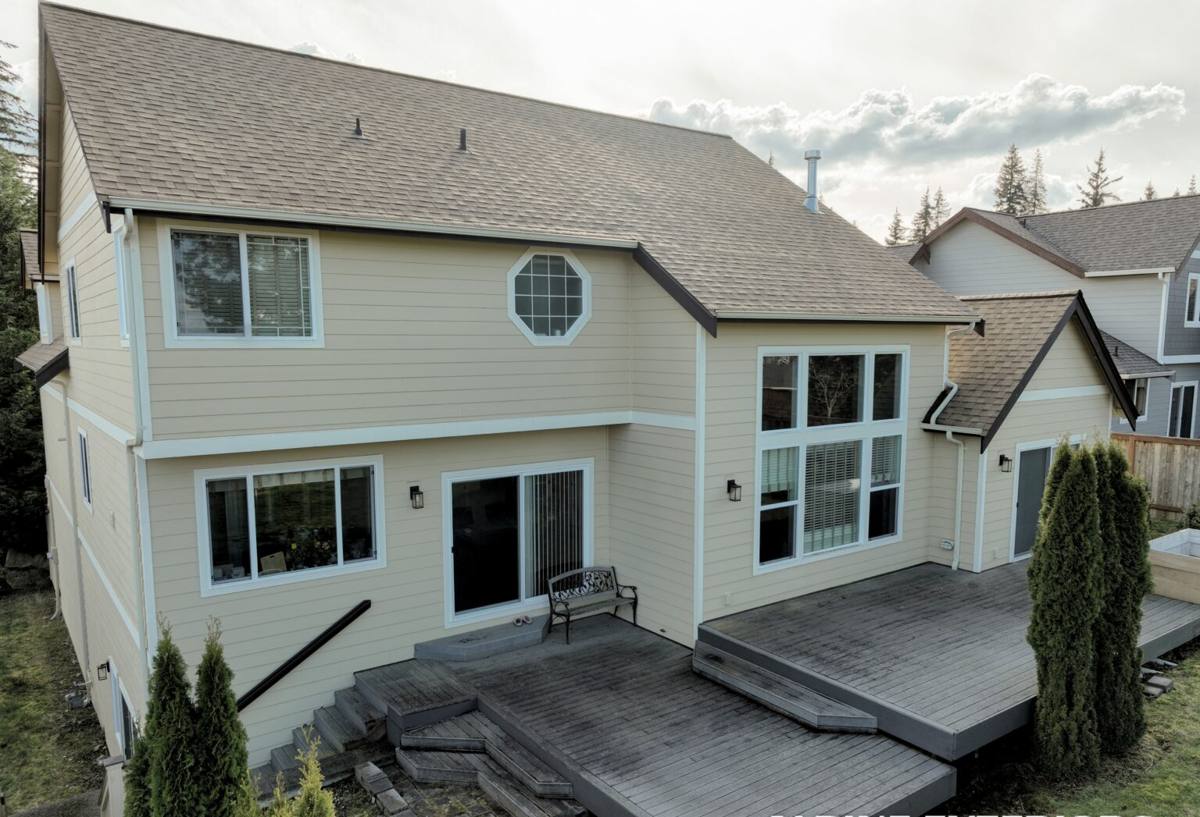
The Deck Problems We See Most Often in Cordata
Soft, Spongy, or Rotting Boards
This is the most common call we get. Decking boards that feel spongy underfoot, or that have gone gray and fibrous, have usually been holding moisture for a while. By the time it's visible on top, the damage often goes deeper than the surface.
Ledger Board and Flashing Failures
The ledger board — where the deck attaches to the house — is the single most important structural connection on most decks, and it's also the spot most vulnerable to water intrusion if flashing wasn't installed correctly or has failed over time. A compromised ledger connection is a safety issue, not just a cosmetic one.
Moss, Algae, and Slick Surfaces
Shaded decks, north-facing decks, and anything under tree cover collect moss fast in this climate. Beyond the slip hazard, moss growth traps moisture against the wood and accelerates decay in the boards underneath it.
Corroded Fasteners and Hardware
Older decks, especially ones built before coated or stainless fasteners were standard practice, often show rust streaking down the boards. That's a sign the fasteners themselves are weakening, which affects how well the deck is actually holding together.
Loose or Settling Posts and Footings
Saturated soil during Bellingham's wetter months can shift footings over time, especially on older decks that weren't built with modern footing depth or drainage in mind. A deck that feels like it has slightly more bounce or movement than it used to is worth having checked.
What a Correct Deck Repair Actually Involves
Inspection Before Anything Else
A proper repair starts by getting under the deck, not just walking across the top. We check framing, ledger attachment, post condition, and look for moisture trapped in places that aren't obvious from a surface glance.
Repair vs. Replace Decisions
Not every problem board means the whole deck needs to come apart. Some repairs are legitimately isolated — a few boards, a section of railing, a resurfacing of the ledger flashing. Other times, what looks like a small problem on top is a sign that the structure underneath needs more attention. We'll tell you honestly which situation you're in.
Structural Framing First
Any repair that skips the framing and just replaces surface boards is a temporary fix at best. If joists or beams show rot or insect damage, that gets addressed before anything new goes on top.
Getting Flashing and Waterproofing Right
This is where a lot of deck problems start in the first place, and it's also where a lot of quick repairs fail to hold up. Flashing at the ledger, proper slope for drainage, and gaps between boards that let water shed instead of pool all matter more in a climate like this than in drier parts of the country.
Choosing Fasteners That Won't Fail Early
Given the salt air this area gets, we use fasteners and hardware rated for coastal or corrosive exposure rather than standard interior-grade hardware. It costs a little more upfront and saves you from redoing the work in a few years.
Repair or Replace? Cost Factors to Weigh
Every deck is different, but these are the factors that generally tip the decision one way or the other.
| Factor | Leans Toward Repair | Leans Toward Replacement |
|---|---|---|
| Framing condition | Solid, dry, no rot found | Soft or rotted joists/beams found |
| Ledger connection | Properly flashed, attached correctly | Failed flashing or improper original attachment |
| Extent of damage | Isolated to a few boards or a section | Widespread across the deck surface |
| Age of the deck | Newer, well-built structure | Older deck nearing the end of its service life |
| Post/footing condition | Stable, no movement or settling | Noticeable shifting, movement, or undersized footings |
If most of your deck falls in the left column, a targeted repair is usually the honest, cost-effective answer. If several factors land in the right column, spending repair money on an aging structure often doesn't make sense — we'll walk you through the real trade-offs rather than pushing one option.
Decking Material Options for a Wet Climate
Material choice matters more here than in drier regions, since whatever goes down will spend most of the year damp.
| Material | Moisture Handling | Moss/Algae Resistance | Maintenance Needs |
|---|---|---|---|
| Pressure-treated wood | Good if sealed and maintained regularly | Needs periodic cleaning to stay ahead of it | Higher — sealing/staining on a recurring schedule |
| Cedar | Naturally moisture-resistant, but still needs upkeep | Better than untreated wood, still needs cleaning | Moderate to high |
| Composite decking | Very good — doesn't absorb moisture like wood | Generally resists growth well, still benefits from washing | Low — occasional cleaning |
| PVC/capped composite | Excellent — fully sealed surface | Best resistance among common options | Lowest — mostly rinsing |
We're not going to tell you there's only one right answer — a well-maintained wood deck can look great and last a long time. But if you're tired of the yearly upkeep cycle that this climate demands, composite or capped composite decking is worth a serious look for a repair or resurfacing project.
How Our Process Works
- Assessment — we get under and around the deck, not just look at the surface, and identify exactly what's causing the problem.
- Written estimate — you get a clear breakdown of what needs to happen and why, with repair and (if relevant) replacement options laid out honestly.
- Repair work — framing and structural issues are addressed first, then decking, railing, and finish work.
- Final walkthrough — we go over the completed work with you before we consider the job done.
Seasonal Deck Maintenance Checklist for Cordata Homeowners
- Sweep leaves and debris off the deck surface regularly through fall — trapped debris holds moisture against the boards.
- Clean moss and algae off shaded areas before it has a chance to spread across the whole surface.
- Check for soft spots or spongy boards each spring after the wettest months have passed.
- Look at the ledger board area and any visible flashing for staining or gaps.
- Inspect fasteners and hardware for rust streaking, especially on older decks.
- Make sure water isn't pooling anywhere on the surface — it should shed off, not sit.
- Check under the deck for standing water or poor drainage after heavy rain.
Why a Crew That Already Works in Cordata Matters
Deck repair done right in this part of Whatcom County isn't quite the same job as it would be in a drier climate. A crew that regularly works Cordata and the surrounding Bellingham neighborhoods already knows which details actually matter here — how aggressive the moss season gets on shaded lots, how much wind-driven rain a deck facing a particular direction takes on, and where drainage tends to be a problem given the area's soil and grading. That's the kind of judgment that comes from doing this work locally and repeatedly, not from a general contractor passing through for one job.
It also means someone who understands local permitting requirements for structural deck work, and who's going to be reachable afterward if a question comes up — not a crew that did one job in the area and moved on.
If you're dealing with a soft spot, a rail that doesn't feel as solid as it used to, or a deck that just needs an honest once-over, we're happy to take a look and give you a straightforward assessment — no pressure, no upsell. Fill out the form below for a free estimate.