 Bellingham
 Decks in Barkley Face a Specific Kind of Wear
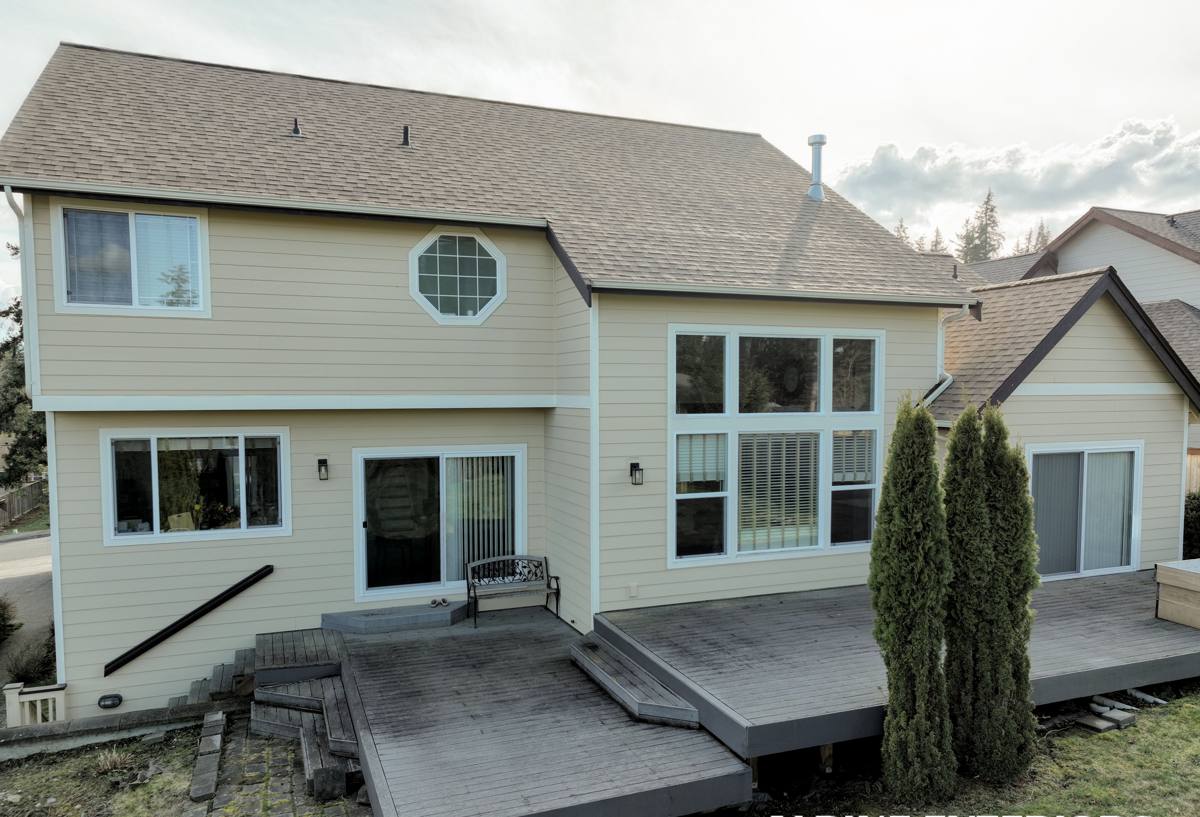
Barkley sits close enough to Bellingham Bay and the surrounding wetlands that decks here deal with a mix of problems most inland neighborhoods don't have to think about as much. Salt-tinged air moves through on a regular basis, driving rain comes in sideways off Puget Sound storms for months at a time, and the long, damp shoulder seasons give moss and algae months to establish themselves on any horizontal surface that doesn't drain or dry properly. A deck built without those three things in mind — salt exposure, wind-driven moisture, and moss season — will show it within a few years, usually as fastener corrosion, soft spots at the ledger, or a slick green film that turns dangerous the first frost of the year.
We build and repair decks all over Bellingham, but Barkley's mix of mature tree cover, closer lot spacing, and proximity to the water means the decks here need a slightly different approach than a deck out toward the county line. This page covers what that means in practice — what materials and details hold up, how we build it, and what to expect from the process.
What Whatcom County Climate Actually Does to a Deck
Salt Air and Metal Fasteners
Bellingham isn't oceanfront in the way a coastal Washington town on the open Pacific is, but Barkley is close enough to the bay that airborne salt is a real factor, especially on south and west-facing decks that catch the prevailing weather. Salt air accelerates corrosion on anything less than fully rated fasteners and connectors. Cheap or mismatched hardware — galvanized screws paired with stainless flashing, for instance — sets up a slow corrosion problem that's invisible until a board comes loose or a ledger connection starts leaking.
Driving Rain and Ledger Attachment
The ledger board — where the deck attaches to the house — is the single most common point of failure on decks in this region, and wind-driven rain makes it worse. Rain here doesn't just fall straight down; it gets pushed sideways into wall assemblies, and if the ledger flashing wasn't detailed correctly, water tracks behind the siding and rots the wall framing from the inside, not just the deck. This is a bigger deal on a wet, tree-shaded lot than it is somewhere drier.
Moss, Algae, and the Long Wet Season
Western Washington's moss season effectively runs from fall through spring, and a shaded Barkley lot under mature trees can stay damp for weeks between real drying spells. Decking that doesn't drain well, or that traps moisture between boards, becomes a moss farm. Beyond looking bad, wet moss on a walking surface is a slip hazard, and moss roots hold moisture against the wood or composite surface longer than open air would, shortening the material's life.
What a Correctly Built Deck Needs Here
- Ledger flashing that sheds water away from the house wall, not just a bead of caulk behind the board
- Stainless steel or coated structural fasteners and joist hangers rated for treated lumber contact and coastal-adjacent air, not mismatched hardware grades
- Consistent board spacing and airflow underneath so surfaces actually dry between rain events instead of staying damp
- A decking material matched to how much shade and moss exposure the specific spot on the lot actually gets
- Footings and posts set below frost depth and away from downspout discharge points, so runoff isn't dumping directly onto structural wood
- Railing hardware and connectors that won't streak or corrode within a few seasons
Every one of these is a place where a builder can cut a corner that won't show up as a problem for a year or two — which is exactly why it's worth asking a contractor directly how they handle each one before signing anything.
Decking Material Choices for a Barkley Lot
Pressure-Treated Wood
Still the most affordable option and perfectly serviceable if it's maintained — meaning periodic cleaning and re-sealing on a schedule that accounts for how much shade and moss pressure the deck actually sees. On a shaded Barkley lot, that maintenance interval needs to be shorter than the manufacturer's generic recommendation assumes.
Cedar
Cedar has natural rot and insect resistance and looks good doing it, but it's a softer wood that shows wear from moss and moisture faster than composite if it isn't kept sealed. It's a good fit for homeowners who want the look and don't mind the upkeep.
Composite Decking
Composite costs more up front but doesn't rot, doesn't need staining, and resists moss staining far better than wood — though it still needs to be cleaned periodically, since algae and moss will grow on any surface that stays damp long enough, composite included. For a shaded, wet Barkley lot, composite usually pays for itself in avoided maintenance over the deck's life.
Railing and Hardware
Whatever the decking, we treat railing posts, connectors, and fasteners as a system that has to match the decking's expected lifespan — there's no point putting mismatched hardware on a 25-year composite deck.
| Material | Upfront Cost | Moss/Moisture Resistance | Maintenance |
|---|---|---|---|
| Pressure-treated wood | Lowest | Fair — needs sealing to hold up | Clean + reseal every 1-2 years |
| Cedar | Moderate | Good naturally, better if sealed | Clean + seal regularly |
| Composite | Highest | Best — won't rot, resists staining | Occasional wash, no sealing |
How We Build a Deck for This Neighborhood
Site Assessment
We start by walking the actual lot — sun exposure, tree cover, drainage patterns, and how close the deck will sit to the house's existing siding and roofline. On a Barkley lot with mature trees, shade mapping matters as much as square footage when it comes to picking a decking material.
Structural Layout
Footings, posts, and beams get sized and placed for the specific span and load, not just built to a generic template. We set footings below frost depth and route them away from downspout discharge and low spots where water pools.
Ledger and Flashing Detail
Given how much ledger failures drive rot problems in this climate, we treat the ledger-to-house connection as the most important single detail on the job — proper flashing, correct fastener spacing, and a water path that leads away from the wall assembly, not into it.
Decking and Fastening
Board spacing is set for drainage and airflow, not just appearance, and fasteners are matched to both the decking material and the coastal-adjacent air Barkley sees. Hidden fastener systems are an option for composite decking where a cleaner look is wanted.
Railing, Stairs, and Finish
Railings and stairs get built to current code for height, spacing, and load, and all hardware is checked for corrosion resistance before it goes in — not after a homeowner notices streaking a year later.
Why a Crew That Already Works Barkley Matters
A deck built by a crew unfamiliar with this specific stretch of Whatcom County tends to build to a generic spec — the kind of deck that would be fine in a drier inland climate but underperforms here. A crew that already works Barkley regularly has already seen which lots hold moisture longest, which orientations catch the worst wind-driven rain, and which decking choices actually hold up through a full moss season rather than just through the sales pitch. That local pattern recognition is worth more than any brochure claim, and it shows up in fewer callbacks a few years down the road.
Maintenance Checklist for a Barkley Deck
- Sweep leaves and debris off the deck surface before they trap moisture, especially under tree cover
- Wash the deck at least once a year to remove early moss and algae growth before it establishes
- Check ledger flashing and any visible gaps at the house connection for water staining
- Inspect fasteners and railing hardware annually for rust streaking or looseness
- Reseal wood decking on the schedule the material actually needs in shade, not the generic label instructions
- Keep downspouts and grading directing water away from posts and footings
What a Barkley Deck Project Typically Involves
Timelines and scope vary with size, material, and whether we're replacing an existing structure or building new, but most projects follow the same general arc: site assessment and design, permitting where required, structural framing, decking and railing installation, and a final walkthrough. We handle permitting requirements for the jurisdiction the property falls under, since deck permit rules can differ between the county and city limits even within the same general area.
If you're planning a deck in Barkley, we're happy to come take a look at the site, talk through material options for your specific exposure, and put together a straightforward estimate — no pressure, no hard sell. You can request a free estimate using the form below.