 Bellingham
 Building Decks in Happy Valley's Marine Climate
Happy Valley sits close enough to Bellingham Bay that the same weather patterns shaping the rest of Whatcom County hit it just as hard: damp winters, a marine layer that doesn't always burn off by noon, and a slow, persistent moss season that can run from October well into May. A deck built the way you'd build one in a dry inland climate simply doesn't hold up the same way here. Like much of Bellingham, Happy Valley mixes older homes with newer construction, and a lot of lots have some grade change and mature tree cover — both of which affect how a deck should be sited, framed, and drained.
This page isn't generic deck advice. It's what actually needs to change about materials, hardware, and construction detailing when the job is a deck in Happy Valley, built for salt-tinged air, sideways rain, and a moss season that doesn't really end.
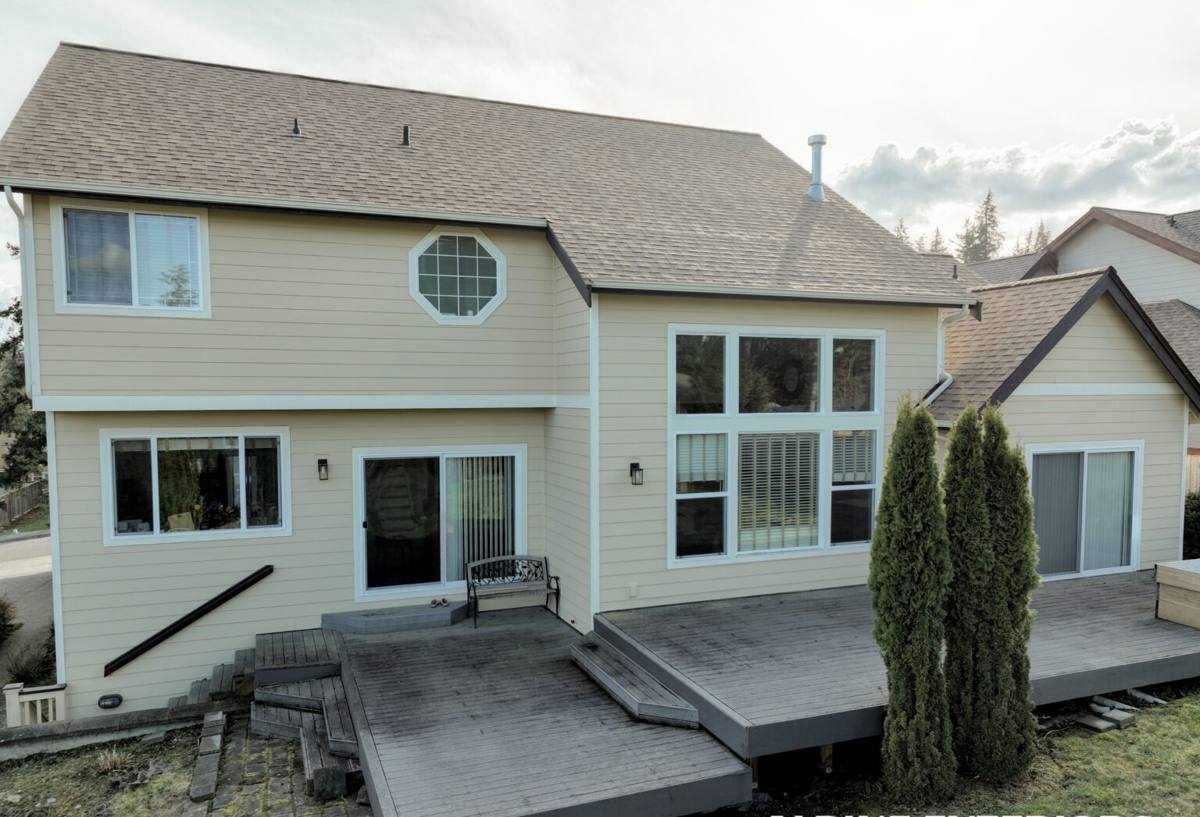
What Salt Air, Driving Rain, and Moss Actually Do to a Deck
Salt Air and Corrosion
Even a few miles from the water, airborne salt speeds up corrosion on anything metal — screws, joist hangers, post bases, structural bolts. Standard zinc-coated hardware that might last two decades in a drier region can show rust streaks and pitting in a fraction of that time here. A fastener loses holding strength well before it looks obviously bad, which is part of why so many deck failures trace back to hardware nobody thought to inspect.
Driving Rain and Water Management
Rain here rarely just falls straight down — wind off the water pushes it sideways, which drives it up under boards, behind ledger connections, and into end grain that vertical rain would never reach. A deck that isn't detailed for driving rain traps water in exactly the spots where rot and hardware failure start: the ledger-to-house connection, stair stringers, and anywhere two pieces of decking butt together.
The Long Moss Season
Any surface that stays shaded and damp for long stretches will grow moss and algae, and Happy Valley's tree cover and long wet season give it plenty of time to establish. Moss isn't just cosmetic — it holds moisture against the board surface, and on painted or sealed wood it can work into hairline cracks and speed up finish failure. Composite and PVC decking resist rot but aren't immune to surface moss, so the material alone doesn't solve the problem — exposure, board spacing, and drainage design matter just as much as what the deck is built from.
What a Correctly Built Deck Includes
A deck that holds up here needs more than good-looking boards on top. The parts that actually determine whether it lasts are mostly invisible once the project is finished:
- Ledger board flashing that sheds water away from the house rim joist, not just a bead of sealant
- Stainless steel or hot-dip galvanized structural hardware rated for corrosive, high-moisture exposure
- Joist spacing and blocking sized for the actual decking material chosen, not a generic span table
- Post bases that hold posts above grade and off standing water, with drainage beneath
- Board spacing that allows airflow and drainage instead of trapping moisture between boards
- Stair and guardrail construction that meets current code for height, spacing, and load
Skipping any one of these usually doesn't show up as a problem in year one. It shows up in year five or six, as soft spots near the ledger, rust-streaked fasteners, or a railing that's gone spongy at the post connections.
Choosing Decking Material for This Climate
There's no single "right" decking material for Happy Valley — it depends on how much upkeep you want to take on and whether you'd rather pay more upfront or over time. Here's how the common options actually perform under Bellingham's conditions:
| Material | Moisture & Rot Resistance | Moss/Algae Resistance | Ongoing Maintenance | Realistic Lifespan Here |
|---|---|---|---|---|
| Pressure-treated lumber | Good if sealed regularly | Moderate — needs cleaning | Annual cleaning, resealing every 1-2 years | 15-20 years with upkeep |
| Cedar | Naturally decent, fades without care | Moderate — needs cleaning | Regular cleaning and finish maintenance | 15-20 years with upkeep |
| Composite | Very good, won't rot | Surface growth possible, cleans off easily | Periodic washing, no sealing needed | 25-30+ years |
| Capped PVC | Excellent, fully moisture-proof core | Surface growth possible, cleans off easily | Occasional washing only | 25-30+ years |
Wood costs less to install but asks more of you every year. Composite and PVC cost more upfront but largely remove the maintenance cycle — which matters if you'd rather not be out there resealing boards every wet spring. Neither choice removes the need for good framing and drainage underneath it; a composite deck built over poorly flashed framing will still rot from below even though the boards themselves won't.
Framing, Fasteners, and Flashing: The Parts You Don't See
Most of what determines whether a Happy Valley deck lasts happens before a single decking board goes down. We treat hardware rated for coastal, high-moisture exposure as our standard, not an upgrade — stainless or hot-dip galvanized fasteners, joist hangers, and structural connectors throughout, not just at the ledger.
Footings on Sloped Ground
Sloped lots, which aren't uncommon in this neighborhood, change how footings get sized and placed. Reaching stable bearing soil can mean deeper footings, or footings set at different points than a flat-lot deck would need, and it changes how the framing steps down to meet grade cleanly.
Ledger Connections That Won't Leak
The ledger board is the single connection point where the deck meets the house, and it's the spot where a small, undetected leak turns into a structural repair inside the wall rather than a quick fix outside. We treat ledger flashing as a critical structural detail, not a finishing touch, and check it against the siding and weather barrier it's tying into.
Our Deck-Building Process
- Site walk and design: We look at sun exposure, drainage patterns, slope, and how the deck will actually get used before drawing anything up.
- Permitting: We handle the permit application and make sure the design meets current guardrail, stair, and structural code before work starts.
- Footings and framing: Footings are set to reach stable bearing soil, and framing goes in with corrosion-resistant hardware throughout — not just where it's visible.
- Flashing and waterproofing: Ledger flashing, post base drainage, and any wall penetrations get sealed and detailed before decking goes down, since this step is nearly impossible to fix later without tearing the deck apart.
- Decking installation: Boards are spaced and fastened to the manufacturer's requirements for our climate, with attention to drainage gaps and end-grain protection.
- Railings, stairs, and final details: Guardrails, stair rails, and any built-in features go in last, checked against code for height and baluster spacing.
- Final walkthrough: We walk the finished deck with you, point out what maintenance it'll need and when, and answer questions before we consider the job done.
We also try to schedule framing and flashing work — the steps most sensitive to getting wet mid-installation — around drier stretches of weather where possible, rather than pushing exposed framing through a week of steady rain.
Permits and Local Code Considerations
Most new decks and many significant deck rebuilds require a permit in Bellingham and unincorporated Whatcom County, with the specifics depending on the deck's height, size, and whether it's attached to the house. Guardrail height, baluster spacing, and stair geometry are all governed by current building code, and inspectors pay close attention to ledger attachment and footing depth specifically, since those are the failure points most common in this climate. We handle the permit process as a standard part of the job rather than something you have to chase down yourself, and we build to pass inspection the first time, not to whatever might slide by.
Cost Factors to Expect
Every deck is different, but the same handful of factors drive most of the cost difference between projects:
| Factor | Impact on Cost |
|---|---|
| Decking material (wood vs. composite/PVC) | Higher upfront for composite/PVC, lower long-term maintenance cost |
| Deck height and railing requirements | Taller decks need more substantial railings and structural bracing |
| Slope and footing depth | Sloped lots often need deeper or additional footings |
| Size and layout complexity | Multiple levels, angles, or built-ins add labor time |
| Attachment vs. freestanding | Ledger-attached decks need more careful flashing work; freestanding decks need more footings |
We'll walk through these factors with you during the estimate so you understand what's driving the number, rather than handing you a total with no explanation behind it.
Maintaining a Deck Through Bellingham's Wet Months
A well-built deck still needs some seasonal attention to get its full lifespan out of this climate. A simple annual routine goes a long way:
- Sweep leaves and debris off the deck surface regularly through fall, especially between boards where they trap moisture
- Clean moss and algae with a deck-safe cleaner rather than a high-pressure washer, which can damage wood fibers or composite surfaces
- Check and reseal wood decking every 1-2 years, or as soon as water stops beading on the surface
- Inspect fasteners and hardware annually for rust streaking or loosening, especially near the ledger
- Keep gutters and downspouts near the deck clear so runoff isn't dumping directly onto footings or framing
- Trim back vegetation that's shading the deck or blocking airflow, since shade and stagnant air are what let moss take hold
Why a Crew That Already Works in Happy Valley Matters
Building decks in a marine climate isn't the same trade as building them somewhere dry, even though the tools and lumber look the same. A crew that hasn't worked Whatcom County conditions before might reach for standard hardware where corrosion-resistant hardware is called for, or underestimate how much a sloped, tree-covered lot changes footing placement and drainage planning.
We work in and around Bellingham regularly, which means we're not guessing at how a deck here needs to be detailed. We've seen what driving rain and a long moss season do to decks that weren't built for them, and we build accordingly the first time rather than treating it as an afterthought.
If you're planning a new deck or replacing one that's showing its age in Happy Valley, we're happy to take a look and walk you through what it would take. The estimate is free, there's no pressure to move forward, and you'll get a straight answer about what your project actually needs — just fill out the form below to get started.