 Bellingham
 Decks in Edgemoor Take a Different Kind of Beating
Edgemoor sits close enough to Bellingham Bay that salt-laden air is a constant in the equation, not an occasional visitor. Add Whatcom County's long wet season — months of driving rain followed by a slow, shaded moss season under the fir and cedar canopy that covers much of the neighborhood — and you get a set of conditions that ages an outdoor deck faster than most homeowners expect. A deck built to a generic spec, or built for a drier inland climate, tends to show its age here in five to eight years instead of fifteen or twenty. That's not a knock on the original builder; it's just what happens when salt air, moisture, and shade stack up year after year.
Replacing a deck the right way in this neighborhood means designing for those three things from the start: corrosion resistance for every metal component, drainage and ventilation that actually clears water instead of trapping it, and a decking surface that won't turn into a moss farm by its second winter.
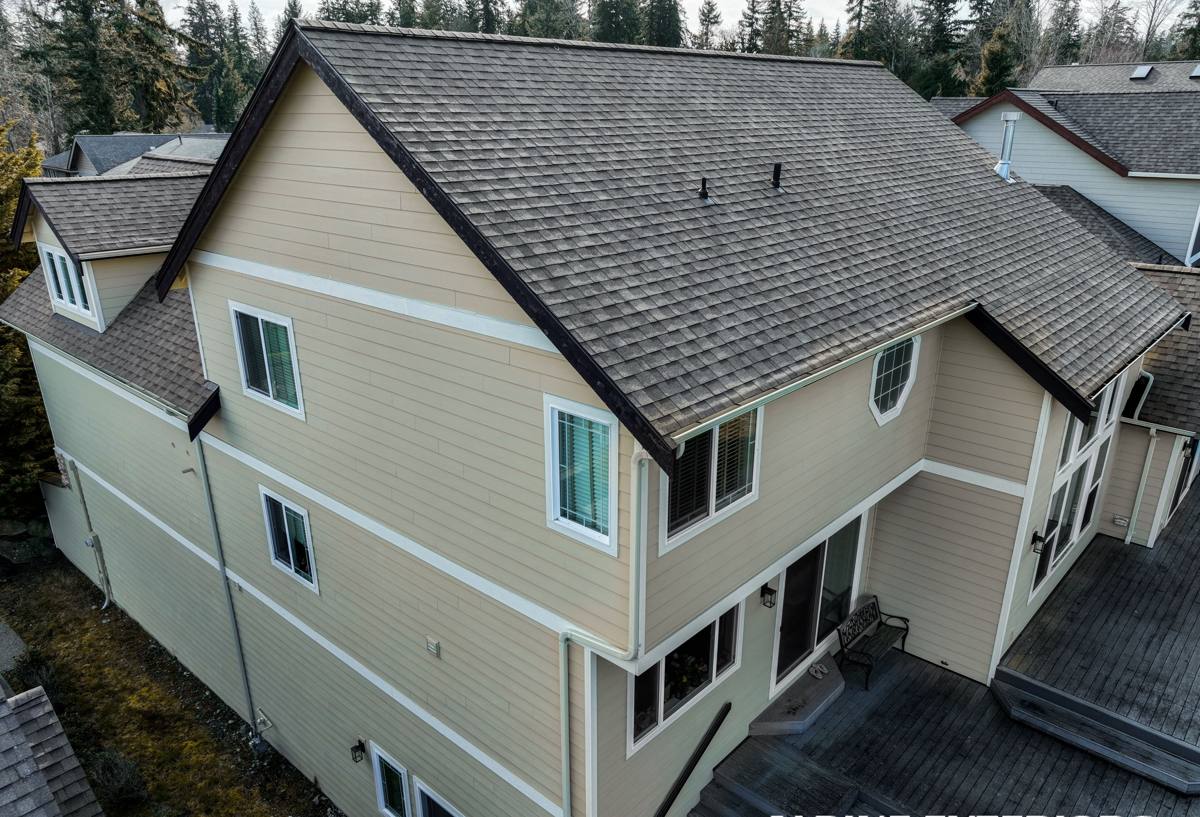
Signs an Edgemoor Deck Needs Replacement, Not Just Repair
Not every tired deck needs a full teardown. But there's a point where patching becomes false economy — you spend real money chasing symptoms while the structure underneath keeps failing. Some signs that point toward replacement:
- Soft, spongy, or spring-back decking boards, especially near the house or in shaded corners
- Rust streaking from fasteners or visible corrosion on joist hangers and structural screws
- A ledger board (where the deck attaches to the house) that's soft, discolored, or separating slightly from the siding
- Persistent moss or algae growth that returns within weeks of cleaning, even after pressure washing
- Wobble or movement in the railing posts or stairs
- Gaps between boards that have closed up or warped unevenly, trapping debris and moisture
Any one of these alone might be repairable. Two or three together, especially on a deck already past 12-15 years old, usually means the structure has absorbed more moisture damage than is visible from the surface.
What a Correct Replacement Actually Involves
The Structure Comes First
The decking boards are the part everyone sees, but the framing underneath is what determines whether the new deck lasts. A proper replacement means pulling the old decking, inspecting every joist, beam, and post, and replacing anything showing rot, insect damage, or corrosion — not just the pieces that look bad from the top. In a salt-air environment, we pay particular attention to fastener corrosion, since galvanized hardware that would hold up fine twenty miles inland can start breaking down noticeably faster this close to the water.
Ledger Attachment and Flashing
The ledger board — where the deck ties into the house — is the single most common failure point on decks in this climate, and it's also the hardest to inspect without pulling things apart. Correct flashing at this connection keeps water from running behind the deck and into the house's wall assembly. This is exactly the kind of detail that separates a deck that lasts from one that quietly rots the band joist behind it.
Footings and Drainage
Whatcom County's frost depth and drainage requirements matter for footing design, and standing water at the base of posts is a slow but steady cause of failure. We grade and set footings to shed water away from the structure rather than letting it pool.
Fastener and Hardware Selection
Given the salt air, we use corrosion-resistant fasteners and connectors rated for coastal exposure rather than standard interior-grade hardware. It costs a little more up front and saves years of rust streaks and hardware failure later.
Choosing a Decking Material for This Climate
There's no single "best" decking material — each option trades off cost, maintenance, and how it handles moisture and moss differently. Here's how the common choices stack up for an Edgemoor property specifically:
| Material | Moss/Moisture Behavior | Maintenance | Typical Lifespan Here |
|---|---|---|---|
| Pressure-treated wood | Absorbs moisture; needs sealing to resist moss and staining | Annual cleaning, re-sealing every 2-3 years | 10-15 years |
| Cedar | Naturally rot-resistant but still needs finish upkeep in shade | Regular cleaning and periodic finishing | 12-18 years |
| Capped composite | Resists moisture absorption; still needs cleaning to prevent surface moss/algae | Occasional washing, no sealing/staining | 20-25+ years |
| PVC decking | No moisture absorption; least prone to moss buildup | Lowest maintenance | 25+ years |
For shaded, damp lots — which describes a good share of Edgemoor's tree-covered properties — we generally steer homeowners toward capped composite or PVC decking. Wood costs less to install, but the ongoing sealing and cleaning burden in a climate this wet is real, and skipping it is what leads to the early soft-board and moss problems described above. That said, some homeowners want the look and feel of real wood and are willing to keep up with the maintenance — that's a legitimate choice too, as long as it's made with eyes open.
Our Process, Start to Finish
- On-site assessment — we inspect the existing structure, ledger connection, and footings before quoting anything, so the estimate reflects what's actually there, not guesswork.
- Written estimate — clear scope, material options, and pricing, with the structural and drainage work broken out separately from the decking surface itself.
- Permitting — deck replacements of most sizes require a permit through the City of Bellingham or Whatcom County depending on the property; we handle that paperwork as part of the job.
- Demo and structural rebuild — old decking removed, framing inspected and repaired or replaced, ledger flashing corrected, footings checked.
- Decking installation — boards, fasteners, and railing installed per manufacturer spec (this matters most for composite and PVC products, which have specific gapping and fastening requirements to perform correctly).
- Final walkthrough — we go over the finished deck with you, including basic care and what to watch for going forward.
Why a Crew That Already Works Edgemoor Matters
A deck built by someone unfamiliar with this specific stretch of Bellingham often misses details that only show up after a season or two — under-sized drainage for the amount of rain this area gets, standard hardware that corrodes faster than expected this close to the bay, or decking laid without enough airflow underneath to keep shaded sections from staying damp long enough to grow moss. A crew that's worked other decks in the neighborhood has already seen which details matter here and builds for them the first time, instead of learning it through a callback.
There's also a practical side: knowing the permitting process for this part of Whatcom County, knowing what typical lot grading and access look like on Edgemoor properties, and being able to show up for a follow-up question without it being a special trip.
Keeping a New Deck Ahead of Moss Season
Even a well-built deck needs a little seasonal attention in this climate. A short list that goes a long way:
- Sweep debris (needles, leaves) off the deck regularly through fall — trapped organic matter is what feeds moss growth
- Rinse or lightly wash the surface before moss season sets in, typically late fall
- Keep gutters and downspouts near the deck clear so runoff isn't landing directly on it
- For wood decks, re-seal on the schedule recommended for the product — skipping a cycle is when moisture problems start
- Check railing posts and stair connections once a year for movement or loosening
What Affects the Cost
Every deck is different, but the main cost drivers are consistent. Rather than quote a number that won't mean much without seeing your specific deck, here's what actually moves the price:
| Factor | Why It Matters |
|---|---|
| Deck size and shape | More square footage and more complex layouts (multiple levels, angles) mean more material and labor |
| Decking material | Composite and PVC cost more upfront than wood but less over the deck's lifetime |
| Structural condition | Rotted joists, a compromised ledger, or failing footings add scope beyond a surface-level replacement |
| Height and access | Elevated decks and stairs require more structural work and railing than a low, ground-level deck |
| Permitting requirements | Scope and location determine what permitting is needed, which affects timeline and cost |
We give an honest range during the on-site assessment once we can see the actual structure — not a phone-quote guess.
Questions Worth Asking Before You Hire
- Will you inspect the ledger board connection and footings, or just the visible decking?
- What fastener and hardware grade do you use, given the salt air here?
- Is the permit included in your process, or is that on me to handle?
- What's your recommendation for shaded, moss-prone areas of my lot specifically?
- Can I see the manufacturer's installation spec for the decking material you're proposing?
If you're weighing a deck replacement in Edgemoor, we're glad to come take a look and walk you through what your specific deck actually needs — no pressure, no upsell, just a straight assessment and a written estimate. Reach out using the form below to set up a free on-site visit.