 Bellingham
 Windows Built for Edgemoor's Waterfront Climate
Edgemoor sits close to Bellingham Bay, and that proximity to salt water shapes what a window has to survive here. Homes in this neighborhood deal with a combination most inland Whatcom County properties don't see as intensely: salt-laden air off the bay, wind-driven rain that hits window walls at an angle instead of falling straight down, and a moss and mildew season that stretches from fall through spring. Add in the tree cover common to Edgemoor's older lots, and you get windows that stay shaded and damp longer than windows in open, sunnier parts of Bellingham.
None of that makes window replacement complicated, but it does change what "correct" looks like. A window that performs fine in a dry inland climate can fail early here if it's the wrong material, the wrong glass package, or installed without real attention to flashing and drainage. This page covers what we look at specifically for Edgemoor homes when we're talking about energy-efficient windows — not a generic rundown of window types.
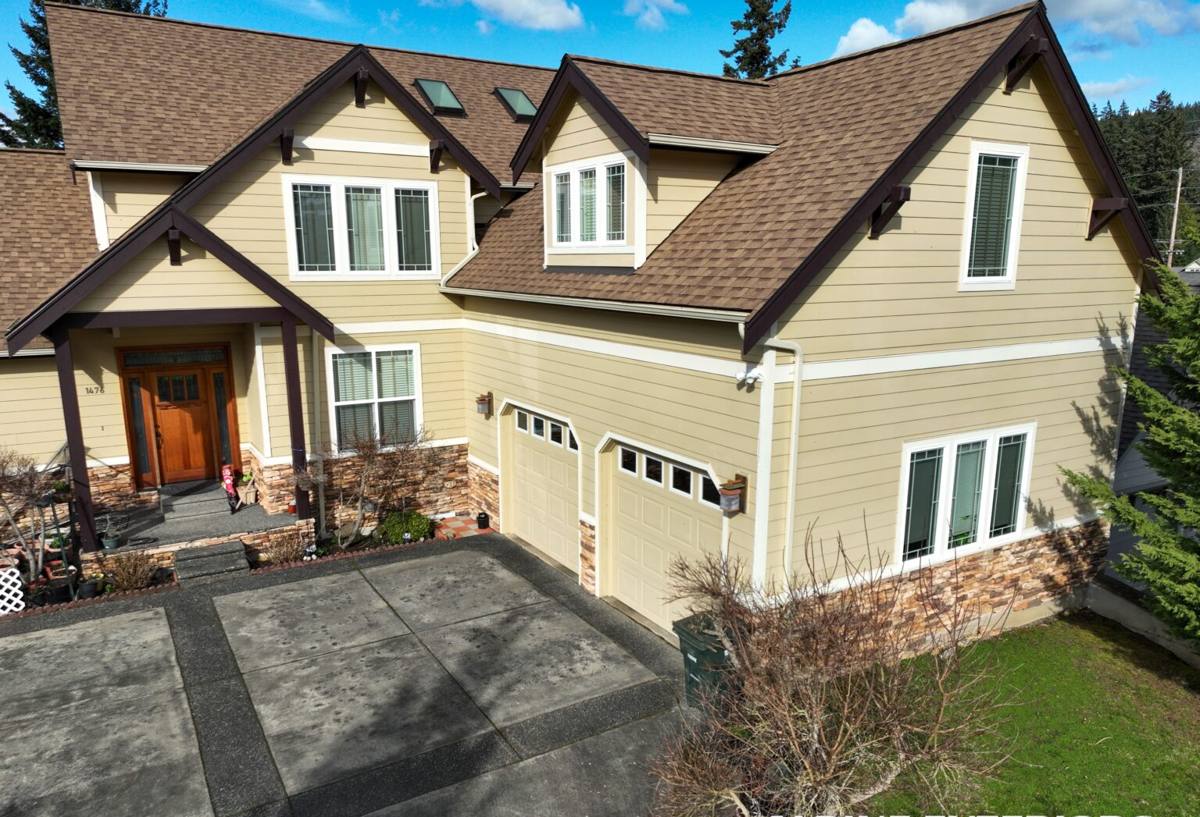
What Salt Air and Driving Rain Actually Do to a Window
It helps to understand the failure modes before picking a product, because the marketing on window packaging doesn't mention any of this.
Salt air and hardware
Salt in the air accelerates corrosion on exposed metal — hinges, cranks, locks, and especially lower-cost aluminum components. Over a few winters near the bay, hardware that would last decades inland can start to pit, stick, or seize. This is one of the reasons hardware quality matters as much as glass quality on a bayside property.
Wind-driven rain and water intrusion
Straight-down rain is easy to shed. Wind-driven rain gets pushed sideways and upward into gaps that a standard installation might not seal against. On exposed elevations of an Edgemoor home — especially upper stories facing the water — this is the difference between a window that stays dry for 30 years and one that starts showing water staining on interior trim within a few winters.
Moss, shade, and slow-drying wood
Tree-shaded lots hold moisture longer after a storm. If a window's exterior trim or sill is wood and it doesn't get enough sun or airflow to dry out between rain events, rot and moss growth start well before the glass or seals ever fail. This is a trim and detailing issue as much as a window issue.
What "Energy-Efficient" Should Mean in This Climate
Energy efficiency isn't just an R-value on a sticker. In a marine climate like Bellingham's, it's really about three things working together: keeping conditioned air inside, keeping bulk water out, and managing the condensation that naturally happens when warm indoor air meets cold glass on a 38-degree January morning.
| Factor | Why it matters near the bay | What to look for |
|---|---|---|
| Frame material | Salt air and moisture cycling stress frames over decades | Vinyl, fiberglass, or clad-wood with corrosion-resistant hardware |
| Glass package | Reduces condensation and heat loss during long damp winters | Double-pane, low-E coating, argon fill for most Whatcom County homes |
| Air infiltration rating | Wind off the bay finds every gap | Low AI (air infiltration) rating on the NFRC label |
| Flashing and sill pan | This, not the window itself, stops water intrusion | Proper sill pan flashing integrated with house wrap, every install |
| Hardware finish | Salt air corrodes exposed metal over time | Corrosion-resistant coatings or stainless components on locks and hinges |
Of everything on that list, flashing and sill pan detailing is the one homeowners are least likely to hear about — and it's the one that determines whether a window leaks in five years or lasts the life of the house. A high-end window installed without a proper sill pan and integrated flashing will still leak. A mid-range window installed correctly won't.
Frame Materials: What We Recommend and Why
We install and stand behind vinyl and fiberglass windows for most Edgemoor replacement projects. Both handle the moisture cycling of a marine climate without the maintenance burden of painted wood. Fiberglass holds up slightly better under large temperature swings and is a common step-up choice for larger openings or homes where the owner wants a narrower frame profile with more glass area.
We're more selective about painted wood windows on this type of site. Wood can look great and perform well when it's protected — under deep eaves, on shaded but well-ventilated elevations — but on exposed, salt-air-facing walls it asks for a repainting and caulking schedule that most owners don't want to keep up with. If a home's architecture calls for a wood look, clad-wood options (wood interior, low-maintenance exterior cladding) usually get the appearance without the exposure risk. We'll walk through the actual trade-offs for your specific elevations rather than push one material across the board.
Our Installation Process for Edgemoor Homes
The window itself is maybe half the job. The other half is everything around it, and that's where most long-term problems either get prevented or get built in.
- On-site assessment. We look at each elevation separately — sun exposure, tree cover, wind exposure toward the water, and the condition of existing trim and sheathing. A house facing the bay and a house tucked behind trees on the same lot can need different details.
- Removal and opening inspection. Once the old window is out, we check the rough opening for rot, soft sheathing, or prior water damage before anything new goes in. This is the point where hidden problems get caught — covering them up costs far more later.
- Sill pan and flashing. We install a sloped sill pan and integrate flashing with the existing house wrap or building paper, shingle-style, so water is directed out and down rather than trapped behind the new window.
- Window setting and shimming. The unit is set level, plumb, and square, and shimmed correctly so it operates smoothly and doesn't stress the frame — a common source of premature seal failure on rushed installs.
- Insulation and air sealing. Gaps get filled with low-expansion foam or backer rod and sealant, not just packed with fiberglass, which does nothing to stop air movement.
- Exterior sealant and trim. Exterior caulking uses a sealant rated for exterior/marine exposure, and trim is finished to shed water rather than trap it against the wall.
- Final check. Every window gets operated, checked for square, and inspected for a clean, weather-tight exterior seal before we call the job done.
Signs an Edgemoor Home May Need Window Replacement Soon
- Condensation forming between the panes (a failed seal, not a cleaning issue)
- Visible fogging or a cloudy band around the glass edges
- Drafts near the frame even with the window fully latched
- Soft or discolored wood trim around the window, especially on shaded elevations
- Difficulty opening, closing, or locking — often a sign of hardware corrosion or frame movement
- Visible moss or dark staining building up on sills or lower trim
- A noticeable jump in heating costs without other explanation
- Noise transfer that seems worse than it used to be, a sign seals have degraded
Cost Factors Worth Knowing Before You Get a Quote
We don't quote prices without seeing the openings, but it's worth understanding what actually drives the number so a quote makes sense when you get one.
| Factor | How it affects cost |
|---|---|
| Number and size of openings | Straightforward — more and larger openings cost more |
| Frame material | Vinyl is typically the most budget-friendly; fiberglass and clad-wood cost more |
| Replacement vs. new construction install | Full frame (new construction) installs cost more than insert replacements but correct more problems |
| Existing damage found at removal | Rotted sheathing or framing found mid-project adds cost to repair properly |
| Access and elevation | Upper-story or hard-to-reach windows on sloped or bluff lots take more labor |
| Glass and hardware upgrades | Triple-pane, upgraded coatings, or higher-grade hardware add cost but reduce long-term maintenance |
For most Edgemoor homes, an insert replacement (new window fits into the existing frame) is the right call when the existing frame and surrounding structure are sound. A full frame replacement makes more sense when there's already water damage or rot to correct, or when the opening size is changing.
Why Local Experience in Edgemoor Matters
A window contractor who mostly works inland can miss things that are second nature to a crew that's worked this specific stretch of Bellingham's waterfront. Knowing which elevations catch the worst of the wind off the bay, which lots hold moisture longer under tree cover, and which hardware finishes actually hold up to salt air over years — that comes from doing the work here repeatedly, not from a product spec sheet. It affects which material we recommend for a given wall, how much attention a given elevation's flashing gets, and what maintenance schedule we tell you to expect afterward.
It also matters for something more basic: knowing what Whatcom County permitting and inspection requirements apply to window replacement on your property, and handling that correctly the first time.
Get a Free, No-Pressure Estimate
If your Edgemoor home has windows showing drafts, fogging, sticking hardware, or trim damage, or if you're planning ahead for a full replacement, we're happy to take a look and walk you through what we see — no obligation and no pressure. Use the form below to request a free estimate.