 Bellingham
 Windows Built for the Silver Beach Side of Bellingham
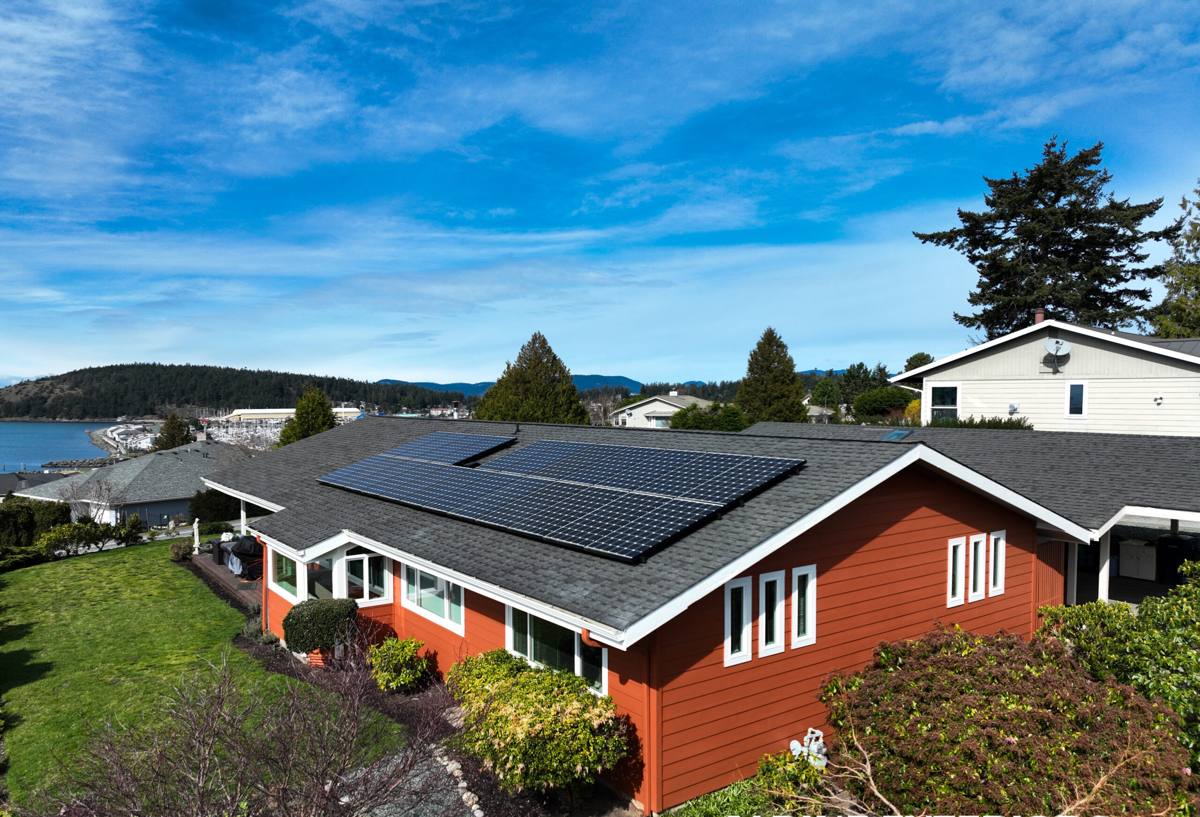
Silver Beach sits close enough to the water that its homes take on a different kind of weather load than houses further inland in Whatcom County. Salt-laden air, wind-driven rain off Bellingham Bay, and the long gray stretch of moss season each put pressure on window components in ways that don't show up in a manufacturer's brochure. Frames corrode faster near salt air. Seals get tested more often by sideways rain. And extended damp periods give algae and moss more time to take hold on sills, tracks, and exterior trim than they would in a drier climate.
None of that means windows in this neighborhood need to be exotic or overbuilt. It means the details — frame material, glazing, flashing, and installation sequencing — need to be chosen and executed with this specific exposure in mind, not treated as an afterthought to a generic install.
What Silver Beach's Climate Actually Does to Windows
Salt Air and Corrosion
Proximity to the bay means airborne salt settles on exterior surfaces more than it would a few miles inland. Over years, this accelerates corrosion on lower-grade aluminum hardware, cheap fasteners, and unprotected metal flashing. It's rarely dramatic — it's a slow degradation that shows up as stiff locks, pitted hardware, or streaking at the sill long before a window actually fails.
Driving Rain
Wind off the water doesn't just fall rain straight down — it pushes it sideways into wall assemblies, which means window flashing and sealant lines get tested far more than on a sheltered inland lot. A window that would perform fine on a calm site can leak on a wind-exposed one if the flashing details weren't done correctly.
Moss and Algae Season
Bellingham's long wet season gives moss, algae, and mildew extended time to establish themselves on window sills, exterior trim, and anywhere water sits instead of draining. This isn't just cosmetic — trapped moisture behind growth is what eventually rots trim and works its way into the wall assembly if it isn't caught early.
What a Correct Window Job Looks Like Here
For Silver Beach homes, we treat a handful of details as non-negotiable rather than optional upgrades:
- Corrosion-resistant hardware and fasteners — not the lowest-grade hardware a window line ships with
- Properly lapped, sealed flashing that directs water out and away from the wall, not just sealant relied on as the only defense
- Sloped sills that shed water instead of letting it pool
- Weep holes kept clear so any water that does get behind the frame can drain back out
- Glazing and frame combinations chosen for real thermal performance in a marine climate, not just a sticker rating
- Sealant products rated for UV and moisture exposure, applied at the manufacturer's specified thickness — not smeared on thin to save time
Skipping any one of these doesn't usually cause an immediate problem. It shows up two, five, or ten years later as a soft sill, a foggy insulated glass unit, or a draft that wasn't there when the windows went in.
Frame Material: What We Recommend and Why
Homeowners in this neighborhood often ask about material choice specifically because of the salt air and moisture exposure. Here's how the common options actually hold up in this environment:
| Material | Behavior Near the Bay | Our Take |
|---|---|---|
| Vinyl | Doesn't corrode, handles moisture well, good thermal performance | Solid default for most Silver Beach homes — low maintenance is a real advantage here |
| Fiberglass | Excellent dimensional stability, resists moisture and salt exposure | Worth the added cost on wind-exposed elevations or larger openings |
| Wood (clad or unclad) | Handsome, but exposed wood needs consistent upkeep in a wet, salt-air climate | We install it when a homeowner wants the look, but we're upfront that maintenance is higher here than in a drier inland location |
| Bare aluminum | Prone to corrosion and condensation in marine air over time | Not our standard recommendation for this exposure — thermal and corrosion performance both lag other options |
None of these is universally "wrong" — the right call depends on the elevation of the house, how directly it faces the water, and how much upkeep a homeowner wants to take on. We'll walk through that trade-off honestly rather than push whatever's easiest to install.
Energy Efficiency: What Actually Matters in This Climate
Whatcom County doesn't see extreme heat, but it does see a long heating season, persistent dampness, and steady wind — all of which make air-sealing and glazing performance matter more than raw R-value numbers. A few things we weigh with homeowners:
Glazing
Double-pane, low-E glass is the baseline for this climate. Triple-pane can make sense on north-facing or particularly wind-exposed walls, but it's not automatically worth the added cost on every opening — we'll tell you where it actually pays off and where it's overkill for the situation.
Air Sealing
A well-rated window installed with poor air sealing around the rough opening will underperform a modestly-rated window installed correctly. This is where a lot of the real energy loss happens, and it's also the step that's easiest to shortcut if a crew is rushing.
Condensation Control
In a consistently damp climate, interior condensation on window glass is often a sign of an air-sealing or ventilation issue rather than the window itself being defective. Getting the installation details right up front helps avoid this from day one.
Our Process for a Silver Beach Window Project
- On-site assessment — we look at each opening's exposure, current flashing condition, and any existing moisture or rot signs before recommending anything
- Material and product selection — matched to that specific home's exposure, budget, and how the house is actually oriented to wind and rain
- Removal and inspection — old windows come out carefully so we can check the surrounding framing for hidden moisture damage before it gets covered back up
- Flashing and sealing — installed to shed water outward, not just relying on caulk as the only barrier
- Window installation and adjustment — set plumb, level, and square, with hardware tested for smooth operation before we consider the job done
- Final weatherproofing check — sills, trim, and sealant lines reviewed once more before we clean up and walk the job with you
Why a Crew That Already Works Silver Beach Matters
Window installation isn't one-size-fits-all across Bellingham. A crew that's worked mostly on drier, inland lots may not default to the flashing and sealing details that matter most a few blocks from the bay. Working this neighborhood regularly means we've already seen how salt air ages hardware, how driving rain finds gaps in a sloppy install, and where moss tends to establish itself on sills and trim — so those lessons get built into the job from the start instead of learned the hard way on your house.
It also means we're not guessing at code requirements, permitting expectations, or how a particular style of home in this part of Whatcom County was typically built. That local familiarity shortens the learning curve and reduces the chance of a callback.
Before You Hire: A Practical Checklist
- Ask what frame material they recommend for a home in your specific location and why
- Ask how they handle flashing — not just "do you flash it" but what the lap sequence and materials are
- Ask whether they inspect the framing behind old windows before installing new ones
- Ask about warranty coverage on both the product and the labor, and what voids it
- Ask for a written estimate that breaks out materials and labor, not just a lump sum
- Ask how they handle disposal of old windows and job-site cleanup
Signs It Might Be Time to Replace, Not Repair
Not every window issue means full replacement. But in this climate, a few signs tend to mean repair is just delaying the inevitable: fogging between panes (a failed seal that can't be fixed, only replaced), soft or spongy sills and trim, hardware that's corroded to the point of not locking properly, or persistent drafts that weatherstripping alone hasn't solved. If you're only seeing one of these on an otherwise sound window, a repair or targeted resealing may be all you need — we'll tell you honestly which situation you're in rather than push a full replacement you don't need.
If you're weighing window replacement or repair for a home near Silver Beach, we're happy to take a look and give you a straightforward, no-pressure estimate — just fill out the form below.