 Bellingham
 Fairhaven's Waterfront Climate Is Tough on Decks
Fairhaven sits close enough to Bellingham Bay that salt-laden air is part of daily life, not an occasional nuisance. Add Whatcom County's long, wet winters and the shoulder seasons where drizzle can linger for weeks, and you have a climate that punishes decking materials that aren't built for it. Wood fibers absorb moisture and swell, fasteners corrode faster near the water, and any north-facing or heavily shaded deck can stay damp long enough to grow moss and algae for much of the year.
None of this means a deck can't last in Fairhaven. It means the material, the fasteners, the substructure, and the drainage details all have to be chosen with this specific environment in mind, not a generic "Pacific Northwest" spec sheet. A deck built the same way you'd build one in a dry inland climate will show problems here years before it should.
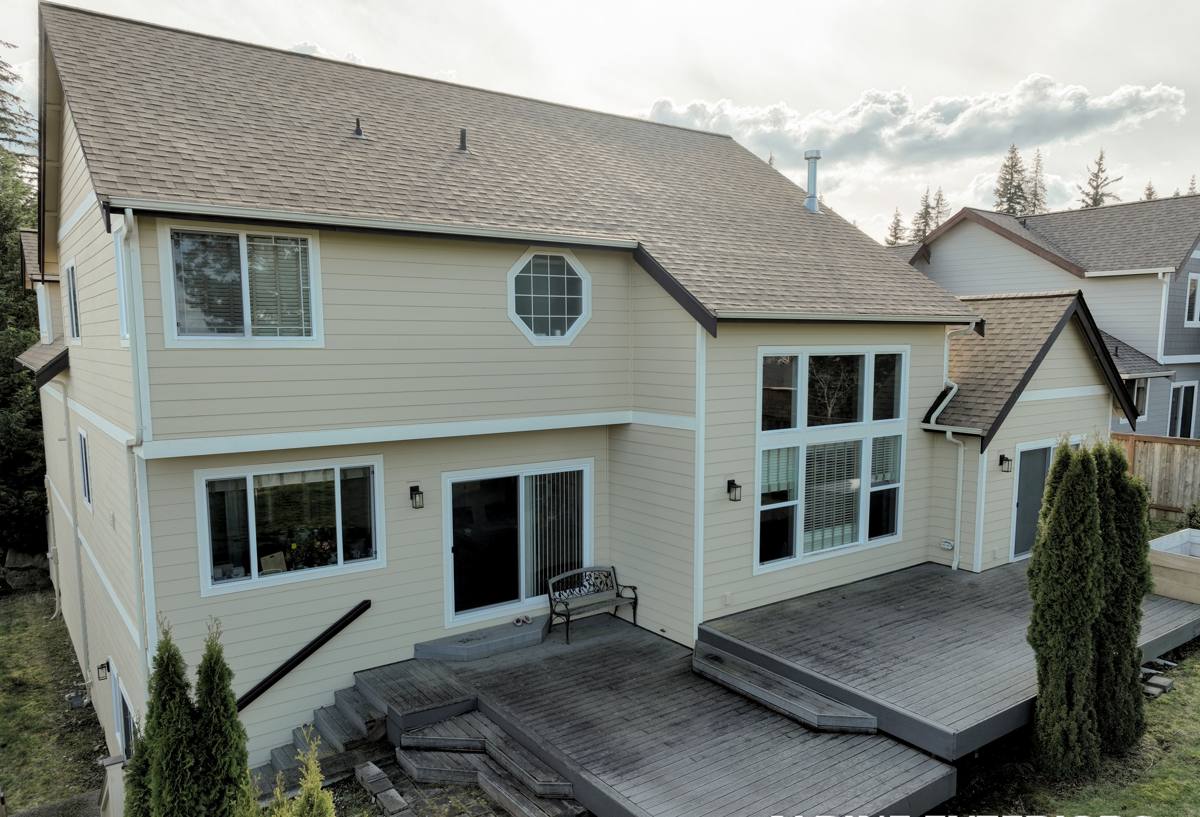
What Local Conditions Demand From a Deck
Salt Air and Metal Fasteners
Proximity to the bay means airborne salt settles on every exposed surface, including screws, brackets, and fastener heads. Standard coated deck screws can start showing rust streaks within a season or two in a salt-air exposure. We spec stainless steel or marine-grade coated fasteners and hardware for Fairhaven jobs specifically because the cost difference is small compared to the cost of replacing corroded connectors later.
Driving Rain and Water Management
Rain in this area doesn't always fall straight down — wind off the water pushes it sideways into ledger boards, fascia, and any gaps where a deck meets the house. If flashing and water-shedding details aren't done correctly at the ledger connection, water works its way behind the board and into the framing or the house wall, where it can sit unnoticed for a long time.
A Long Moss Season
Shaded decks, decks under tree cover, and north-facing decks in this part of Whatcom County can stay damp for much of the fall through spring. Moss and algae need that sustained moisture to take hold, and once they do, a deck surface gets slick and the growth accelerates its own hold on the board texture. Board selection and surface drainage both play a role in how much moss pressure a given deck will face.
Why Composite Decking Fits This Environment
Composite decking is a strong match for Fairhaven because it doesn't absorb moisture the way wood does, doesn't need annual staining or sealing, and resists the rot and splintering that wet wood eventually develops. Most composite boards are made from a blend of wood fiber and recycled plastic, and higher-end lines add a fully encapsulated cap layer that seals the board surface against moisture intrusion and makes cleaning mildew and algae off the surface much easier than with wood.
That said, composite isn't a "zero maintenance" material, and we don't sell it that way. It still needs periodic cleaning to stay ahead of surface mildew in a damp climate, and board quality varies a lot between manufacturers and product lines. Part of our job is steering homeowners toward boards with a track record in wet coastal climates, not just the lowest price point at the yard.
Composite vs. Other Decking Materials
| Material | Moisture Behavior | Maintenance | Typical Lifespan Here |
|---|---|---|---|
| Capped composite | Resists absorption; cap layer sheds water and salt residue | Periodic washing; no staining/sealing | 25-30+ years |
| Uncapped composite | More prone to moisture wicking at cut ends | Occasional cleaning; end-cap sealing recommended | 15-25 years |
| Pressure-treated wood | Absorbs and releases moisture; prone to swelling/checking | Annual cleaning and re-staining/sealing | 10-15 years before major repair |
| Cedar | Naturally rot-resistant but still absorbs water over time | Regular sealing to maintain resistance | 15-20 years with upkeep |
| PVC decking | Fully moisture-resistant; no wood fiber to absorb water | Low; occasional washing | 25-30+ years |
We install composite for most Fairhaven projects because it strikes the best balance of moisture resistance, appearance, and cost for this climate. PVC is a reasonable alternative for homeowners who want the lowest possible maintenance and don't mind a different look and feel underfoot; we're glad to walk through that trade-off during an estimate.
Substructure and Drainage: The Part You Don't See
A composite deck is only as good as what's underneath it. In a climate this wet, the framing, ledger connection, and drainage plan matter as much as the board choice — arguably more, since framing failures are harder and more expensive to fix after the fact.
- Ledger flashing: Properly integrated flashing at the house connection keeps wind-driven rain from tracking behind the ledger board and into the wall assembly.
- Joist protection: Joist tape or an equivalent moisture barrier on top of the framing keeps water from sitting directly on cut lumber, which is where rot typically starts even under a "moisture-resistant" deck board.
- Fastener grade: Stainless or marine-rated hardware throughout, not just on the visible surface screws.
- Board gapping and drainage slope: Correct spacing between boards and a slight slope away from the house lets water actually leave the deck surface instead of pooling.
- Ventilation underneath: Low, enclosed, or ground-level decks need enough airflow beneath the structure to keep the framing from staying damp between rain events.
These details rarely show up in a sales brochure for decking boards, but they're the difference between a deck that looks good for two years and one that holds up through two decades of Bellingham Bay weather.
Our Process for a Fairhaven Deck Project
1. On-Site Assessment
We walk the site, check sun and shade exposure, note proximity to the water and prevailing wind direction, and look at how the existing structure (if there is one) has held up. This tells us how aggressive the moss and moisture pressure will be and shapes our board and drainage recommendations.
2. Material Selection
We go over composite board options with actual samples, discuss color and texture in the context of shade exposure (darker boards show less surface debris but can hold more heat; lighter boards show algae growth more visibly), and give a straightforward cost range for each tier.
3. Framing and Structural Work
Any needed repairs to ledger connections, footings, or joists happen before a single deck board goes down. We're not going to install new composite decking over compromised framing — it just moves the problem underneath where it's harder to see and more expensive to fix.
4. Installation
Boards are installed with manufacturer-specified fastening systems, correct gapping for expansion and drainage, and attention to picture-framing and edge details that hold up to weather exposure over time.
5. Final Walkthrough
We review the finished deck with the homeowner, including a plain-language explanation of what maintenance is actually needed going forward — not a generic manufacturer pamphlet.
Maintaining a Composite Deck in a Damp Climate
Composite decking cuts down on maintenance significantly compared to wood, but "low maintenance" still means some maintenance, especially this close to the water and under a long moss season.
- Sweep debris off the deck regularly, especially organic matter like leaves and needles that trap moisture against the board surface.
- Wash the deck with a soft-bristle brush and a mild cleaner a couple of times a year, more often on shaded sections prone to algae.
- Avoid pressure washing at high PSI directly into board seams, which can force water into fastener holes and joints.
- Keep gutters and downspouts near the deck clear so runoff isn't dumping extra water onto the deck surface or framing below.
- Trim back vegetation that's shading the deck and keeping it damp longer than necessary.
- Check fastener heads and railing connections annually for any early signs of corrosion, particularly on decks facing the water.
Permits and Whatcom County Requirements
Most new deck construction and significant deck replacement in Whatcom County and the City of Bellingham requires a building permit, and requirements can differ depending on deck height, size, and whether it's attached to the house. We handle the permitting process as part of the project so homeowners aren't left navigating it alone, and we build to the structural and guardrail requirements that apply locally rather than treating them as optional.
Why It Matters That We Already Work in Fairhaven
A crew that regularly works in Fairhaven and along the Bellingham waterfront has already seen how salt air, shade patterns, and driving rain off the bay affect decking over time — not in theory, but on decks we've built, repaired, and maintained relationships with over the years. That local track record shapes practical decisions: which board lines actually perform well in this specific exposure, where moss pressure tends to be worst, and which framing details are worth the extra time given what this climate does to a deck that skips them.
It also means faster, more accurate estimates. We're not guessing at how a product will perform near the water — we already know, because we've installed it in neighborhoods a few minutes from where you live.
Get a Straightforward Estimate
If you're considering a new composite deck or replacing an aging wood deck in Fairhaven, we're happy to come take a look, walk you through material options suited to your home's sun and wind exposure, and give you an honest cost range. The estimate is free, there's no pressure, and you'll get a clear explanation of what your deck actually needs — use the form below to get started.