 Bellingham
 Why Fiber Cement Is the Right Material for a Fairhaven Home
Fairhaven sits on Bellingham Bay, and that location isn't just a nice view, it's a set of working conditions for whatever material ends up on the outside of a house. Salt-laden air drifts off the water most of the year. Rain arrives sideways as often as it falls straight down. And the mix of mature tree cover and consistently mild, damp weather keeps moss and mildew active across most of the calendar rather than just a few wet months. Every siding material on the market has to answer to those three conditions eventually, and not all of them answer well.
This page is specifically about fiber cement siding as a product for a Fairhaven home, not a general overview of our services. We install James Hardie fiber cement exclusively, and the reasons are practical: we've seen how different materials actually perform on tear-offs and repair calls in this exact climate, and fiber cement engineered for a wet coastal zone consistently outlasts and outperforms the alternatives here.
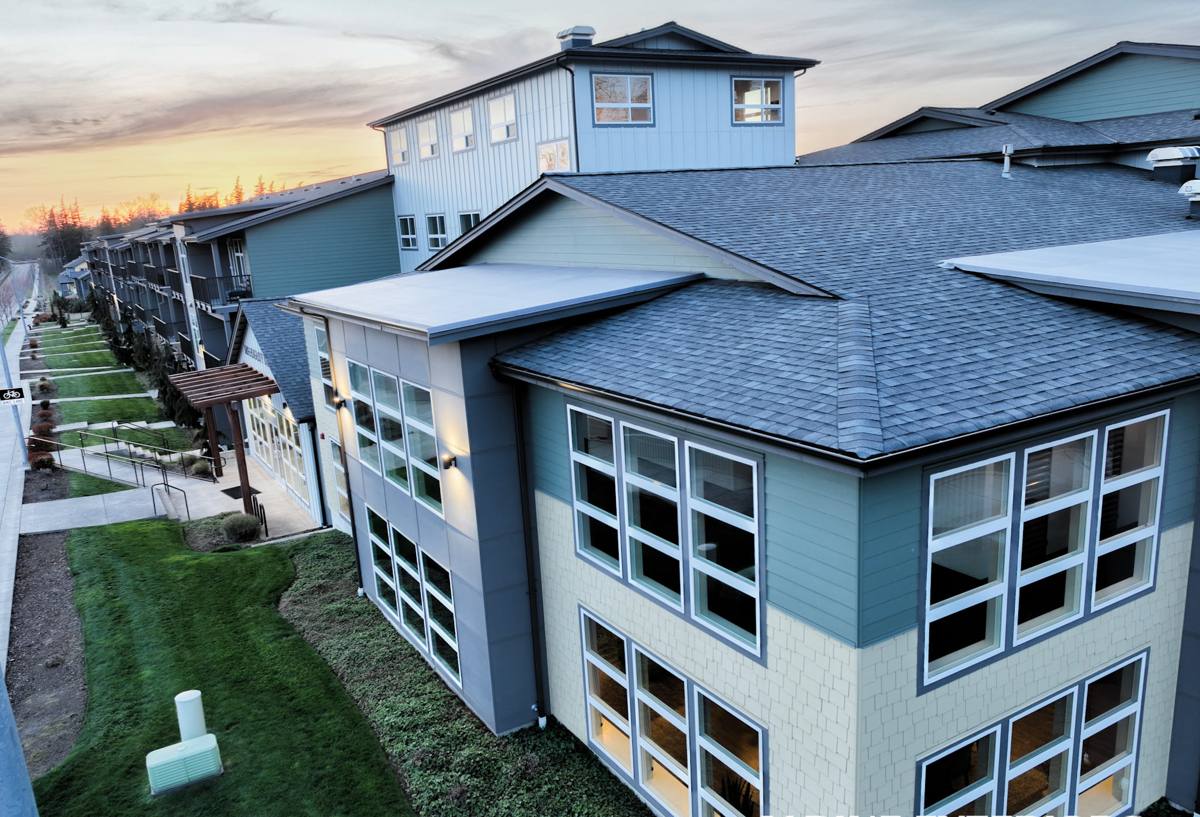
What James Hardie Fiber Cement Siding Actually Is
The Material Itself
Fiber cement is a mix of Portland cement, sand, and cellulose fiber, cured into rigid boards and panels. It's inorganic, which matters more in Fairhaven than in a drier market, because it means the material doesn't have a wood-based or foam core that can absorb water and swell, delaminate, or feed rot the way organic siding materials eventually can under sustained coastal moisture. It's also dimensionally stable, so it doesn't expand and contract with temperature and humidity swings the way vinyl and engineered wood do, which keeps joints and fastener holes tighter over years of freeze-thaw and wet-dry cycling.
ColorPlus Factory Finish
Rather than being painted on site, Hardie's ColorPlus finish is baked on in multiple coats under controlled factory conditions before the boards ever arrive at a job. That process gives the finish better resistance to fading, chalking, and moisture intrusion than field-applied paint, which matters directly in Fairhaven because salt air and UV exposure are two of the fastest ways a site-painted finish loses its color and its protective function.
HZ5: Engineered for This Climate Zone
James Hardie manufactures different siding formulations for different climate zones, and the HZ5 line is built for regions with sustained moisture exposure and freeze-thaw cycling. That's a closer match to Whatcom County's marine winters than a product engineered primarily for hot, dry conditions. Using the right HZ formulation for the region isn't a marketing footnote, it's the difference between siding that's been tested against conditions like Fairhaven's and siding that hasn't.
Siding Profiles and Style Options
Fiber cement isn't a single look. James Hardie makes several profiles, and picking the right one for a Fairhaven property is as much about matching the neighborhood's older, established character as it is about performance.
- Lap siding: The traditional horizontal board look, available in smooth or cedar-textured finishes, and in several exposure widths. This is the most common choice for a straightforward re-side and reads well against Fairhaven's mix of early-century and hillside infill homes.
- Shingle-style siding: Available in straight-edge or staggered patterns, this profile suits homes built to look like traditional cedar shingle construction without carrying an organic, moisture-absorbing core into a wet climate.
- Board and batten / vertical panel siding: Often used as an accent on gables, dormers, or entry features rather than the whole house, giving a home visual texture without mixing in a less durable material.
- Trim, fascia, and soffit boards: HardieTrim boards are engineered to the same standard as the field siding. Pairing Hardie siding with a mismatched trim material is one of the more common places we find early failure on inspections, since trim takes direct weather exposure at every seam and corner.
What a Correct Fiber Cement Installation Involves Here
The material only performs to spec if the installation matches it. This is the part of the job that separates a fiber cement wall that holds up for decades from one that develops problems in five to ten years despite using the same boards.
Clearance and Flashing
Hardie specifies minimum clearances from grade, roofline, and deck surfaces to keep splash-back and standing moisture away from the board edge. In a climate where rain is driven sideways by wind, flashing at windows, doors, and every wall penetration has to be integrated with the house wrap as one continuous water-management system, not treated as separate steps done in isolation.
Fastening and Joint Treatment
Correct fastener type, spacing, and depth keep the boards secure without cracking the material or compromising the water-resistive barrier behind it. Joints and seams need the manufacturer-specified sealant, and factory-cut edges should be used wherever possible since field cuts need to be sealed on site to preserve the factory finish's protection at that edge.
A Drainage Plane Behind the Siding
A rainscreen or drainage gap behind the siding gives any moisture that does get past the surface a path to drain and dry instead of sitting against the sheathing. This detail matters more in a marine climate that stays damp most of the year than it does in a drier region, because the wall assembly gets less natural drying time between rain events.
Fiber Cement Compared to the Materials We Don't Install
We used to offer more than one siding brand. What changed our minds wasn't marketing, it was watching how different materials actually aged on homes in this exact climate.
| Material | How It Handles Fairhaven's Marine Climate | Long-Term Maintenance |
|---|---|---|
| James Hardie fiber cement | Inorganic core resists moisture absorption and rot; HZ5 formulation built for sustained wet, freeze-thaw conditions | Low; no repainting cycle needed for the substrate itself |
| Vinyl siding | Can warp under direct sun and become brittle in a cold snap; joints rely on lapped, non-sealed channels that aren't built for driving rain | Low cost but limited repair options once panels crack or fade |
| Engineered wood (LP SmartSide) | Treated wood-fiber core performs only as well as its coating and sealed edges stay intact under near-constant coastal humidity | Depends on keeping field cuts and fastener penetrations sealed indefinitely |
| Cedar or primed spruce | Organic and moisture-absorbent; moss and mildew find these surfaces especially hospitable in a damp, shaded climate | Ongoing paint or stain schedule required to keep water out |
Vinyl and engineered wood are legitimate products elsewhere, and plenty of contractors install them well. In a climate this consistently wet and salt-exposed, we made a professional decision to stand behind one system we understand completely rather than sell a cheaper option that shifts maintenance risk onto the homeowner down the road.
Cost Factors for a Fiber Cement Re-Side in Fairhaven
| Factor | What It Affects | Why It Matters in Fairhaven |
|---|---|---|
| Siding profile chosen | Material cost and install labor | Shingle-style and board-and-batten accents take more cutting and layout time than straight lap siding |
| Trim and soffit scope | Total material cost | Fairhaven's older homes often carry more trim detail around windows, dormers, and roof intersections |
| Tear-off vs. overlay | Labor and substrate access | Removing old siding exposes hidden moisture damage that's common on decades-old walls this close to the bay |
| Site access and slope | Staging and setup time | Hillside lots common in Fairhaven can require additional scaffolding or equipment |
| Color and finish selection | Material cost | ColorPlus factory finishes cost more upfront than standard colors but hold up longer against salt air and UV |
Actual numbers depend on the specific house and what we find once the old siding comes off, which is why we walk the property in person before quoting rather than pricing off square footage alone.
What Fiber Cement Actually Needs for Upkeep in This Climate
One of fiber cement's real advantages is a light maintenance load, but "low-maintenance" doesn't mean "no maintenance," especially this close to the water.
- Rinse the siding periodically to clear the fine salt film that builds up on walls facing the bay
- Inspect caulking at trim joints, corners, and window and door penetrations once a year and re-seal anything that's cracked or pulled away
- Keep shrubs and plantings trimmed back from lower courses so shaded walls get airflow and dry out between rain events
- Watch north-facing and tree-shaded elevations for early moss growth and clean it before it spreads
- Check field-cut edges and any touch-up paint for early wear, since these are the points most likely to lose protection first
- Address nail pops or loose boards promptly rather than waiting for a full maintenance cycle
Our Process for a Fairhaven Fiber Cement Project
We start with an in-person walk of the property, looking at the existing wall assembly, checking for signs of trapped moisture, and assessing site conditions like slope and access before we talk numbers. From there, we make a straight recommendation on tear-off versus overlay, since a house with hidden substrate damage needs that addressed before new siding goes on top of it. Installation follows Hardie's specification for clearances, fastening, and flashing, with house wrap and a drainage plane installed as one integrated system rather than a series of disconnected steps. Trim and caulking get finished to the same standard as the field siding, and we walk the completed job with you before calling it done.
Why a Crew That Already Works Fairhaven Matters
A contractor who works this stretch of Whatcom County regularly knows which walls in a neighborhood like Fairhaven stay damp longest, which orientations take the worst of the wind-driven rain, and where hillside terrain changes how a job gets staged. That's the kind of judgment that doesn't show up on a spec sheet but shows up two winters later in whether the caulking is still doing its job. It also means we've already made the profile and finish decisions that suit an older, established neighborhood, rather than defaulting to whatever's fastest to install.
If you're considering a fiber cement re-side for a Fairhaven home, or you just want a straight opinion on whether your current siding still has real life left in it, we're glad to take a look. Reach out using the form below to schedule a free, no-pressure estimate.