 Bellingham
 Why Fairhaven's Location Is Hard on Siding
Fairhaven sits close to the water, which means homes here deal with a combination of stresses that inland Whatcom County neighborhoods don't see in the same intensity. Salt-laden air moves off Bellingham Bay and settles on exterior surfaces, driving rain comes in sideways during fall and winter storms, and the long gray stretch from October through April keeps siding damp for weeks at a time. Add in the shade from mature trees on many lots, and you get a near-perfect environment for moss and algae to take hold on north- and west-facing walls.
None of that is unusual for the Pacific Northwest coast. But it does mean siding in Fairhaven ages differently than siding in a drier, more sheltered part of the county. Paint fails sooner on salt-exposed walls. Wood-based products swell and shrink more aggressively with the moisture cycles. And any gap in the water-management details behind the siding — flashing, house wrap, caulking — gets tested constantly instead of occasionally.
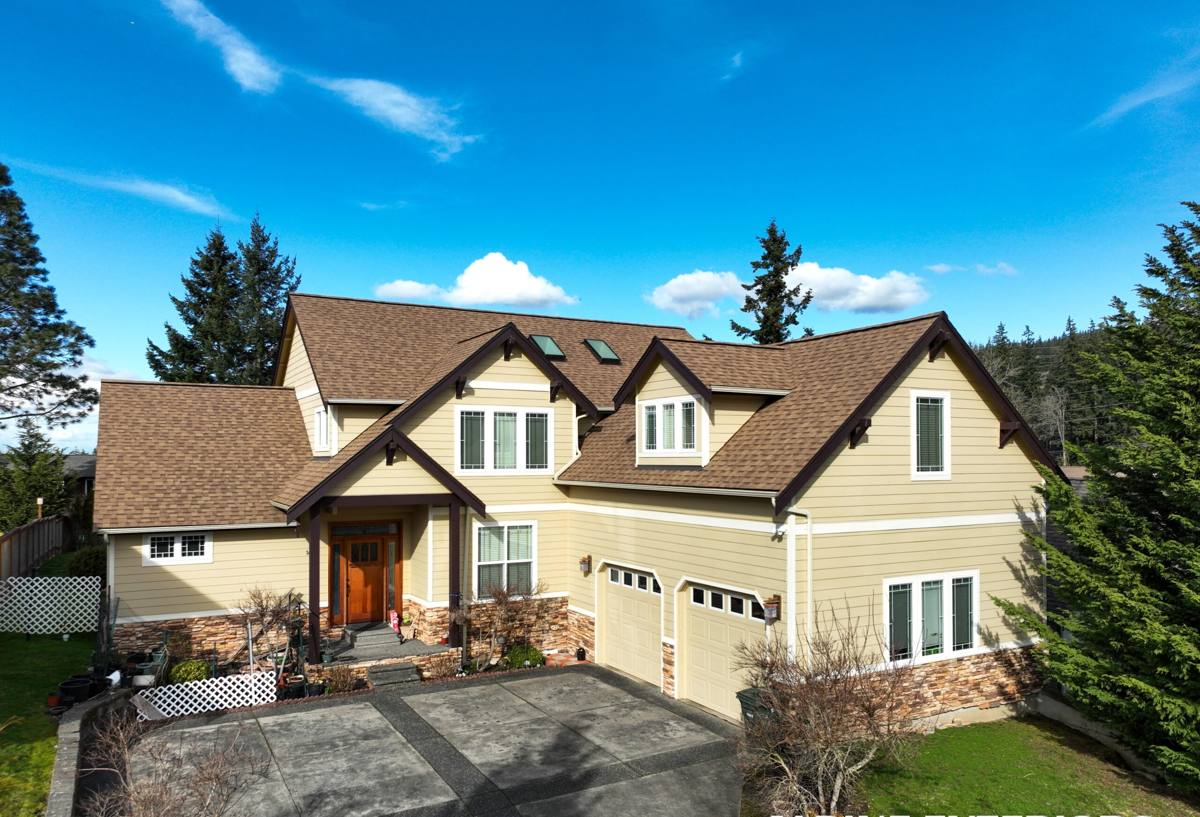
Signs a Fairhaven Home Needs Siding Replacement, Not Just a Repair
Not every issue calls for a full tear-off. But there's a point where patching stops making sense and replacement becomes the more honest recommendation. Homeowners in this neighborhood typically start asking about replacement when they notice one or more of the following:
- Paint that's peeling, bubbling, or needing repainting every 3-4 years instead of holding for a decade
- Soft or spongy spots when you press on the siding, especially near the bottom courses or around window trim
- Persistent moss or dark streaking that comes back within a season of cleaning
- Visible warping, cupping, or gapping between boards or panels
- Rising energy bills that point to failing insulation or air infiltration behind the wall
- Siding that's simply reached the end of its expected service life for its material type
A lot of these symptoms show up first on the sides of the house facing the water or prevailing weather, which is worth checking even if the street-facing elevation looks fine.
What a Correct Siding Replacement Actually Involves
It Starts Underneath the Siding, Not With the Siding Itself
The siding you see is the last layer of a system. What's underneath it — the water-resistive barrier, the flashing at windows and doors, the drainage plane, and how those pieces integrate at every seam — determines whether the wall stays dry for the next 30 years or starts failing again in five. In a neighborhood exposed to driving rain and salt air like Fairhaven, cutting corners on this hidden work is where premature failures almost always start.
A proper replacement means the old siding comes off, the sheathing underneath gets inspected for rot or damage, any compromised material gets repaired before anything new goes up, and a correctly lapped water-resistive barrier goes on with attention to every penetration — outlets, hose bibs, light fixtures, vents.
Then the Siding System Itself
Once the wall is properly prepped, the siding installation itself needs correct fastening patterns, proper clearance from grade and roof lines, and factory-finished materials that don't depend on a perfect field paint job to perform. This is where product choice matters as much as workmanship.
Why We Install Only James Hardie Fiber Cement
We get asked why we don't offer vinyl, LP SmartSide, or cedar as options. The honest answer is that in a climate like Bellingham's — and especially in a spot like Fairhaven with direct salt air exposure — those materials each carry trade-offs we're not willing to put on a customer's home and stand behind.
Vinyl is inexpensive and low-maintenance in mild conditions, but it's a thin product that can warp in temperature swings, crack in impacts, and fade in UV exposure over time — and it doesn't hold paint well if a homeowner ever wants to change the color. LP SmartSide and cedar are wood-based products; even with engineered strand technology or proper sealing, wood-based siding is more sensitive to sustained moisture exposure than fiber cement, and that sensitivity is exactly what a wet, salty coastal microclimate tests hardest.
James Hardie fiber cement is non-combustible, dimensionally stable in wet-dry cycling, and comes with a factory-applied ColorPlus finish that's baked on rather than field-painted — which matters a lot when your siding is going to spend half the year damp. Hardie also engineers specific product lines (their HZ5 designation) for climates like ours, meaning the formulation accounts for the freeze-thaw and moisture patterns of the Pacific Northwest rather than a one-size-fits-all national spec. It's backed by a strong transferable warranty, which protects the investment if the home sells down the road. That combination is why it's the only siding system we put on homes.
How the Common Options Compare in This Climate
| Factor | James Hardie Fiber Cement | Vinyl | LP SmartSide / Cedar |
|---|---|---|---|
| Salt air resistance | Strong — non-organic, factory-finished | Moderate — can chalk and fade | Weaker — wood-based, moisture-sensitive |
| Moisture/moss resistance | Strong — doesn't swell or rot | Doesn't rot but traps moisture behind it if installed poorly | Needs consistent sealing/maintenance to resist moisture |
| Finish longevity | Factory ColorPlus finish, long repaint interval | Color molded in but fades/chalks over time | Field-painted or stained; shorter repaint cycle |
| Fire resistance | Non-combustible | Can melt/deform near heat | Combustible (wood-based) |
| Typical service life | Decades, with strong transferable warranty | Long but brittle with age | Shorter without diligent upkeep |
Our Process for a Fairhaven Siding Replacement
Every project runs the same way whether the home is on a quiet inland street or a few blocks from the water:
- On-site assessment — we walk the exterior, check for soft spots, moisture intrusion, and current siding condition on every elevation, not just the ones visible from the street
- Scope and estimate — a clear breakdown of what's being replaced, what's being repaired underneath, and the Hardie product and color options that fit the home
- Tear-off and sheathing inspection — old siding comes off, sheathing is checked and repaired where needed before anything new is installed
- Water management first — house wrap and flashing details go in correctly at every window, door, and penetration
- Hardie installation to manufacturer spec — correct fastening, clearances, and joint treatment so the warranty stays intact
- Final walkthrough — we go over the finished work with the homeowner before calling the job done
What Affects the Cost of a Fairhaven Siding Replacement
Every home is different, so we don't publish blanket pricing, but the main variables that move the estimate are consistent from house to house:
| Cost Factor | Why It Matters |
|---|---|
| Condition of the sheathing underneath | Rot or water damage found during tear-off adds repair scope before new siding goes on |
| Home size and wall complexity | More corners, dormers, and trim detail mean more labor and material cuts |
| Siding profile and accessories | Lap width, trim style, and accent details affect material cost |
| Access and site conditions | Tight lots, slopes, or landscaping close to the house can affect staging and labor time |
| Existing paint or coatings | Some older siding types require extra prep or disposal handling |
Why Hiring a Crew That Already Works in Fairhaven Matters
Coastal Whatcom County neighborhoods aren't interchangeable with inland ones when it comes to exterior work. A crew that regularly works close to the water already knows to check specific trouble spots — north-facing walls that stay shaded and damp longer, areas where salt spray concentrates, and how the moss season behaves on this particular stretch of coastline. That local pattern recognition shows up in fewer callbacks and a wall system that's actually built for the conditions it's going to face, not just a generic install.
It also matters for scheduling and weather judgment. Bellingham's wet season is long, and knowing when a tear-off can safely happen without leaving a wall open to the elements for days is as much local experience as it is planning.
A Quick Checklist for Vetting a Siding Contractor
- Are they licensed and insured in Washington State?
- Do they explain what's happening behind the siding, not just the finished look?
- Can they speak specifically to coastal/moisture conditions, not just generic siding talk?
- Do they install manufacturer-certified per Hardie's installation specifications?
- Is the warranty clearly explained — what's covered, and is it transferable?
- Will they put the scope of work and materials in writing before starting?
Get a Straight Answer About Your Siding
If your Fairhaven home is showing peeling paint, moss that keeps coming back, or siding that's simply reached the end of its life, it's worth having someone take an honest look before deciding whether repair or replacement makes sense. We'll walk the exterior, tell you what we actually see, and put together a clear estimate for James Hardie fiber cement siding built for this climate. Reach out below for a free, no-pressure estimate.