 Bellingham
 Board & Batten Siding in Ferndale: A Look That Has to Earn Its Keep
Board and batten has become one of the most requested siding styles in Whatcom County, and it's easy to see why. The vertical lines read as clean, modern, and a little bit farmhouse all at once, and it pairs well with the mix of new builds and older homes you see around Ferndale. But board and batten is a profile, not a material — and the material underneath that profile is what decides whether it still looks good in fifteen years or starts failing in five. On a home this close to the water and this exposed to Pacific storm systems, that decision matters more than the color you pick.
This page covers what board and batten siding specifically needs to hold up in Ferndale, what a correct installation actually involves, and why we only install this profile in James Hardie fiber cement rather than the wood or engineered wood products it's traditionally been built from.
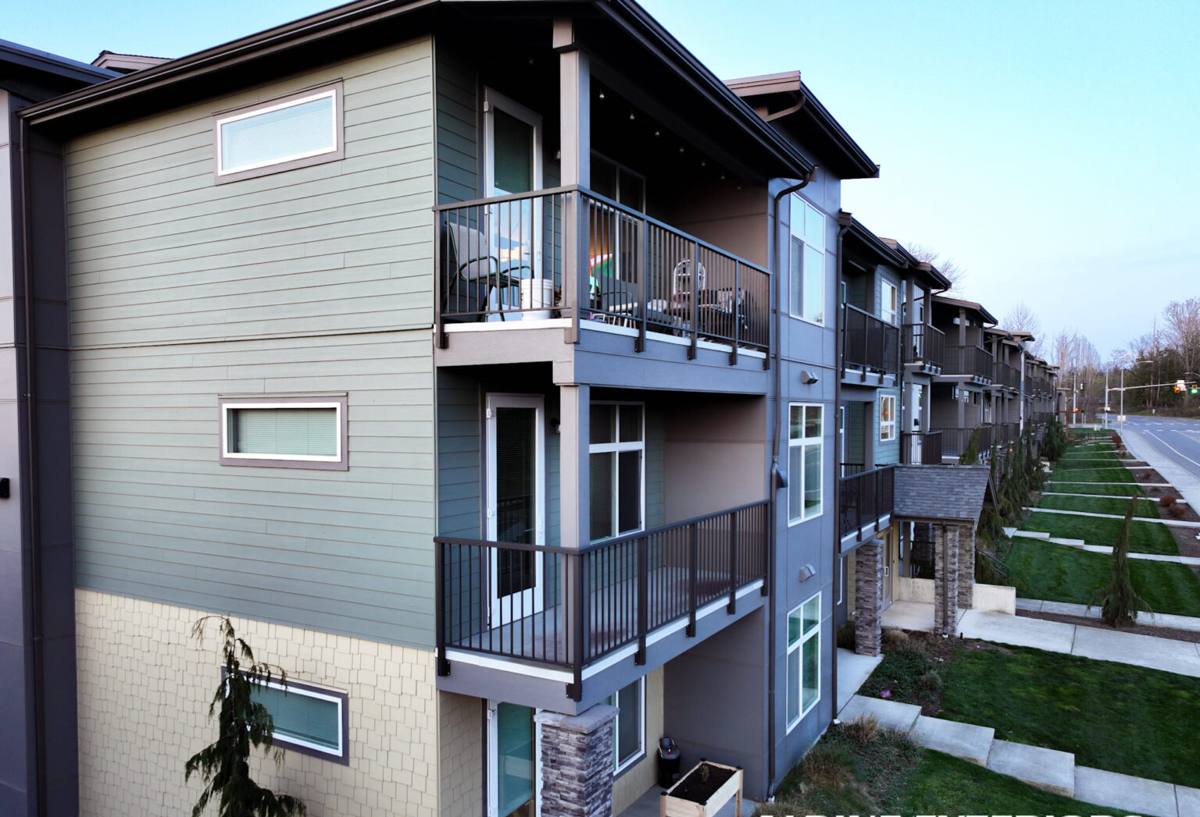
What Ferndale's Climate Does to Vertical Siding
Ferndale sits close enough to the water and open farmland that homes here take a specific combination of punishment: salt-laden air moving in off the coast, long stretches of driving rain through the fall and winter, and a moss and algae season that can run most of the year in shaded, north-facing spots. Board and batten siding is more exposed to all three of these than a standard lap profile, for a simple reason — the battens create dozens of extra vertical seams and shadow lines running down the wall, and every seam is a place where water can find a way in if the detailing isn't right.
- Salt air: accelerates corrosion on fasteners, staples, and any exposed metal trim — cheap fasteners fail years before the siding around them does.
- Driving rain: wind-driven rain in Whatcom County doesn't just fall straight down, it gets pushed sideways into vertical seams and batten joints, which is exactly where wood-based products are weakest.
- Moss and algae: constant damp shade lets organic growth take hold on any surface that stays wet too long, and vertical battens create more ledges and shadow lines for it to establish on than a flat lap board does.
None of this means board and batten is a bad choice for a Ferndale home. It means the material and the installation both have to be built for these conditions from the start, not patched later.
Why We Only Install Board & Batten in James Hardie Fiber Cement
Board and batten has traditionally been built out of solid wood, primed spruce, or engineered wood panel products. All of them can look great on day one. The problem is what happens at the seams and cut ends over the following years in a climate like this. Wood and engineered wood siding are organic materials — they absorb moisture at any exposed edge, and once moisture gets into an exposed batten edge or a fastener hole, it doesn't dry out quickly in a place with our rainfall and humidity. That's how you get swelling, soft spots, and paint failure at exactly the seams that make board and batten look sharp in the first place.
We standardized on James Hardie fiber cement for every siding job we do, board and batten included, for a few concrete reasons:
- It's non-combustible. Fiber cement doesn't feed a fire the way wood-based siding can, which matters more every fire season in Washington.
- It's engineered for wet, coastal climates. Hardie's HZ5 product line is formulated specifically for the Pacific Northwest's moisture and freeze-thaw cycles, not a generic national spec.
- The factory finish holds up. ColorPlus finish is baked on at the factory and warranted against fading and peeling, so you're not repainting battens every few years the way you would with primed wood.
- It doesn't swell or rot at cut edges the way wood does. Properly sealed and painted cut ends stay stable instead of wicking moisture.
We're not going to tell you wood board and batten always fails — plenty of it looks fine for years with diligent upkeep. What we will tell you is that we've made a professional call to stop installing siding materials that put that much of the long-term outcome on ongoing maintenance, in a climate that doesn't give wood many breaks. Fiber cement lets us stand behind the installation without asking a homeowner to repaint and recaulk every few years to keep it that way.
What a Correct Board & Batten Installation Actually Involves
Board and batten looks simple from the street — vertical boards, battens over the seams — but it has more failure points than lap siding if it's rushed. A correct install includes:
Drainage plane and rainscreen gap
Every board and batten wall we install goes over a water-resistive barrier with a proper rainscreen gap behind the siding. That gap lets any moisture that does get past the surface drain and dry out instead of sitting against the wall sheathing — this matters even more on a vertical profile than a horizontal one, because water tends to travel down and pool at the base.
Batten spacing and fastening
Battens have to be spaced and fastened according to Hardie's engineering specs, with fasteners landing in framing, not just sheathing. Corrosion-resistant fasteners are non-negotiable this close to salt air — the wrong fastener is a slow-motion failure you won't see for a few years.
Flashing at every horizontal transition
Windows, doors, roof lines, and any horizontal trim board need proper flashing integrated with the water-resistive barrier before a single batten goes up. This is the step that gets skipped most often on rushed jobs, and it's the step that causes the most callbacks.
Sealed and painted cut ends
Every field cut on a board or batten gets sealed per manufacturer spec before installation. This is a small step that a lot of crews skip because it slows them down — it's also one of the biggest predictors of long-term seam performance.
Correct clearance at grade and roof lines
Board and batten needs the same clearance rules as any siding — minimum distance from grade, decks, patios, and roof surfaces — so the bottom of the wall isn't sitting in a splash zone or trapped moisture.
Board & Batten vs. Other Siding Options for Ferndale Homes
| Material | How It Handles Salt Air & Driving Rain | Maintenance Burden | Typical Lifespan Here |
|---|---|---|---|
| James Hardie fiber cement | Engineered for coastal PNW moisture; won't rot or swell at seams | Low — factory finish, occasional wash | Decades, with warranty backing |
| Primed wood / spruce board & batten | Absorbs moisture at seams and cut ends; vulnerable to driving rain | High — regular repainting and caulking | Shorter, heavily dependent on upkeep |
| Engineered wood panel siding | Better than raw wood but still moisture-sensitive at edges | Moderate — edge sealing and inspection needed | Moderate, warranty often tied to strict maintenance |
| Vinyl board & batten profiles | Doesn't rot, but can warp and doesn't hold up structurally to wind-driven rain intrusion behind panels | Low, but limited repair options if damaged | Variable, appearance degrades over time |
Our Process for Ferndale Projects
- On-site assessment: we look at your home's exposure — how much direct salt air and driving rain it takes, where the shade and moss-prone areas are, and the condition of the existing wall assembly.
- Design and profile selection: board width, batten spacing, and color are worked out to fit the home and match Hardie's engineered specs for our climate zone.
- Tear-off and wall prep: old siding comes off, sheathing is inspected and repaired as needed, and the water-resistive barrier and rainscreen system go on correctly before anything else happens.
- Installation to spec: boards, battens, and flashing installed per James Hardie's fastening and clearance requirements, with every cut end sealed.
- Final inspection and walkthrough: we check seams, flashing, and clearances before calling the job done, and walk you through what maintenance actually looks like going forward.
What Board & Batten Siding Costs to Install
Pricing depends on the size and complexity of your home, how much tear-off is involved, and the amount of trim and flashing detail around windows and rooflines. Board and batten typically runs a bit higher in labor than standard lap siding because of the extra batten fastening and seam sealing work — the material cost difference versus lap Hardie siding is comparatively minor. We'll always give you an itemized number after seeing the actual wall conditions rather than a ballpark over the phone.
Maintenance Checklist for Ferndale Homeowners
- Rinse siding annually to clear salt residue and organic buildup before it takes hold, especially on north-facing and shaded walls.
- Check caulking at window and door trim yearly — even with fiber cement, sealant joints are the first thing to wear.
- Keep gutters clear so water isn't sheeting down the wall face during heavy rain events.
- Trim back vegetation and landscaping that keeps any section of wall shaded and damp longer than the rest of the house.
- Watch for moss starting at batten shadow lines — catching it early is a five-minute rinse instead of a scrub job.
Why Hiring a Crew That Already Works Ferndale Matters
A siding crew that works this area regularly already knows which walls take the worst of the wind-driven rain, where moss tends to establish first, and how much salt exposure a given lot actually sees based on its distance from the water and its orientation. That's not something you get from a general contractor who occasionally drives up from out of the area — it's built from doing the work here repeatedly, on homes with the same weather to deal with as yours. It also means warranty and follow-up service isn't a phone call to someone three counties away.
If you're weighing board and batten for a home in Ferndale, we're happy to walk the property, talk through what your specific exposure looks like, and give you a straightforward, no-pressure estimate — just fill out the form below.