 Bellingham
 Why Ferndale's Climate Is Hard on Siding
Ferndale sits close enough to the Salish Sea and the Nooksack River lowlands that homes here take on a specific combination of punishment: salt-laden air moving in off the water, long stretches of driving rain through fall and winter, and a moss and algae season that can run most of the year in shaded, north-facing spots. Any one of those on its own is manageable. Together, they're what separates a siding job that looks good for two years from one that holds up for decades.
Salt air is corrosive to fasteners and trim hardware, and it accelerates the breakdown of paint films on wood and some engineered wood products. Driving rain, especially when it comes sideways off a storm system, tests every seam, joint, and piece of flashing on a house — not just the field of the siding itself. And moss doesn't just look bad; it holds moisture against a wall assembly, which is exactly the condition that rots wood-based products and lets water find its way behind the cladding.
We install exclusively James Hardie fiber cement siding because it's the product we've found actually stands up to this combination, when it's installed correctly. That last part matters as much as the product choice — more on that below.
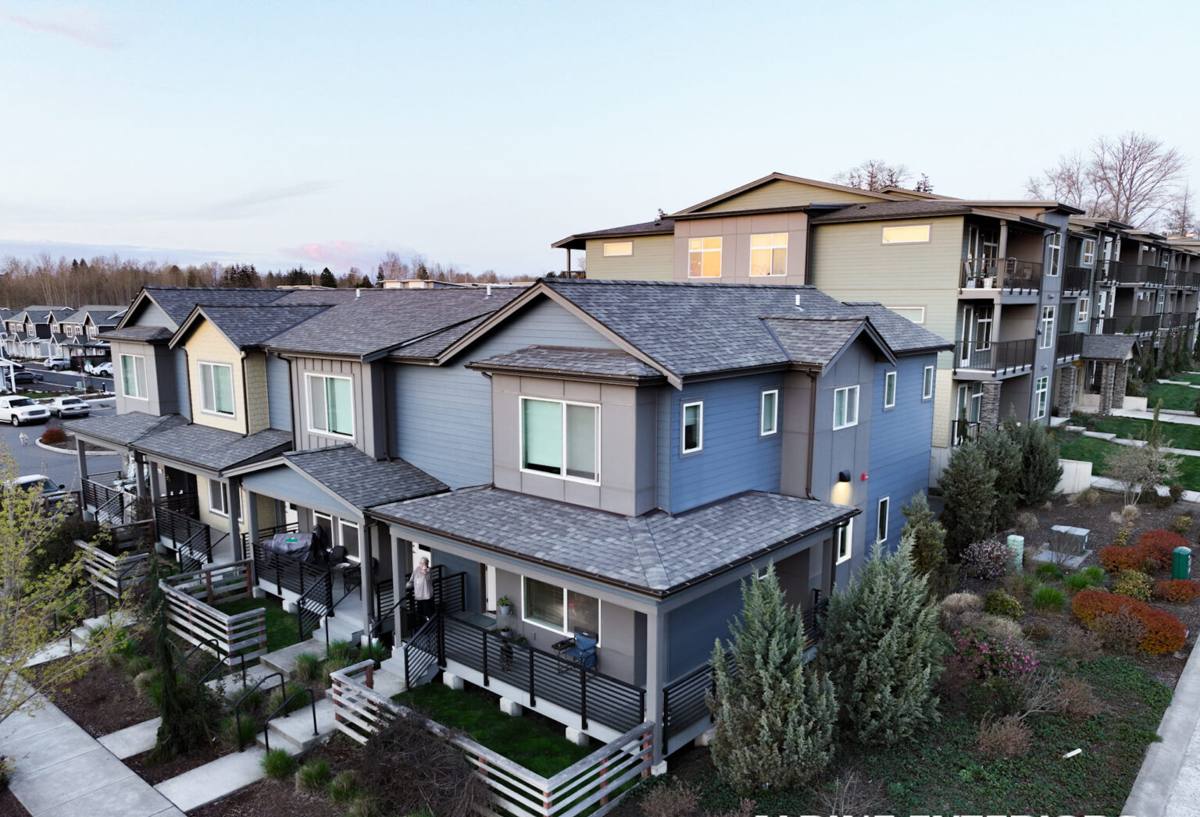
What James Hardie Brings to a Ferndale Home
James Hardie siding is fiber cement: a mix of cellulose fiber, sand, and Portland cement, cured into a rigid board. It doesn't feed mold or moss the way wood-based siding can, it doesn't swell and delaminate when it takes on repeated moisture, and it's non-combustible, which matters given how many Whatcom County properties back up to trees or brush. The factory-applied ColorPlus finish is baked on and warranted separately from the substrate, which means the color holds up to UV and salt exposure far longer than a field-applied paint job typically does.
None of that is marketing language — it's the reason we standardized on this one product line instead of carrying several. We don't install vinyl, LP SmartSide, Cemplank, Allura, or primed wood siding, and we're upfront about why: those products can be reasonable choices in the right setting, but in a marine climate with this much rain and moss pressure, we've seen where they tend to fail first — seams, cut edges, ground contact, and painted surfaces exposed to salt air. James Hardie's engineered fiber cement and factory finish address those specific weak points directly.
Built for This Specific Climate
James Hardie makes region-specific product formulations under its HZ5 designation for areas with more freeze-thaw cycling and moisture exposure, which fits Whatcom County's weather pattern better than a generic warm-climate formulation would. We spec HZ5 products for Ferndale installs as a matter of course, not as an upsell — it's the right material for the zone.
Choosing the Right Product Line and Colors
James Hardie offers several board profiles and one panel system, and the right mix depends on the home's style and exposure:
- HardiePlank lap siding — the standard horizontal lap look, available in several exposure widths and textures (smooth or cedar-mill grain)
- HardiePanel vertical siding — often used for accent gables, shed dormers, or a modern board-and-batten look
- HardieTrim — fascia, corner boards, and window trim in a matching fiber cement, so trim doesn't become the weak point once the field siding is upgraded
- HardieShingle — a fiber cement alternative for homes with a shingle-style accent area, without the moisture sensitivity of real cedar shingle
On color, darker ColorPlus finishes read as more dramatic against the region's grey-sky backdrop, but they also run hotter in direct sun and can show pollen and moss growth staining faster on north- and west-facing walls than lighter tones. We walk through the home's actual exposure — which sides get shaded and stay damp longest — before finalizing color, not just which swatch looks best on a sample chip.
What a Correct Installation Actually Involves
The siding board itself is only part of the system. In a climate that gets this much wind-driven rain, the details around it determine whether water gets managed or gets trapped:
Water Management Behind the Siding
Correct installs include a weather-resistive barrier and, on most walls, a rainscreen gap that lets any water that does get past the cladding drain and dry instead of sitting against the sheathing. This is one of the most commonly skipped steps on rushed installs, and it's one of the most important in a marine climate.
Flashing and Penetrations
Every window, door, vent, and hose bib penetration is a place water can get behind the wall. Proper head flashing, kick-out flashing at roof-wall intersections, and correctly lapped house wrap matter more than the siding brand in determining whether a wall assembly stays dry over time.
Fastening and Clearances
James Hardie specifies fastener type, spacing, and minimum clearance from grade, decks, and roof lines. Salt air accelerates corrosion on the wrong fastener choice, and tight clearances trap moisture at the bottom courses — often the first place we see failure on older installs we're asked to replace.
Caulking and Joints
Manufacturer-spec joint treatment and paintable sealant at butt joints and trim intersections, done to the manufacturer's written instructions — not general contractor habit — is part of keeping the warranty valid and the wall dry.
How Siding Materials Compare in a Ferndale Setting
| Material | Moisture/Moss Resistance | Salt Air Behavior | Maintenance |
|---|---|---|---|
| James Hardie fiber cement | Does not swell, rot, or feed mold; factory finish resists moss staining longer | Cement substrate is not corroded by salt; factory finish holds color | Periodic wash; repaint not required for the life of the ColorPlus finish |
| Vinyl siding | Won't rot, but seams and J-channels trap moisture and debris where moss can establish | Can become brittle and fade faster under coastal UV/salt exposure | Low, but panels can warp or crack and are hard to color-match when replaced |
| Wood-based/engineered wood siding | Vulnerable to swelling, edge rot, and moss growth if moisture-managed poorly | Paint film breaks down faster in salt air, exposing substrate | Regular repainting and edge sealing required |
| Cedar siding | Natural but moisture-sensitive; needs consistent maintenance to resist rot and moss | Salt air accelerates weathering and finish breakdown | High — refinishing, sealing, and moss treatment on a recurring schedule |
Our Process for a Ferndale Siding Project
- On-site assessment — we look at existing siding condition, wall exposure by direction, trim and flashing condition, and any signs of past moisture intrusion before quoting anything
- Product and color plan — HZ5 board selection, profile, and ColorPlus color matched to the home's style and sun/shade exposure
- Tear-off and sheathing check — removing old siding gives us a look at the sheathing underneath, which is often the real story on an older home
- Water-resistive barrier and rainscreen — installed per manufacturer and code requirements before a single board goes up
- Flashing at every penetration — windows, doors, vents, and roof-wall intersections detailed before siding closes them in
- Hardie installation — fastened, spaced, and jointed to manufacturer specification, maintaining proper clearances from grade and roofing
- Trim, caulk, and cleanup — HardieTrim details finished, joints sealed, site cleaned of debris and old material
Why a Crew That Already Works Ferndale Matters
A lot of siding problems we get called out to fix aren't product failures — they're installation shortcuts that don't show up until the second or third rainy season. A crew that regularly works Whatcom County homes has already seen how wind-driven rain finds the gaps most installers don't think about, and how quickly a shaded north wall can start growing moss if the wrong color or a tight rainscreen gap gets used. That's not something you get from a crew that mostly works drier inland climates and treats every job the same way.
It also matters for something more mundane but real: knowing local permitting requirements, working efficiently around Whatcom County's wetter install windows, and being reachable afterward if a warranty question comes up — not a call center for a company that installed the job once and moved on.
Maintenance: What to Actually Do (and Skip)
- Rinse siding with a garden hose and soft brush once or twice a year, focusing on shaded north- and west-facing walls where moss and grime build up fastest
- Avoid pressure washing directly at joints and seams — it can force water behind properly installed flashing
- Keep gutters clear so overflow doesn't run down the siding face and accelerate staining
- Trim back vegetation and tree cover that keeps a wall section shaded and damp longer than the rest of the house
- Watch for caulk failure at trim joints over time and have it addressed before it becomes a water path
- Skip repainting — a correctly installed ColorPlus finish is not meant to need it on the same schedule as field-painted siding
Warranty and Long-Term Value
James Hardie backs its fiber cement substrate with a long-term limited warranty, and ColorPlus finishes carry their own separate finish warranty covering fade and chipping. Warranty coverage depends on installation meeting manufacturer specification, which is part of why we install to the letter of Hardie's published instructions rather than general practice — it protects the homeowner's coverage, not just the wall.
For a Ferndale home dealing with salt air, driving rain, and a long moss season every year, that combination of a non-combustible, moisture-stable substrate and a factory finish built to hold up outdoors is what makes James Hardie the product we're willing to put our name behind.
If you're weighing a siding replacement or repair in Ferndale, we're happy to take a look and give you a straightforward, no-pressure estimate — just fill out the form below.