 Bellingham
 Sudden Valley's Siding Problem Isn't Like the Rest of Bellingham
Sudden Valley sits back from Bellingham Bay, wrapped around Lake Whatcom under heavy fir and cedar canopy. That changes what siding has to survive out here. Closer to the water and downtown, homes take more direct wind-driven rain and salt-laden air off the Bay. Out at the lake, the bigger enemy is shade: tree cover that keeps siding damp for hours after a storm has passed everywhere else, humidity that rolls off the lake in the mornings, and a moss and algae season that can run eight or nine months of the year on north- and east-facing walls. Add Whatcom County's general pattern of long, low-intensity rain rather than short downpours, and you get siding that's rarely fully dry.
That combination is hard on the wrong materials. Wood siding wicks moisture at end grain and behind trim, and in a shaded lot it doesn't get the sun exposure to dry out between rains. Vinyl doesn't rot, but it doesn't stop moss either, and it moves enough with temperature swings that caulk joints and trim lines open up over the years. Engineered wood products have their own moisture-sensitivity issues at cut edges and seams. Fiber cement, installed correctly, is the material that holds up best against this specific mix of shade, standing humidity, and moss pressure — which is why it's what we install, and only what we install, on Sudden Valley homes.
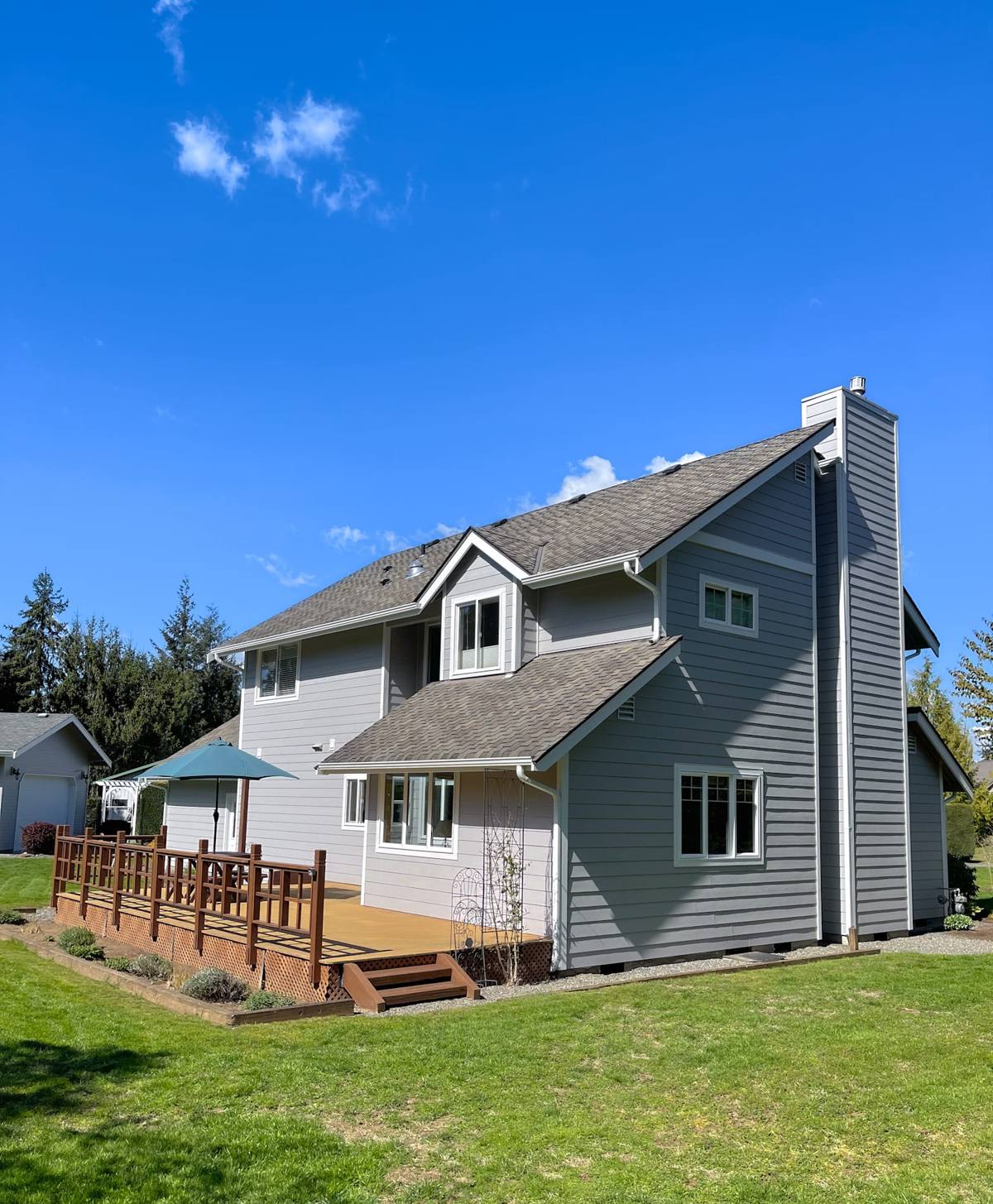
Why We Only Install James Hardie Fiber Cement Here
We don't carry LP SmartSide, vinyl, Cemplank, Allura, or unfinished cedar or spruce siding, and we won't install them even if a homeowner brings us the material. That's not a knock on every one of those products in every application — it's a standard we set because of what we've seen hold up in this climate and what we're willing to warranty our labor against.
- LP SmartSide is an engineered wood (strand) product with a resin-treated surface. It performs fine in drier climates, but any breach in the factory coating — a cut edge, a fastener hole, a scuff — exposes wood fiber to moisture, and Sudden Valley's shaded, damp conditions are exactly the environment where that kind of edge exposure turns into swelling and delamination over time.
- Vinyl siding is inexpensive and low-maintenance in the sense that it doesn't rot, but it doesn't slow moss and algae growth, it can crack in the cold snaps we get off the Fraser Valley outflow, and it isn't rated for the same fire resistance as fiber cement.
- Cemplank and Allura are also fiber cement, and reasonable products on paper. We standardized on James Hardie specifically for the ColorPlus factory finish, the HZ5 formulation engineered for this Pacific Northwest moisture zone, and a manufacturer warranty structure we've found easiest to actually use when something needs to be addressed years down the road.
- Bare cedar or primed spruce siding looks great fresh, but it needs a repaint or re-stain cycle every few years in this climate to keep water out, and in a shaded lot like most Sudden Valley properties, that cycle comes faster, not slower.
Fiber cement is portland cement, sand, and cellulose fiber pressed and cured into a plank or panel. It doesn't rot, it doesn't feed insects, it's non-combustible, and — critically for this neighborhood — it doesn't swell or delaminate the way wood-based products can when it stays damp for extended stretches under tree cover.
What a Correct Fiber Cement Job Requires Out Here
Clearance and Drainage Come First
James Hardie's own installation instructions call for a minimum clearance between the bottom of the siding and grade, roofing, decks, and paved surfaces — typically several inches, more where soil or mulch beds sit against the foundation. On heavily landscaped Sudden Valley lots with retaining walls, sloped yards, and mature planting beds close to the house, that clearance gets ignored more often than it should. We check it on every wall, every time, because a job that looks fine on install day but violates clearance will trap moisture against the bottom course within a season or two.
Flashing and Water Management
Fiber cement itself is highly moisture-resistant, but the siding system as a whole is only as good as the flashing, house wrap, and window/door integration behind it. On shaded, damp lots, we pay particular attention to head flashing above windows and trim, kick-out flashing where roof lines meet walls, and proper weather-resistant barrier lapping — because on a home that stays damp longer than most, any gap in the water management plan gets exploited more thoroughly than it would on a sunnier lot in town.
Fastening and Gaps
Hardie planks need to be fastened per the manufacturer's schedule — correct nail or screw type, correct spacing, correct penetration into framing — and joints need the gaps and caulking (or Hardie's engineered joint approach) that let the material expand and contract without cracking finish or opening seams that moss and water can work into.
Ventilation Behind the Cladding
On heavily shaded walls we often recommend a rainscreen or drainage-gap approach behind the siding rather than direct-to-sheathing installation. It costs a bit more up front, but it gives any moisture that does get behind the cladding a path to drain and dry instead of sitting against the wall assembly — which matters more on a lakeside, tree-covered lot than it does on an open, sunny one.
How Our Sudden Valley Jobs Actually Run
- On-site assessment. We walk the whole exterior, not just the wall the homeowner called about — checking existing clearance, trim condition, current moss/algae extent, and any signs of moisture already behind the current siding.
- Scope and product selection. We recommend plank profile, exposure width, and HZ formulation based on which walls face the lake, which sit in deep shade, and which get real sun.
- Tear-off and sheathing check. Old siding comes off and we inspect sheathing underneath before anything new goes up — this is where hidden moisture damage from years of a damp microclimate shows up, and it needs to be dealt with before new siding goes on top of it.
- Weather-resistant barrier and flashing. House wrap, window and door flashing, and any rainscreen furring go in next, with extra attention on north- and east-facing walls that stay wet longest.
- Siding installation. Planks or panels go up to Hardie's fastening and clearance specifications, trim and corners get installed, and joints are finished per the product line's system.
- Final walk-through. We review the finished exterior with the homeowner, confirm clearances at grade and decks, and go over the ColorPlus finish warranty and basic care.
Choosing the Right Hardie Line for a Shaded, Wet Lot
| Product Line | Best Fit | Why It Matters in Sudden Valley |
|---|---|---|
| HardiePlank (HZ5 formulation) | Most walls, standard lap siding | Formulated for the Pacific Northwest moisture zone; the default choice for the bulk of the exterior |
| HardieShingle | Accent gables, dormers | Sheds water well on steep, small roof-adjacent sections common on wooded lots |
| HardieTrim | Corners, window/door surrounds, fascia | Matches expansion behavior to the field siding so trim lines don't open up over time |
| HardiePanel | Accent walls, garages, some modern facades | Fewer horizontal joints for water to find on simpler wall sections |
What Drives Cost on a Sudden Valley Home
| Factor | Why It Moves the Number |
|---|---|
| Wall access and lot slope | Steep, wooded, or terraced lots common around the lake take longer to stage and scaffold safely |
| Sheathing condition | Hidden moisture damage found during tear-off adds repair scope before new siding can go on |
| Rainscreen / drainage gap | Recommended on deeply shaded walls; adds material and labor but reduces long-term moisture risk |
| Trim and detail complexity | Multiple gables, dormers, and window surrounds add cutting and flashing time |
| Color and finish selection | Factory ColorPlus finishes vs. field-painted finishes affect both cost and long-term touch-up needs |
We give a written, walk-through-based estimate for every job — we don't quote fiber cement work off a phone call or a satellite photo, because lot conditions out here vary too much house to house.
Living With Fiber Cement Siding in a Moss-Heavy Microclimate
Correctly installed Hardie siding is low-maintenance, not no-maintenance. In a community with as much shade and standing humidity as Sudden Valley, a little seasonal attention goes a long way toward keeping the ColorPlus finish looking like it did on install day.
- Rinse shaded, moss-prone walls with a garden hose once or twice a year — a soft wash, not a pressure washer aimed directly at the siding, which can force water behind joints and trim.
- Keep gutters clear so overflow doesn't run down the wall face and feed algae growth on the siding below.
- Trim back branches and shrubs that keep a wall in constant shade or brush directly against the siding.
- Check caulking at trim joints and penetrations every year or two — caulk fails before the siding does, and it's the cheapest thing on the house to stay ahead of.
- Watch the bottom courses near grade, decks, and planting beds for any buildup of soil, mulch, or debris that closes up the clearance gap over time.
Why a Crew That Already Works This Neighborhood Matters
Sudden Valley isn't a subdivision you drive through on the way to somewhere else — it's a specific set of conditions: lake-effect humidity, deep shade on certain lots, steep and terraced yards, and a moss season that outlasts most of the calendar year. A crew that's worked here before already knows to check for these things without being told, has a feel for which walls typically need a rainscreen versus which don't, and isn't guessing at access and staging on a sloped, wooded lot for the first time on your job. That local pattern-recognition is the difference between a siding job that looks right on day one and one that's still performing correctly in year fifteen.
We're a Bellingham-based crew, and Sudden Valley and the surrounding Lake Whatcom-area neighborhoods are territory we work regularly, alongside jobs closer to Bellingham Bay where the same rainy, shaded Whatcom County climate shows up in slightly different ways. If your siding is showing moss buildup, soft spots, or failing paint, we'll walk the exterior with you, give you a straight read on what's actually going on, and put together a written estimate for James Hardie fiber cement siding sized to your home and your lot — no pressure, and no charge for the visit.