 Bellingham
 Asphalt Shingle Roofing Built for Happy Valley's Weather
Happy Valley sits close enough to Bellingham Bay that salt-laden air reaches the neighborhood's rooftops year-round, and the tree cover that makes the area so livable also means shade, moisture, and organic debris sitting on shingles for months at a time. Add in Whatcom County's long wet season, where driving rain off the Sound and steady drizzle can keep a roof damp for weeks straight, and you have a climate that is genuinely hard on asphalt shingles if the roof underneath wasn't built to handle it. We work on Happy Valley roofs regularly, and the patterns repeat: premature granule loss on west-facing slopes, moss colonies on shaded north sides, and soft spots where old underlayment gave out years before the shingles on top showed obvious wear.
A correctly installed asphalt shingle roof can handle all of that. The issue is rarely the shingle itself — it's usually what's underneath it, how it was flashed, and whether the roof was allowed to breathe. This page covers what an asphalt shingle roof needs to hold up in Happy Valley specifically, what a proper installation or repair involves, and how our process works from first look to final walk-through.
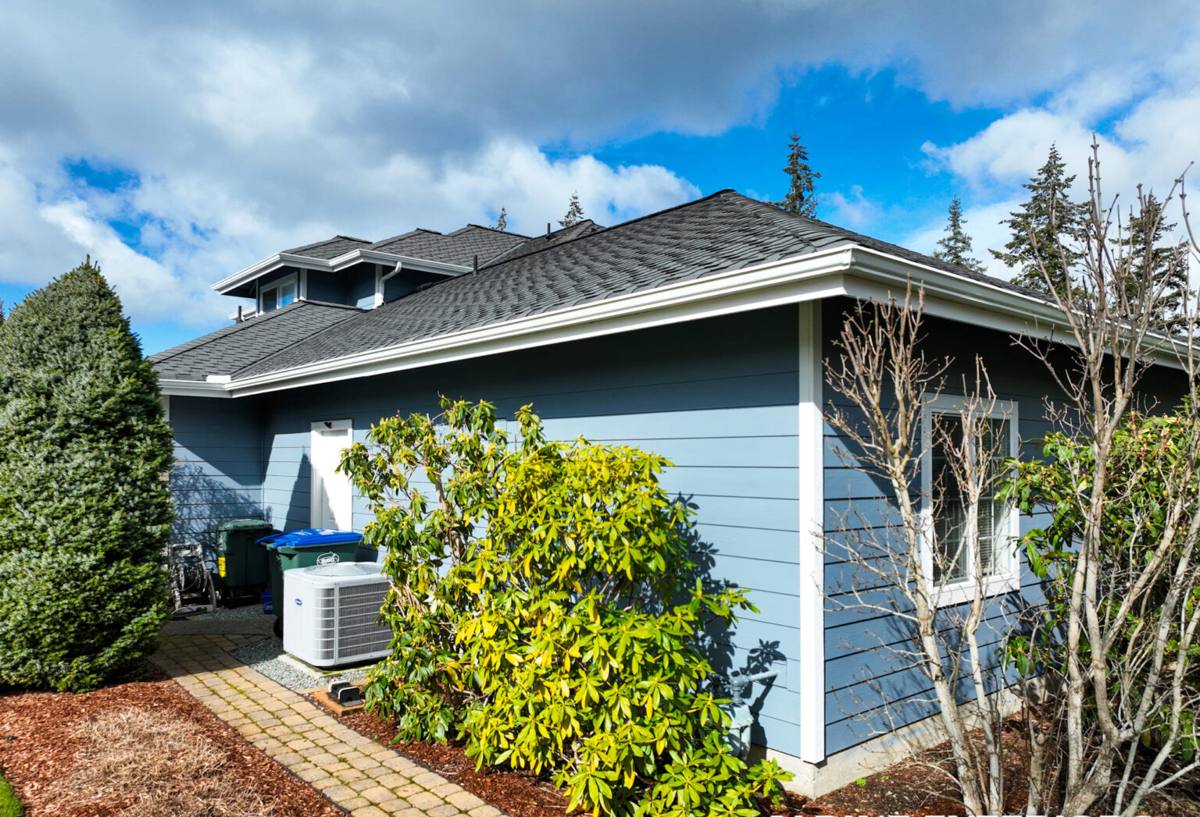
Why Happy Valley's Conditions Are Tougher on Shingles Than They Look
Salt Air and Moisture
Proximity to the bay means airborne salt settles on roofing surfaces along with everything else. On its own, salt doesn't destroy asphalt shingles the way it corrodes bare metal, but it does accelerate the breakdown of exposed metal flashing, fasteners, and vent components if they aren't rated for coastal exposure. Combined with near-constant moisture, unprotected metal on a roof in this area corrodes faster than the same materials would fifty miles inland.
Tree Canopy and Moss
Happy Valley's mature trees are a big part of the neighborhood's character, but overhanging branches drop needles, leaves, and seed debris onto roofs constantly. That debris traps moisture against the shingle surface, and moisture plus shade is exactly what moss and algae need to take hold. Once moss establishes itself, it doesn't just sit on top of the roof — it works its way under shingle tabs, lifts them slightly, and creates a path for water to get underneath. A moss-covered roof is often a roof that's losing its watertight seal from below, even if it still looks intact from the ground.
Sustained Rain, Not Just Volume
It's not only how much rain falls — it's how long the roof stays wet. Whatcom County's rainy season means asphalt shingles, underlayment, and flashing can stay saturated or damp for extended stretches rather than getting a quick soak-and-dry cycle. Any weak point in the roofing system — a poorly sealed nail, a gap in step flashing, worn boot flashing around a vent pipe — has more time and more opportunities to let water in.
What a Correct Asphalt Shingle Roof Needs Here
A shingle roof that's going to last in this environment isn't just about which shingle brand or color you pick. It's a system, and every layer matters.
- Ice-and-water shield at eaves and valleys — a self-adhering waterproof membrane at the roof's most vulnerable points, where water concentrates and moss tends to build up first.
- Synthetic or felt underlayment across the full deck — the backup waterproofing layer that has to perform if wind-driven rain gets past the shingles themselves.
- Properly lapped step and counter-flashing — around chimneys, dormers, and any wall-to-roof transition, installed in the correct sequence with the underlayment, not caulked over as an afterthought.
- Algae-resistant (AR) shingles — most major manufacturers now offer shingles treated with copper-releasing granules that resist algae and moss growth; on a shaded, moisture-heavy lot this is worth specifying rather than treating as optional.
- Balanced attic ventilation — intake at the eaves and exhaust at the ridge, so moisture-laden air escapes the attic instead of condensing against the underside of the deck.
- Corrosion-resistant fasteners and flashing metal — appropriate for coastal air exposure rather than standard-grade material that pits and rusts early.
Skip any one of these and the roof will likely still look fine for a season or two — but the failures that show up down the line almost always trace back to one of these details being shortcut during installation.
Roof Age and Condition: When Repair Makes Sense vs. Replacement
| Situation | Repair Usually Makes Sense | Replacement Usually Makes Sense |
|---|---|---|
| Isolated moss patches, roof under 12 years old | Yes | No |
| Widespread granule loss, curling shingles | No | Yes |
| One or two active leaks near flashing points | Yes | No |
| Soft or spongy decking found under shingles | Rarely — depends on extent | Yes |
| Roof at or past manufacturer's rated lifespan | No | Yes |
We'll always tell you honestly which side of that table your roof falls on. A repair that only buys a homeowner one more wet season isn't a good use of money, and we'd rather say so upfront than let a small job turn into a bigger problem later.
Our Process for Happy Valley Roofing Projects
- On-site inspection. We get on the roof (not just a ground-level look) and check the deck, flashing, ventilation, and shingle condition, including areas shaded by tree cover where moss and moisture damage tend to hide.
- Honest scope and options. We explain what we found in plain terms — what needs to happen now, what can wait, and what your realistic options are, including repair versus full replacement where relevant.
- Material selection. We walk through shingle lines, algae-resistance ratings, and warranty structures so you're choosing based on what fits your home and budget, not a sales pitch.
- Protection and prep. Landscaping, gutters, and siding get covered or protected before tear-off begins.
- Tear-off and deck inspection. Old roofing comes off down to the deck, and we check for soft or damaged sheathing before anything new goes down — this is the point where hidden moisture damage gets found and fixed, not covered up.
- Underlayment, flashing, and shingle installation. Installed in the correct order, with attention to the eave, valley, and penetration details that matter most in this climate.
- Ventilation check. We confirm intake and exhaust are balanced so the new roof isn't fighting trapped moisture from day one.
- Cleanup and final walk-through. Magnetic sweep for stray fasteners, full site cleanup, and a walk-through so you know exactly what was done and what maintenance to expect going forward.
Maintenance That Actually Extends Roof Life Here
Even a well-installed roof needs some upkeep in a neighborhood with this much tree cover and moisture. None of this is complicated, but it's easy to let slide.
- Keep gutters clear of needles and leaf debris, especially before the rainy season sets in.
- Have overhanging branches trimmed back where they touch or shade large sections of the roof.
- Watch for early moss growth in shaded valleys and along north-facing slopes — catching it early is far cheaper than dealing with lifted shingles later.
- Schedule a roof check every couple of years, or after any major windstorm, even if nothing looks obviously wrong from the ground.
- Avoid pressure washing shingles — it strips granules and shortens the roof's life; soft-wash or manual removal methods are safer for moss and algae.
Why a Crew That Already Works Happy Valley Matters
Roofing crews who work this specific area regularly build a working knowledge of things that don't show up in a general estimate: which streets sit in heavier shade pockets, how local permitting and inspection typically go, what the tree canopy does to a roof over ten or fifteen years, and which flashing and fastener grades hold up against the salt air coming off the bay. That experience shows up in fewer surprises during tear-off and fewer callbacks after the job is done. It also means we're not guessing at what "normal" looks like for a roof in this environment — we've seen enough of them to know the difference between cosmetic moss and a roof that's actively failing underneath it.
We also stand behind our work with straightforward workmanship warranties and installation practices that match manufacturer requirements, so the material warranty on your shingles stays valid — something that's only true if the roof was installed correctly in the first place.
Get a Free, No-Pressure Estimate
If your Happy Valley roof is showing moss, granule loss, or you just want an honest opinion on how much life it has left, we're happy to take a look. Use the form below to request a free estimate — no pressure, no obligation, just a straight answer about what your roof actually needs.