 Bellingham
 Roofing in Happy Valley: A Different Climate Problem Than Most of the Country
Happy Valley sits close enough to Bellingham Bay that homes here deal with a combination most roofing crews from outside the area don't think about until it's too late: salt-laden air off the water, long stretches of driving rain pushed in on southwest wind, and a moss season that can run eight or nine months out of the year. None of these are dramatic on their own. Together, over ten or fifteen years, they're what actually determines whether a roof makes it to its rated lifespan or starts failing early.
A new roof installation in this neighborhood isn't just about swapping old shingles for new ones. It's about building an assembly — decking, underlayment, flashing, ventilation, and the finish material — that's specifically suited to what Whatcom County weather does to a roof year after year. That's the difference between a roof that looks fine for two years and one that actually performs for its full service life.
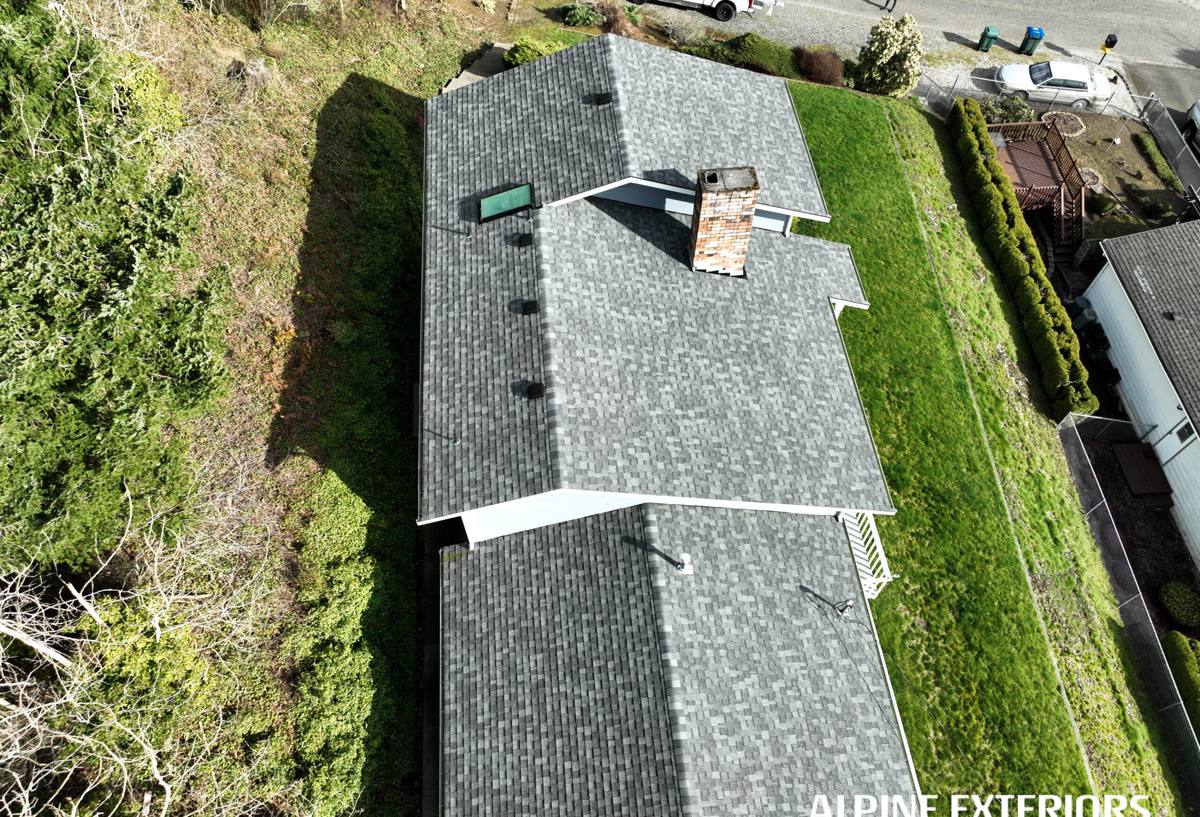
What Salt Air, Rain, and Moss Actually Do to a Roof
Salt Air
Airborne salt from the bay accelerates corrosion on any exposed metal — nail heads, flashing, vent stacks, gutter hardware. Cheap or under-coated fasteners and flashing corrode faster here than they would twenty miles inland, and once a nail head rusts through or a flashing seam pits, that's a leak path waiting to happen. This is one of the biggest reasons material and fastener selection matters more in Happy Valley than in a lot of other parts of the county.
Driving Rain
Bellingham doesn't just get a lot of rain — it gets wind-driven rain that hits roof planes at an angle instead of falling straight down. That matters because it pushes water sideways and upward under shingle edges, into valleys, and around penetrations like vent pipes and chimneys in ways that vertical rain doesn't. A roof detailed for straight-down rain in a drier climate will often leak here at exactly those spots — valleys, low-slope transitions, and flashing laps — within a few wet seasons.
Moss
Shaded, north-facing, and lower-slope roof sections in Happy Valley hold moisture long enough for moss to take hold, and once established, moss roots work into shingle granules and mat layers, holding water against the roof surface and lifting shingle edges. Left alone, it shortens a roof's life considerably and it's one of the most common reasons we get called out to look at a roof that's only twelve or fifteen years old but already needs replacing.
Signs a Happy Valley Home Needs a New Roof, Not Another Repair
Repairs make sense when a roof has isolated damage and years of life left. A full replacement makes sense once the underlying materials are worn out everywhere, not just in one spot. Here's what tells us which situation a home is actually in:
- Granule loss heavy enough that shingles look patchy or bald, especially on south and west-facing slopes
- Shingles that are cupping, curling, or cracking across multiple roof planes, not just one area
- Persistent moss or dark streaking that comes back within a season or two of cleaning
- Soft spots or visible sagging when walked on or viewed from the ground
- Daylight visible through the roof deck from inside the attic
- Rusted, lifted, or missing flashing around chimneys, skylights, or vent pipes
- Interior staining on ceilings or in the attic that shows up after wind-driven rain specifically
- A roof that's already had two or more rounds of patch repairs in the last five years
If a roof is showing two or three of these at once, patching individual spots usually just delays the same conversation by a year or two — often at a higher total cost than doing the replacement once, correctly.
What a Correctly Installed Roof Actually Involves
A lot of what determines whether a roof lasts comes from layers homeowners never see once the job is done. Here's what should happen on every new roof install in this area, regardless of which material gets chosen:
Tear-Off and Deck Inspection
Full tear-off to bare decking, not layering new material over old. This is the only point in the entire job where the deck itself — the plywood or OSB the whole roof sits on — can actually be inspected. Any soft, delaminated, or water-damaged sections get replaced before anything new goes down. Skipping this step is how a brand-new roof ends up sitting on a compromised deck.
Underlayment and Ice-and-Water Protection
A synthetic underlayment layer across the whole roof, with self-adhering ice-and-water shield membrane at the vulnerable points — eaves, valleys, around chimneys and skylights, and low-slope transitions. Given how much of Happy Valley's roof damage traces back to wind-driven rain finding its way under shingle edges, this underlayment layer is doing a lot of the actual waterproofing work, not just the visible shingle surface.
Flashing
New metal flashing at every penetration and transition — chimneys, vent stacks, skylights, sidewalls, valleys. Given the corrosive effect of salt air here, we don't reuse old flashing on a new roof install. It's a small cost relative to the whole job and it's one of the most common failure points on roofs that leak within the first few years.
Ventilation
Balanced intake and exhaust ventilation so the attic can actually breathe. Poor ventilation traps moisture, which shortens shingle life from underneath and contributes to moss growth and rot at the deck. This gets checked and corrected as part of the install, not treated as a separate project.
Finish Material
The visible roofing material — shingles, metal panels, or another system — installed to manufacturer spec with proper nailing patterns, exposure, and overlap for this region's wind and rain exposure.
Choosing a Roofing Material for a Happy Valley Home
There's no single "best" roofing material — the right choice depends on the home's roof slope, budget, and how much long-term maintenance the homeowner wants to take on. Here's how the common options compare for this specific climate:
| Material | How It Handles This Climate | Maintenance | Typical Lifespan |
|---|---|---|---|
| Architectural asphalt shingle | Solid performance with algae-resistant granules; needs correct underlayment detailing at valleys and eaves for driving rain | Periodic moss treatment and gutter/debris clearing | 25–30 years |
| Standing seam metal | Sheds wind-driven rain very well; minimal surface for moss to anchor to; needs marine-grade or coated fasteners near the bay | Low; occasional inspection of seams and fasteners | 40–50+ years |
| Composite/synthetic shingle | Good moisture resistance, resists moss better than standard asphalt | Low to moderate | 30–50 years, varies by product |
| Cedar shake | Attractive but holds moisture longer, which shortens life in this climate and raises moss/rot risk without diligent upkeep | High; regular treatment and moss control required | 20–30 years with upkeep |
We'll walk through these options honestly, including the maintenance commitment each one actually requires here — not just the sales pitch. A roof that fits the homeowner's tolerance for upkeep is one that stays looking good and performing well, rather than becoming a recurring chore.
Our Installation Process
- On-site inspection and estimate — we walk the roof, check the attic and decking where accessible, and give a straight assessment of condition and options
- Material and scope selection — we go over material choices, ventilation needs, and any deck repair likely to be needed, with a clear written estimate
- Scheduling around weather — in Whatcom County, timing a tear-off against the forecast matters; we plan the job so the deck isn't left exposed to rain
- Tear-off and deck inspection — full removal of the old roof, with any damaged decking identified and replaced
- Underlayment, flashing, and ventilation installed — the layers that do the real waterproofing and moisture-management work
- Finish material installed to spec — proper nailing, exposure, and overlap for the chosen product
- Final walkthrough — we review the completed roof with the homeowner and clean the site thoroughly before we leave
What Drives the Cost of a New Roof
| Factor | Why It Matters |
|---|---|
| Roof size and number of planes | More material and more labor hours; complex rooflines take longer to detail correctly |
| Pitch and accessibility | Steeper or harder-to-access roofs require more safety setup and time |
| Deck condition | Rotted or delaminated decking found during tear-off adds material and labor to replace |
| Material choice | Asphalt shingle, metal, and composite systems carry different material and labor costs |
| Number of penetrations | Chimneys, skylights, and multiple vent stacks each need individual flashing work |
| Ventilation upgrades needed | Adding or correcting intake/exhaust ventilation is sometimes needed and adds to scope |
We give a written estimate that breaks these factors down so a homeowner can see exactly what they're paying for, rather than a single lump number with no explanation behind it.
Why a Crew That Already Works Happy Valley Matters
Roofing crews that mostly work drier or inland climates tend to under-detail the things that matter most here — underlayment coverage at valleys, flashing material selection near salt air, and ventilation balance for a moss-prone climate. A crew that regularly works Bellingham and Whatcom County neighborhoods like Happy Valley already knows which roof details need extra attention on this side of the state, and schedules tear-offs with realistic respect for how fast weather can turn here.
Local experience also means faster response if something needs a follow-up look after the job — no long drive, no scheduling a crew back in from out of the area. That matters over the life of a roof, not just on install day.
Get a Straight Answer for Your Roof
If your roof in Happy Valley is showing its age — moss that keeps coming back, granules in the gutters, or a repair history that's starting to add up — we'll come take an honest look and walk you through what it actually needs. Reach out below for a free, no-pressure estimate.