 Bellingham
 Windows Built for Happy Valley's Weather
Happy Valley sits close enough to Bellingham Bay and the surrounding hillside tree cover that its homes take a specific kind of beating: salt-tinged air off the water, wind-driven rain that finds every gap in a window frame, and a moss season that stretches from fall through spring. None of that is unusual for Whatcom County, but it does mean a window installed here needs to handle more than a window installed somewhere dry and inland. We've replaced and installed windows across this neighborhood long enough to know which failure points show up first, and we build our installation process around preventing them rather than reacting to them later.
A window is only as good as the way it's set into the wall. The unit itself — vinyl, fiberglass, or wood-clad — matters, but in this climate the flashing, sealant, and drainage details around it matter just as much. That's the part of the job that's invisible once the trim is back on, and it's also the part that determines whether you're dealing with a soft sill or a stained wall in five years.
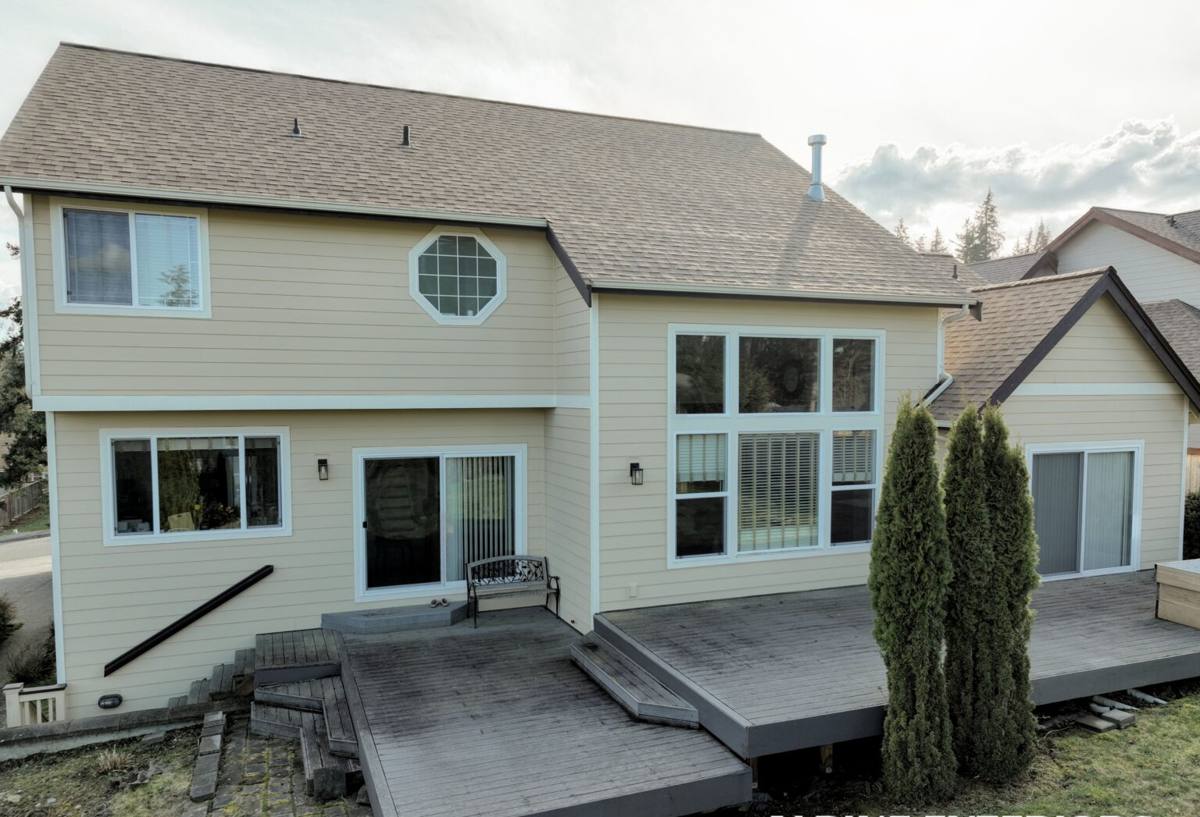
What Local Conditions Do to Windows Over Time
Salt Air and Metal Components
Proximity to the bay means airborne salt settles on everything, including window hardware. Cheaper hinges, cranks, and locks corrode faster here than they would twenty miles inland. We pay attention to hardware quality and finish specifically because of this — it's a small cost difference that shows up as a big difference in how smoothly a window operates ten years down the road.
Driving Rain and Wind-Driven Water
Bellingham's rain rarely falls straight down. Storms off the Strait push rain sideways into west- and south-facing walls, which puts real pressure on window flashing and the seal between the frame and the rough opening. A window that would be fine in a calm climate can leak here if the flashing sequence isn't done correctly — water finds the path of least resistance, and on a windy day that path can run uphill along a poorly lapped flashing edge.
Moss, Shade, and Moisture Retention
Many Happy Valley lots have mature tree cover, which is part of the neighborhood's character but also means more shade, more standing damp, and a longer moss season on siding, trim, and sills. Moisture that would evaporate quickly in full sun can sit against a window sill or under trim for days in a shaded yard. Over time that keeps wood trim wetter than it should be and accelerates rot at the most vulnerable points — sill corners and the bottom edge of the frame.
Signs Your Windows Are Due for Replacement
- Soft, spongy, or discolored wood at the sill or bottom corners of the frame
- Fogging or a visible haze between the panes of double-pane glass, meaning the seal has failed
- Drafts you can feel near the frame even when the window is fully latched
- Windows that are hard to open, close, or lock — often from swelling, warping, or corroded hardware
- Visible gaps, cracked caulking, or peeling paint concentrated around the window opening
- Condensation forming on the inside of the glass regularly during cooler months
- Noticeable temperature difference near the window compared to the rest of the room
Any one of these on its own isn't necessarily an emergency, but a few of them together usually mean the window and its surrounding flashing are past the point where caulk and weatherstripping will fix the problem.
What a Correct Installation Actually Involves
Swapping the sash inside an existing frame — sometimes called a "pocket" or insert replacement — is faster and cheaper, but it only works if the existing frame and flashing are still sound. In a lot of older Happy Valley homes, especially ones with any history of moisture at the sill, that's not the case, and a full-frame replacement is the honest recommendation. Here's what we check and do on a full-frame job:
- Remove the old window and inspect the opening. This is where we find out whether there's hidden rot in the sill, king studs, or sheathing that needs to be addressed before a new window goes in — putting a new window into a compromised opening just hides the problem.
- Repair or rebuild the rough opening as needed so the new unit has solid, square, and dry framing to sit in.
- Install flashing in the correct shingle-lap sequence — sill pan first, then side flashing, then head flashing over the top — so water is directed out and down, never trapped behind the siding.
- Set the window level, plumb, and square, shimming as needed so the sash operates smoothly and the seal is even all the way around.
- Insulate the gap between the frame and the rough opening without overpacking it, which can bow the frame and cause operational problems.
- Seal and caulk with the right exterior-grade product at the right joints — not everywhere, since over-caulking can trap moisture where it needs to drain instead.
- Reinstall or replace trim and touch up siding so the finished look matches the rest of the house.
Choosing the Right Window for This Climate
There's no single "best" window brand or material — the right choice depends on the home, the budget, and how much upkeep you want to take on. What we won't do is install a product we know is a poor match for wind-driven rain and long damp seasons just because it's cheaper up front. Here's how the common options stack up for a neighborhood like Happy Valley:
| Frame Material | Moisture Behavior | Maintenance | Typical Fit |
|---|---|---|---|
| Vinyl | Doesn't rot or corrode; performs well against driving rain when installed correctly | Low — occasional cleaning | Most budgets, most homes, especially where salt air is a factor |
| Fiberglass | Very stable, resists warping and moisture damage well | Low | Homes wanting a longer-term investment with minimal upkeep |
| Wood | Attractive but vulnerable to rot if any seal fails, especially under tree cover | High — regular painting/sealing needed | Homes prioritizing a traditional look and willing to maintain it |
| Wood-clad (wood interior, metal or vinyl exterior) | Better exterior moisture resistance than solid wood, interior still needs care | Moderate | Homes wanting a wood look inside without full wood maintenance outside |
| Aluminum | Prone to condensation and corrosion in salt-air, high-moisture settings unless thermally broken | Moderate to high | Limited fit for this climate unless spec'd carefully |
For most Happy Valley homes, vinyl or fiberglass frames are the practical choice — they hold up to the salt air and rain without demanding a maintenance schedule. Wood and wood-clad windows can absolutely work here, but we'll be direct about the upkeep that comes with them, because a wood sill that gets neglected in a shaded, damp yard is exactly the failure point we described above.
Glass Options Worth Understanding
Double-pane, low-E glass is the standard for this region now, and for good reason — it cuts heat loss and helps manage condensation on cold, damp mornings, which are common here. Triple-pane glass is available and does offer a further step up in insulation and sound dampening, but it adds cost and weight, and for most Happy Valley homes double-pane low-E strikes the right balance. Argon or krypton gas fill between the panes is a low-cost upgrade that improves insulation further and is worth including on most jobs.
Why a Crew That Knows Happy Valley Matters
Window installation looks similar on paper everywhere, but the details that matter shift with the site. A crew that's worked this neighborhood knows which orientations catch the worst of the wind-driven rain, expects to find shaded, damp sill conditions on tree-covered lots, and doesn't need to relearn how salt air treats hardware and flashing on every job. That familiarity shows up in fewer surprises during the tear-out and in flashing details that are sized for what this specific location actually deals with, not a generic installation spec.
It also matters for permitting and code compliance — window replacement in Bellingham and Whatcom County can trigger permit requirements depending on scope, especially with full-frame replacements or changes to a window's size or egress function. A local crew handles that process routinely rather than treating it as a surprise mid-project.
What to Expect From Our Process
- On-site assessment of your current windows, framing condition, and any moisture history
- An honest recommendation on insert versus full-frame replacement, with reasoning explained
- A written estimate covering materials, labor, and any framing repair that's needed
- A clear installation timeline, including how long your home will have open wall or window cavities
- Cleanup and a final walkthrough so you can check operation and sightlines before we call it done
We keep the number of open exterior openings to a minimum at any given time, which matters in a climate where rain can show up with little warning. Jobs are sequenced to limit exposure, not just to move fast.
Get a Free, No-Pressure Estimate
If your windows in Happy Valley are showing any of the wear signs above, or you're planning ahead before the wet season sets in, we're happy to take a look and give you a straightforward assessment — no pressure, no upsell. Use the form below to request a free estimate.