 Bellingham
 Why Windows in Happy Valley Wear Differently
Happy Valley sits close enough to Bellingham Bay that salt-laden air is a constant, low-grade factor in how exterior materials age. Add in the region's long wet season — months of driving rain off the Salish Sea, followed by the shaded, moisture-holding conditions that grow moss on roofs, siding, and window sills alike — and you get a climate that is genuinely harder on windows than most manufacturers' warranty language assumes. Homes here don't fail because owners neglected them. They fail because the assemblies weren't built or installed with this specific combination of salt, rain volume, and prolonged dampness in mind.
Salt air accelerates corrosion on metal hardware, fasteners, and some aluminum components faster than it would inland. Driving rain — rain pushed sideways by wind rather than falling straight down — finds every weak point in flashing, caulk lines, and window-to-wall transitions. And moss season, which in Whatcom County can run half the year, keeps sills, tracks, and cladding damp long after a storm has passed, giving wood rot and seal failure the time they need to take hold.
What This Means for Older Homes
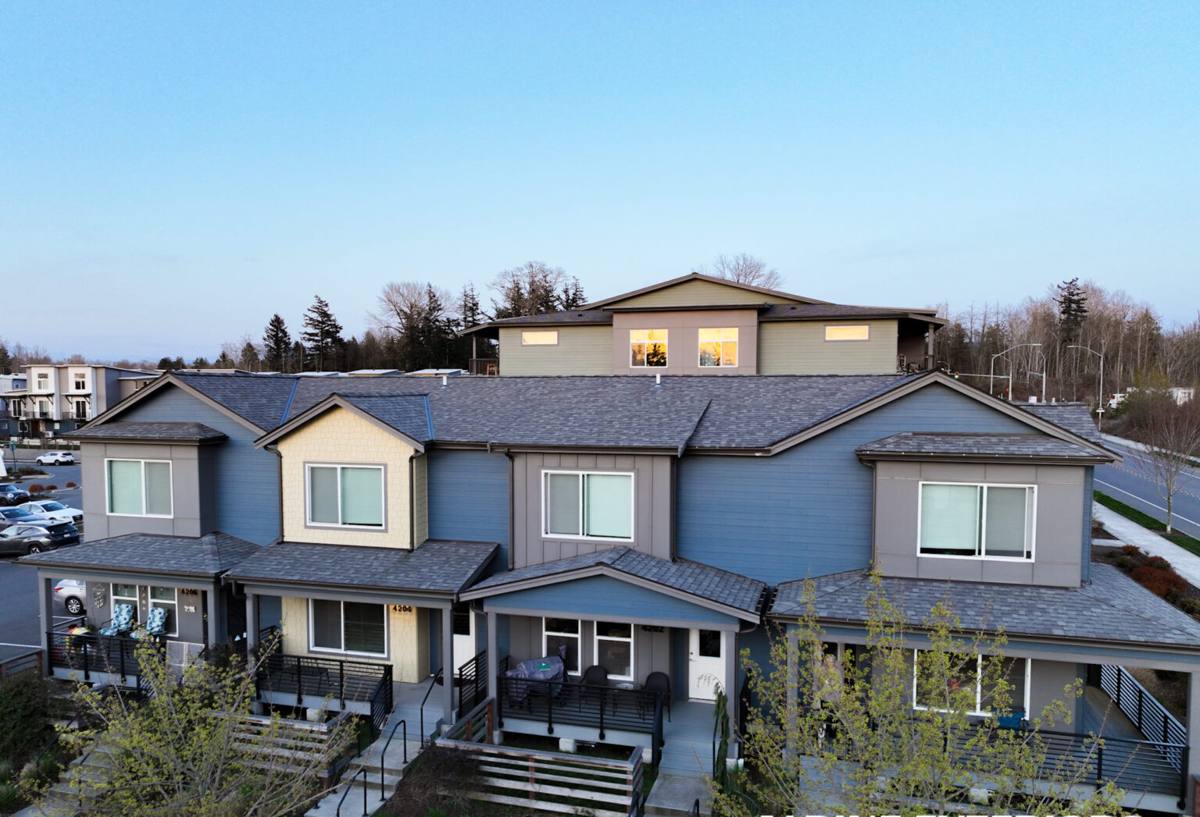
A lot of Happy Valley housing stock includes older single-pane or early dual-pane windows installed before local builders fully accounted for this coastal weather pattern. Original wood frames, aluminum-frame sliders from past decades, and even some early vinyl units are common candidates for replacement — not because the glass itself failed, but because the seals, frame corners, and sill areas gave way to years of wind-driven moisture.
Signs Your Windows Are Due for Replacement
Not every drafty window needs full replacement, and not every foggy pane means the whole unit is shot. Here's how to read the signs honestly:
- Fogging or a visible haze between panes — the seal has failed and the insulating gas or air gap is compromised; this cannot be repaired, only replaced
- Soft, spongy, or discolored wood at the sill or bottom corners — a sign moisture has been sitting there through repeated wet seasons
- Windows that won't stay open, won't latch tight, or rattle in wind — hardware and frame wear common on older units exposed to salt air
- Visible gaps around the frame where caulking has cracked or pulled away, especially on walls that face prevailing wind and rain
- A noticeable draft or cold spot near the window in winter, even with the unit closed and locked
- Moss or green growth building up in the sill track or exterior trim — a sign that area rarely fully dries out
If you're only seeing one or two of these on a single window, a repair or reseal may be reasonable. If it's showing up across multiple windows on the same exposure, that's usually a sign the whole batch is reaching the end of its service life together — they were installed at the same time and have taken the same weather.
What a Correct Window Replacement Job Actually Involves
Window replacement done right is mostly about what happens around the window, not the window itself. In a climate that pushes rain sideways for months at a time, the flashing, sill pan, and sealant details matter as much as the unit you choose.
Removal Without Hidden Damage
Old windows need to come out carefully so we can actually see the condition of the rough opening underneath — the framing, sheathing, and any existing flashing. This is where problems from years of moisture exposure show up, and it's better to find them during removal than to seal a new window over a hidden issue.
Sill Pan and Flashing
A proper sill pan directs any water that does get past the window to the outside, instead of letting it sit against the framing. Flashing tape and house wrap integration need to shingle correctly — each layer overlapping the one below it — so water moving down the wall is shed outward, not trapped behind the new unit. This detail is easy to rush and is exactly the kind of thing that determines whether a window lasts 20 years or fails again in five.
Setting, Shimming, and Sealing
The window needs to sit level, plumb, and square in the opening, shimmed correctly so it doesn't bind or sag over time. Insulation around the frame should be low-expansion foam or backer rod rather than packed too tight, which can bow the frame. Exterior sealant goes on last, and only after the flashing has been given a chance to do its job — sealant is a backup layer, not the only line of defense against Bellingham's rain.
Interior and Exterior Finish
Trim, casing, and interior finish work should match the surrounding wall and hold up to interior humidity, while exterior trim and caulking need to be rated for sustained outdoor moisture exposure, not just splash-and-dry conditions.
Choosing the Right Window for Happy Valley's Climate
There's no single "best" window material — the right choice depends on exposure, budget, and how much upkeep you want to take on. Here's an honest comparison of what we typically see homeowners choosing between:
| Frame Material | How It Handles Salt Air & Rain | Maintenance | Typical Lifespan |
|---|---|---|---|
| Vinyl | Doesn't corrode; performs well against salt air; needs correctly sized frames to avoid warping in direct sun exposure | Low — occasional cleaning of tracks and weep holes | 20-30+ years |
| Fiberglass | Very stable dimensionally; strong resistance to moisture and temperature swings; holds paint well if a custom color is wanted | Low | 30-40+ years |
| Wood (clad exterior) | Good insulating properties; exterior cladding protects the wood from direct rain exposure, but any breach in the cladding needs prompt attention | Moderate — exterior cladding is low-maintenance, but any gaps need to be caught early | 20-30 years with proper care |
| Aluminum | Conducts cold and can corrode faster in salt-air environments unless it has a marine-grade finish | Moderate to high in coastal exposure | Varies widely by finish quality |
Glass Packages Worth Considering
Dual-pane with a low-E coating is the practical baseline for this region — it cuts heat loss and reduces condensation risk on cold, damp mornings. Triple-pane adds further insulation value and can help with sound, which matters more on wind-exposed sides of a property. Argon or krypton gas fill between panes is a modest but real upgrade as long as the seal quality behind it is solid — a good gas fill in a poorly sealed frame won't outperform a well-sealed standard unit.
Our Process, Start to Finish
1. On-Site Assessment
We look at each window individually — exposure, current condition, framing underneath if accessible, and what's actually causing the problem before recommending replacement over repair.
2. Straight Talk on Options
We'll walk through frame material, glass package, and installation approach in plain terms, including trade-offs, so you're choosing based on what fits your home and budget, not a sales script.
3. Careful Removal and Opening Inspection
As described above, we check the rough opening for hidden moisture or framing issues before anything new goes in, and we'll flag anything we find rather than seal over it.
4. Correct Flashing and Installation
Sill pan, flashing integration, shimming, and sealing — done to the standard the climate actually requires, not just the minimum to pass a quick visual check.
5. Finish Work and Cleanup
Interior and exterior trim finished to match, job site cleaned, and a final walkthrough so you know exactly what was done and why.
Why Hiring a Crew That Already Works Happy Valley Matters
A window that performs fine in a drier, more sheltered part of Whatcom County can still underperform on a home exposed to wind off the water and months of moss-season dampness. Crews who work this specific area regularly recognize the wear patterns particular to Happy Valley's exposure — where driving rain typically hits hardest on a given lot, which sill details tend to fail first, and how much margin to build into flashing and sealant choices for a climate that doesn't give surfaces much time to dry out.
That local pattern-recognition is the difference between a window that's simply installed correctly on paper and one that's installed correctly for this exact stretch of Bellingham weather.
What Affects the Cost
Every home and window count is different, but the main cost drivers are consistent:
- Frame material chosen (vinyl and fiberglass typically cost less upfront than clad wood)
- Glass package — dual-pane vs. triple-pane, and whether low-E coatings or gas fill are included
- Condition of the existing opening — hidden rot or framing repair adds labor and materials
- Number of windows replaced at once — doing several together on one visit is generally more efficient than one-off replacements
- Window size and configuration — large picture windows, custom shapes, or operable units with more hardware cost more than standard sliders or double-hungs
- Access — second-story or hard-to-reach windows take more time and equipment
We give straightforward, itemized estimates so you can see exactly where the cost is going, rather than a single lump number with no explanation.
Keeping New Windows Performing Long-Term
Even a well-installed window benefits from basic upkeep in this climate. Clear debris and moss from sill tracks and weep holes periodically so water has a clear path to drain outward. Check exterior caulking annually, since UV exposure and repeated wet-dry cycles are what eventually break sealant down. And keep an eye on any exterior wood trim or cladding for early signs of moisture intrusion — catching a small gap early is far less costly than dealing with rot damage that's had a full wet season to develop.
If your windows in Happy Valley are showing their age or you're planning ahead of the next wet season, we're happy to take a look and give you a straightforward, no-pressure estimate — just fill out the form below.