 Bellingham
 Siding in Columbia Has to Work Against Three Things at Once
Columbia sits close enough to Bellingham Bay that salt-laden air is part of daily weather, not an occasional event. Add Whatcom County's driving, wind-pushed rain and a moss season that can run from late fall through spring, and you have a neighborhood where exterior materials are under near-constant load. Wood-based sidings absorb moisture, hold it, and eventually let it travel into the wall assembly. Vinyl expands and contracts with temperature swings and can warp or crack at the fasteners over time. None of that is a defect in those products so much as a mismatch with what this specific stretch of coastline demands.
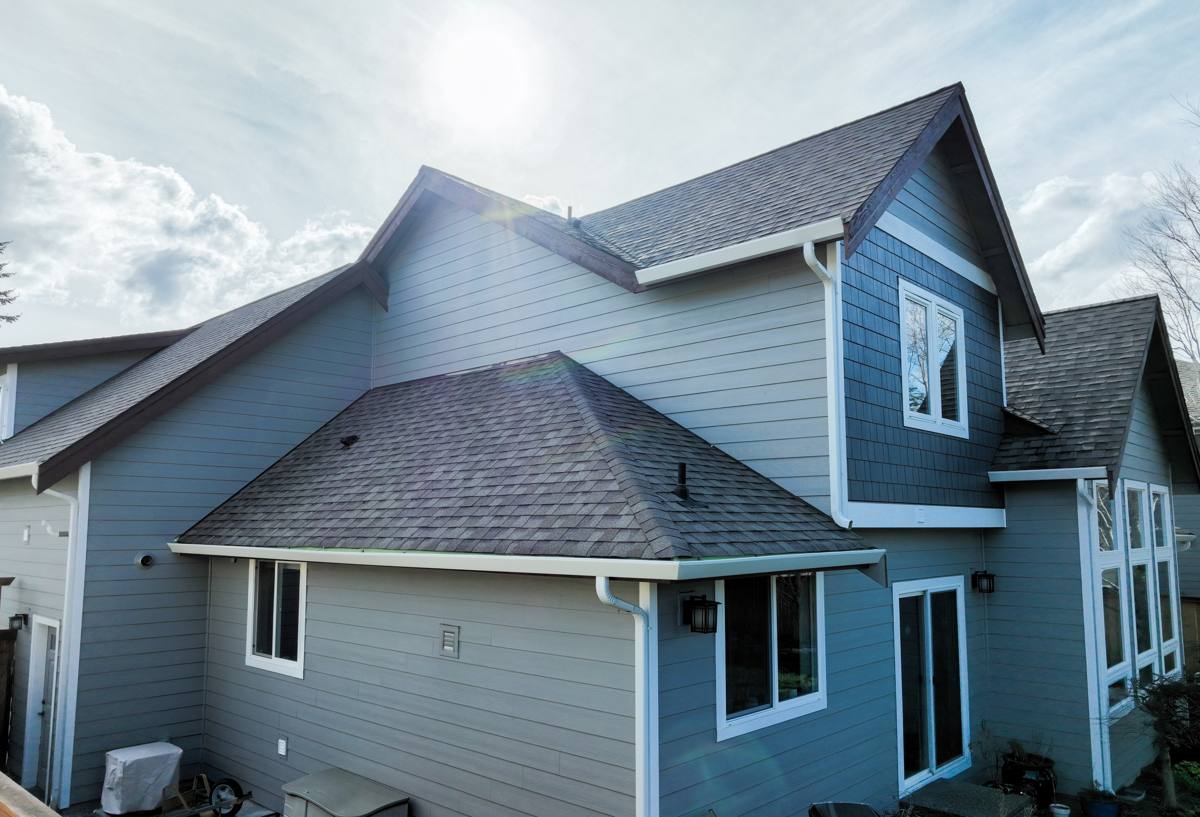
Homes in Columbia range from older, established houses with mature landscaping and tight side yards to newer infill construction. Both types share the same exposure problem: shaded north and west walls that stay damp longer after a storm, and roof lines and fences that funnel wind-driven rain into specific wall sections. A siding decision here isn't cosmetic — it's a moisture-management decision first.
Why Salt Air and Moss Change the Calculus
Salt air accelerates corrosion on fasteners, flashing, and any metal trim that isn't rated for it. It also breaks down surface coatings faster than inland environments, which is why paint jobs in coastal neighborhoods fade and chalk sooner than the same product would a few miles east. Moss and algae need three things to establish: moisture, shade, and a surface they can grip. Wood siding and many low-cost cement boards give moss exactly what it wants, especially on the shaded sides of a lot with mature trees or tight home spacing, common in Columbia.
The practical result: a siding material that looks fine at installation can look tired within five to eight years if it wasn't built for this specific combination of salt, shade, and rain. That's the standard we install against — not the general Pacific Northwest climate, but the coastal-Whatcom version of it.
Why We Standardized on James Hardie for This Climate
We install James Hardie fiber cement exclusively, and Columbia's exposure is a good example of why. Hardie's HZ5 product line is engineered specifically for climate zones with freeze-thaw cycles and high moisture exposure — the Pacific Northwest coast qualifies. Fiber cement doesn't feed moss the way wood does, doesn't rot from the inside out the way untreated or poorly sealed wood products can, and the factory-applied ColorPlus finish is baked on under controlled conditions rather than field-applied, which matters enormously in a place where you can't count on a dry week to paint.
We're not going to tell you every other product on the market is worthless — that's not honest, and it's not our call to make about a manufacturer's engineering. What we will say is that after years of doing exterior work in this specific climate, we stopped installing products that require more maintenance than a coastal Whatcom homeowner should reasonably have to do, and Hardie's combination of non-combustible material, factory finish, and climate-specific engineering fit what we were willing to warranty our labor against.
What ColorPlus Actually Buys You Here
The factory finish is baked on in multiple coats under controlled temperature and humidity, then cured — something that's very hard to replicate with a job-site paint crew working around Bellingham's rain windows. That finish is formulated to resist the fading and chalking that salt air and UV exposure cause faster near the water. It also comes with its own finish warranty separate from the substrate warranty, which is worth understanding before you assume "warranty" means one blanket promise.
What a Correct Installation Involves
Fiber cement siding is only as good as the installation behind it. This is where a lot of jobs — on any brand — go wrong, and it's the part homeowners can't see once the siding is up.
- Proper drainage plane and weather-resistant barrier installed and lapped correctly, not just stapled up as an afterthought
- Rainscreen or furring strips where the wall assembly calls for one, giving water a path to drain and dry rather than sitting against the back of the siding
- Correct fastener type and spacing — coastal exposure means corrosion-resistant fasteners aren't optional
- Flashing at every window, door, and roofline intersection, installed to shed water outward rather than trap it
- Manufacturer-specified gaps at butt joints and trim, caulked with a sealant rated for the joint, not just whatever tube was on the truck that day
- Starter strip and clearance from grade, decks, and roof lines set to Hardie's published minimums so the bottom edge of the siding isn't sitting in standing water or splashback
- Field-cut edges sealed or primed per manufacturer instructions before installation, not left raw
Skip any one of these and you can end up with a wall that looks right for a year or two before moisture finds the gap. This is the difference between a Hardie installation that hits its 30-plus-year expectation and one that develops problems well ahead of schedule — and it's why we treat installation detail as seriously as material selection.
What We Commonly Find on Older Columbia Homes
A fair number of the homes we look at in this neighborhood have had at least one prior exterior update — sometimes siding installed over existing siding, sometimes trim work that wasn't flashed correctly the first time. When we tear off old material, we're checking sheathing condition, looking for soft spots around window openings, and checking whether the original weather barrier (if there is one) is still intact. Salt air and long moss seasons don't just affect the siding surface — over enough years, they can affect what's underneath it if the wall wasn't drying properly.
This is also where overlay jobs — installing new siding directly over old without addressing what's underneath — cause the most long-term trouble. It can look like a faster, cheaper fix, but it buries any existing moisture problem instead of solving it. We don't recommend it on homes in this kind of exposure.
Our Process for a Columbia Project
1. On-Site Assessment
We walk the exterior, check the condition of existing siding and trim, look at drainage around the foundation, and identify which walls take the most weather based on orientation and shading. Columbia's tighter lots and mature trees mean shade patterns matter more here than in more open parts of Bellingham.
2. Scope and Material Plan
We spec the right Hardie plank, panel, or shingle profile and ColorPlus color for the home, confirm HZ5 compatibility with the site conditions, and plan trim, flashing, and rainscreen details before any material is ordered.
3. Tear-Off and Substrate Check
Old siding comes off (we don't install over it), and we inspect sheathing and framing for hidden moisture damage before closing the wall back up. Anything found gets addressed and documented before new siding goes on.
4. Weather Barrier and Drainage Plane
New weather-resistant barrier, properly lapped, with a drainage gap where the assembly calls for one — this is the layer doing the real work of keeping driving rain out of the wall.
5. Installation to Manufacturer Spec
Fastening, flashing, gapping, and sealing per Hardie's published installation guidelines — the details listed above aren't optional add-ons, they're what makes the warranty and the performance real.
6. Final Walkthrough
We review the completed exterior with the homeowner, cover basic care, and make sure everything from trim caulking to touch-up paint on cut edges is finished before we call the job done.
Cost Factors for a Columbia Project
Every home is different, but the variables that move the price on a Hardie job here are fairly consistent. We avoid quoting numbers without seeing the house, but this is what drives the estimate up or down.
| Factor | Why It Matters Here |
|---|---|
| Existing siding removal | Tear-off and disposal add labor; condition of what's underneath can add scope if repairs are needed |
| Substrate repair | Salt air and long moss seasons can mean hidden sheathing damage on older homes, especially on shaded walls |
| Home size and wall complexity | Dormers, multiple gables, and tight side-yard access (common on smaller Columbia lots) add labor time |
| Product line and profile | Lap siding, panel systems, and shingle-style profiles carry different material costs |
| Trim and flashing scope | Full trim replacement versus reusing sound existing trim changes both material and labor cost |
| Color and finish | Standard ColorPlus colors versus special-order finishes affect lead time and price |
Maintaining Hardie Siding in a Coastal Whatcom Climate
One of the reasons we recommend Hardie for this area is how little upkeep it needs relative to wood or lower-grade cement products — but "low maintenance" isn't "no maintenance." A short annual routine keeps it performing the way it's designed to.
- Rinse the exterior once or twice a year, focusing on shaded, moss-prone walls, using a garden hose rather than a pressure washer aimed directly at seams
- Check caulking at trim joints and penetrations annually — sealant is the first thing to age out, well before the siding itself
- Trim back vegetation and tree limbs holding moisture against the wall or blocking airflow and sun exposure
- Clear debris from the base of the siding and any spots where mulch or landscaping has crept up against the bottom edge
- Touch up any cut or damaged edges promptly rather than letting exposed fiber cement sit unsealed through a wet season
Why It Matters That We Already Work in This Neighborhood
A crew that's worked Columbia knows which walls take the worst of the wind-driven rain, how shaded lots behave with moss over a winter, and what City of Bellingham permitting and inspection expectations look like for exterior work on both older and newer homes. That local pattern recognition shortens the assessment phase and reduces surprises once tear-off starts. It's also why we don't treat every Hardie job the same way a contractor working across a dozen unrelated climates might — the details that matter in Columbia aren't identical to the details that matter twenty miles inland.
If you're weighing a siding replacement on a Columbia home, we're happy to take a look and walk you through what your specific walls, exposure, and existing siding condition would call for. Reach out for a free, no-pressure estimate — there's a form below to get started.