 Bellingham
 Why Fairhaven's Location Is Hard on Siding
Fairhaven sits close enough to Bellingham Bay that salt-laden air is part of daily life for the homes here, not an occasional nuisance. Add in driving rain that comes off the water sideways during fall and winter storms, and a moss season that can stretch from October well into spring on shaded or north-facing walls, and you've got a climate that finds every weakness in an exterior wall. Wood-based sidings swell, cup, and rot at the seams. Paint chalks and fails early. Fasteners corrode. Moss and algae hold moisture against the surface long after the rain has stopped, which is often the real cause of rot underneath — not the rain itself, but how long the wall stays wet after it.
None of this is unique to any one street in Fairhaven — it's a function of proximity to the water and the Pacific storm track that moves through Whatcom County most of the year. But it does mean that siding decisions here carry more weight than they would in a drier inland climate. The material, the installation details, and the maintenance routine all matter more.
What James Hardie Fiber Cement Brings to This Environment
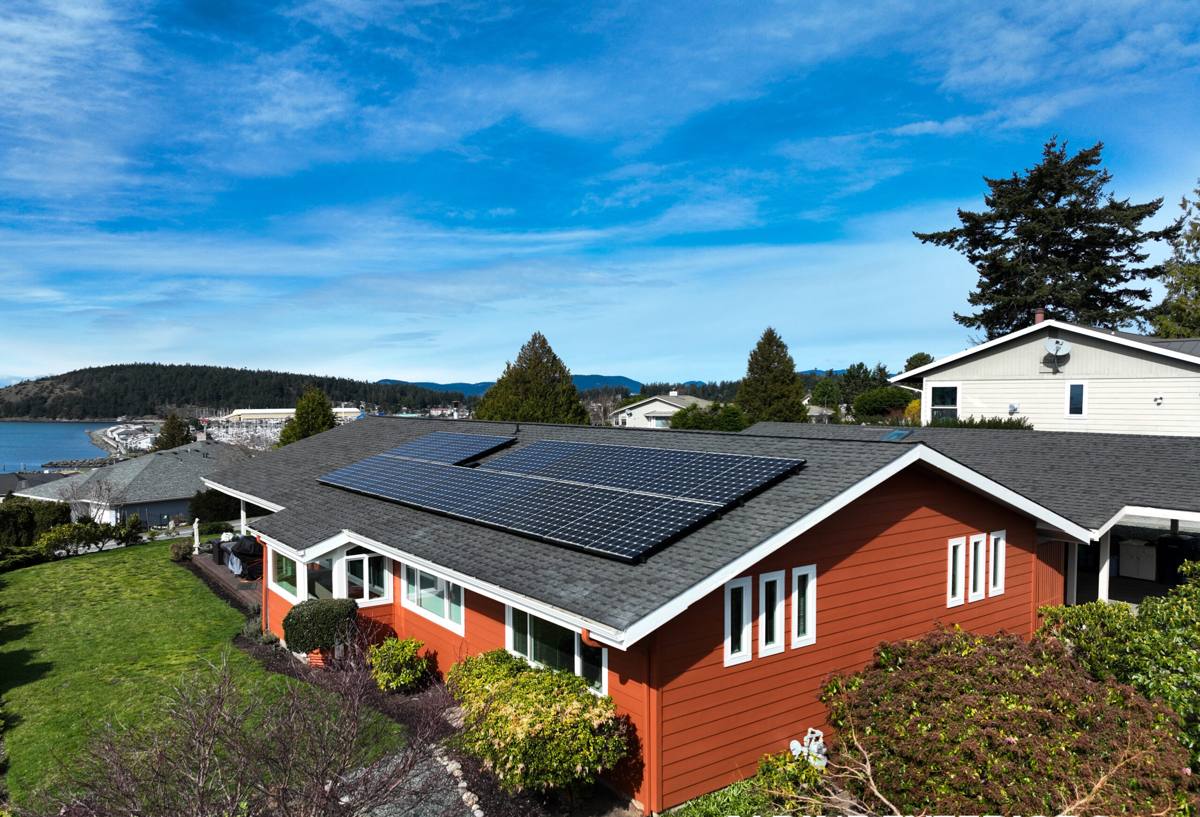
We install James Hardie fiber cement siding exclusively, and in a climate like this one, the reasoning isn't abstract. Hardie board is made from cement, sand, and cellulose fiber — it doesn't absorb and release moisture the way wood or wood-composite sidings do, so it isn't prone to the swelling, cupping, and edge rot that damp coastal air causes in organic materials over time. It's also non-combustible, which matters given how dry Whatcom County summers have become in recent years even alongside our wet winters.
The Climate-Specific Formulation
James Hardie manufactures its siding in different formulations engineered for different climate zones. The version built for high-moisture, high-humidity regions is the one that fits Whatcom County's weather profile — it's designed around the reality of sustained dampness rather than occasional rain. That's a meaningful distinction, and it's one reason we don't treat "Hardie siding" as a single generic product; getting the right formulation and profile for this specific area is part of doing the job correctly.
The ColorPlus Finish
Most Hardie siding on Fairhaven homes goes on with a factory-applied ColorPlus finish rather than field paint. That finish is baked on in multiple coats under controlled conditions, which gives it better adhesion and fade resistance than a coat of paint applied on-site in variable weather. In a climate where paint failure is one of the most common complaints homeowners have about older siding, that difference shows up over the years, not on day one.
Choosing the Right Hardie Profile for a Fairhaven Home
Fairhaven's building stock leans toward traditional and craftsman-era character, and the right Hardie profile depends on matching that look rather than defaulting to whatever's fastest to install.
- HardiePlank lap siding — the most common choice, available in several exposure widths and textures, and the closest match to traditional horizontal wood lap siding.
- HardieShingle — a good fit for homes with a craftsman or cottage character where a shingled gable or accent area is part of the original design.
- HardiePanel with battens — used for board-and-batten sections, porch gables, or accent walls where a vertical line makes sense.
- HardieTrim boards — for corners, window and door casing, and fascia, so the trim ages and performs the same way the field siding does instead of becoming the weak point.
Mixing profiles thoughtfully — lap siding on the main walls with shingle or panel accents where the architecture calls for it — is common on homes in this neighborhood, and it's a decision worth making with someone who's looked at a lot of Fairhaven houses, not just a catalog.
What a Correct Installation Actually Involves
Fiber cement siding is only as good as the installation behind it. In a climate that stays wet for months at a time, a handful of details separate a job that lasts decades from one that causes problems in five years.
Drainage Behind the Siding
A drainage gap (often called a rainscreen) between the siding and the weather-resistant barrier gives any moisture that does get past the surface a way to drain and dry out instead of sitting against the sheathing. This matters more in a climate with Fairhaven's rainfall totals and humidity than it would somewhere drier, and it's one of the most commonly skipped steps on lower-quality installs.
Flashing and Clearances
Windows, doors, and roof-to-wall intersections need proper flashing so water is directed out and away rather than behind the siding. Hardie's own installation specifications also call for keeping the bottom edge of the siding a set distance above grade, roof lines, and decks — closer than that invites exactly the rot and moisture problems fiber cement is supposed to prevent in the first place.
Fasteners That Match the Environment
Because Fairhaven sits close enough to the water for salt air to be a real factor, fastener choice matters more here than it does further inland. Corrosion-resistant fasteners — stainless steel or hot-dip galvanized, depending on the application — are worth the small added cost to avoid streaking and fastener failure over time.
Sealed Cut Edges and Correct Joints
Every factory edge on Hardie board is sealed at the plant, but any edge cut on-site needs to be treated with the manufacturer-specified sealer before installation. Butt joints need to be handled per Hardie's written specifications — either caulked correctly or joined with an approved flashing or joiner system — because an unsealed joint is a direct path for water into the wall assembly.
Our Process, Start to Finish
- On-site assessment — we look at the existing siding, wall assembly, and any signs of trapped moisture or rot before quoting anything.
- Tear-off and sheathing check — old siding comes off and the sheathing underneath gets inspected; damaged sheathing gets repaired before anything new goes up, never covered over.
- Weather barrier and drainage plane — a new weather-resistant barrier and drainage gap go on correctly the first time.
- Flashing and trim — windows, doors, and roof intersections are flashed before the field siding goes up around them.
- Hardie installation — boards are hung to the manufacturer's fastening schedule and clearance requirements, not shortcuts.
- Sealing and finish work — cut edges sealed, joints treated correctly, caulking done to spec.
- Final walkthrough — we go over the finished job with the homeowner before calling it done.
What Drives the Cost of a Fairhaven Hardie Install
Every home is different, and we won't quote a number without seeing the house, but these are the factors that move the price up or down on most jobs in this area:
| Factor | Why It Matters in Fairhaven |
|---|---|
| Home size and number of stories | More square footage and taller walls mean more material and more time, plus added access equipment for two- and three-story homes. |
| Condition of existing sheathing | Older homes near the water sometimes have hidden moisture damage under the current siding that isn't visible until tear-off. |
| Trim and architectural detail | Craftsman-style gables, multiple roof lines, and accent shingle or panel work take more labor than a simple flat wall. |
| Adding a drainage gap where none existed | Retrofitting proper drainage behind the siding is worth the added step on a home that didn't have it before. |
| Color and finish selection | Standard ColorPlus colors versus premium or custom options can shift material cost. |
| Site access | Narrow lots, fencing, and proximity to neighboring structures — common on older Fairhaven lots — can add setup time. |
Maintaining Hardie Siding in a Salt Air, Moss-Prone Climate
Hardie siding needs far less upkeep than wood, but "low-maintenance" doesn't mean "no maintenance," especially this close to the water. A short annual routine keeps it performing the way it's designed to:
- Rinse the siding once a year with a garden hose to clear off salt film, pollen, and airborne grime before it builds up.
- Keep gutters and downspouts clear so runoff doesn't sheet down the face of the siding during heavy rain.
- Trim back branches and vegetation that shade the wall and keep it damp longer than the rest of the house.
- Check caulking at trim, joints, and penetrations yearly — caulk weathers well before the siding itself does, and it's the first thing that needs attention.
- Address moss or algae on shaded walls early rather than letting it build up over a full winter.
- Avoid close-range pressure washing — a gentle rinse is enough and won't force water behind the boards or damage the finish.
Why It Matters That We Already Work in Fairhaven
A crew that's done siding work in this neighborhood already knows what tends to be hiding behind older walls, how exposed a given lot is to wind off the bay, and what the City of Bellingham's permitting process looks like for exterior work. That familiarity shows up in fewer surprises mid-project and a faster, more accurate estimate up front. It also means we're not guessing at how Whatcom County's climate behaves — we're installing to a standard that's already been tested against it on homes near this one.
If you're weighing a siding project on a Fairhaven home, we're happy to take a look and walk you through what we're seeing, no pressure and no obligation. A free estimate is the easiest way to find out what your home actually needs.