 Bellingham
 Building a Deck That Actually Belongs in Lynden
A deck in Lynden has to earn its keep. It sits under a marine-influenced sky that swings between long stretches of low gray drizzle and sudden hard rain, it picks up moisture-laden air that moves inland off the Sound, and it spends a good chunk of the year growing moss whether anyone wants it to or not. A deck built from a generic plan, with generic fasteners and no real drainage thinking, will look fine for a season or two. Then the moss shows up in the shaded corners, the ledger board starts holding water against the house, and the "custom" deck starts looking like a maintenance project instead of an outdoor room.
We build decks for homes around Bellingham and Whatcom County, including Lynden, and the difference between a deck that lasts fifteen-plus years and one that needs board replacement by year seven almost always comes down to a handful of decisions made before the first board is ever cut: how the ledger is flashed, how the footings are sized for our soil and frost depth, what fasteners go into the frame, and how water is encouraged to leave rather than linger.
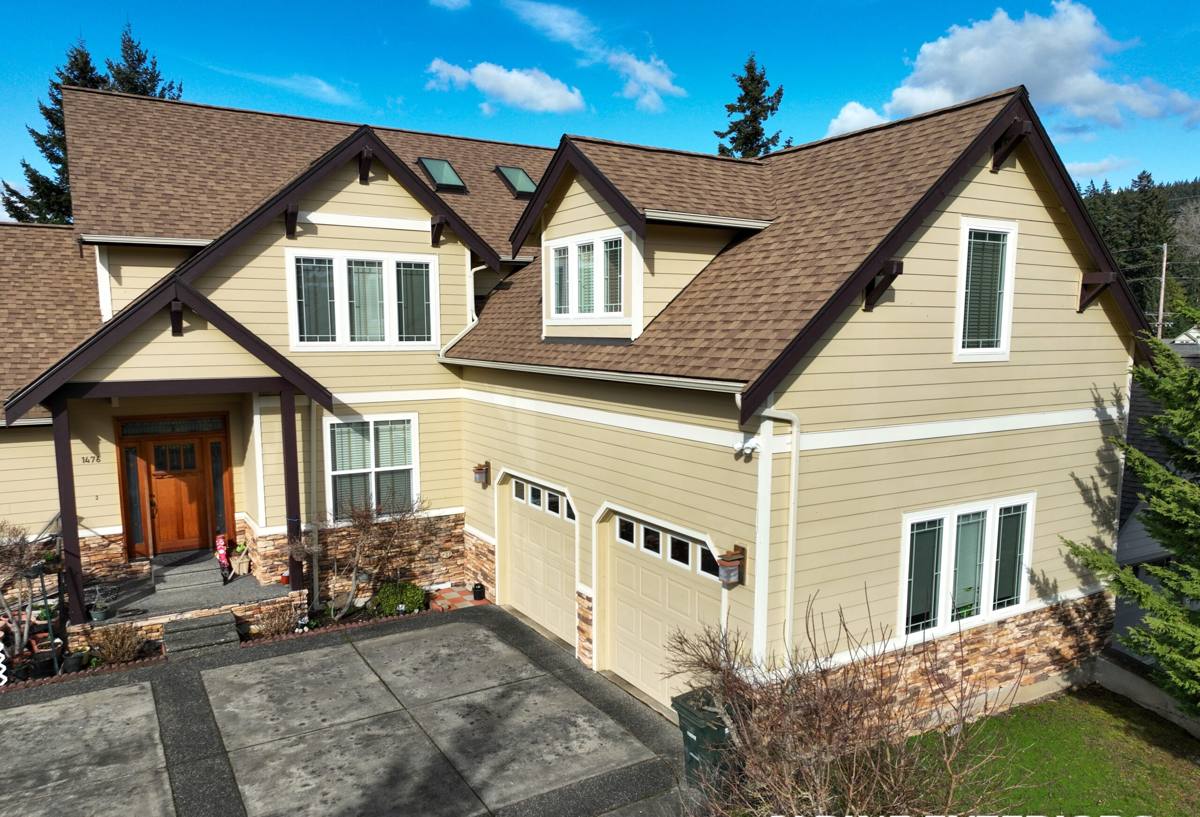
What Whatcom County's Climate Does to an Outdoor Deck
None of this is exotic engineering — it's just taking the local weather seriously instead of building like the house is in a dry climate.
Driving Rain and the Ledger Connection
The single most common point of failure on a deck attached to a house isn't the decking itself — it's the ledger board, the piece that bolts the deck frame to the house rim joist. In a region that gets sustained, wind-driven rain, water finds its way behind an unflashed or poorly flashed ledger and sits against the house sheathing. That's how you get rot inside a wall from a problem that started outside on the deck. Correct ledger flashing (metal flashing plus a self-adhering membrane, properly lapped) is not optional trim work here — it's the difference between a deck and a slow leak.
Moss, Algae, and a Long Damp Season
Whatcom County's moss season runs long, and a deck surface that stays shaded and damp for weeks at a stretch will grow moss and algae just like a roof or a north-facing fence. On wood decking this isn't just cosmetic — moss holds moisture against the board and accelerates rot in the areas it colonizes. On composite decking, moss and algae mostly sit on the surface and get slick, which is a footing hazard more than a structural one. Either way, the fix starts at the design stage: gaps between boards sized for drainage, airflow underneath the deck instead of a sealed box, and layout that doesn't trap water in dead corners.
Freeze-Thaw and Footings
Whatcom County soil goes through freeze-thaw cycles most winters, even if hard freezes aren't long or extreme. Footings that aren't poured to the correct depth and diameter for our frost line can heave slightly over the years, which is how you end up with a deck that develops a subtle lean or a door that starts binding against a ledger that's shifted. Sizing footings correctly the first time costs a little more concrete and a little more time; it costs far less than jacking and releveling a deck five years in.
Choosing a Decking Material for a Lynden Property
There isn't a single "best" decking material — there's a best material for what a specific homeowner wants to maintain, spend, and look at for the next couple of decades. Here's how the common options actually compare under our climate, without the marketing gloss:
| Material | How it handles our climate | Maintenance reality | Typical lifespan |
|---|---|---|---|
| Pressure-treated fir/hem-fir | Handles moisture fine when properly sealed; needs gaps and airflow to avoid trapping water | Re-stain or seal every 2-3 years; moss needs periodic cleaning | 15-20 years with upkeep |
| Western red cedar | Naturally rot-resistant, ages gracefully to gray if left unfinished | Occasional cleaning; finishing is optional but extends color life | 20-25 years |
| Composite / capped polymer | Doesn't rot, but surface can get slick with algae if shaded and unwashed | Periodic washing; no staining or sealing ever needed | 25-30+ years, backed by manufacturer warranty |
| PVC decking | Fully moisture-immune; performs consistently in wet, shaded yards | Lowest maintenance of the group; occasional wash | 25-30+ years |
For a shaded Lynden backyard that stays damp most of the year, we generally steer clients away from budget-grade composite blends that skip a full cap, because the exposed core can absorb moisture at cut edges over time — that's a manufacturing and installation-sensitivity issue, not a reason to avoid composite decking as a category. Fully capped composite or PVC tends to be the lower-hassle choice for shaded, moss-prone lots; cedar or well-maintained pressure-treated wood suits homeowners who want a natural material and don't mind the upkeep rhythm.
What a Correctly Built Deck Actually Involves
A deck is a structure first and a surface second. The parts that don't show are the parts that determine whether it's still solid in fifteen years.
- Footings sized and set to the correct depth for our frost line and soil conditions, not just poured to whatever depth is fast
- Ledger flashing with metal flashing and self-adhering membrane, properly lapped to shed water away from the house
- Joist hangers and structural fasteners rated for exterior, high-moisture use — the wrong corrosion class of fastener will streak, weaken, and fail years before the wood does
- Board spacing and airflow designed to let water drain and the underside of the deck breathe rather than trap moisture
- Railing and guard construction built to current code height and baluster spacing, not just "close enough" for how it used to be done
- Stair stringers and rise/run calculated to code, not eyeballed — this is one of the most common shortcuts on DIY and low-bid decks
Every one of these is inspectable, and every one of these is something a homeowner can ask about directly when getting quotes. If a contractor can't explain their ledger flashing detail or fastener spec without hesitating, that's worth noting.
Permits and Local Code
Most new deck construction and many deck rebuilds in Whatcom County require a building permit, and the exact threshold and process depend on the deck's height, size, and attachment to the house. Permitting isn't paperwork for its own sake — it's a second set of eyes confirming the footings, framing, and railings meet the structural and safety code that applies to your property. We handle the permit process as part of the job rather than leaving it to the homeowner to sort out, and we build to pass inspection the first time, not to talk an inspector into overlooking a shortcut.
Our Process
- On-site assessment — we look at grade, drainage, sun/shade exposure, and how the deck will tie into the house before we talk materials
- Design and material selection — layout, decking material, and railing style matched to how the space will actually be used and how much upkeep the homeowner wants going forward
- Permit and engineering — drawings and permit submission handled on our end
- Footings and framing — the structural work that determines everything downstream, built and inspected before decking goes down
- Decking, railing, and finish work — final surface, fastening, and any staining or sealing the material calls for
- Walkthrough — we go over the finished deck and what maintenance schedule fits the material chosen
Maintenance Checklist for Local Conditions
A deck built right still needs a little seasonal attention in this climate. This is the same list we walk clients through at handoff:
- Sweep debris off the deck surface regularly in fall — trapped leaves hold moisture and speed up moss growth
- Wash the surface at least once a year, more often in shaded areas, to keep moss and algae from establishing
- Check ledger flashing and the house-to-deck joint annually for any sign of water staining
- Re-seal or re-stain wood decking on the schedule the finish product calls for — don't wait for visible graying to start
- Keep gutters and downspouts near the deck clear so roof runoff isn't dumping extra water onto or under the structure
- Check railings and stair connections yearly for any looseness, especially after a hard winter
Why Hire a Crew That Already Works in Lynden
A deck built by a crew that only occasionally works this far north can still be a fine deck — but a crew that regularly builds and repairs decks around Bellingham and Whatcom County has already seen which details matter here: how ledger flashing holds up against our rain patterns, which fastener grades actually last through our damp winters, and where moss tends to establish first on a given lot orientation. That's not a marketing point, it's just the accumulated experience of building outdoor structures for this specific climate rather than a generic one. It also means faster, more informed answers when something needs a look five or ten years down the road.
If you're planning a new deck or replacing one that's showing its age, we're happy to come take a look and talk through what makes sense for your property — no pressure, no obligation. Use the form below to request a free estimate.