 Bellingham
 Lynden's Climate Is Harder on Siding Than It Looks
Lynden sits in the Nooksack River valley, and that geography matters more than most homeowners realize when it comes to exterior siding. The valley traps fog and damp air longer than the surrounding hills, rainfall is frequent and often prolonged rather than heavy, and the growing season for moss and algae runs long — sometimes nearly year-round on shaded north and east walls. Add in the broader Whatcom County pattern of salt-tinged marine air moving inland off Bellingham Bay and the Strait of Georgia, and you get a climate that is chemically and biologically tough on building materials, even if it never feels dramatic day to day.
Siding here doesn't usually fail from one bad storm. It fails slowly — moisture wicking into seams, paint film breaking down under UV and damp cycling, moss roots working into porous surfaces, and fasteners corroding behind panels nobody's looked at in fifteen years. By the time problems are visible from the driveway, there's often already damage to the sheathing or framing underneath.
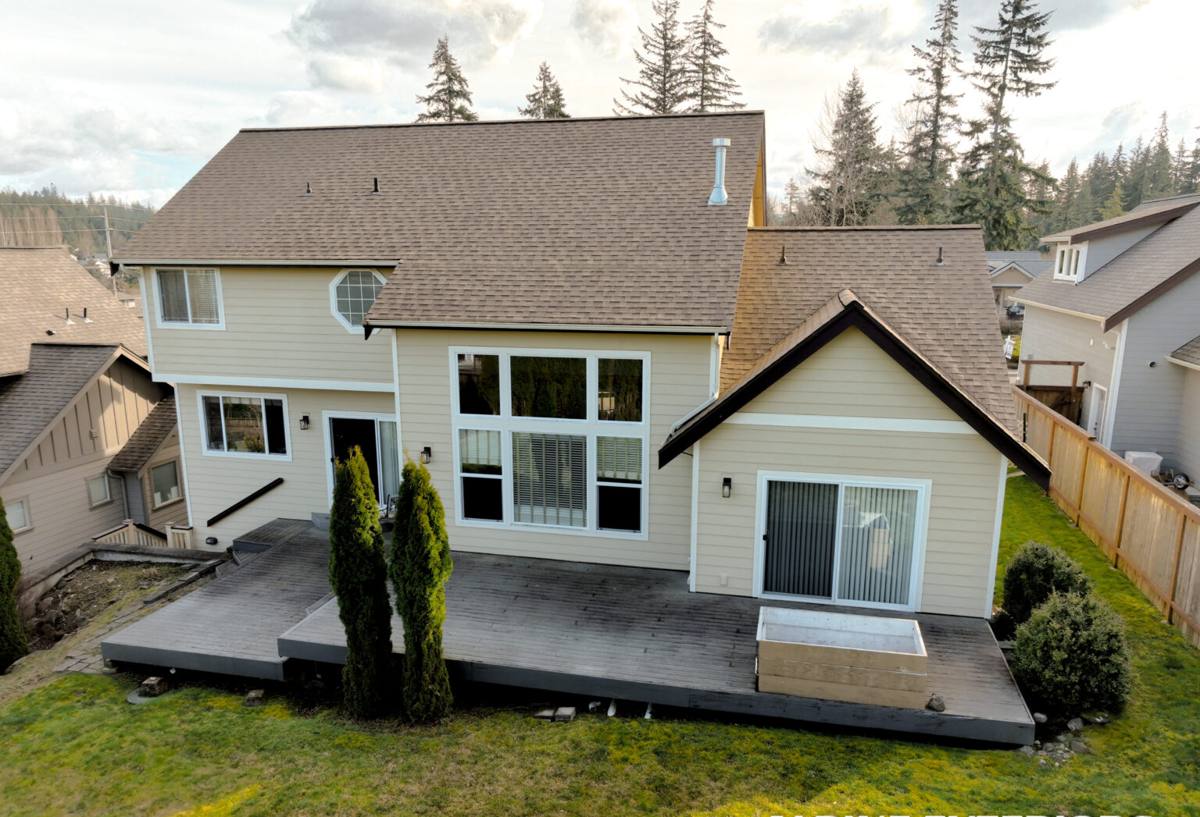
Signs a Lynden Home Actually Needs Siding Replacement
Not every tired-looking exterior needs full replacement — sometimes it's a repaint or spot repair. But certain signs mean the siding system itself has reached the end of its useful life:
- Soft or spongy spots when you press on siding near the bottom courses, corners, or below window sills
- Persistent moss or dark streaking that returns within weeks of cleaning, especially on north-facing or tree-shaded walls
- Cupping, warping, or delamination in wood-based or engineered wood panels
- Paint that's chalking, peeling, or blistering across large sections rather than one spot
- Visible gaps at seams, corners, or trim where caulking has failed and not been maintained
- Rust staining running down from nail heads or fastener locations
- A musty smell in an adjacent interior room, which can indicate moisture has already reached the wall cavity
If you're seeing two or more of these, it's worth a real inspection rather than another round of caulk and paint.
What a Correct Siding Replacement Actually Involves
Siding replacement is not just pulling off old panels and nailing up new ones. In a climate like Lynden's, the parts nobody sees are what determine whether the new siding lasts 10 years or 40.
Tear-Off and Inspection
Old siding comes off in sections so the crew can inspect sheathing as they go, not after the whole wall is exposed to weather. Any water-damaged sheathing or framing gets identified and repaired before anything new goes on — covering rot with new siding just hides the problem and guarantees a repeat failure.
Water-Resistive Barrier
A continuous, properly lapped weather-resistive barrier goes over the sheathing before siding installation. In a valley with as much sustained damp air as Lynden gets, this layer is what actually keeps incidental moisture from reaching the framing — the siding itself is the first line of defense, not the only one.
Flashing at Every Penetration
Windows, doors, hose bibs, light fixtures, and vents all need proper flashing integrated with the water-resistive barrier using correct shingle-lap sequencing. This is the single most common place cheap or rushed siding jobs fail — and the failures don't show up for a year or two, by which point water has already been getting behind the wall.
Clearances and Fastening
Siding needs proper clearance from grade, roof lines, decks, and patios so water can't wick up from below. Fasteners need to be the correct type, spacing, and depth for the specific product — over-driven or under-driven nails are a leading cause of premature panel failure.
Trim, Caulking, and Paint or Finish
Corners, trim boards, and joints get sealed with products rated for the material and exposure. If the siding requires field painting, conditions and technique matter — painting over damp material or in the wrong weather window shortens the finish's life regardless of the product underneath.
Why We Only Install James Hardie Fiber Cement
We don't install vinyl, LP SmartSide, or primed wood siding, and that's a deliberate standard, not a limitation of what we're capable of installing. James Hardie fiber cement is non-combustible, dimensionally stable in a damp, cycling climate like Whatcom County's, and available with a factory-applied ColorPlus finish that resists the fading and peeling that repainted wood and engineered wood siding are prone to here. Hardie's HZ5 product line is specifically engineered for cold, wet, marine-influenced climates — which describes Lynden's conditions well, even set back from the water.
Fiber cement doesn't feed moss the way some porous or wood-based products can, it doesn't swell and cup with repeated wet-dry cycling, and it carries a long transferable warranty backed by a manufacturer with a multi-decade track record in exactly this kind of climate. We'd rather install one product correctly and stand behind it than offer a menu of options with different long-term outcomes.
Our Process for a Lynden Project
- On-site inspection — we walk the exterior, check problem areas you've flagged, and look at things homeowners typically can't from the ground: fastener condition, flashing details, and signs of moisture intrusion.
- Written scope and estimate — what's being replaced, what Hardie product and profile fits the home, and a clear cost breakdown, not a vague lump sum.
- Material order and scheduling — we schedule around Lynden's weather windows; fiber cement installation and finishing go better with a few consecutive dry-enough days than squeezed between storm systems.
- Tear-off, repair, and install — sheathing repairs happen before new siding goes up, not after.
- Final walkthrough — we go over the finished work with you, including care and maintenance specific to your home's exposure.
What Drives Cost on a Siding Replacement
| Factor | Why It Matters |
|---|---|
| Extent of sheathing/framing damage found during tear-off | Hidden rot repair is the most common reason estimates change once walls are opened up |
| Home size and wall complexity | More corners, dormers, and trim details mean more labor and material cuts |
| Siding profile and finish selected | Lap width, texture, and factory color options affect material cost |
| Number of window, door, and vent penetrations | Each one needs individual flashing work |
| Access and staging | Steep sites, limited driveway access, or tall gable walls affect equipment and labor time |
| Whether full replacement or partial re-side is appropriate | Partial replacement can work if damage is localized and the rest of the wall system is sound |
We'll give you honest numbers after a real inspection rather than a phone estimate, because on siding jobs the biggest cost swings come from what's found once the old material is off the wall.
Why a Crew That Already Works in Lynden Matters
Lynden and the surrounding Whatcom County communities have their own permitting expectations, and a crew that's already done work here knows the local building department's process rather than learning it on your project. Just as important, we know the practical side of working in this valley: which weeks tend to give reliable dry stretches, how far damp weather can push a schedule, and how homes here — often on larger lots with mature trees and more shade exposure than a typical Bellingham city lot — tend to hold moisture and moss differently than homes closer to the water. That local pattern recognition is the difference between a crew reading a spec sheet and a crew that's watched how Hardie siding actually performs on Whatcom County homes over time.
After Replacement: Keeping Siding Performing Long-Term
Fiber cement is low-maintenance, not no-maintenance. A simple annual routine keeps it performing the way it should:
- Rinse siding annually with a garden hose and soft brush — avoid high-pressure washing directly at seams and penetrations
- Trim back vegetation and tree limbs to keep airflow and sunlight reaching shaded wall sections
- Re-caulk joints and trim if you notice gaps or cracking, rather than waiting for a full failure
- Watch gutters and downspouts — overflow running down a wall is one of the fastest ways to reintroduce the moisture problems new siding is supposed to solve
- Address moss regrowth early with a gentle wash rather than letting it establish
None of this is complicated, but skipping it for years is how even good siding systems end up looking tired before their time.
Get a Straight Answer About Your Siding
If your Lynden home is showing signs of siding wear, or you just want a professional opinion before winter weather makes small problems bigger, we're glad to take a look. There's no pressure and no sales script — just an honest assessment and, if replacement makes sense, a clear estimate to work from. Use the form below to request a free evaluation.