 Bellingham
 Building New in Barkley? The Windows Deserve as Much Attention as the Foundation
Barkley is one of Bellingham's newer, more tightly planned neighborhoods — a mix of single-family homes, townhomes, and live-work buildings laid out with walkable streets and, in many phases, design standards set by an architectural review process. If you're building new here, the windows aren't just an afterthought item on the framing punch list. They're one of the few components that get harder and more expensive to fix correctly once siding, trim, and interior finish work close in behind them. Get the window install right during the build, and you won't think about it again for decades. Get it wrong, and you're looking at trim removal, siding repair, and interior drywall patching to correct it later.
We install new-construction windows for builders and homeowners working in Barkley and the surrounding Bellingham area, and we treat the flashing and sealing details with the same seriousness as the glass package itself. Both matter. Neither one covers for the other.
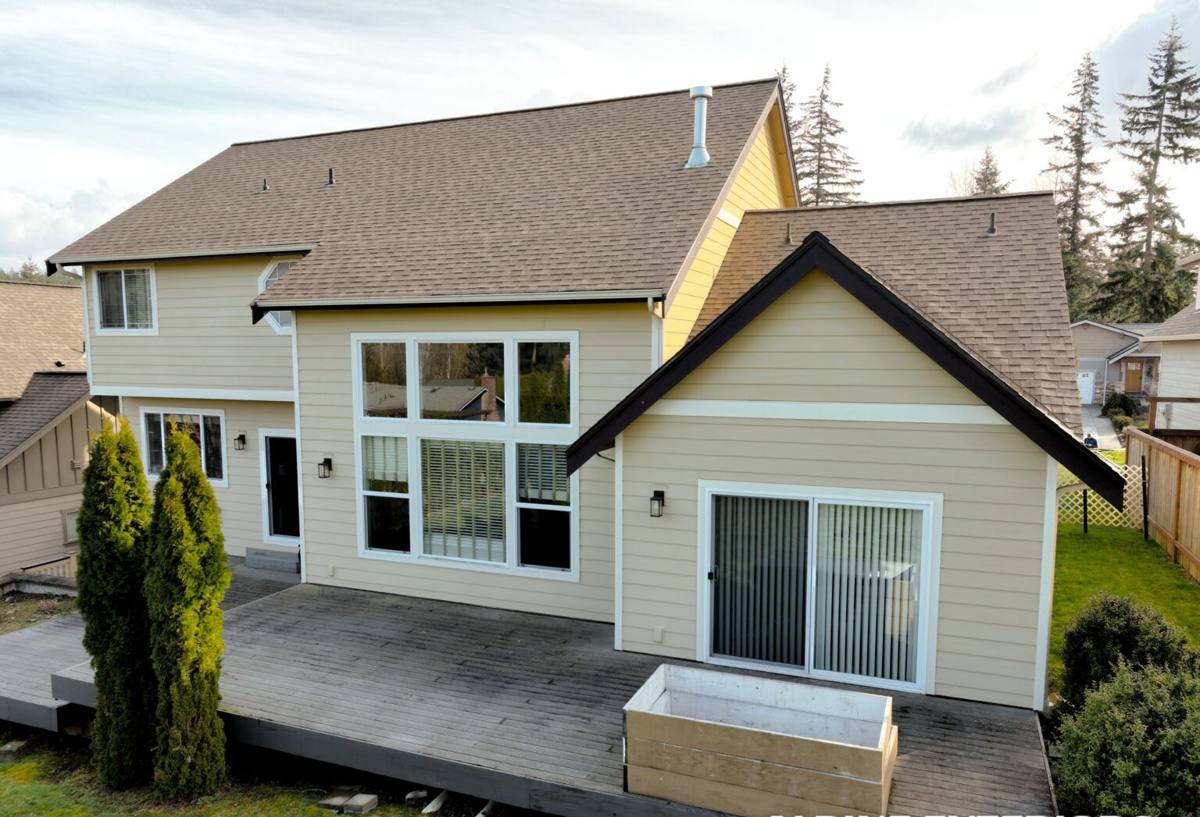
What Bellingham's Climate Actually Does to a Window Opening
Whatcom County sits close enough to Bellingham Bay that salt-laden air is a real factor on hardware, fasteners, and exposed metal — not a coastal-town exaggeration. Combine that with the region's long stretch of driving rain each fall and winter, and a heavy moss and algae season that keeps exterior surfaces damp for weeks at a time, and you get a set of conditions that punishes shortcuts around window openings faster than a drier climate would.
- Wind-driven rain pushes water sideways into any gap in the flashing plane, not just straight down onto a sill.
- Persistent dampness during moss season keeps housewrap and sealants wet longer, which is exactly when a poor seal starts to fail.
- Salt air accelerates corrosion on cheap fasteners, hinges, and cladding fasteners over the life of the window.
- Temperature swings between damp winter nights and warmer summer afternoons stress sealants and expand/contract frame materials.
None of this means Barkley needs exotic window technology. It means the ordinary steps — correct flashing sequence, the right sealant in the right place, a glass package rated for our climate zone — have to actually be followed, every time, because this climate finds the one spot where they weren't.
What a Correct New-Construction Install Actually Involves
"New construction" windows differ from replacement windows in one key way: they have a nailing fin that gets integrated directly into the wall's water-resistive barrier during framing, rather than being retrofitted into an existing finished opening. That gives us a real opportunity to build the drainage plane correctly from the start — but only if the sequence is followed in order.
The sequence we follow on every opening
- Rough opening checked for square, level, and correct dimension against the window schedule before anything is installed.
- Sill pan flashing installed first, sloped to drain outward, so any water that gets past the window has somewhere to go besides your framing.
- Window set, shimmed plumb and square, and fastened per the manufacturer's schedule — not a shortcut pattern.
- Jamb and head flashing integrated in the correct shingle-lap order with the housewrap, so water sheds down and out at every layer.
- Sealant used only where the window manufacturer and code specify — not as a substitute for proper flashing, which is a common shortcut that fails quietly for years.
- Interior air sealing at the rough opening gap, which affects both energy performance and condensation risk on the inside face of the frame.
Every one of those steps is inspectable, and on new construction, we welcome that — a builder's site super or an owner walking the framing stage should be able to see clean, sequenced flashing at every opening before siding goes on.
Choosing the Right Window for a Barkley Build
Washington's state energy code sets minimum performance requirements for new construction glazing, and Whatcom County's climate zone means we're not choosing the cheapest glass package that technically passes. We look at U-factor (heat loss), solar heat gain coefficient, and condensation resistance together, not in isolation — a window that scores well on paper but sweats on the interior frame every damp February morning is not a win.
| Frame Material | Typical Fit for Barkley Builds | Trade-Offs to Know |
|---|---|---|
| Vinyl | Good value, solid thermal performance, low maintenance | Limited color/profile range; some HOA design guidelines restrict it on street-facing elevations |
| Fiberglass | Strong dimensional stability in our wet/dry swings, holds paint well | Higher upfront cost than vinyl |
| Aluminum-clad wood | Traditional look often preferred in planned communities with design standards | Requires attention to clad-to-wood transitions where moisture can be an issue if detailing is sloppy |
| Bare wood | Historic or high-end aesthetic | Highest maintenance burden in a climate with this much sustained moisture exposure — we're upfront that this is the trade-off, not a defect in the product |
We don't push one material as universally "best." We ask what the elevation is exposed to, what the architectural guidelines (if any) require, and what maintenance level the homeowner actually wants to sign up for, then match the frame material to that.
Coordinating with Your Builder or General Contractor
New-construction window work lives on the critical path of a build schedule — everything from siding to interior trim to final inspection waits on windows being set correctly. We coordinate directly with the GC or framing crew on:
- Confirming rough opening sizes against the approved window schedule before framing is closed up
- Scheduling our install between dry-in and siding, when the window and flashing plane are exposed and inspectable
- Matching flashing tape and sealant products to what's compatible with the housewrap already on the job — mixing incompatible products is a real failure point we watch for
- Timing around weather windows, since flashing work done in active rain is a compromise we'd rather not make on a job that only gets installed once
If you're a homeowner managing your own build or acting as owner-builder, we're used to stepping into that coordinating role directly rather than working through a third party.
Working Within Barkley's Design Guidelines
Many newer planned communities in the Bellingham area, Barkley included, have architectural review standards that cover exterior elements on at least some elevations or building types — window style, grille pattern, trim profile, and sometimes frame color can fall under that review depending on the specific phase and property. We're not the authority on any individual HOA's current design guidelines, and we'd never claim to be — but we've installed enough windows in planned communities around Bellingham to know the right question to ask early: check with your HOA or architectural review committee on window specifications before you finalize an order, not after it arrives on site. Reordering a window because a grille pattern didn't clear review costs real time and money, and it's avoidable with one phone call at the start.
Our Process, Start to Finish
For a Barkley new-construction project, our process typically looks like this:
- Plan review — we look at the window schedule and elevations, flag anything unusual before ordering.
- Measure and confirm — rough openings verified on site against the plans, not assumed from paper.
- Product selection — matched to the elevation's exposure, the build's energy targets, and any HOA design requirements you've confirmed.
- Install at the dry-in stage — flashed, sealed, and fastened per manufacturer spec, sequenced correctly with the housewrap.
- Walkthrough — we review each opening with the GC or homeowner before siding closes it in, since that's the last easy chance to catch anything.
What to check before you hire anyone for this work
- Do they install to the manufacturer's written flashing instructions, or their own shortcut sequence?
- Will they coordinate directly with your GC's schedule, including weather delays?
- Are they familiar with Washington State Energy Code minimums for new construction glazing?
- Can they speak to HOA/design review considerations common in planned communities like Barkley?
- Do they carry liability insurance and stand behind their installation labor in writing, separate from the manufacturer's product warranty?
Why Local Install Experience Matters Here
A window that's correctly rated and correctly installed in a dry inland climate can still fail early in Whatcom County if the flashing sequence wasn't built for sustained wind-driven rain and a long damp season. Crews who install across a wide range of climates sometimes carry habits that don't hold up here — a sealant bead used in place of proper flashing, for instance, might never get tested in a drier region but will get found out during a wet Bellingham winter. Working new-construction openings across Barkley and the rest of Bellingham repeatedly is what keeps our sequencing sharp and our product choices grounded in what actually performs here, not just what performs on a spec sheet.
If you're planning new construction or a major addition in Barkley, we're happy to walk the plans with you or your builder and give you a straightforward, no-pressure estimate — just fill out the form below to get started.