 Bellingham
 Roofing Built for Birchwood's Weather, Not Just the Average PNW House
Birchwood sits close enough to Bellingham Bay and the surrounding waterways that homes here take a different kind of beating than roofs a few miles inland. It's not one big storm that wrecks a roof in Whatcom County — it's years of salt-tinged air working into fasteners and flashing, wind-driven rain finding every gap in a worn roof system, and a moss season that runs longer here than in drier parts of Washington. A new roof installation in this neighborhood has to be planned around those three things specifically, not installed the same way you'd install a roof in Spokane or Sacramento.
When we talk about a "correct" roof install in Birchwood, we mean one where every layer — deck, underlayment, flashing, field material, and ventilation — is chosen and installed with this exact climate in mind. That's the difference between a roof that looks fine on install day and one that's still performing at year fifteen.
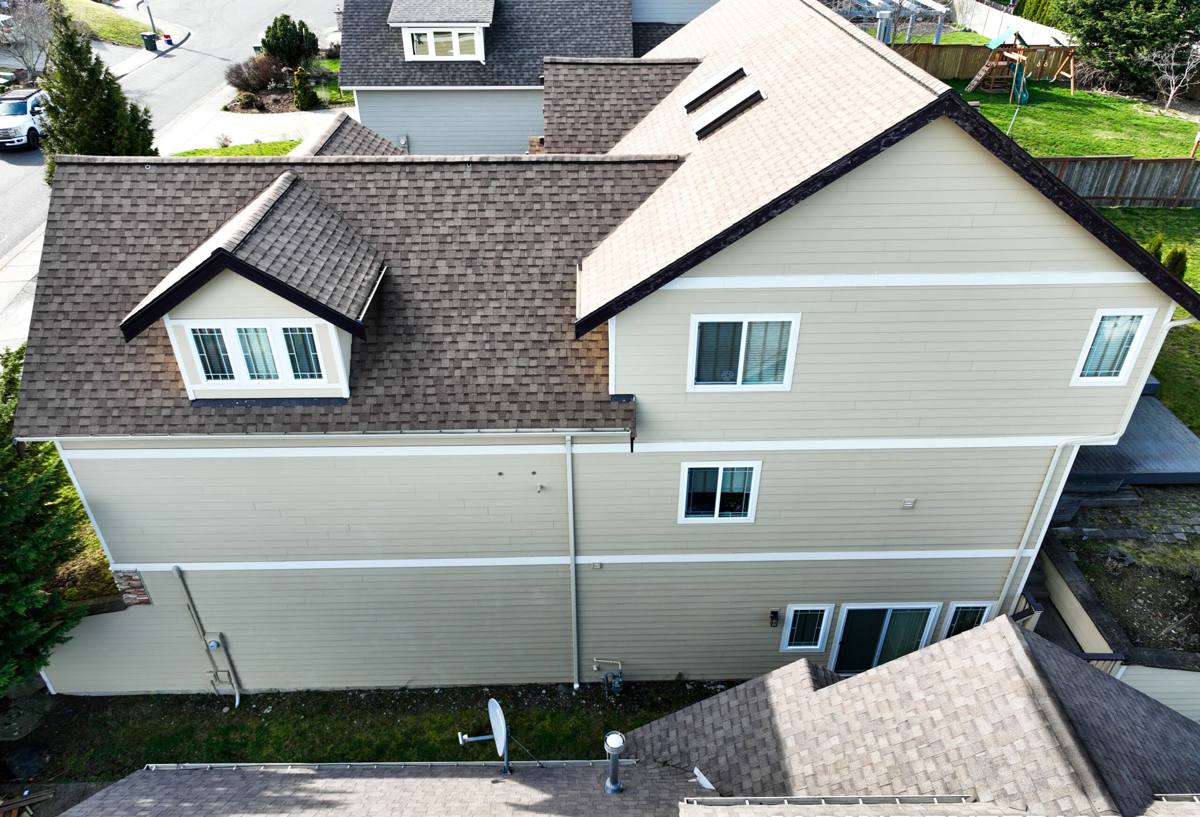
What Salt Air, Driving Rain, and Moss Actually Do to a Roof
Salt Air and Fastener Corrosion
Homes closer to the water pick up airborne salt that accelerates corrosion on exposed metal — nail heads, flashing seams, gutter fasteners, and any exposed screws. Standard electro-galvanized fasteners can start showing rust streaks years before they should, and once a fastener corrodes, it's no longer sealing the hole it was driven into.
Driving Rain and Wind-Driven Water
Bellingham's storms rarely come straight down. Wind pushes rain sideways and up under shingle tabs, around chimney and skylight flashing, and into any seam that isn't properly lapped. A roof that would shed water fine in a calm rain can leak in a Whatcom County wind event if the underlayment and flashing details weren't built for lateral water intrusion.
Moss and Prolonged Moisture
Shade, cool temperatures, and a long wet season give moss everything it needs to take hold, especially on north-facing slopes and anywhere debris collects. Moss doesn't just look bad — it holds moisture against the roofing material, lifts shingle edges as it grows, and can work its way under flashing over time. A roof designed without moss resistance in mind will need moss treatment and cleaning far more often than one that accounts for it from the start.
What a Correct New Roof Installation Involves
A full re-roof isn't just stripping old shingles and nailing down new ones. Each layer does a specific job, and skipping or shortcutting any one of them is where most premature roof failures start.
- Tear-off and deck inspection — removing the old roofing down to the deck and checking for soft spots, rot, or delamination before anything new goes down.
- Deck repair — replacing any damaged sheathing so the new roof has a solid, dry base.
- Ice-and-water shield — a self-adhering waterproof membrane at eaves, valleys, and around penetrations where wind-driven rain is most likely to get in.
- Synthetic underlayment — a water-resistant layer across the rest of the deck as a second line of defense under the field material.
- Flashing — new metal flashing at chimneys, skylights, sidewalls, and valleys, properly lapped so water is always directed out and down, never trapped.
- Field material installation — shingles, metal panels, or another chosen material installed to manufacturer spec and local wind exposure.
- Ridge and hip ventilation — intake and exhaust venting sized correctly for the attic space, not just installed for looks.
Choosing a Roofing Material for Birchwood Conditions
There isn't a single "best" roofing material for every Birchwood home — it depends on the roof's pitch, sun exposure, budget, and how much maintenance the homeowner wants to do. Here's how the common options actually compare for this specific climate.
| Material | Moss Resistance | Wind/Rain Performance | Typical Lifespan | Relative Cost |
|---|---|---|---|---|
| Architectural asphalt shingle | Moderate — needs periodic cleaning | Good when properly fastened and flashed | 25–30 years | $ |
| Standing seam metal | High — sheds debris and dries fast | Excellent in wind-driven rain | 40–50+ years | $$$ |
| Synthetic/composite shake or slate | Moderate to high, depending on product | Good, varies by manufacturer | 30–50 years | $$–$$$ |
| 3-tab asphalt shingle | Lower — more exposed edges to lift | Fair, more prone to wind lift | 15–20 years | $ |
For most Birchwood homes, we lean toward architectural shingles or metal roofing over 3-tab shingles, mainly because of how each handles this area's wind and moss exposure — not because 3-tab is a bad product everywhere, just less suited to this specific climate.
Ventilation and Moisture Control — The Part Homeowners Rarely See
A new roof can be installed with premium materials and still fail early if the attic underneath isn't ventilated correctly. In a climate as damp as Whatcom County's, trapped attic moisture condenses on the underside of the deck, which rots sheathing from the inside and accelerates moss growth on the surface above it. Balanced intake (usually soffit vents) and exhaust (ridge vents) keeps air moving through the attic space, which does two things: it helps the roof deck dry out between rain events, and it keeps attic temperatures more even, which reduces the freeze-thaw stress that can crack sealant and loosen fasteners over a wet winter.
Our Installation Process
1. On-Site Assessment
We look at the existing roof, attic ventilation, flashing details, and any trouble spots — north-facing slopes with moss buildup, valleys showing wear, areas where past patch jobs were done.
2. Material and Scope Discussion
We walk through material options honestly, including trade-offs in cost, maintenance, and lifespan, so the decision fits the home and the budget rather than a one-size-fits-all package.
3. Tear-Off and Deck Repair
Old roofing comes off, the deck gets inspected, and any soft or damaged sheathing is replaced before a single new layer goes down.
4. Waterproofing and Flashing
Ice-and-water shield goes in at vulnerable points, underlayment covers the rest of the deck, and new flashing is installed at every penetration and transition.
5. Field Installation and Ventilation
The chosen roofing material is installed to spec, and ridge/soffit ventilation is checked and corrected if the existing setup is undersized or blocked.
6. Final Walkthrough
We go over the finished roof, gutters, and any exterior work affected by the install, and answer questions about maintenance going forward.
Signs a Birchwood Home May Need a New Roof
- Shingles that are cupping, curling, or missing granules in patches
- Moss buildup that returns quickly even after cleaning
- Daylight visible through the attic roof deck
- Soft or spongy spots when walking the roof
- Rusted or lifting flashing around chimneys and skylights
- Water stains on interior ceilings after wind-driven rain
- A roof approaching or past its material's expected lifespan
What Affects the Cost of a New Roof Installation
| Factor | Why It Matters |
|---|---|
| Roof size and pitch | More square footage and steeper pitches mean more material and labor time |
| Deck condition | Rotted or damaged sheathing found during tear-off adds repair costs |
| Material choice | Asphalt, metal, and composite options span a wide cost range |
| Number of penetrations | Chimneys, skylights, and vents each need custom flashing work |
| Access and site conditions | Steep lots, tight setbacks, or limited staging space affect labor time |
| Tear-off layers | Removing multiple existing roofing layers takes more time than a single-layer tear-off |
We don't quote roofs off a square-footage formula alone — we walk the roof, check the deck when possible, and give a number based on what's actually there.
Why Hire a Crew That Already Works in Birchwood
Roofing crews that work Bellingham and Whatcom County regularly already know which details matter here: how far to run ice-and-water shield given the local rain patterns, which slopes in this area tend to hold moss, and what wind exposure looks like on a given lot. That familiarity shows up in decisions a homeowner never has to think about — flashing choices at valleys, ventilation sizing, fastener selection — because the crew has already seen what does and doesn't hold up through a Whatcom County winter. It also means straightforward permitting and a realistic sense of how weather windows affect scheduling, since roofing work here often has to be planned around rain rather than around it.
Get a Straightforward Estimate
If your Birchwood home's roof is showing its age — persistent moss, curling shingles, or a leak that shows up every time the wind picks up — we're glad to take a look and give you an honest read on what it needs. Reach out for a free, no-pressure estimate and we'll walk the roof, answer your questions, and give you a clear picture of your options.