 Bellingham
 Roofing for a Corner of Whatcom County That Doesn't Go Easy on Shingles
Puget sits close enough to the water and the tree line that its roofs take a different kind of beating than roofs twenty miles inland. Salt-laden air corrodes exposed metal faster, wind-driven rain finds its way under poorly sealed edges, and the shade from mature conifers keeps roof decks damp long after a storm has passed. None of that means asphalt shingles are the wrong choice here — they're still one of the most practical, cost-effective roofing systems for Whatcom County homes. It means the installation has to be done with this specific climate in mind, not treated like a generic roof-in-a-box job.
We install and repair asphalt shingle roofs throughout the Bellingham area, and Puget is one of the neighborhoods we know well enough to anticipate its problems before they show up on an inspection report.
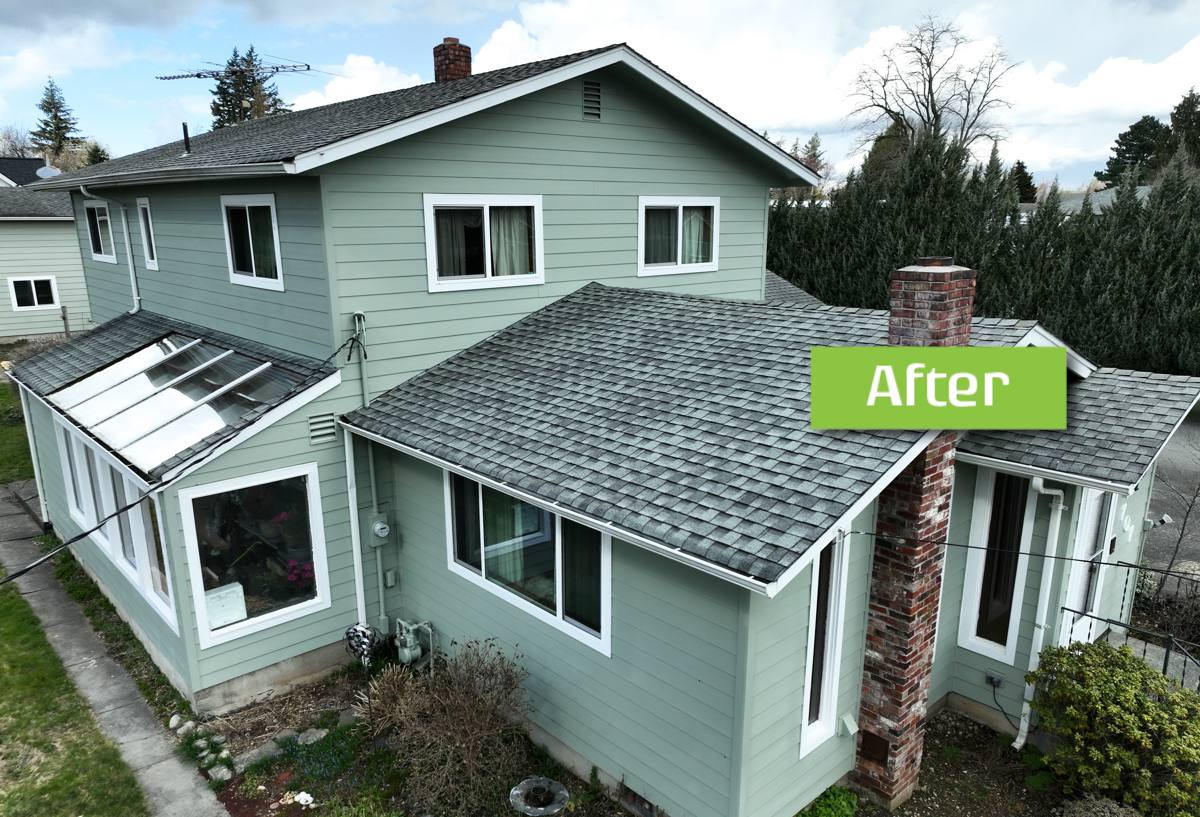
What Salt Air, Driving Rain, and Moss Season Actually Do to a Roof
Each of these three factors attacks a shingle roof differently, and understanding the mechanism matters more than the general warning.
Salt Air
Airborne salt accelerates corrosion on any exposed metal — nail heads, flashing, drip edge, and vent stacks. Once fasteners or flashing start to corrode, they lose their ability to hold a watertight seal, and that's usually where a "roof leak" actually starts, not in the shingles themselves.
Driving Rain
Rain that comes in sideways during a windstorm behaves differently than rain falling straight down. It can work its way under shingle tabs, around chimneys, and into valleys that weren't detailed correctly. A roof that sheds vertical rain fine can still leak in a driving rain event if the underlayment, flashing laps, and valley work weren't built for wind-driven water.
Moss Season
Whatcom County's damp, shaded conditions give moss a long growing window. Moss holds moisture directly against the shingle surface, which shortens shingle life, and as it spreads it lifts shingle edges, creating small gaps that let water track underneath. Left unaddressed for a few seasons, moss growth alone can cut meaningfully into the useful life of an otherwise sound roof.
Choosing the Right Asphalt Shingle for a Puget Property
Not every asphalt shingle product is built the same way, and the differences matter more in a climate like this than they would somewhere drier. We generally steer homeowners toward algae-resistant, higher wind-rated products for this area, and explain the trade-offs honestly rather than upselling for its own sake.
| Shingle Type | Typical Lifespan | Best Fit for Puget Conditions |
|---|---|---|
| 3-Tab (economy) | 15–20 years | Lower upfront cost, but less wind resistance and shorter moss-resistant coating life |
| Architectural / Dimensional | 25–30 years | Heavier, better wind and impact performance, our standard recommendation for this area |
| Algae-Resistant (AR) Coating | Same as base shingle | Copper- or zinc-infused granules that slow moss and algae growth — worth the small upcharge given local moss pressure |
| Premium / Designer | 30+ years | Best appearance and durability; makes sense on prominent, street-facing roofs |
We don't push the most expensive tier on every job. On a roof with heavy tree cover and long moss exposure, the algae-resistant upgrade is usually worth more than a jump to a premium designer line. On a more exposed, wind-heavy lot, wind rating matters more than the coating. We'll walk through what fits your specific property rather than quoting one package for everyone.
What a Correct Asphalt Shingle Job Actually Involves
A shingle roof is a system, not a single product. Where roofs in this climate fail early, it's almost always because one layer of that system was skipped or rushed — not because the shingles themselves were bad.
- Deck inspection and repair: Any soft, delaminated, or water-stained sheathing gets replaced before new material goes down, not covered over.
- Ice and water shield at vulnerable points: Eaves, valleys, and roof-to-wall transitions get a self-adhering waterproof membrane underneath, which is the single biggest defense against wind-driven rain intrusion.
- Synthetic underlayment across the full deck: A continuous, properly lapped underlayment is the roof's backup layer if wind ever pushes water past the shingles.
- Corrosion-resistant flashing and fasteners: Given the salt air here, we use flashing and fastener materials chosen to resist corrosion, not the cheapest available option.
- Proper valley and penetration detailing: Valleys, chimneys, skylights, and vent penetrations are where most leaks originate, so these get extra attention rather than a quick pass.
- Balanced attic ventilation: Intake and exhaust venting that moves air correctly, which keeps the deck dry from underneath and helps the shingles perform for their full rated life.
- Correct nailing pattern and shingle exposure: Manufacturer nailing specs exist for wind resistance — shortcuts here are invisible until the first real windstorm.
How We Approach a Roofing Project in Puget
Inspection and Honest Estimate
We start by getting on the roof (weather permitting) and in the attic, not just looking from the ground. That's the only way to catch deck damage, ventilation problems, or moss-related lifting before they turn into a change order mid-project. You get a written estimate that separates what's actually needed from what's optional.
Tear-Off and Deck Prep
We remove old roofing down to the deck rather than layering over existing shingles, which lets us actually see and fix what's underneath — the part of the job that determines whether a new roof lasts 15 years or 30.
Installation
Underlayment, flashing, and shingles go down in the sequence and detail described above, with particular care at valleys, eaves, and any point where the roof meets a wall or penetration.
Cleanup and Walkthrough
We clear debris and run a magnetic sweep for stray nails, then walk the finished roof with you so you know what was done and what to watch for going forward.
Ventilation and Moss: The Long-Term Maintenance Side
A well-installed roof still needs a little seasonal attention in a place like this. Balanced ventilation reduces the moisture buildup that feeds moss, but it doesn't eliminate moss pressure entirely under heavy tree cover. We recommend periodic soft washing or gentle moss removal (never pressure washing directly on shingles, which strips granules) and keeping gutters clear so water isn't sitting against the roof edge. If your property has significant overhanging trees, trimming back branches to improve sun exposure and airflow makes a real difference in how long moss takes to return.
What Drives the Cost of a Shingle Roof in This Area
| Factor | Why It Matters Here |
|---|---|
| Roof size and pitch | Steeper roofs take longer to work safely and use more material per square |
| Deck condition | Moisture damage from long-term moss growth or old leaks often means sheathing replacement |
| Shingle tier | Algae-resistant and higher wind-rated products cost more upfront but reduce moss-related maintenance |
| Flashing and penetrations | More valleys, chimneys, and skylights mean more detail work and material |
| Ventilation upgrades | Adding or correcting intake/exhaust venting protects the investment but adds scope |
| Access and tree cover | Limited access or heavy overhead branches can affect setup time and disposal |
We'd rather give you a real number after seeing the roof than a rough figure over the phone that changes once we're up there. Every estimate breaks out labor and materials so you can see exactly what you're paying for.
Signs a Puget Homeowner Shouldn't Ignore
- Moss or dark streaking concentrated on north-facing or shaded slopes
- Granules collecting in gutters or at downspout outlets
- Curling, cupping, or lifted shingle edges, especially after a windstorm
- Rust staining around vent stacks, flashing, or nail heads
- Daylight visible through the roof deck from inside the attic
- Soft spots or sagging noticeable when walking the roof
- Water stains on interior ceilings following heavy rain
Catching any of these early usually means a repair instead of a full replacement.
Why Local Experience Matters for This Job
A crew that only occasionally works in Whatcom County can install a technically fine roof and still get the details wrong for this specific climate — underspecifying wind rating, skipping algae-resistant shingles, or missing how much moss pressure a shaded Puget lot actually sees. We work in this area regularly enough to know which details matter here versus in a drier, more open part of the state, and we build every roof accordingly rather than applying a one-size-fits-all spec sheet.
If you're dealing with an aging roof, active moss growth, or you just want an honest read on where things stand, we're happy to take a look. Request a free, no-pressure estimate using the form below and we'll get you a straight answer on what your roof actually needs.