 Bellingham
 Why Ferndale Roofs Wear Differently Than Roofs Inland
Ferndale sits close enough to the water and open farmland that roofs here take a different kind of beating than a roof twenty miles inland in Whatcom County. You get salt-laden air drifting off the bay, wind-driven rain that finds its way under poorly lapped shingles, and a moss season that can run eight or nine months out of the year in shaded, north-facing sections of a roof. None of these factors are dramatic on their own, but stacked together over ten or fifteen years, they shorten the useful life of a roof that would have lasted much longer somewhere drier and sunnier.
We replace roofs across Bellingham and the surrounding communities, and Ferndale jobs consistently show a specific wear pattern: fastener corrosion showing up earlier than the shingle manufacturer's warranty would suggest, moss colonies bridging shingle tabs and lifting them just enough to let wind-driven rain underneath, and valleys and eaves that stay damp long after the rest of the roof has dried out. Understanding that pattern before we ever get on the roof changes how we spec the replacement.
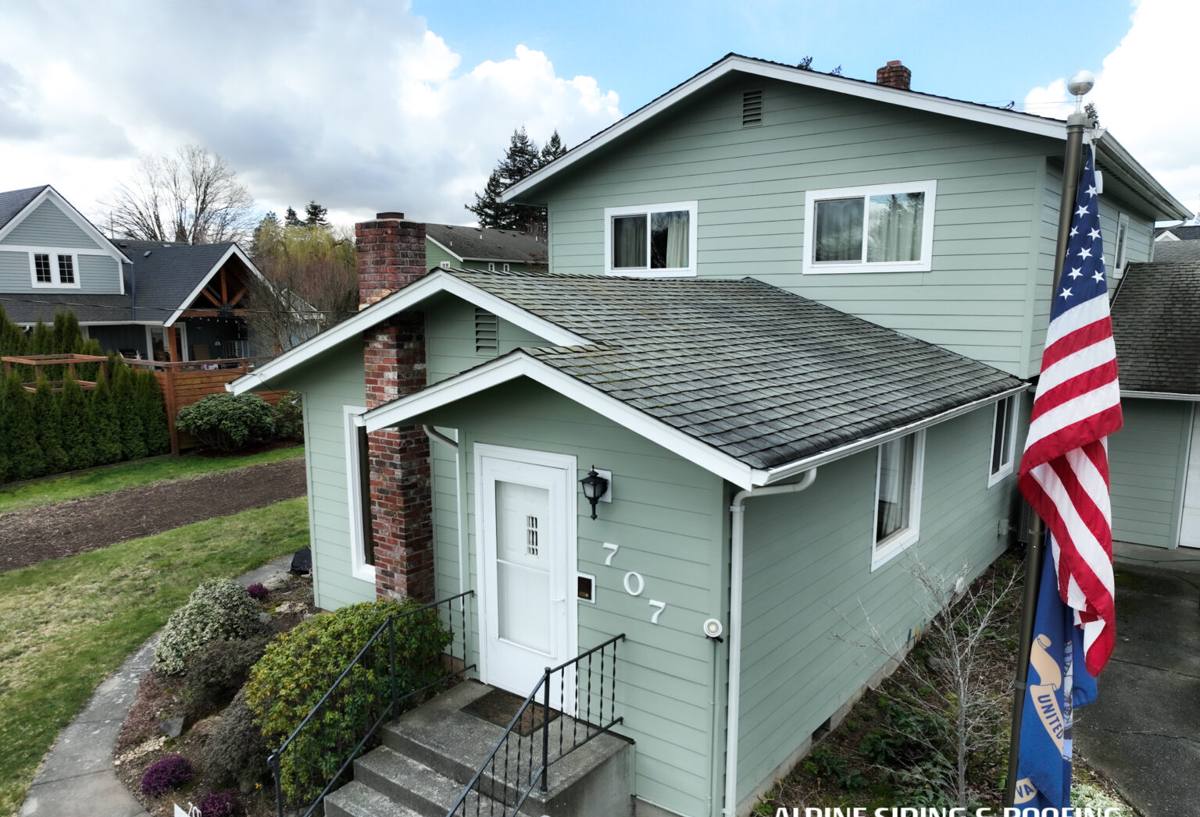
What Salt Air Actually Does to a Roof
Salt air isn't just a coastal curiosity — it's corrosive to exposed metal. On a roof, that means:
- Standard electro-galvanized nails and fasteners can start showing rust streaks years before a stainless or hot-dip galvanized fastener would.
- Flashing, roof vents, and any exposed metal trim are more prone to pitting and early corrosion if the wrong metal or coating was used originally.
- Rust streaks bleeding down through shingles are a visible sign the fastening system underneath is degrading, even when the shingles themselves still look serviceable from the ground.
The fix isn't complicated, but it does require choosing the right materials up front rather than defaulting to whatever's cheapest at the supply house. On a Ferndale replacement we spec corrosion-resistant fasteners and flashing as standard practice, not as an upsell — it's simply what holds up in this environment.
Driving Rain and Wind-Driven Water Intrusion
Ferndale gets plenty of straight-down rain, but the problem roofs is the sideways kind — rain pushed horizontally by wind off open fields or the water, forced up and under shingle edges instead of running down and off. A roof system built for calmer conditions can handle normal rainfall fine and still leak during a wind-driven storm because the underlayment, ice-and-water membrane placement, and shingle sealing weren't built with lateral water intrusion in mind.
A correct replacement addresses this at the underlayment and detail level — self-adhered membrane at eaves, valleys, and any wall-to-roof transitions, plus proper starter strip and cap nailing so the shingle field itself resists wind uplift and doesn't give water a path to work under the tabs.
Moss: The Slow, Quiet Damage
Moss doesn't cause dramatic failures overnight, which is exactly why it's dangerous — it works slowly enough that homeowners often don't connect it to a leak until the underlayment or decking underneath is already compromised. Here's the mechanism:
- Spores settle into shaded, north-facing, or tree-covered sections of the roof where shingles stay damp longer between rain events.
- As moss colonies establish, they physically lift shingle edges and tabs, breaking the seal that keeps water running off rather than pooling.
- Roots and organic material hold moisture against the shingle surface, accelerating granule loss and shingle aging in that specific area.
- Water that gets under lifted shingles can travel along the deck before showing up as an interior stain, so the visible damage often lags well behind the actual intrusion point.
On an existing roof, moss can sometimes be managed with treatment and gentle removal. But on a roof that's due for replacement anyway, this is the moment to correct the underlying conditions — trimming back overhanging growth where it's within our scope, using algae-resistant shingles, and making sure ventilation is adequate so the deck dries out between rain events instead of staying damp.
What a Correct Roof Replacement Involves
A roof replacement done right in Ferndale isn't just stripping old shingles and nailing down new ones. The sequence matters:
- Tear-off and deck inspection — every square foot of decking gets checked once the old roofing is off. Soft, delaminated, or moss-damaged sheathing gets replaced before anything new goes down, not patched over.
- Ice-and-water membrane at eaves, valleys, and any low-slope transitions, since these are the areas most exposed to wind-driven rain and standing moisture.
- Synthetic underlayment across the field for a consistent secondary water barrier that outperforms old-style felt in wet climates.
- Corrosion-resistant fasteners and flashing, given the salt air exposure common to this area.
- Proper ventilation — intake at the eaves and exhaust at the ridge, balanced so the attic space actually moves air instead of trapping humidity that feeds moss and rot from underneath.
- Algae-resistant shingles where moss and moisture are a known issue, which slows regrowth without pretending it eliminates the need for occasional roof cleaning.
Skipping any one of these steps doesn't usually show up as a problem in year one. It shows up in year seven or eight, as a leak that traces back to a shortcut nobody saw at the time.
Our Process for a Ferndale Roof Replacement
1. On-Site Assessment
We walk the roof and the attic, not just the roof. Attic conditions — insulation, ventilation, any existing moisture staining on the underside of the deck — tell us as much about what the new roof needs as the shingle surface does.
2. Straight Written Estimate
You get a written scope covering materials, tear-off, deck repair contingencies, and timeline, so there's no ambiguity about what's included versus what would be an added cost if we find rotted decking once tear-off starts.
3. Material Selection
We'll walk you through shingle options, including algae-resistant lines, and explain the trade-offs honestly — some products have better warranty structures, some handle this climate's moisture cycles better, and we'll tell you which is which rather than just pushing whatever has the best margin.
4. Tear-Off and Installation
Full tear-off, deck inspection and repair as needed, underlayment, flashing, and shingle installation in sequence, with attention to the details above that matter most for this specific environment.
5. Final Walkthrough
We walk the finished roof and the site with you before we consider the job done — ventilation, flashing details, cleanup, and any questions about maintenance going forward.
Cost Factors for a Ferndale Roof Replacement
Every roof is different, but the variables that move the price on a Ferndale job tend to be the same handful of things:
| Factor | Why It Matters Here |
|---|---|
| Roof size and pitch | More surface area and steeper pitches mean more material and labor time |
| Deck condition | Moss and moisture exposure make hidden deck rot more common than in drier areas — this can only be confirmed once tear-off starts |
| Number of layers to remove | Some older Ferndale homes have a second layer of shingles installed over the first, which adds tear-off time |
| Flashing and penetrations | Chimneys, skylights, and multiple roof valleys all add detail work, and corrosion-resistant flashing costs more than standard |
| Shingle grade chosen | Algae-resistant and higher-tier shingles cost more up front but hold up better against this area's moss and moisture cycle |
| Ventilation upgrades | Adding or correcting attic ventilation during the reroof is far cheaper than doing it as a separate project later |
We're not going to quote a number without seeing the roof — anyone who does is guessing. What we can tell you is which of these factors is likely to matter on your specific house once we've had a look.
Signs a Ferndale Roof Needs Replacing, Not Patching
- Granule loss heavy enough that you're finding shingle granules in gutters or downspouts regularly.
- Moss established across multiple sections, not just an isolated patch you can spot-treat.
- Curling, cupping, or cracked shingle tabs, especially on south or west-facing slopes that see the most sun-to-rain cycling.
- Rust staining around fasteners, vents, or flashing.
- Visible sagging anywhere in the roofline, which can indicate deck or structural moisture damage.
- Interior water stains on ceilings or in the attic, even if they've only shown up once.
- A roof already past 20-25 years old, which is roughly when many asphalt shingle roofs in this climate start showing their age regardless of how well they were maintained.
One or two of these on their own might mean a repair is enough. Several together usually mean the roof system as a whole is past the point where patching makes financial sense.
Why Local Experience with Ferndale Conditions Matters
A roofing crew that mostly works drier, inland regions can still install a technically correct roof — but "correct for the manual" and "correct for Whatcom County's coastal edge" aren't always the same spec. Fastener choice, underlayment placement, ventilation balance, and shingle selection all shift when you're accounting for salt air and a long wet-moss season rather than just following a generic install guide.
We work Ferndale and the surrounding Bellingham area regularly, which means we're not guessing at how a roof here ages — we're replacing roofs that failed for reasons specific to this climate, and building the next one to hold up better against those same conditions. That's the difference between a roof that looks right on installation day and one that's still performing well a decade later.
If your roof is showing any of the wear signs above, or it's simply getting close to the age where replacement makes more sense than another round of patching, we're happy to take a look and give you a straight assessment. Fill out the form below for a free, no-pressure estimate.