 Bellingham
 Sehome's Siding Climate: Salt Air, Driving Rain, and a Long Moss Season
Sehome sits close enough to Bellingham Bay that salt-laden air is part of daily weather, and close enough to the water that wind-driven rain hits homes from angles that inland siding never has to deal with. Add in the tree canopy that shades a lot of Sehome's older lots, and you get siding that stays damp longer after every storm than siding on an open, sun-exposed lot across town. In Whatcom County, that combination — salt, rain, and shade — adds up to a moss and mildew season that can run from early fall through late spring, not just a few weeks in winter.
None of that is a reason to panic about your siding. It's a reason to be specific about what material goes on the house and how it gets installed. Wood siding softens and holds moisture. Vinyl flexes, gaps, and gives algae somewhere to grip. The siding that holds up best here is dense, factory-finished fiber cement, installed with the water management details done correctly the first time — because in a climate like this, there usually isn't a dry stretch long enough to forgive a sloppy install.
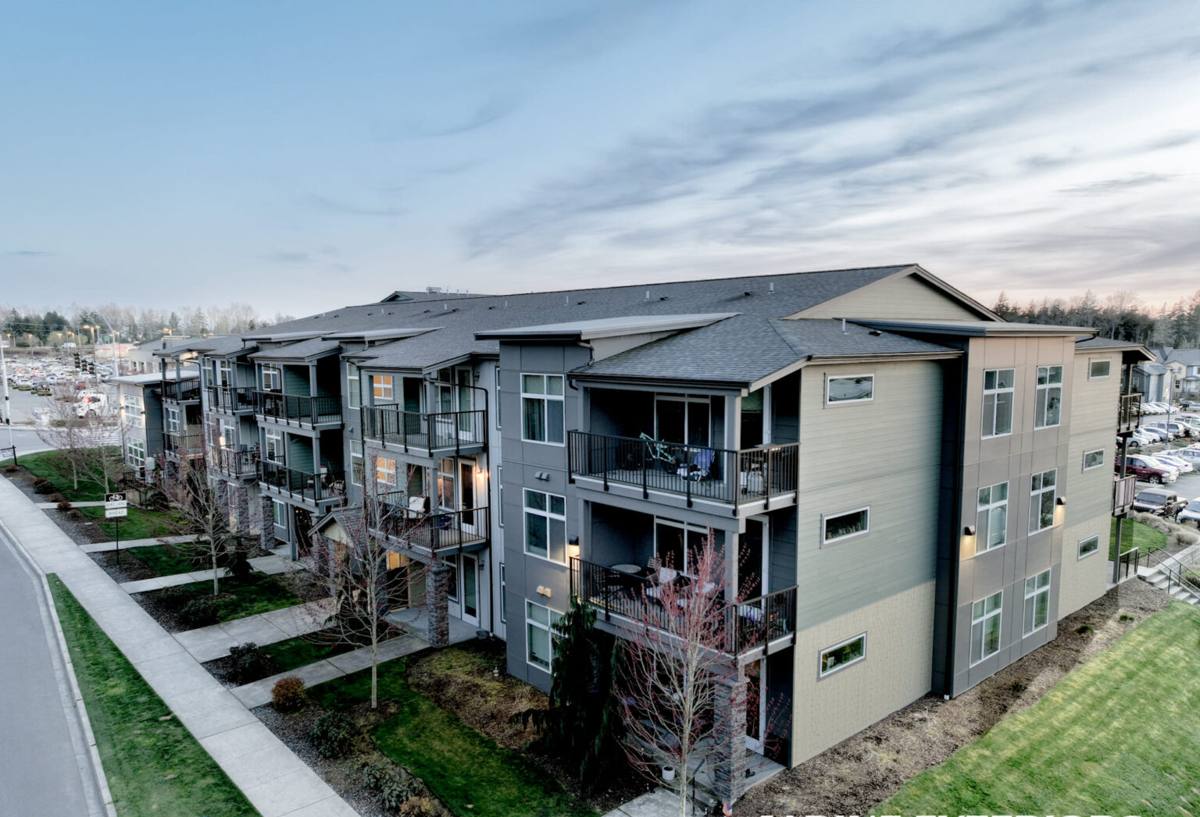
Why James Hardie Fits a Sehome House
We install James Hardie fiber cement siding exclusively, and in a marine climate like Bellingham's, the reasoning is straightforward rather than a sales pitch. Hardie's boards are engineered for exactly this kind of weather exposure:
- HZ5 engineering. James Hardie manufactures its products to regional climate specifications, and the Pacific Northwest falls under the HZ5 category — built to resist moisture cycling and freeze-thaw stress rather than the hot-humid profile used for Gulf Coast markets.
- Factory-cured ColorPlus finish. The color is baked on at the factory under controlled conditions, not brushed on outdoors between rain showers. That finish resists fading, chalking, and the kind of moisture absorption that lets mildew take hold on painted wood.
- Dimensional stability. Fiber cement doesn't swell and shrink with humidity the way wood does, so caulk joints and paint lines stay intact through repeated wet-dry cycles instead of cracking open every winter.
- Non-combustible core. Not a Bellingham-specific concern the way it is further inland during wildfire season, but it's part of why we standardized on this product across every job we do.
None of that means Hardie is maintenance-free. It means the material itself isn't the weak point — the installation is, which is where most siding problems in this climate actually start.
What a Correct Installation Involves
Ground and Roofline Clearance
Siding installed too close to grade, a deck, or a roofline wicks water straight into the bottom edge of the board. Manufacturer specs call for a minimum clearance at grade and at any horizontal surface, and on a lot with heavy planting or a raised bed against the foundation, that clearance gets ignored more often than it should. We check it on every wall, every time, because it's the single easiest detail to get wrong and the hardest one to fix later without pulling boards back off.
Flashing and Water Management
Windows, doors, and any horizontal trim need proper flashing and a correctly lapped weather-resistive barrier behind the siding — not caulk used as a substitute for flashing. In a climate where wind-driven rain can push water sideways under trim, the drainage plane behind the siding matters as much as the siding itself. This is also where older Sehome homes tend to show their age: original flashing details from decades ago often don't meet current water-management standards, even if the siding on top of them looks fine.
Fastening and Joint Treatment
Hardie specifies fastener type, spacing, and embedment depth, and those specs exist for a reason — over- or under-driven nails cause the board to sit wrong and open a path for moisture. Butt joints and seams need to be treated per manufacturer instructions, whether that's a sealant designed for the product or a factory joint system, not general-purpose caulk that will fail under repeated soaking.
Ventilation Behind the Cladding
A rainscreen or ventilation gap behind the siding lets any moisture that does get behind the boards dry out instead of sitting against the sheathing. In a climate with as much sustained damp weather as Bellingham gets, that gap is the difference between siding that dries between storms and sheathing that slowly rots behind siding that looks perfectly fine from the street.
Signs Your Current Siding Is Losing the Fight
On siding calls around Sehome, the same handful of warning signs come up again and again:
- Green or black staining that comes back within weeks of being cleaned, especially on north-facing or shaded walls
- Paint that's peeling or bubbling in patches rather than fading evenly
- Soft spots or visible swelling at board edges, corners, or below windows
- Caulk joints that have cracked open or pulled away from trim
- A musty smell near exterior walls inside the house, which usually means moisture has already reached the sheathing
Any one of these is worth a look. Several at once usually means the water management behind the siding has been compromised for a while, not just that the surface needs a wash.
Our Process, Start to Finish
1. On-Site Assessment
We walk the exterior, check problem areas at grade, trim, and penetrations, and look at what's actually happening behind the siding where we can access it — not just the surface condition.
2. Tear-Off and Sheathing Check
Old siding comes off and we inspect the sheathing underneath before anything new goes up. If there's rot or damage from a prior water problem, that gets addressed before a single new board is hung — covering it up would just repeat the same failure.
3. Weather Barrier and Flashing
A correctly lapped weather-resistive barrier and new flashing at every window, door, and horizontal transition go on next, sized and detailed for this region's rainfall, not a generic minimum.
4. Hardie Installation to Manufacturer Spec
Boards, fasteners, and joint treatments installed per James Hardie's published instructions for the specific product line, with clearances checked at grade, roofline, and any attached structure.
5. Trim, Caulk, and Touch-Up
Trim details finished, factory-finish touch-up applied where cuts exposed raw edges, and a final walk-through so you know exactly what was done and why.
James Hardie Compared to Other Siding Options for This Climate
| Material | Moisture Behavior in a Marine Climate | Finish Longevity | Where We Stand |
|---|---|---|---|
| James Hardie fiber cement | Dense, dimensionally stable, resists moisture absorption at the board level | Factory ColorPlus finish, typically 15-year finish warranty depending on product | What we install |
| Vinyl | Doesn't absorb water, but seams and panels flex and can allow water behind the cladding | Color is through the material but can fade and become brittle over time | Not installed by us |
| Cedar or primed wood | Absorbs moisture readily; needs consistent paint maintenance to hold up in this climate | Paint film typically needs attention every 3-7 years in wet climates | Not installed by us |
| LP SmartSide | Engineered wood strand product; performs well when detailed correctly but is more installation-sensitive around cut edges and moisture exposure | Factory finish varies by product line | Not installed by us |
This isn't a claim that other products fail on every house — plenty of homes around Bellingham have vinyl or wood siding that's holding up fine. It's why, when we're the ones installing your siding, we install the product we trust to perform consistently in this specific climate rather than juggling multiple systems with different moisture tolerances and installation requirements.
What Affects the Cost of a Sehome Hardie Project
| Factor | Why It Matters |
|---|---|
| Wall square footage and cutouts | More windows, dormers, and trim transitions mean more cutting, flashing, and labor time |
| Condition of the sheathing underneath | Rot repair found during tear-off adds cost but prevents a repeat failure under new siding |
| Product line and profile | Lap siding, shingle-style panels, and board-and-batten carry different material and labor costs |
| Access and site conditions | Steep lots, mature landscaping, or tight setbacks common on older Sehome parcels can affect staging and labor time |
| Existing water damage | Homes with a history of moisture intrusion may need additional flashing or sheathing work beyond a standard re-side |
We give a written, itemized estimate before any work starts, so you know what you're paying for and why — not a lump number with no breakdown.
Why a Crew That Already Works Sehome Matters
Installation quality is the deciding factor in how long James Hardie siding performs, and that quality shows up most in the details a homeowner can't easily inspect after the fact — flashing laps, fastener embedment, clearance at grade. A crew that regularly works Bellingham's close-in neighborhoods already knows the local permitting process, has already handled the tree-canopy-and-moisture combination on other Sehome-area homes, and isn't guessing at how much rain exposure this specific part of Whatcom County actually gets over a winter.
Before hiring anyone for a Hardie project, it's worth checking:
- Are they James Hardie–trained or factory-certified, not just familiar with the product?
- Will they show you the flashing and water-barrier details in writing, not just the finished appearance?
- Do they pull the required local permits, and can they explain the process?
- Will they inspect and address sheathing condition during tear-off rather than siding over existing damage?
- Do they install one siding system consistently, or juggle several products with different spec sheets?
A siding job done right in this climate should hold its finish, its seams, and its water management for decades, not just look good for the first dry summer.
If you're weighing a re-side in Sehome or anywhere else in the Bellingham area, we're happy to take a look and walk you through what your specific house needs — no pressure, no obligation. Request a free estimate below and we'll go from there.