 Bellingham
 Siding Installation in Barkley: What This Neighborhood Actually Needs
Barkley sits far enough from downtown Bellingham to feel like its own community, but it shares the same weather problems as the rest of Whatcom County — and in some ways, gets them worse. Homes here deal with the same marine-driven rain load as the rest of Bellingham, plus the moisture that collects under mature tree canopy and landscaped berms common in the newer developments and golf-course-adjacent lots throughout the area. That combination of shade, damp air, and rain that comes in sideways off Bellingham Bay is exactly the environment where the wrong siding choice shows its weaknesses fastest.
We install James Hardie fiber cement siding exclusively. Not because it's the only decent product on the market, but because after years of tearing old siding off Whatcom County homes, it's the one system we're willing to put our name behind in this climate. This page is about what a correct siding installation looks like specifically for a Barkley home — not a generic "why siding matters" pitch.
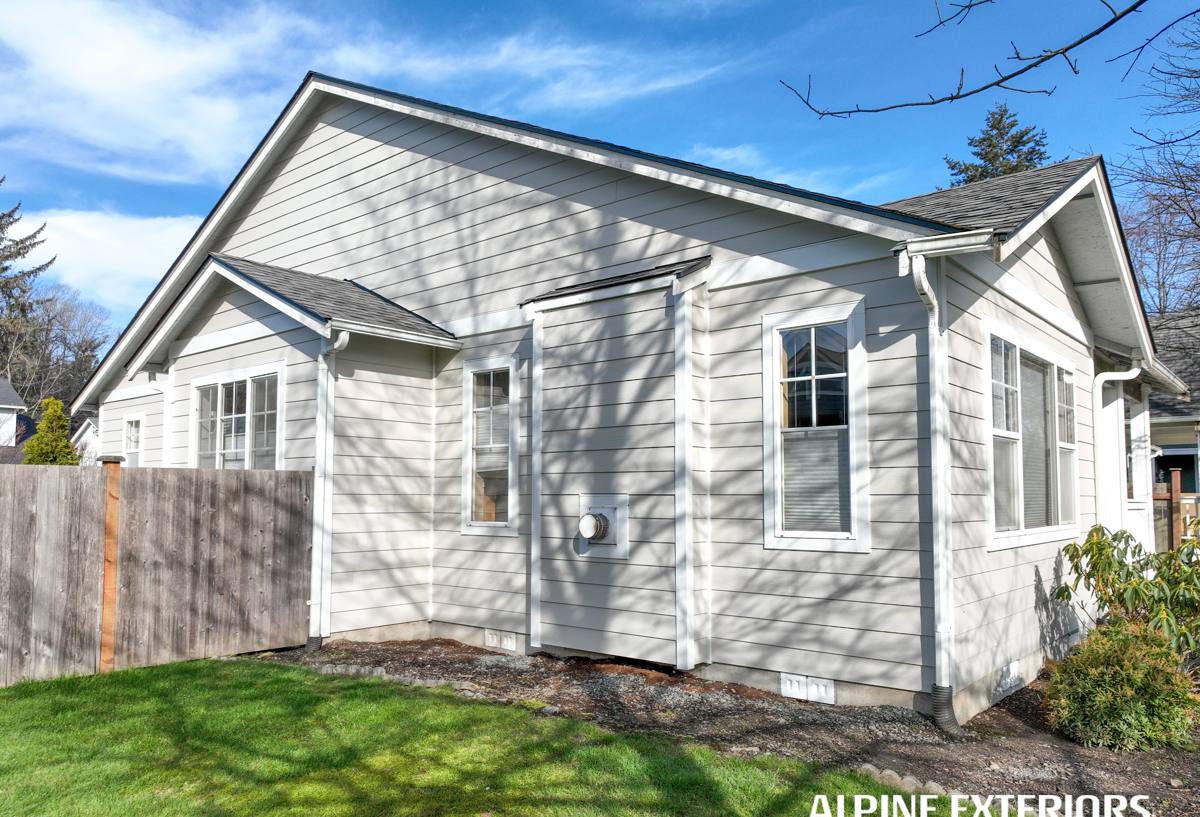
Why Barkley's Climate Is Harder on Siding Than It Looks
Salt Air Reaches Further Than People Assume
Bellingham Bay's salt air doesn't stop at the waterfront. It rides the prevailing wind inland and settles on every exterior surface it touches, including homes well up into the Barkley area. Salt-laden moisture accelerates corrosion on fasteners, trim flashing, and any metal component in a siding system. It also speeds up the breakdown of paint films that aren't formulated to resist it, which is why so many older homes in this part of Bellingham show chalking, fading, and peeling years before a homeowner expects to repaint.
Driving Rain Finds Every Gap
Whatcom County doesn't just get a lot of rain — it gets a lot of wind-driven rain, which behaves very differently than a straight vertical downpour. Wind-driven rain gets pushed sideways and upward into laps, seams, and butt joints that would stay dry in a calmer climate. A siding system that isn't detailed for that reality — proper lap coverage, correctly sealed penetrations, flashing that actually sheds water instead of trapping it — will eventually let moisture behind the cladding, even if the surface material itself never fails.
Moss Season Isn't a Cosmetic Problem
Bellingham's moss season runs long, and Barkley's tree cover and shaded lots make it worse in spots. Moss and algae growth on siding is often treated as a cosmetic annoyance, but it holds moisture directly against the wall surface for months at a time. On materials that swell, absorb water, or rely on a factory finish that degrades under prolonged dampness, that sustained moisture contact is what eventually causes real damage — not a single storm, but months of low-grade saturation every year.
What Correct Siding Installation Involves
A siding installation is only as good as the water management system underneath it. The visible siding is the last layer, not the only one that matters.
- Removal of old siding down to the sheathing, with an inspection for rot, soft spots, or prior moisture damage before anything new goes on
- Repair or replacement of any compromised sheathing — covering over damaged wood just traps the problem
- A correctly lapped and sealed weather-resistive barrier (housewrap) installed over the sheathing
- Proper flashing at every window, door, deck ledger, and roofline intersection — the points where most real-world leaks originate
- Rain screen or furring strips where the wall assembly calls for a drainage gap, especially important on shaded, damp lots like many in Barkley
- James Hardie panels, planks, or shingles installed to the manufacturer's fastening and clearance specifications
- Correct minimum clearance from grade, decks, patios, and roof lines to keep the siding out of standing water and splash-back
- Factory-finished ColorPlus caulking and touch-up only where the manufacturer specifies it — not as a substitute for proper flashing
Skip any one of these steps and the siding can look fine for a few years while moisture quietly works on the structure behind it. This is the part of the job that doesn't show up in a driveway estimate but determines whether the installation lasts 30 years or 8.
Why We Only Install James Hardie
We get asked why we don't offer vinyl, LP SmartSide, or other fiber cement brands as cheaper options. The honest answer is that we standardized on one product because we got tired of being called back to fix problems that started with the material, not the installation.
Non-Combustible Material
James Hardie fiber cement is non-combustible, which matters more every year in Washington as wildfire smoke and ember exposure become a bigger part of the conversation around home exteriors, even on the west side of the state.
Engineered for This Climate
Hardie's HZ5 product line is specifically engineered for climates with freeze-thaw cycling and high moisture exposure — which describes Whatcom County well. It's not a generic national product; it's built with regional weather exposure in mind.
Factory Finish Holds Up to Salt Air and UV
ColorPlus is a baked-on factory finish, not a field-applied paint job. It resists fading, chalking, and peeling far better than site-applied paint, which matters directly in a salt-air environment like Bellingham's, where field-painted trim and siding tend to fail early.
It Doesn't Feed Moss and Algae the Way Wood-Based Products Can
Fiber cement doesn't swell, rot, or provide the same organic surface that wood-based siding does. In a neighborhood with Barkley's tree cover and long damp season, that's a meaningful difference over a 20-30 year ownership horizon.
A Warranty Structure Backed by the Manufacturer
Hardie's transferable warranty is a real asset at resale, which matters in a desirable, established neighborhood like Barkley where homes tend to change hands with buyers who ask pointed questions about exterior condition and remaining siding life.
Comparing Siding Options for a Barkley Home
| Factor | James Hardie Fiber Cement | Vinyl | Wood / Engineered Wood |
|---|---|---|---|
| Combustibility | Non-combustible | Combustible, can melt/warp | Combustible |
| Moisture behavior | Doesn't absorb/swell | Doesn't absorb, but can trap moisture behind it | Absorbs moisture, prone to rot if finish fails |
| Finish longevity in salt air | Factory ColorPlus finish, long fade resistance | Color molded in, but can fade and become brittle | Field-applied paint, shorter repaint cycle |
| Moss/algae resistance | Doesn't feed organic growth | Resistant but can trap moisture underneath | More susceptible, especially in shaded areas |
| Warranty | Strong, transferable manufacturer warranty | Varies widely by brand | Often limited or none on the material itself |
Our Process for a Barkley Installation
Every job starts with a walk of the property, not a phone estimate. We look at grade slope, tree cover, existing moisture damage, roofline intersections, and how exposed the home is to prevailing wind and rain direction — all of which affect the actual scope of work more than the square footage does.
- On-site inspection and measurement, including a check of sheathing condition where old siding is coming off
- Written estimate that separates material, labor, and any sheathing or flashing repair as a distinct line item — no vague lump sums
- Scheduling that accounts for Whatcom County's wet season, since tear-off work needs dry windows to keep sheathing protected
- Full tear-off, sheathing repair as needed, weather-resistive barrier, and flashing before a single piece of Hardie goes up
- Installation to Hardie's fastening and clearance specifications, with attention to the rain screen detail on shaded or damp elevations
- Final walkthrough with the homeowner before we consider the job finished
What to Check Before Hiring Anyone for This Job
- Ask specifically what weather-resistive barrier and flashing details they use — not just what siding brand they sell
- Ask how they handle rain screen or drainage gaps on shaded, damp elevations
- Ask whether they're a certified or experienced Hardie installer, since improper fastening voids manufacturer warranty coverage
- Get the sheathing repair terms in writing before the tear-off starts, not after damage is found
- Ask how they schedule around Whatcom County's rainy season to protect open walls during the job
Why Local Experience in Barkley Matters
A crew that already works in Bellingham and Whatcom County knows what a Barkley home is dealing with before they pull the first piece of old siding off: the tree canopy, the shaded north-facing walls that never fully dry out, the salt air drifting up from the bay, and the wind-driven rain pattern that's different from what a contractor coming from a drier inland climate would expect. That local knowledge changes real decisions on the job — where to add rain screen furring, how much clearance to leave at grade, which elevations need extra attention to flashing. It's the difference between an installation that's technically done to code and one that's actually built for how this neighborhood's weather behaves.
If you're planning a siding project in Barkley, we're happy to walk the property, look at what's there now, and give you a straightforward, no-pressure estimate for a James Hardie installation done right the first time. Fill out the form below to get started.