 Bellingham
 Why Siding Repair Looks Different in Blaine
Blaine sits about as close to the water and the border as a Whatcom County home can get, and that location shapes what siding repair actually means here. A cracked panel or a soft spot near the foundation isn't just cosmetic — it's usually a sign that wind-driven rain, salt-laden air off the strait, or a long stretch of shaded moss growth found a weak point and worked it over months or years. Repairing siding correctly in Blaine means understanding that combination of exposures, not just patching whatever is visibly damaged.
We get calls from Blaine homeowners at every stage: a few damaged boards after a windstorm, a stretch of siding that's stayed damp and started to sag, or trim that's pulling away from the house. In almost every case, the visible damage is the last step in a process that started with moisture finding a gap. Good repair work stops that process — it doesn't just cover it up.
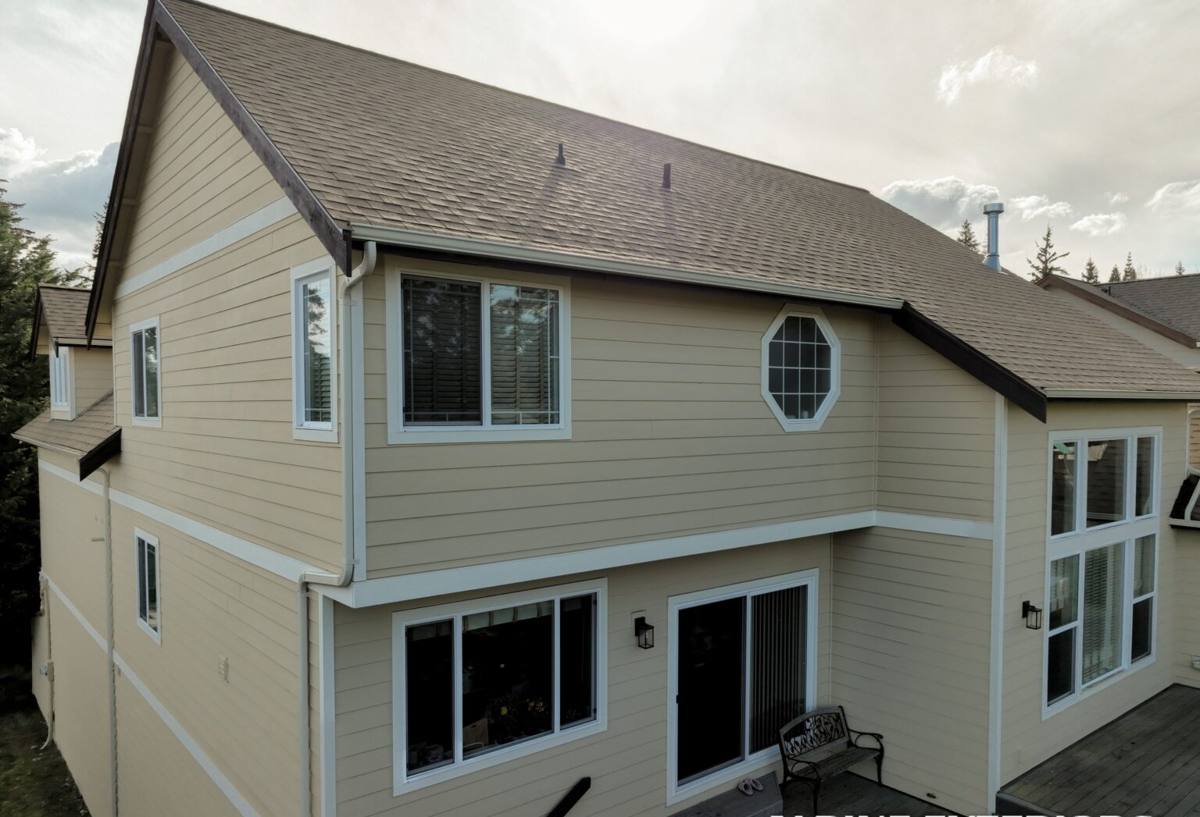
What Blaine's Climate Does to Siding Over Time
Salt Air
Blaine's proximity to Semiahmoo Bay and the Strait of Georgia means siding, fasteners, and trim are exposed to salt-carrying air more than homes further inland in Whatcom County. Salt accelerates corrosion in exposed fasteners and metal trim, and it can slowly degrade paint films and caulk joints faster than a typical inland exposure. Siding materials and finishes that hold up fine 20 miles inland can show wear sooner this close to open water.
Driving Rain
Storms off the water don't just drop rain straight down — they push it sideways into wall assemblies, seams, and butt joints. Siding that isn't lapped, flashed, and caulked correctly will eventually let that wind-driven rain behind the cladding, where it can sit against sheathing and framing long after the storm passes. This is one of the most common root causes we find behind soft or swollen siding in Blaine.
Moss Season
Shaded north- and west-facing walls, tree cover, and the region's long wet season give moss and algae a real head start in Blaine. Moss holds moisture against the siding surface for extended periods, which is hard on any cladding material and especially hard on anything with an organic component like wood or wood-based composites. Left alone, moss growth doesn't just look bad — it keeps the wall assembly damp far longer than it should be.
Common Blaine Siding Problems We're Called Out For
Most repair calls in this area trace back to one of a handful of recurring issues. Recognizing them early is the difference between a straightforward repair and a much larger project.
- Soft, spongy, or visibly swollen siding panels, usually near the bottom courses or below windows
- Persistent moss or dark streaking on shaded walls that won't wash off and keeps coming back
- Cracked, split, or delaminating boards after a wind event
- Caulk that's shrunk, cracked, or pulled away from joints and trim
- Rust streaking below fasteners or trim, especially on walls facing the water
- Paint that's peeling, chalking, or blistering years ahead of schedule
- Gaps or separation where siding meets window and door trim
- A musty smell or visible staining on interior walls that back up to exterior siding
Any one of these on its own might be a small fix. Several of them together, especially on the same wall, usually mean water has been getting behind the siding for a while and the repair needs to address the underlying moisture path, not just the surface.
Repair or Replace? How We Make That Call
Not every damaged wall needs full re-siding, and we don't sell a replacement job when a targeted repair will genuinely hold up. The honest answer depends on how much of the wall is affected, what's underneath, and what the existing material is.
| Factor | Leans Toward Repair | Leans Toward Replacement |
|---|---|---|
| Extent of damage | Isolated to a few boards or one wall section | Spread across multiple walls or the whole elevation |
| Sheathing condition | Dry, solid framing once siding is pulled back | Soft or rotted sheathing found behind the siding |
| Existing material | James Hardie fiber cement, sound and matchable | Failing wood, LP-style composite, or discontinued product |
| Age of siding | Well within its expected service life | Already near or past the age other walls are showing wear |
| Moss/moisture history | One-time event, not chronic exposure | Chronic damp wall with a history of repeat problems |
We open up the affected area before quoting anything final. Siding that looks fine from the ground can be hiding soft sheathing, and siding that looks rough can sometimes be salvaged with a clean board swap and better flashing. We'd rather tell you the truth after a real inspection than guess from the driveway.
What a Correct Repair Actually Involves
A repair that actually solves the problem is more than swapping a damaged board for a new one. In a wet, salt-exposed climate like Blaine's, the details around the repair matter as much as the board itself.
- Diagnose before cutting. We find out why the original section failed — a flashing gap, a caulk joint, a drainage path — so the same spot doesn't fail again in two years.
- Check the sheathing and framing. Any soft or stained wood behind the siding gets addressed, not covered over.
- Correct the water path. Flashing, house wrap, and drainage gaps get restored to code-correct detailing, not just patched with sealant.
- Match the material and finish. Where the existing siding is James Hardie, we match the profile and ColorPlus finish so the repair blends in rather than standing out as a patch.
- Reseal and finish properly. Fresh caulk at joints, correctly fastened trim, and touch-up painting where needed so the repaired section weathers the same as the rest of the wall.
Our Repair Process, Start to Finish
- Inspection. We walk the affected walls, probe soft areas, and check for moss, staining, and fastener corrosion — inside and out where accessible.
- Diagnosis and honest scope. We tell you plainly whether this is a repair, a partial re-side of one elevation, or something bigger, and why.
- Written estimate. A clear scope of work and price before anything is opened up, with no pressure to upsize the job.
- Repair work. Damaged material removed, sheathing checked and addressed, flashing and drainage corrected, new material installed to spec.
- Finish and cleanup. Caulking, matched paint or factory-finish boards, and a final walk-through so you can see exactly what was done and why.
Why We Only Repair With James Hardie Materials
When we replace damaged siding sections, we install James Hardie fiber cement — the same standard we hold for full re-sides. Hardie's HZ product lines are engineered for climates like this one, and the ColorPlus factory finish holds up to sun, salt air, and driving rain better than field-applied paint on most other materials. It's non-combustible, resists moisture-driven swelling and rot in a way wood and wood-composite products can't, and it carries a strong transferable warranty that matters if you ever sell the home.
If your existing siding is a wood product, an old composite, or another material we don't install, we'll say so plainly and explain your real options — including a straightforward repair using compatible material if that's genuinely the right call, or a conversation about transitioning that wall or the whole house to Hardie if the existing material is nearing the end of its useful life. We won't talk you into a full re-side you don't need, and we won't pretend a patch will hold if the underlying material is already failing.
Why a Crew That Already Works Blaine Matters
Siding repair done well depends on understanding the specific exposure of the wall you're fixing — which direction it faces, how much wind-driven rain it takes in a winter storm, how long moss has had to work on it, and whether salt air has been quietly corroding fasteners nobody's looked at in years. A crew that regularly works Blaine and the surrounding Whatcom County waterfront has already seen these patterns on other homes nearby and knows where problems tend to start before they're visible from the street.
That familiarity shows up in small but real ways: knowing which elevations in this area typically need extra attention to flashing, recognizing early moss and moisture signs before they become structural, and matching repairs to Hardie's product lines correctly the first time. It's the difference between a repair that blends in and holds for years, and one that becomes a callback.
Get an Honest Look at Your Siding
If you're seeing soft spots, persistent moss, cracked boards, or failing caulk on your Blaine home, it's worth having someone look before the damage spreads to the sheathing underneath. We offer free, no-pressure estimates — we'll tell you honestly whether you need a repair, a partial re-side, or nothing at all right now.