 Bellingham
 Siding Replacement in Cordata: What Local Homes Are Up Against
Cordata sits in north Bellingham, close enough to the water and the lowland drainage of Whatcom County that its homes deal with a specific combination of punishment: salt-tinged marine air moving in off Bellingham Bay, long stretches of driving rain that comes in sideways during fall and winter storms, and a moss season that, depending on the year, barely takes a break. None of that is unusual for this part of Washington. What is worth paying attention to is what it does to siding over time, and why a straightforward-looking replacement job needs to be done a specific way here to actually hold up.
This page is about one service, in one place: full siding replacement for houses in the Cordata area. Not a repair, not a patch — the whole envelope, done correctly, for the conditions this neighborhood actually sees.
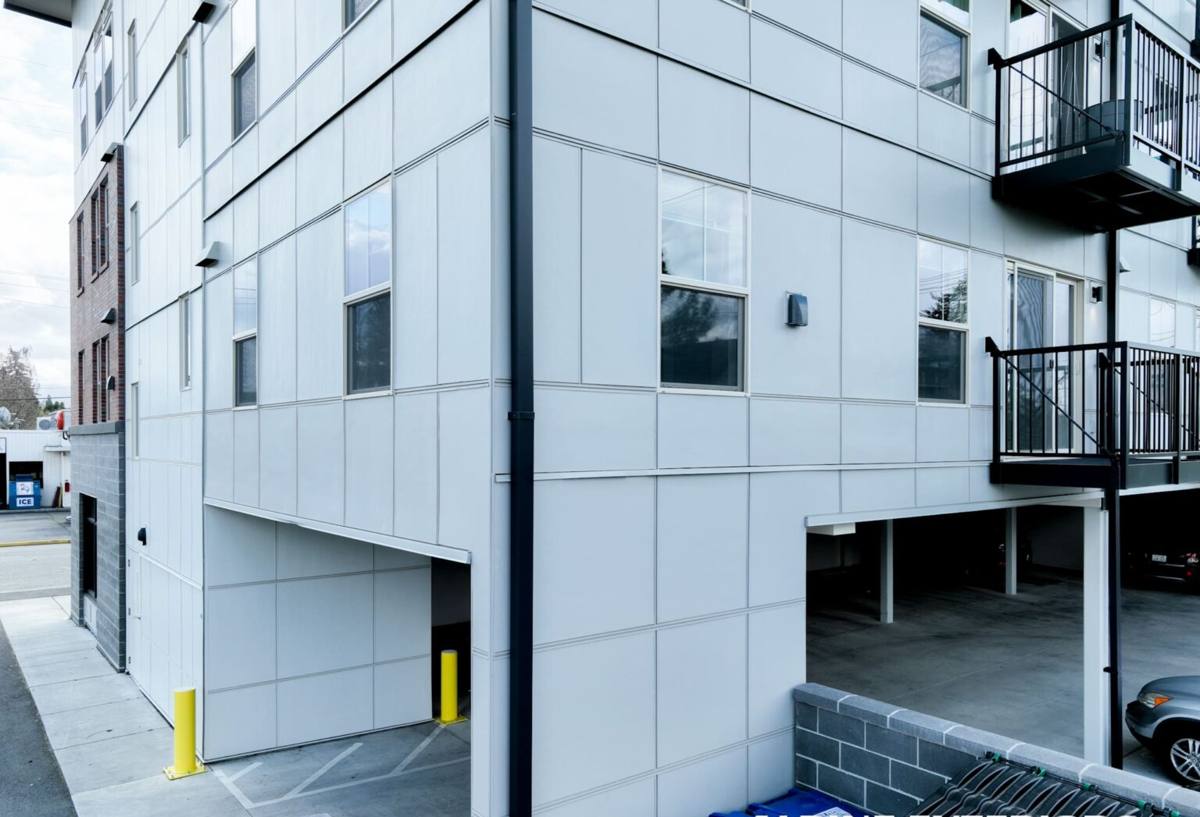
Why Cordata's Housing Stock Needs Attention Now
A lot of Cordata's homes date to the subdivision growth Bellingham saw over the past few decades, which means a large share of the siding out there is now old enough to be at or past the point where repair stops being the honest answer. Original wood siding, older vinyl, and OSB-based composite products installed in that era are all reaching the end of their realistic service life at roughly the same time — and the symptoms tend to show up together on the same house.
What to look for
Homeowners in this part of Bellingham typically start noticing problems in a few predictable spots: north- and west-facing walls that stay shaded and damp longer after a storm, areas under overhangs or near landscaping where moss and algae get a foothold, and lower courses of siding near grade or downspouts where splash-back keeps the material wet. Cordata's mix of mature trees and closely built lots creates exactly the shaded, slow-drying conditions that accelerate all of this.
What a Correct Siding Replacement Job Actually Involves
Siding replacement done right is not just swapping old panels for new ones. In a climate like this, most of the value is in what happens underneath the visible surface.
Full tear-off, not overlay
We remove the old siding entirely rather than installing over it. Covering up old siding traps whatever moisture problems already exist and hides rot, mold, or failed flashing that needs to be dealt with, not sealed in.
Inspecting the sheathing and framing
Once the old material is off, we check the wall sheathing and framing underneath for soft spots, water staining, or rot — especially around windows, doors, and any spot where two roof planes or wall sections meet. This is the step that gets skipped on rushed jobs, and it's the step that matters most in a wet climate.
Weather-resistive barrier and flashing
A new, correctly lapped weather-resistive barrier goes on before any siding, with flashing detailed at every window, door, deck ledger, and penetration so water is directed out and down rather than behind the siding. In a place that gets sustained, wind-driven rain, sloppy flashing is the single most common reason a "new" siding job leaks within a few years.
Correct fastening and clearances
Fiber cement has specific fastening patterns, nail spacing, and clearance requirements — from grade, from roof lines, from decks — that are laid out by the manufacturer for a reason. Ignoring them voids warranty coverage and, more importantly, sets the siding up to hold moisture exactly where it shouldn't.
Why We Install Only James Hardie Fiber Cement
We don't install vinyl, LP SmartSide, Cemplank, Allura, primed spruce, or cedar. That's a deliberate standard, not a sales pitch, and it's worth explaining honestly rather than just asserting it.
Vinyl is inexpensive and low-maintenance in mild conditions, but it softens and warps at temperature extremes and can crack on impact; in a marine climate with real wind events, that's a real trade-off. Engineered wood products like LP SmartSide use resin-treated strand board, which performs reasonably when installation is flawless but is far less forgiving of the small gaps, poor caulking, or delayed maintenance that happen on real job sites over real years. Cedar and primed spruce look great new but demand an ongoing maintenance schedule — repainting, resealing cut ends, watching for moss and rot — that most homeowners don't keep up with, and Cordata's shaded, damp microclimates are exactly where that maintenance gap turns into a problem.
James Hardie fiber cement is non-combustible, dimensionally stable across temperature swings, and factory-finished with ColorPlus coating that's baked on rather than field-applied, which matters in a region where paint failure from moisture is common. Hardie also engineers specific product lines (their HZ5 line, for instance) for climates that see more moisture cycling, and backs installations with a strong transferable warranty when installed to their specifications. We standardized on it because, installed correctly, it's the product that holds up to what Whatcom County actually throws at a house — not because it's the cheapest or the fastest to install.
How the common options actually compare here
| Material | Behavior in salt air / driving rain | Moss & algae resistance | Long-term maintenance |
|---|---|---|---|
| Vinyl siding | Can warp or crack in temperature swings and wind events | Moderate; moss can still take hold in shaded seams | Low, but limited lifespan and no real repair option once damaged |
| Cedar / primed spruce | Absorbs moisture; prone to swelling and rot without upkeep | Low; needs regular cleaning and resealing | High — repainting and sealing on an ongoing schedule |
| Engineered wood (LP SmartSide, etc.) | Performs adequately if installation is flawless; sensitive to gaps and moisture intrusion | Moderate | Moderate; failures often trace back to installation details |
| James Hardie fiber cement | Non-combustible, dimensionally stable, engineered lines for wetter climates | High when properly installed and maintained | Low — factory finish holds up without a repainting cycle |
Our Process, From Estimate to Finished Job
- On-site assessment: We walk the exterior, check current siding condition, and look at trouble spots specific to the lot — shade, drainage, prior water intrusion.
- Written estimate: A clear scope covering tear-off, any sheathing repair allowance, materials, and Hardie product line/profile selection.
- Tear-off and inspection: Old siding comes off, sheathing and framing get inspected before anything new goes up.
- Weather barrier and flashing: Installed and detailed at every penetration before siding starts.
- Hardie installation: Installed to manufacturer fastening, clearance, and joint specifications so the warranty stays intact.
- Final walkthrough: We go over the finished job with you before calling it done.
Signs a Cordata Home Needs Replacement, Not a Repair
Not every siding problem means a full replacement, but a few signs usually indicate the material has reached the end of its useful life rather than needing a spot fix:
- Soft, spongy, or bubbling siding when pressed, especially near the bottom courses or under windows
- Persistent moss or dark staining that returns within a season of cleaning
- Visible warping, cupping, or gaps between boards that weren't there a few years ago
- Paint that keeps failing in the same spots no matter how often it's redone
- Interior signs — musty smell, staining, or soft drywall — near an exterior wall
- Siding that's original to a home built more than 20–25 years ago and has never been replaced
Cost Factors Worth Understanding Before You Get Quotes
Siding replacement pricing varies by home size, number of stories, complexity of trim and window openings, and how much sheathing repair turns up once the old siding is off. Homes with mature landscaping close to the walls, multiple roof-wall intersections, or extensive water damage from years of neglect will run higher than a straightforward, well-maintained house of the same square footage. Rather than quote a number that doesn't mean much without seeing the house, we walk every property and give a written estimate based on what's actually there — including what we find once tear-off starts, communicated before any surprise costs are added.
Why a Crew That Already Works in Cordata Matters
Cordata's building stock, lot layouts, and exposure patterns aren't identical to downtown Bellingham, Fairhaven, or the more rural parts of Whatcom County. A crew that has already worked this neighborhood knows which wall orientations tend to hide moisture damage, how the local moss and algae growth behaves through the wet season, and what flashing details actually hold up against the wind-driven rain this area gets. That familiarity shows up in fewer surprises during tear-off and a finished job that's detailed for the conditions the house will actually face, not generic best practices copied from a drier climate.
If your Cordata home has siding that's original, failing, or just past the point of another repair, we're happy to take a look and put together a straightforward, no-pressure estimate — use the form below to get started.