 Bellingham
 Building New in Silver Beach: Why the Install Matters as Much as the Window
Silver Beach sits along the north end of Lake Whatcom, close enough to open water and tree cover that new homes and additions here take a steady beating from the weather even before the drywall goes up. Whatcom County's marine climate means long stretches of driving rain, humid air that never fully dries out the wood-and-sheathing sandwich behind your siding, and a moss season that can run eight or nine months out of the year on north-facing walls. Salt-laden air off the Sound reaches inland on windy days too, and it settles into hardware, fasteners, and finishes over time. None of that is a problem you can solve by picking a good window off a shelf. It's a problem you solve with how that window gets flashed, sealed, and tied into the wall assembly during construction — which is a one-shot opportunity. Get it wrong on a new build, and you're not troubleshooting a leak years later; you're tearing into finished walls.
This page is specifically about installing windows during new construction in Silver Beach — new builds, additions, and shell-to-finish projects — not swapping windows into an existing wall. The two jobs share a product category but almost nothing else in terms of technique.
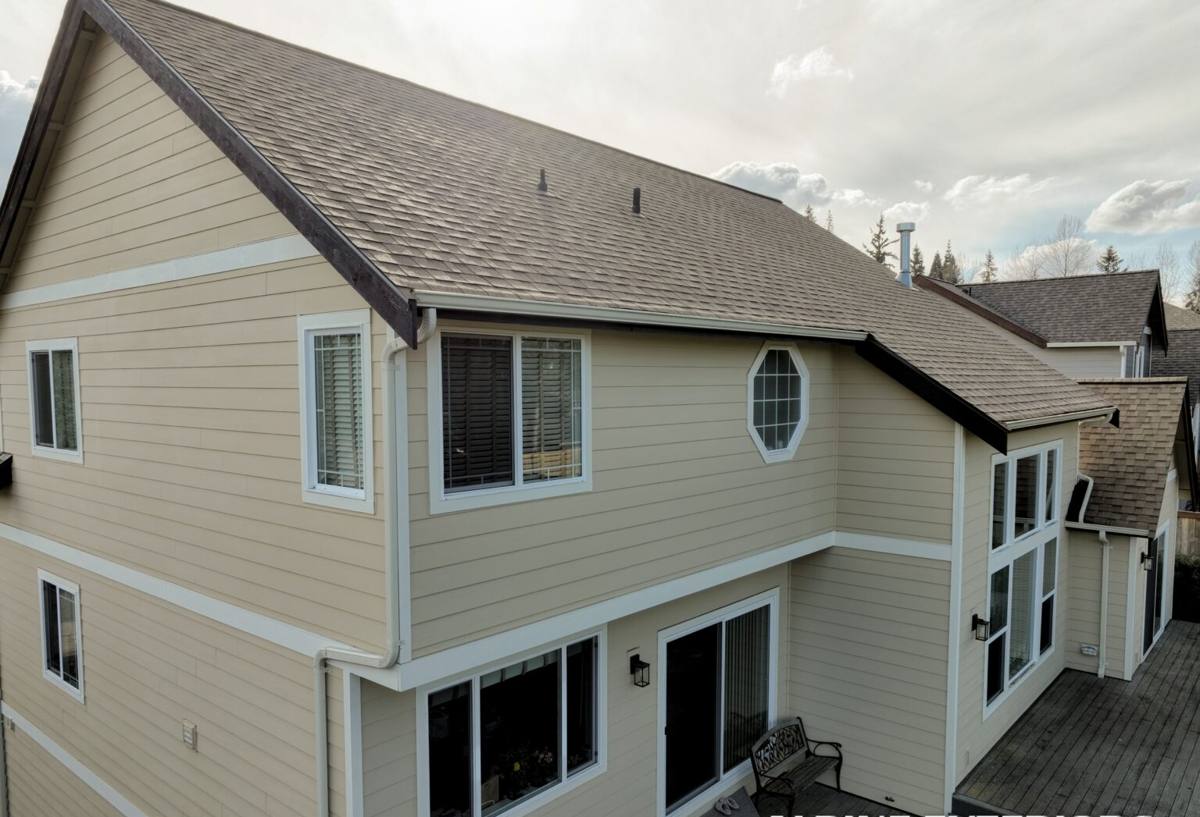
New-Construction Windows vs. Replacement Windows: Not the Same Job
A lot of homeowners and even some builders use these terms loosely, but they describe different products and different installation methods:
- New-construction windows have a nailing fin (or flange) around the perimeter of the frame. They install before siding goes on, get fastened directly to the sheathing through that fin, and are integrated into the weather-resistive barrier (WRB) as part of the wall's drainage plane.
- Replacement (retrofit) windows are block-frame units without a nailing fin, designed to fit inside an existing opening without disturbing the surrounding siding or trim.
Because you're building the wall from scratch, new construction gives you the chance to do this correctly the first time — proper sill pan flashing, shingle-lapped house wrap, and a fully sealed opening with no shortcuts hidden behind finished siding. That's an advantage. It's also a responsibility: if the crew installing your windows isn't sequencing this correctly with the framers, siders, and WRB installer, you lose that advantage permanently.
What a Correct New-Construction Window Install Involves
The Flashing Sequence
Water management around a new-construction window follows a specific order, and skipping or reversing steps is the single most common source of failures we get called to fix in older Whatcom County homes:
- Rough opening is checked for square, level, and correct size — with margin for shimming.
- A sloped sill pan flashing is installed at the bottom of the opening so any water that gets past the window drains back out, not into the wall cavity.
- Self-adhered flashing tape runs up the jambs (sides), lapping over the sill pan.
- The window is set, leveled, plumbed, and fastened through the nailing fin per the manufacturer's schedule — not just "a few nails in the corners."
- Head flashing goes on last, lapping over the jamb flashing, with the WRB above lapping over the head flashing. Water always sheds down and over the layer below it, never the reverse.
- Interior and exterior sealant is applied at specified points only — sealing the entire perimeter on both sides traps moisture instead of letting it drain, which causes rot from the inside out.
Why the Order Matters More Than the Window
Every layer above needs to overlap the layer below it, shingle-style, so water always has a path down and out. A window installed with expensive triple-pane glass but backward-lapped flashing will leak. A modest vinyl window installed with correct flashing will stay dry for decades. In a climate like ours, where wind-driven rain hits building envelopes from multiple directions and moss thrives on any surface that stays damp, that sequencing isn't optional detail work — it's the entire job.
Choosing Window Materials for a Silver Beach Build
| Material | Performance in Local Climate | Maintenance | Typical Fit |
|---|---|---|---|
| Vinyl | Good moisture resistance, no corrosion risk from salt air, solid energy performance | Low — occasional cleaning | Budget-conscious builds, rentals, spec homes |
| Fiberglass | Excellent dimensional stability in temperature and humidity swings, very durable | Low | Custom homes, higher-end new construction |
| Wood-clad | Attractive interior wood with exterior cladding protection, but cladding seams need attention during install | Moderate — exterior clad low, interior wood needs periodic finish care | Traditional or high-end aesthetic goals |
| Aluminum | Strong and slim-profile, but conducts cold and is more prone to condensation in our humid winters unless thermally broken | Low, but hardware and finish can show wear near salt-influenced air | Modern designs, large glass openings |
We don't push one material over another as a blanket rule — the right call depends on your design, budget, and how exposed the wall is to weather. What we do insist on is that whatever product you choose has a documented installation instruction sheet we follow to the letter, because that's what keeps the manufacturer's warranty valid if something ever does go wrong.
Glass Packages Worth Discussing with Your Builder
For new construction in this region, most homeowners land on double-pane units with low-E coatings and argon gas fill as the practical baseline — it balances upfront cost against real energy performance in a climate with mild but persistent heating demand most of the year. Triple-pane is worth considering on north- or west-facing walls that catch the worst of the wind and rain, or on homes aiming for higher energy targets.
Our Process for New-Construction Window Installs
- Coordinate with the builder or GC early — window sizing, rough openings, and flashing details need to be settled before framing is finalized, not adjusted after the fact.
- Confirm the WRB and flashing plan before a single window goes in, so there's no ambiguity about lap direction or who installs which layer.
- Install sill pans and flashing tape per the sequence above, at every opening, no exceptions for "it's just a small window."
- Set and fasten windows to manufacturer fastening schedules — spacing and fastener type affect both structural performance and warranty coverage.
- Photograph flashing details before siding covers them, so there's a record of what's behind the finished wall.
- Walk the job with the builder before siding installation begins, to catch anything that needs correction while it's still accessible.
Mistakes We See on New-Construction Jobs Around Whatcom County
Most of the repair calls we get on newer homes trace back to a handful of recurring issues:
- Sill pan flashing skipped or improvised with caulk instead of a proper sloped pan.
- WRB and flashing layers lapped in the wrong order, directing water into the wall instead of away from it.
- Full-perimeter sealant on both interior and exterior, trapping any moisture that does get in.
- Fastening through the nailing fin with the wrong spacing or fastener type, which can void manufacturer warranties.
- Window openings framed out of square, forcing the installer to compensate with shims and sealant rather than a properly built opening.
Cost Factors for New-Construction Window Installation
| Factor | How It Affects Cost |
|---|---|
| Window count and size | More openings and larger glass units mean more material and labor hours |
| Material choice | Vinyl is generally the most economical; fiberglass and wood-clad run higher |
| Glass package | Triple-pane and specialty coatings add cost over standard double-pane low-E |
| Wall complexity | Multiple stories, steep gables, or elaborate trim details add access and flashing time |
| Coordination timing | Installing on schedule with framing and siding crews avoids rework costs from delays |
We won't quote a project without seeing the plans or the framed openings, but we're glad to walk through rough numbers and trade-offs during an estimate so you can budget with a realistic range rather than a guess.
Why a Crew That Already Works Silver Beach Makes a Difference
New-construction window installation intersects with Bellingham and Whatcom County building code requirements, inspection expectations, and the realities of building near Lake Whatcom's microclimate — shaded, damp lots that stay wetter longer than more open sites nearby. A crew that regularly works this area already knows what local inspectors look for at flashing checks, how to sequence work around the wetter stretches of our build season, and which details matter most on homes exposed to wind coming off the water. That familiarity shows up as fewer surprises, fewer callbacks, and a wall assembly built to actually perform through a Whatcom County winter — not just pass a walkthrough on a dry day.
Get an Estimate for Your Silver Beach Build
If you're framing a new home or addition in Silver Beach and want windows installed correctly the first time, we're happy to take a look at your plans and talk through material and timing options. Reach out for a free, no-pressure estimate using the form below.