 Bellingham
 Storm Damage Roof Repair for South Hill Homes
South Hill sits high above downtown Bellingham, which means the homes up here catch weather that lower-lying neighborhoods sometimes miss. Wind coming off Bellingham Bay and the Strait of Georgia hits this elevation harder, mature trees on and around older lots drop limbs during winter storms, and the constant damp keeps roofs wet longer after every system passes through. If you've had a windstorm, a heavy limb come down, or just a run of hard winter weather and you're not sure whether your roof took real damage, this is exactly the kind of call we get a lot from South Hill homeowners.
Storm damage roof repair isn't a single fix — it's a process that starts with an honest assessment of what actually happened to the roof, followed by repairs that match how the roof was built and what it needs to hold up through the next storm season. Done wrong, a rushed patch job can leave a roof leaking again within a year. Done right, it should get you back to a dry, secure roof without paying for more than the storm actually damaged.
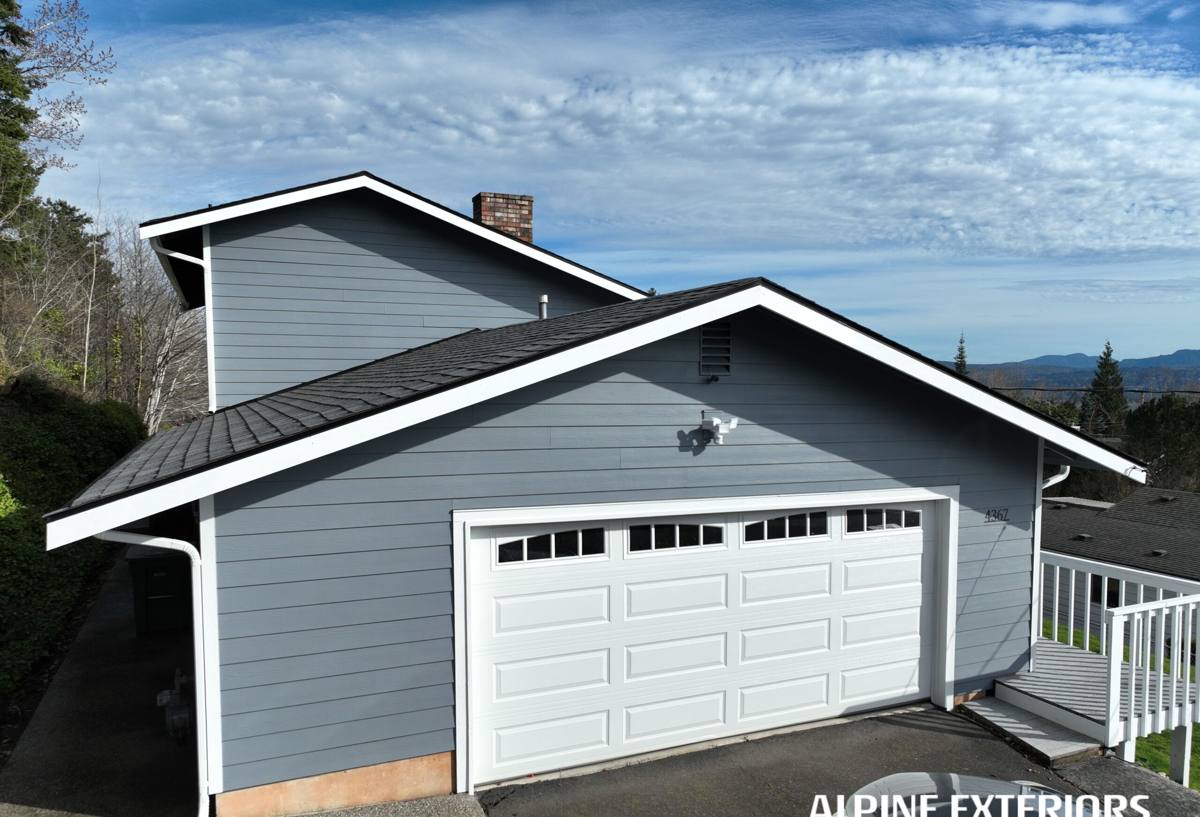
Why Storm Damage Hits South Hill Roofs Differently
Whatcom County weather is generally wet and mild, but South Hill's elevation and exposure change the equation in a few specific ways homeowners should understand before they assume "a little wind" couldn't have done much.
Wind and Elevation
Being up the hill means less wind shelter than homes tucked closer to sea level or surrounded by denser development. Gusts off the bay can lift shingles or shift roofing panels at the edges and ridges before a homeowner ever notices anything from the ground. Wind damage is often invisible from the driveway — it shows up later as a leak once wind-driven rain finds the opening.
Mature Trees and Limb Impact
Many South Hill lots have been established for decades and carry large, mature trees. That's part of the neighborhood's character, but it also means storm winds bring down limbs onto roofs more often than in newer, more open subdivisions. Even a limb that doesn't puncture the roofing can crack a shingle, dent a metal panel, or knock flashing loose in a way that isn't obvious until the next rain.
Salt Air and a Long Moss Season
Proximity to Bellingham Bay means a steady dose of salt-laden air, which accelerates corrosion on exposed metal fasteners, flashing, and gutter systems faster than you'd see further inland. Combine that with the long moss season typical of this part of Washington, and roofs here are already carrying a maintenance burden before a storm ever hits. Moss holds moisture against roofing material and can hide storm damage — a cracked shingle under a mat of moss is easy to miss until it's actively leaking.
Signs Your South Hill Roof May Have Storm Damage
Not all storm damage announces itself with an obvious hole or an active leak. Here's what we tell South Hill homeowners to check for after any significant wind or rain event:
- Shingles that look lifted, curled, or are missing granules in patches (often visible from the ground with binoculars, no need to get on the roof)
- Debris — branches, twigs, needles — collecting in valleys or against the chimney, which can trap water
- New or worsening moss growth concentrated in one area, which can indicate the surface underneath has been disturbed
- Gutters pulling away from the fascia, or full of shingle granules after a storm
- Water stains on interior ceilings or in the attic, even faint ones
- Visible dents or cracks on metal roofing or flashing near chimneys, vents, and skylights
- Daylight visible through the roof deck from inside the attic
If you see any of these after a storm, it's worth getting a professional look before the next rain finds the weak point.
What a Correct Storm Damage Repair Actually Involves
Temporary Protection First
If there's an active leak or exposed decking, the first priority is stopping water intrusion — typically with a tarp or temporary membrane — before anything else. This isn't the fix itself, but skipping it while waiting on scheduling or insurance paperwork is how a small storm hit turns into interior water damage and mold concerns.
Full Inspection, Not Just the Obvious Spot
Storm damage rarely stays confined to the spot a homeowner noticed. A correct repair starts with checking the whole roof plane — ridges, valleys, flashing around penetrations, and the gutter system — because wind and impact damage often shows up in more than one place at once.
Matching the Repair to the Roof
Repairs should use materials and techniques appropriate to what's already on the roof, properly integrated with the existing underlayment and flashing rather than just surface-patched. A patch that isn't tied into the roof's water-shedding system correctly can leak again in the very next storm, even if it looks fine on the surface.
Repair vs. Replacement
Not every storm-damaged roof needs full replacement, and not every roof can be responsibly patched. The right call depends on the roof's age, how widespread the damage is, and what condition the rest of the roofing is in.
| Factor | Favors Repair | Favors Replacement |
|---|---|---|
| Roof age | Under roughly half its expected lifespan | Near or past expected service life |
| Extent of damage | Isolated to one area or slope | Scattered across multiple areas |
| Underlying condition | Deck and underlayment sound | Existing rot, prior leaks, or widespread moss damage found underneath |
| Moss/salt air wear | Minimal granule loss, fasteners intact | Significant fastener corrosion or granule loss beyond the storm damage itself |
| Insurance scope | Damage limited to what the storm caused | Storm damage exposes pre-existing wear that affects the whole roof's integrity |
Our Process for South Hill Storm Repairs
- Assessment: We inspect the full roof, not just the reported damage, and document everything with photos.
- Honest scope: We tell you plainly whether this is a targeted repair or whether the damage points to a bigger issue, and why.
- Temporary protection: If needed, we secure the roof against further water intrusion the same visit.
- Insurance documentation: If you're filing a claim, we provide the photos and written scope your adjuster needs.
- The repair: Work is matched to your existing roofing system and properly tied into flashing and underlayment, not just surface-patched.
- Cleanup and check: We clear debris, check gutters and downspouts are flowing, and confirm the repair area sheds water correctly.
Working With Insurance on Storm Claims
Most homeowners insurance covers sudden storm and wind damage, but adjusters need clear documentation of what happened and what it takes to fix it properly. We provide detailed photos and a written scope of the damage and the repair, which helps the claims process move faster and helps make sure the scope covers what the roof actually needs — not a stripped-down patch that leaves you exposed again next storm season.
Salt Air, Moss, and Long-Term Roof Health
A storm repair is a good moment to also address the conditions that make South Hill roofs more vulnerable in the first place. Corroded fasteners and flashing near the coast should be replaced with corrosion-resistant hardware where practical, and moss should be treated and cleared rather than left in place, since it holds moisture against the roofing surface and can mask new damage during the next storm. We'll flag these issues honestly during a repair visit rather than pretending they don't affect the roof's future performance.
Why Local Experience Matters for This Kind of Repair
A crew that already works in South Hill knows the wind exposure this elevation gets, has seen how the local tree cover contributes to storm damage patterns, and understands how fast moss reestablishes itself in this climate. That local knowledge shapes real decisions — where to look for hidden damage, which materials hold up against the salt air off Bellingham Bay, and how to scope a repair that actually lasts through Whatcom County's wet season rather than needing a repeat visit.
Get an Honest Look at Your Roof
If a recent storm has you wondering whether your South Hill roof took damage, it's better to have it checked than to wait for a leak to show up on the ceiling. We offer free, no-pressure estimates — we'll tell you plainly what we find, what it needs, and what your options are, whether that's a targeted repair or something bigger. Fill out the form below to get a visit scheduled.