 Bellingham
 Windows Built for Where Edgemoor Actually Sits
Edgemoor homes face a different set of conditions than a house a few miles inland. Sitting up on the wooded bluff overlooking Bellingham Bay, these properties catch salt-laden air off the water, take driving rain straight off Puget Sound weather systems, and sit under heavy tree canopy that keeps everything shaded and damp for much of the year. That combination is hard on windows in ways that don't show up right away. A window that was installed correctly ten or fifteen years ago in a drier, more sheltered part of Whatcom County can still be failing quietly in Edgemoor while it looks fine from the curb.
This page is about window installation specifically for that setting — what the climate does to windows here, what a correct installation actually involves, and why it matters to work with a crew that has already done this work on bluff and waterfront-adjacent homes rather than a general contractor pulling from a generic playbook.
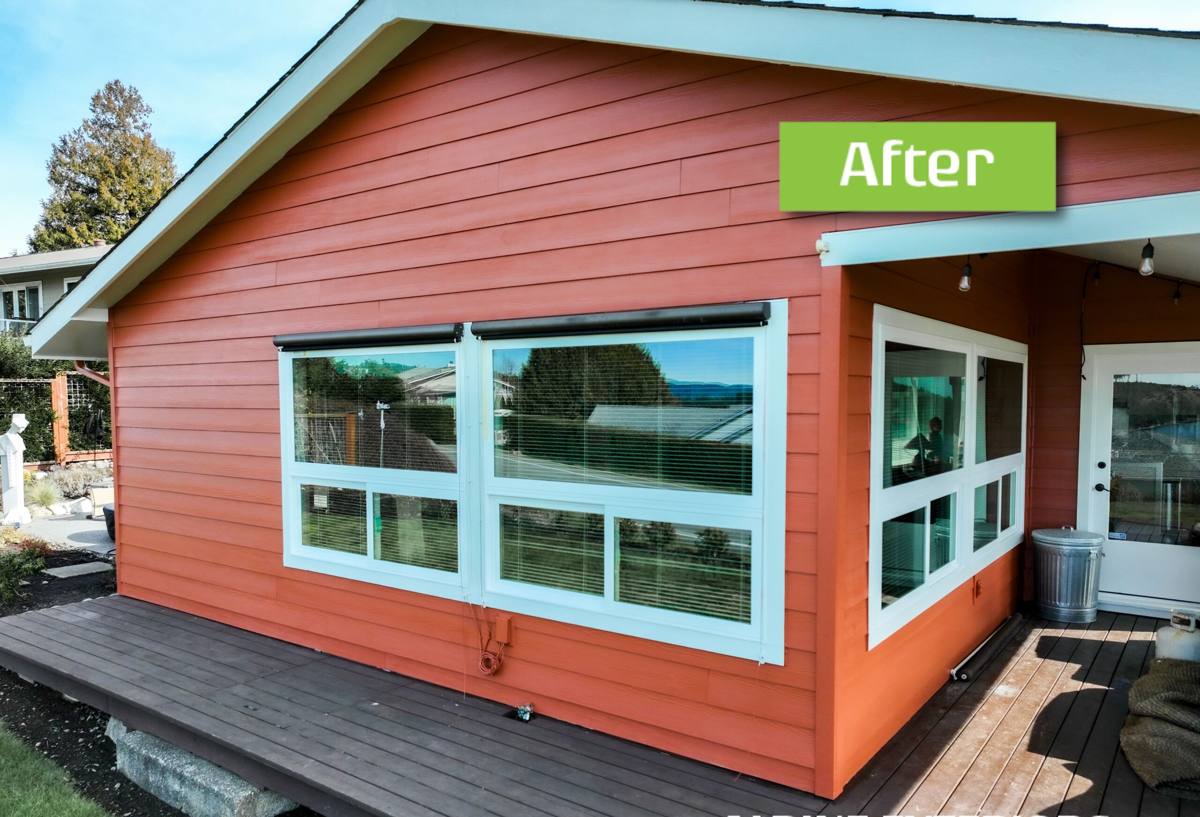
What Bellingham's Marine Climate Does to Windows Over Time
Three things define the wear pattern on Edgemoor windows, and none of them are unique to any one brand or style of window — they're about exposure and installation quality.
Salt Air
Proximity to Bellingham Bay means a fine, near-constant deposit of salt on exterior surfaces. On windows, that salt accelerates corrosion of hardware, hinges, and fasteners, and it can slowly degrade certain finishes and sealants faster than the manufacturer's stated lifespan assumes. Aluminum components without a marine-grade finish are especially vulnerable.
Driving Rain
Storms coming off the Sound don't just fall straight down — wind-driven rain hits windows at an angle, which puts real pressure on flashing, sealant joints, and the water management details behind the trim. A window that would stay dry in a calm rain can still take on moisture during a sideways storm if the flashing and integration with the wall assembly weren't done right the first time.
The Long Moss Season
Heavy tree cover and persistent damp air mean moss, algae, and lichen get a long growing season on north- and shade-facing walls. Around windows, that growth holds moisture against trim and sills far longer than a sunnier, more exposed site would, which speeds up wood rot and can trap water against sealant lines that would otherwise dry out between rain events.
Signs an Edgemoor Home's Windows Need Attention
Because these problems build slowly under shade and tree cover, homeowners often don't notice until there's visible damage. Watch for:
- Soft or discolored wood trim around the window frame, especially on shaded or north-facing walls
- Moss or dark staining building up in the corners of the frame or along the sill
- Condensation forming between panes, which usually means a failed seal on a double- or triple-pane unit
- Drafts or a noticeable temperature difference near the window on windy days
- Difficulty opening, closing, or locking a window that used to operate smoothly
- Paint or finish peeling from the frame faster than on other parts of the house
- Visible daylight or gaps where the frame meets the siding or trim
Any one of these can be minor on its own. Several at once, especially on a wall that gets heavy shade or salt exposure, usually means the window or its installation has reached the end of its useful life.
What Correct Window Installation Actually Involves
The window unit itself is only part of the job. Most of the failures we see on bluff and waterfront-exposed homes trace back to how the window was integrated into the wall, not a defect in the window itself.
Water Management Comes First
Before a new window ever goes in, the opening needs to be prepared so water is directed out and away from the wall assembly, not trapped behind it. That means correctly lapped flashing (top, sides, and a sloped sill pan at the bottom), a weather-resistive barrier that's properly integrated with the flashing, and attention to how the rough opening was framed. On a home that takes driving rain regularly, skipping or rushing this step is the single biggest cause of hidden rot.
Fastening and Sealing
Windows need to be shimmed level, plumb, and square, fastened per the manufacturer's specification, and sealed with products rated for the exposure. In a salt-air, high-moisture environment, we pay close attention to sealant compatibility and hardware corrosion resistance — not every fastener or caulk sold for general use is a good match for this climate.
Insulation and Air Sealing
The gap between the window frame and the rough opening needs to be filled with an appropriate insulating material — not packed too tight, which can bow the frame, and not left open, which invites drafts and moisture. Done right, this step also cuts down on condensation forming on the interior frame during cold, damp stretches.
Interior and Exterior Trim
Trim isn't just cosmetic. It's part of the water management system, and on shaded walls it needs to be a material and finish that can handle prolonged dampness without holding moisture against the frame.
Choosing the Right Window for a Bluff or Wooded, Shade-Heavy Property
There's no single "best" window brand — the right choice depends on exposure, budget, and how much upkeep a homeowner wants to take on. For Edgemoor specifically, we weigh frame material heavily because of the salt air and shade-driven moisture.
| Frame Material | How It Handles Salt Air & Moisture | Maintenance | Typical Fit for Edgemoor |
|---|---|---|---|
| Vinyl | Won't corrode; performs well in salt air | Low — occasional cleaning | Strong value option, good for most exposures |
| Fiberglass | Excellent — very stable, resists moisture and corrosion | Low | Best long-term choice for heavy salt/rain exposure or view walls |
| Aluminum (non-clad) | Prone to corrosion and conducts cold without a thermal break | Higher | Generally not recommended this close to the bay |
| Wood, painted | Vulnerable to rot in shaded, damp conditions without diligent upkeep | High — regular repainting/sealing | Only where architectural style requires it, with a clear maintenance plan |
| Wood-clad (vinyl or aluminum-clad wood) | Good, if cladding and seams are properly detailed | Moderate | Popular where a wood interior look is wanted with less exterior upkeep |
We're honest with clients about trade-offs rather than pushing one product. If a homeowner wants a painted wood exterior for architectural reasons, we'll install it correctly and explain the maintenance commitment up front rather than talk them out of it — it's their home and their call, but they should make it with the full picture.
Glass Packages Worth Considering for This Climate
Beyond the frame, the glass package affects comfort and condensation resistance:
- Double-pane with Low-E coating: A solid baseline for most Whatcom County homes, cuts heat loss and UV fading
- Argon or krypton gas fill: Improves insulating performance between panes, worthwhile in our cooler, damp winters
- Triple-pane: Better insulation and sound dampening, useful on walls exposed to wind or road noise, though it adds weight and cost
- Tempered or laminated glass: Often required by code near grade-level openings or in specific locations regardless of exposure
Our Installation Process
- On-site assessment. We look at every window opening individually — sun and wind exposure, existing rot or water damage, and how the current flashing was done, not just the window itself.
- Honest scope and options. We walk through frame material, glass package, and any structural or water-management repairs the opening needs, with real trade-offs explained, not upsold.
- Removal and opening prep. Old units come out carefully so we can inspect the rough opening, sheathing, and framing for hidden moisture damage before anything new goes in.
- Flashing and water management. Sill pans, flashing, and the weather-resistive barrier are installed or repaired to current best practice, matched to what a driving-rain exposure actually needs.
- Window installation. Units are set level, plumb, square, and fastened and sealed to spec.
- Insulation, trim, and finish. Interior and exterior trim is completed and finished appropriately for the wall's sun/shade exposure.
- Final check and walkthrough. We test operation, check seals, and walk the homeowner through anything they should watch for or maintain going forward.
Cost Factors Homeowners Should Understand
Window installation pricing varies with the specifics of the home, but the main drivers are consistent:
| Factor | Why It Affects Cost |
|---|---|
| Number and size of windows | More openings and larger glass units mean more material and labor |
| Frame material | Fiberglass and premium vinyl cost more upfront than basic vinyl or aluminum |
| Glass package | Triple-pane, upgraded Low-E, and gas fills add cost but improve performance |
| Condition of the existing opening | Hidden rot or damaged sheathing found during removal adds repair scope |
| Access and site conditions | Bluff lots, steep grades, and heavy tree cover can add setup and staging time |
| New construction vs. retrofit | Retrofitting into an existing wall generally costs less than a full-frame replacement that removes exterior trim |
We don't quote a flat per-window price over the phone without seeing the openings, because on a home this age and exposure, the condition of what's behind the trim matters as much as the window itself.
Why Working With a Crew That Already Knows Edgemoor Matters
Edgemoor's terrain and tree cover create practical challenges that a crew unfamiliar with the neighborhood will run into for the first time on your project instead of already knowing how to handle. Bluff lots often mean tighter access, steeper grades, and more careful staging of materials and equipment. Heavy, mature tree canopy affects how quickly caulking and finishes cure and how long an opening can safely sit exposed during a project. And because many Edgemoor homes are older or custom-built, window openings aren't always standard sizes, which affects both product selection and installation approach.
A crew that has already worked in this part of Bellingham also has a feel for how Whatcom County's permitting process applies to window replacement versus enlargement or structural changes, and knows to check for any applicable neighborhood or design review requirements before work starts, rather than discovering them mid-project.
Maintaining New Windows in a Salt Air, Heavy-Shade Environment
A correct installation is the foundation, but a little seasonal attention extends the life of any window here:
- Rinse salt residue and debris off exterior frames a few times a year, especially after storms
- Clear moss, leaves, and organic debris from sills and tracks before it holds moisture against the frame
- Check and re-caulk any cracked or separated sealant joints promptly, before water gets behind the trim
- Keep gutters and downspouts clear so roof runoff isn't sheeting down over window heads
- Trim back vegetation that keeps a wall or window shaded and damp longer than necessary
- Operate and lubricate hardware periodically so hinges and locks don't seize from corrosion
If you're seeing drafts, fogged glass, soft trim, or moss buildup around your windows — or you're planning ahead for a home in Edgemoor's bluff, wooded, or waterfront-exposed conditions — we're happy to take a look and give you a straightforward, no-pressure estimate using the form below.