 Bellingham
 Window Replacement in the York Area
York is one of the older, established pockets in and around Bellingham, and that means a lot of its homes are still carrying original or first-generation replacement windows — units that were reasonable choices decades ago but were never built for what Whatcom County weather does to a window over 20, 30, or 40 years. If you're feeling drafts, seeing fogged glass, or fighting a window that won't stay open or won't latch shut anymore, you're not imagining it. Windows in this part of Bellingham take a beating that windows in drier climates simply don't.
This page is about window replacement specifically for York-area homes — what the local climate does to windows here, what a correct installation actually involves, and how we run the job from first look to final walkthrough.
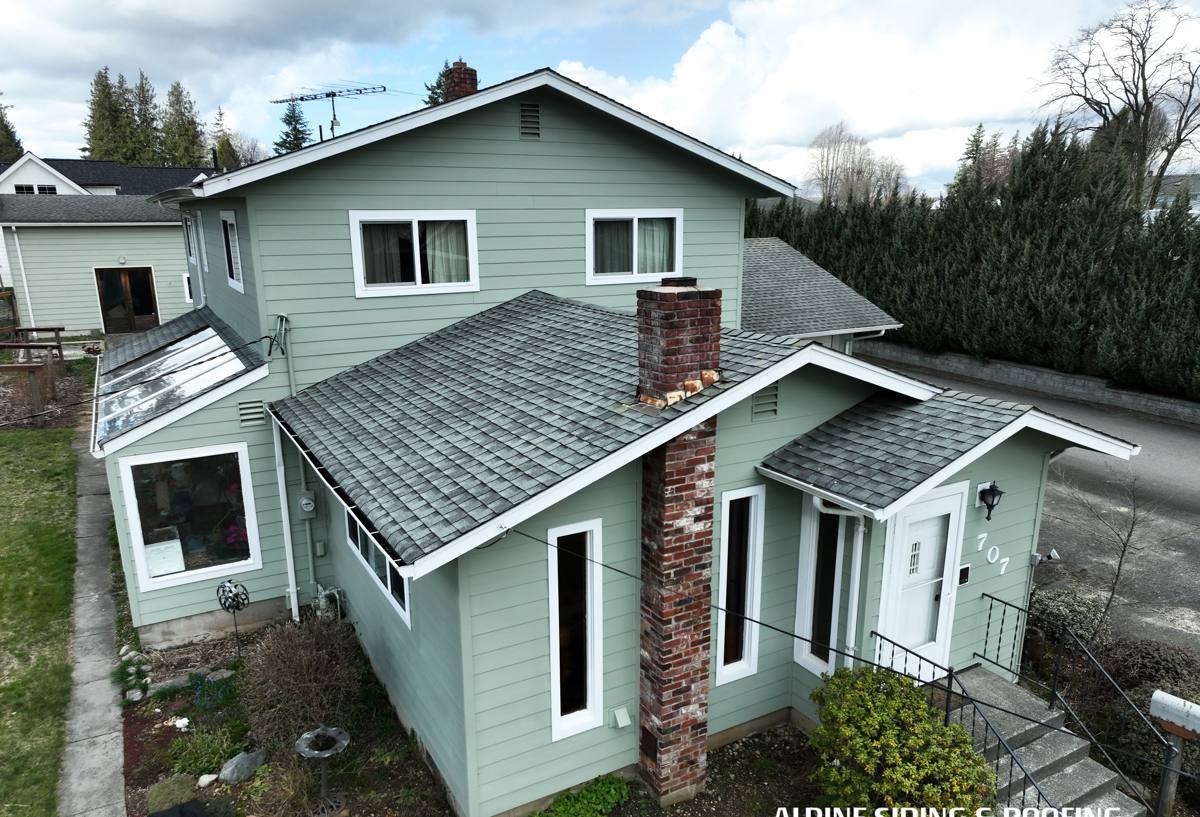
Why Bellingham's Climate Is Hard on Windows
Whatcom County sits close enough to the water that salt-laden air is a real factor on window hardware and frames, especially for anything facing west or southwest. Add driving rain that comes in sideways during fall and winter storms, and a moss and mildew season that can stretch for months in shaded or north-facing spots, and you've got three separate stresses working on a window at the same time:
- Salt air corrodes exposed metal hardware — hinges, locks, balance mechanisms — faster than in inland climates, especially on older aluminum or steel components.
- Driving rain tests flashing and sealant details that a fair-weather installation might get away with. Wind-driven water finds any gap in the weather barrier around a window opening.
- Moss and sustained damp hold moisture against wood trim and sills longer than a drier climate would, which accelerates rot at any point where water can sit rather than shed.
None of this means windows here fail faster because the products are bad — it means the installation details matter more here than they would in a milder climate, and cutting corners on flashing or sealant shows up as a problem sooner rather than later.
Signs a York Home's Windows Need Attention
- Visible fog or moisture between glass panes (failed seal)
- Drafts you can feel near the frame, especially in wind
- Wood trim or sill that's soft, discolored, or holding paint poorly
- Windows that are hard to open, close, or lock — often a sign the frame has shifted or swollen
- Visible moss, mildew, or black staining around the frame edges
- Noticeably higher heating bills with no other explanation
What a Correct Window Replacement Actually Involves
Swapping a window looks simple from the street — old unit out, new unit in. The part that determines whether it lasts is everything that happens in between, and it's the part that's easy to skip if a crew is moving fast.
The Details That Matter Most Here
Given the rain and moisture load this area sees, a few steps are non-negotiable on every job we do:
- Inspecting the opening once the old window is out — checking the sill, framing, and sheathing for hidden rot or water damage before anything new goes in.
- Proper flashing integration so the new window ties into the existing weather-resistive barrier correctly, with water directed out and down, not trapped behind the trim.
- Sealing that accounts for wind-driven rain, not just still-air conditions — bead placement and backer rod use matter more here than in a drier region.
- Shimming and leveling so the sash operates correctly for the long haul, not just on install day.
- Insulating the gap around the frame properly — too little leaves drafts and condensation risk, too much (or the wrong material) can bow the frame.
Any one of these done poorly can look fine for a year or two and then cause a callback — usually in the form of water intrusion, wood rot, or a window that won't seal against wind.
Choosing the Right Window for a York Home
There isn't one "correct" window material for every house — it depends on the home's age, exposure, and how it was built. What we won't do is install a product where the maintenance burden or moisture behavior doesn't match the site conditions, or promise a warranty structure that doesn't hold up in practice.
| Frame Material | How It Handles This Climate | Trade-offs to Know |
|---|---|---|
| Vinyl | Good moisture resistance, no repainting, handles humidity well | Limited color/finish flexibility; quality varies widely between manufacturers |
| Fiberglass | Very stable in temperature swings, strong moisture and corrosion resistance | Higher upfront cost than vinyl |
| Wood (clad) | Classic look, exterior cladding protects against weather | Interior wood still needs periodic maintenance; any cladding breach invites rot |
| Aluminum | Durable and low-maintenance structurally | Poor insulator unless thermally broken; more prone to condensation in this climate |
For most York-area homes dealing with salt air and sustained damp, we lean toward vinyl or fiberglass options with corrosion-resistant hardware, because they hold up with the least ongoing maintenance. Wood-clad windows are still a legitimate choice for homes where the look matters and the owner is willing to keep up with maintenance — we'll walk through the honest trade-offs for your specific house rather than push one answer.
Glass Package Considerations
Double-pane, low-E glass is the practical baseline for this region — it manages both heat loss in winter and the condensation risk that comes with our humidity. Triple-pane can make sense for homes with unusually high heat-loss needs or noise concerns, but it adds weight, cost, and isn't always necessary. We'll size the glass package to the house, not upsell a package it doesn't need.
Our Process for a York Window Replacement Job
- On-site assessment — we look at each window from both sides, check framing condition where accessible, and talk through what's actually needed versus what can wait.
- Honest scope and quote — a clear breakdown of what's included: removal, disposal, flashing and sealant work, trim, and the window units themselves.
- Scheduling around weather — we plan install windows with an eye on the forecast so openings aren't left exposed to driving rain any longer than necessary.
- Removal and opening inspection — old windows come out, and we check the opening before anything new goes in. If we find rot or damage, we tell you before proceeding, not after.
- Installation — level, shim, flash, seal, insulate, and finish trim to match the home.
- Walkthrough — we test operation on every window with you before we consider the job done.
Why Hire a Crew That Already Works in York
A lot of window problems in this part of Whatcom County trace back to installation methods that would be fine somewhere drier but aren't built for our rain patterns and salt exposure. A crew that installs windows regularly in this specific area already knows:
- Which exposures on a York-area house typically take the worst weather (usually west and southwest-facing walls)
- How local building conditions — older framing, existing trim details, common siding types in the area — affect flashing and integration choices
- What hardware finishes hold up against salt air over time versus what corrodes early
- How to sequence work around the wetter months so openings aren't sitting exposed
That's not a marketing point — it's the difference between a window that's still sealing tight in ten years and one that needs re-caulking or re-flashing in three.
Cost Factors for York-Area Window Replacement
Every job is different, but the factors that actually move the price are consistent:
| Factor | Why It Matters |
|---|---|
| Number of windows and sizes | Bigger jobs get more efficient per-unit pricing, but large or custom sizes cost more individually |
| Frame material chosen | Vinyl, fiberglass, and wood-clad carry different material costs |
| Condition of the existing opening | Hidden rot or framing damage found during removal adds repair scope |
| Access and second-story work | Upper-floor windows or tricky access can add labor time |
| Trim and finish work | Matching existing interior/exterior trim adds detail work versus a basic install |
We'd rather give you a real number after seeing the actual windows than a rough figure that doesn't hold up — but broadly, straightforward vinyl replacements in standard openings run toward the lower end of the market, while custom sizes, wood-clad units, or jobs that uncover framing repairs push toward the higher end.
What to Ask Before You Hire Anyone
- Do you inspect the opening for rot or damage before installing, and what happens if you find it?
- What's your approach to flashing and sealing for wind-driven rain specifically?
- What warranty covers the installation itself, separate from the manufacturer's product warranty?
- Are you licensed and insured to work in Washington, and can you provide proof?
- Do you have experience with homes in this specific area, or mostly newer construction elsewhere?
A contractor who answers these clearly and specifically, without hedging, is usually the safer bet — especially the flashing and rot-inspection questions, since those are the details that separate a window that lasts from one that doesn't.
If your York-area home has windows that are drafty, foggy, hard to operate, or just old enough that you're wondering, we're glad to take a look and give you a straightforward, no-pressure estimate. There's a form below — reach out and we'll get you scheduled.