 Bellingham
 Roof Repair Built for the York Neighborhood
The York neighborhood sits close enough to the water and to the hillside tree cover that its roofs deal with a mix of problems most inland Whatcom County homes don't face in the same combination. You've got salt-tinged air moving in off Bellingham Bay, driving rain that comes in sideways during winter storms, and a shade canopy from mature trees that keeps roof surfaces damp long after the rain stops. Add in a moss season that can run from October through May, and you have a roof environment that punishes any weak point in a repair.
We work on roofs in York regularly enough to know which failure patterns show up here again and again — and which quick fixes don't hold up once the next atmospheric river rolls through. This page walks through what a proper repair actually involves, what tends to go wrong on homes in this part of Bellingham, and how we approach the work.
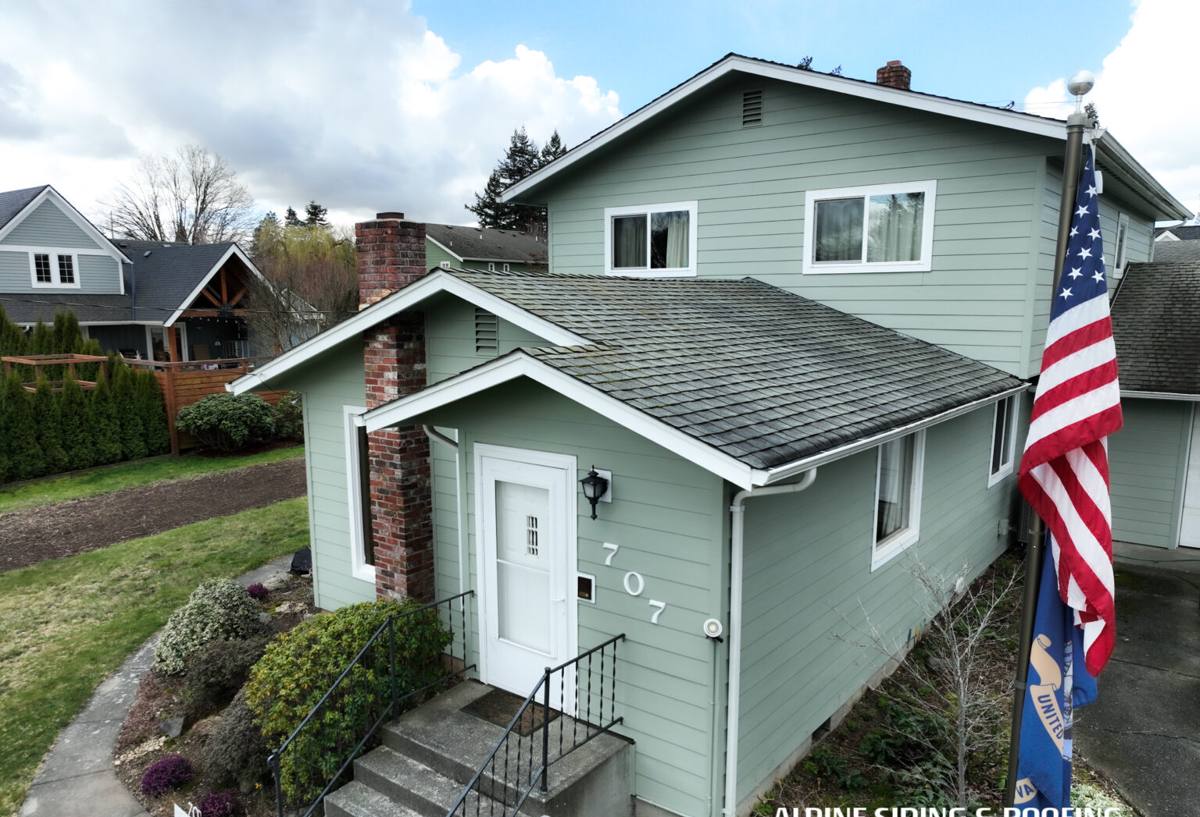
What Bellingham's Climate Does to a Roof Over Time
Roof repair isn't a generic service — the right fix depends heavily on what's actually degrading the roof, and in Whatcom County that's rarely just "old age." A few things are consistently at play on York roofs:
- Persistent moisture: Long stretches of drizzle and fog mean roofing materials rarely get a full dry-out cycle, which accelerates wear on underlayment, flashing seals, and any exposed fasteners.
- Moss and organic growth: Shaded, north-facing slopes and roofs under tree cover collect moss and algae that hold moisture against shingles and shakes, working into laps and seams over a season or two.
- Wind-driven rain: Storms off the Sound don't just fall straight down — wind pushes water sideways and upward under laps, which is why flashing and edge details matter more here than in drier climates.
- Salt air exposure: Being close to the bay means metal components — flashing, fasteners, vents — corrode faster than the same materials would inland.
None of this means a York roof is doomed to constant repairs. It means the repair has to account for how the roof actually fails here, not just patch the visible symptom.
Common Signs a Repair Is Needed
Most roof problems don't announce themselves as a dramatic leak. They show up as small, easy-to-miss signs first. If you're seeing any of these on a York home, it's worth having someone look before it turns into interior damage:
- Dark streaking or thick moss growth concentrated in shaded sections of the roof
- Granules collecting in gutters or downspouts (a sign of shingle wear)
- Curling, cupping, or lifted shingle edges, especially on south and west-facing slopes
- Soft or discolored ceiling spots, particularly after a heavy wind-and-rain event
- Visible daylight or gaps around chimney, vent, or skylight flashing from the attic
- Sagging in the roofline, which points to deck or structural issues beneath the surface
- Missing or displaced shingles after a windstorm
Some of these are minor and localized; others point to something bigger. Part of an honest repair visit is telling you which is which, rather than treating every callout as a full-roof problem.
What a Correct Repair Actually Involves
Diagnosis Before Patching
A roof leak often shows up in the ceiling several feet from where the water is actually entering — water travels along rafters and sheathing before it finds a path through. A repair that just seals the spot above the ceiling stain frequently misses the real entry point, which is usually at a flashing detail: a chimney, a valley, a vent boot, or a wall-to-roof transition.
Before we touch anything, we trace the actual path of the water. That means checking the attic where accessible, examining flashing and penetrations, and looking at the broader condition of the roofing field around the problem area — not just the square foot where the stain appeared.
Matching Repair Scope to Roof Condition
Repairs make sense when the roofing material and deck underneath are still fundamentally sound and the damage is localized — a failed flashing seal, a handful of storm-damaged shingles, a deteriorated boot around a pipe vent. If the underlayment is failing broadly, or the shingles are past their service life across large sections, a patch will look fine for a season and then fail again nearby, because the underlying material simply isn't holding up. We'll tell you honestly which category your roof falls into.
Getting the Details Right
The parts of a roof most likely to leak are also the parts most likely to be repaired wrong by a rushed job: flashing laps, step flashing along walls, valley metal, and vent boots. Correct repair means proper shingle or panel overlap, flashing that's actually integrated into the water path (not just caulked over it), and fasteners placed and sealed to shed wind-driven rain rather than just vertical rainfall.
Repair Scenarios We See Often in York
| Situation | Typical Cause | Repair Approach |
|---|---|---|
| Ceiling stain near a chimney | Deteriorated chimney flashing or counter-flashing | Remove and reflash the chimney intersection, checking mortar joints where flashing is tucked in |
| Leak near a skylight or vent | Cracked or shrunken rubber boot, failed sealant | Replace the boot/flashing assembly rather than resealing over it |
| Heavy moss on shaded slopes | Persistent shade, poor airflow, organic debris buildup | Careful moss removal, treatment, and repair of any shingles damaged underneath |
| Shingles missing after a windstorm | Wind uplift on aging or under-fastened shingles | Replace missing shingles, check surrounding courses for lifted nails or wind damage |
| Leak along a roof valley | Worn valley metal or debris damming water flow | Clear debris, inspect valley metal, replace if corroded or undersized |
Our Repair Process
- On-site inspection: We walk the roof (and attic where accessible) to find the actual source of the problem, not just the visible symptom.
- Honest assessment: We explain what we found in plain terms — what needs repair now, what's worth monitoring, and what doesn't need touching yet.
- Written estimate: A clear scope of work and price before anything is scheduled, so there are no surprises.
- The repair itself: Matching materials as closely as possible to the existing roof, proper flashing technique, and attention to the details that actually stop water — not just cosmetic patching.
- Cleanup and check-in: Site cleaned up, debris hauled, and a final look to confirm the fix addresses what we found in the inspection.
Repair or Replace? How We Help You Decide
Not every roof problem is a repair candidate, and it's not in your interest — or ours, long-term — to keep patching a roof that's genuinely at the end of its life. A few factors weigh into that call:
- Age relative to material lifespan: A roof nearing the end of its expected service life is a poor candidate for repeated repairs, since new problems tend to surface faster than they can be fixed.
- Extent of the damage: Isolated flashing or shingle issues favor repair. Widespread granule loss, curling, or underlayment failure favors replacement.
- Deck condition: If the roof deck itself has moisture damage or rot, that changes the scope regardless of what the shingles look like.
- How long you plan to stay in the home: A targeted repair can be the right call to extend a roof's life a few more years; it's a different conversation if you're planning a longer hold and want to stop dealing with recurring issues.
We'll lay out the honest tradeoffs rather than defaulting to whichever option is more work for us.
Moss, Algae, and Ongoing Maintenance
Given how much of the year Bellingham roofs stay damp, moss and algae aren't a one-time problem — they're an ongoing maintenance item, especially on shaded roof sections common in wooded neighborhoods like York. Left unaddressed, moss holds water against the roofing surface, lifts shingle edges as it grows, and can work its way under laps over a couple of seasons, turning a maintenance issue into an actual leak.
Where moss growth is heavy, we address both the immediate cleanup and the shingles or underlayment it may have already damaged underneath, rather than just clearing the surface and leaving compromised material in place.
Why a Local Crew Matters for Roof Repair
Roof repair is one of those services where local knowledge genuinely changes the outcome. A crew that regularly works in York and the surrounding Bellingham neighborhoods knows the typical age and construction of homes in the area, has a feel for how the tree cover and hillside exposure affect specific roof sections, and isn't guessing at how Whatcom County's rain patterns interact with a given roof design. That translates into faster, more accurate diagnosis and repairs that are built for the conditions the roof will actually face — not a generic fix pulled from a different climate.
It also means being available when weather-related damage happens. Winter storms in this part of Washington can create a backlog for out-of-area contractors; a local crew is easier to reach and typically faster to respond when a leak needs attention before the next storm rolls through.
A Quick Pre-Winter Checklist
Before the wet season sets in, it's worth a quick visual check of a few things — from the ground or safely from a ladder, not by climbing onto the roof yourself:
- Look for moss buildup, especially on shaded or north-facing slopes
- Check gutters for granule buildup or shingle debris
- Scan for any visibly lifted, curled, or missing shingles
- Note any ceiling discoloration from the previous winter that hasn't been addressed
- Check that gutters and downspouts are clear so water isn't backing up under roof edges
If anything on that list looks off, it's worth having it looked at before the heavy rains start rather than after a leak shows up.
Get an Honest Look at Your Roof
If you're dealing with a leak, storm damage, or just want an honest read on where your roof stands, we're happy to take a look. The estimate is free, there's no pressure, and you'll get a straight answer about what your roof actually needs — use the form below to get started.