 Bellingham
 Why Sudden Valley Puts Extra Demands on an Asphalt Shingle Roof
Sudden Valley sits back in the trees along Lake Whatcom, and that setting is exactly what makes roofing here different from a roof job on an open lot closer to town. Heavy fir and cedar canopy, a lake nearby, and Whatcom County's marine climate all stack up against a shingle roof in ways that shorten its useful life if the job wasn't done right the first time. We've worked enough roofs in this neighborhood to know which parts of a standard installation aren't good enough for it.
Heavy Tree Cover and a Long Moss Season
Homes shaded by mature conifers dry out slower after every rain. Needles and debris collect in valleys and behind chimneys, holding moisture against the shingle surface for days at a time. That combination — shade plus standing moisture — is exactly what moss needs to get established, and once moss takes hold it works its rhizoids under the shingle edges and lifts granules loose. On a lot with full sun, moss might be a once-a-decade nuisance. Under Sudden Valley's tree canopy, it can be a near-constant maintenance item if the roof wasn't built to resist it from the start.
Moisture and Wind Off the Water
Whatcom County's weather comes off the water, and driving, wind-pushed rain is normal here for a good chunk of the year, not just during named storms. Lake Whatcom itself adds local humidity on top of that. Neither factor is unique to Sudden Valley, but the combination with heavy shade means a roof in this neighborhood spends more hours of the year wet than a roof with better sun exposure and drainage. Fasteners, flashing, and vent components that aren't rated for a damp, moisture-heavy environment corrode faster here than the manufacturer's general specs would suggest.
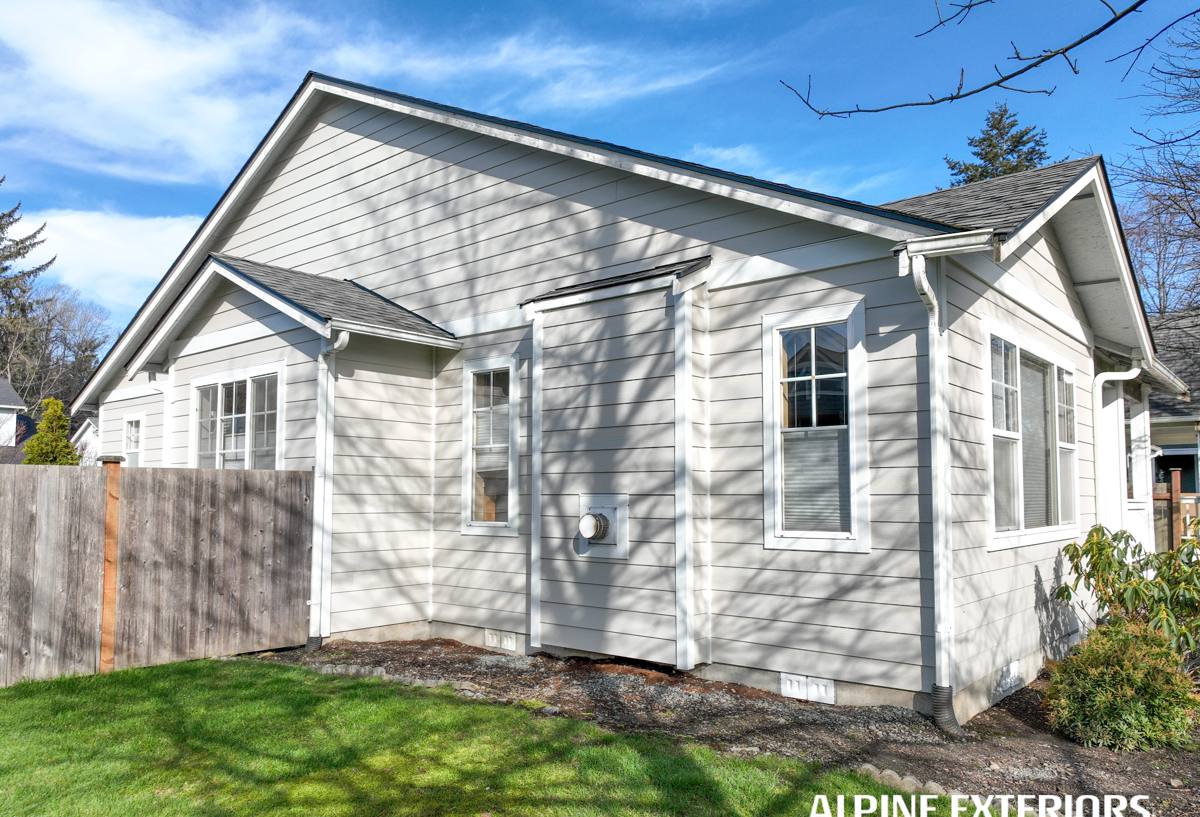
What an Asphalt Shingle Roof Actually Needs to Hold Up Here
A shingle roof that's built to a bare-minimum code standard will pass inspection and look fine for a few years. It's the details underneath the shingles that decide whether it's still doing its job in fifteen or twenty.
Underlayment and Ice-and-Water Protection
We run self-adhered ice-and-water membrane at eaves, valleys, and around every penetration — chimneys, skylights, pipe boots — not just the code-minimum stretch at the eave edge. In a shaded, high-moisture setting, valleys carry more standing water and debris than a typical roof, and that's where a synthetic underlayment alone tends to fail first.
Ventilation That Actually Balances
Intake at the soffits has to match exhaust at the ridge, or the attic traps moisture that condenses on the underside of the deck. We see plenty of Sudden Valley attics with ridge vent installed but soffits painted over or blocked with insulation, which defeats the system. Balanced ventilation matters everywhere, but it matters more under tree cover where the roof already runs wetter and cooler than a sun-exposed one.
Flashing and Fasteners That Won't Corrode Early
Step flashing at walls, counter-flashing at chimneys, and metal drip edge all need to be a material that holds up to sustained moisture, not just occasional rain. We don't reuse old flashing during a tear-off — it's a small material cost against the risk of a leak coming back through a fastener hole or a seam that was already thinning out.
Shingle Options for a Wooded, Lake-Adjacent Lot
Every shingle line on the market will shed water when it's new. The differences that matter for a lot like this show up over years, in how the shingle handles algae growth, wind uplift under gusty lake weather, and how forgiving it is if a branch or debris load hits it.
| Shingle Type | Moss/Algae Resistance | Wind Rating | Typical Lifespan Here |
|---|---|---|---|
| Standard 3-tab | Low — no algae-resistant granules | Lower uplift rating | Shortened under heavy shade |
| Architectural/laminate | Moderate to high with AR granules | Higher uplift rating, better in gusty conditions | Full expected life with proper ventilation |
| Algae-resistant (AR) upgrade | High — copper-infused granules slow regrowth | Same as base shingle line | Longest before moss becomes a recurring problem |
We default to steering Sudden Valley clients toward an architectural shingle with algae-resistant granules. It costs more up front than a basic 3-tab, but on a shaded, lake-adjacent roof the difference in how long it stays clean and intact is real, and it's the honest recommendation regardless of what we'd rather sell.
Our Process for a Sudden Valley Re-Roof
- On-site inspection — we check the deck, existing moss and algae extent, flashing condition, and attic ventilation before quoting anything.
- Written scope — a specific proposal covering tear-off, deck repair allowance, underlayment, flashing, ventilation, and shingle selection, so there's no ambiguity about what's included.
- Tear-off and deck inspection — old material comes off completely; we don't layer new shingles over old on any job, and any soft or rotted decking gets replaced before anything goes back down.
- Underlayment and ice-and-water shield — installed at eaves, valleys, and penetrations to the standard described above.
- Flashing and vent replacement — new step flashing, counter-flashing, and vent boots rather than reusing what's already corroding.
- Shingle installation — installed to the manufacturer's nailing pattern and exposure specs, which is what keeps the warranty valid if a problem ever shows up.
- Cleanup and walk-through — magnetic sweep for stray fasteners, debris hauled off, and a walk-through so you know what was done and what to watch for.
- Documentation — workmanship warranty and manufacturer paperwork handed over in writing.
What Drives the Cost of a Sudden Valley Roof Replacement
There's a wide range on roofing quotes, and most of it comes down to a handful of factors rather than which contractor you call.
| Factor | Why It Moves the Price |
|---|---|
| Roof size and pitch | More surface area and steeper pitch both add labor and safety requirements |
| Layers to remove | A second tear-off layer adds disposal weight and labor time |
| Deck condition | Rotted or soft sheathing found during tear-off has to be replaced before shingles go on |
| Tree cover and access | Limbs needing clearance, long carries to a dumpster, or tight driveways add time |
| Shingle tier | Basic 3-tab vs. architectural vs. algae-resistant upgrade changes material cost directly |
| Ventilation or flashing upgrades | Correcting an unbalanced attic or replacing all flashing adds scope beyond a straight shingle swap |
We put all of this in writing before work starts. If we open the deck and find something we didn't expect, we stop and talk to you before spending a dollar on it.
Between Service Visits: A Moss and Debris Checklist
A well-built roof still needs basic upkeep in a shaded, wet environment. This won't replace a professional inspection, but it will catch problems early and reduce how hard moss and moisture can work against you between visits.
- Clear needles and leaf litter from valleys and behind chimneys a couple of times a year, especially after fall needle drop.
- Keep gutters flowing — a clogged gutter backs water up under the shingle edge at the eave.
- Look for dark streaking or green-black patches on north-facing or shaded slopes; that's early algae or moss, not just staining.
- Trim back branches that overhang the roofline to cut down on shade and debris load over time.
- Check the attic on a cold day for frost or damp spots on the underside of the deck — a sign ventilation isn't balanced.
- Have a professional inspection after any major windstorm rather than waiting for a visible leak.
Why It Matters That We Already Work in This Neighborhood
Sudden Valley isn't a typical subdivision, and a crew that's never worked here will treat it like one. We're familiar with the tree-heavy lots, the tighter access many driveways present for staging a tear-off, and the debris-hauling logistics that come with a heavily wooded site. If your property is part of a community with architectural or color guidelines, we've dealt with that kind of review before and can plan the material selection around it rather than finding out about a restriction mid-project. And because we're a Bellingham-based crew, we're not driving in from out of the area to handle a warranty callback or respond after a storm — we're already local to Whatcom County.
Signs a Sudden Valley Roof Needs Attention Now
- Granules collecting in gutters or at the base of downspouts in noticeable amounts.
- Moss mats thick enough that you can see them lifting shingle edges, not just surface discoloration.
- Shingles that are cupping, curling at the corners, or cracking when you look closely.
- Water stains on interior ceilings or in the attic, even faint ones.
- Daylight visible through the roof deck from inside the attic.
- Flashing around chimneys or skylights that looks rusted, lifted, or gapped.
If you're seeing any of these, it's worth a look before the next wet season rather than after. We offer free, no-pressure estimates for Sudden Valley homeowners — you can use the form below to get one scheduled.