 Bellingham
 Roofing in Sehome: What Bellingham's Climate Actually Does to a Roof
Sehome sits close enough to Bellingham Bay that salt-laden air reaches the neighborhood's roofs year-round, and the wooded, hillside character of the area around Sehome Hill means a lot of homes get shade for a large part of the day. That combination is harder on a roof than either factor alone. Salt air accelerates corrosion on exposed metal fasteners and flashing. Shade and tree cover keep roof surfaces damp long after a storm has passed, which is exactly the condition moss, moss spores, and algae need to take hold. Add Whatcom County's long wet season and driving rain that comes in sideways off the water during winter storms, and you have a roof that's under near-constant moisture load for six to eight months of the year.
None of this means Sehome roofs fail faster than roofs anywhere else in Western Washington. It means they need to be built and maintained with those specific stresses in mind — correct ventilation, moss-resistant material choices, and flashing details that don't rely on caulk or sealant to do the work that proper metalwork should be doing.
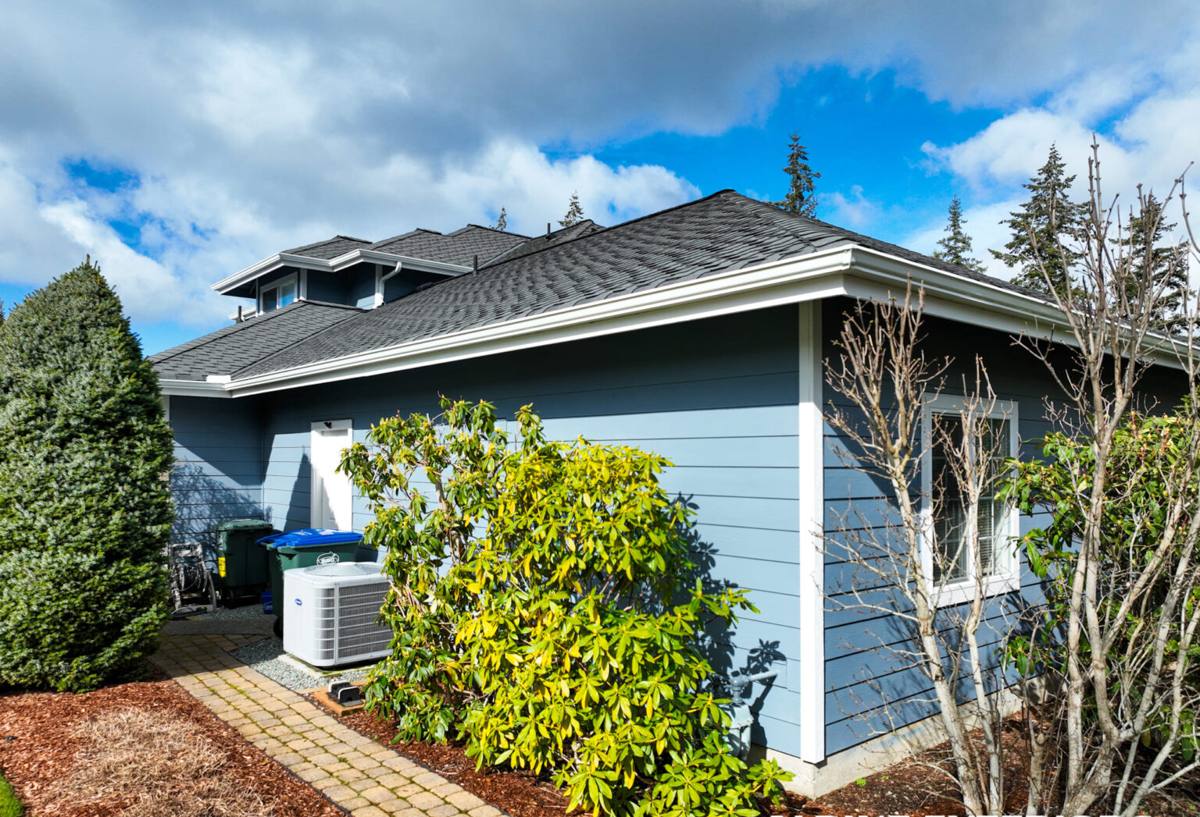
Signs a Sehome Roof Needs Replacing, Not Patching
A lot of roofs in this neighborhood get patched two or three times before anyone calls for a full replacement quote. Patching has its place, but there's a point where it stops making financial sense. Here's what tends to signal that point:
- Moss growth that comes back within a season of cleaning, especially on north-facing slopes or under tree cover
- Granule loss heavy enough that you can see bare, shiny patches on asphalt shingles
- Shingles that are cupping, curling at the edges, or cracking when you walk the roof
- Soft spots in the decking, found either by walking the roof or by staining on the attic ceiling below
- Flashing around chimneys, skylights, or roof-wall intersections that's rusted, lifted, or was never properly stepped in the first place
- A roof that's 20+ years old (asphalt) or showing its age structurally, regardless of how it looks from the ground
If you're only dealing with one of these in isolation, a repair is often the right call. When two or three show up together, that's usually a sign the roof system as a whole is past the point where patching buys you meaningful time.
What a Correct Roof Replacement Actually Involves
Tear-off, not overlay
We tear off down to the decking rather than layering new shingles over old ones. An overlay hides existing damage, traps moisture between layers, and voids most manufacturer warranties. On a coastal-climate roof like the ones in Sehome, that trapped moisture is a real problem, not a theoretical one.
Deck inspection and repair
Once the old roofing is off, we check the decking for soft spots, delamination, or water staining and replace any sections that don't pass. Skipping this step is one of the most common ways a "new roof" fails early — the covering is new, but it's fastened to compromised wood underneath.
Underlayment and ice/water protection
A synthetic underlayment goes down across the full roof, with self-adhering ice-and-water membrane at the eaves, valleys, and any low-slope transitions — the spots most exposed to wind-driven rain. This is the layer that actually keeps water out if wind pushes rain up under the shingles, which happens regularly during winter storms off the Sound.
Flashing done as metalwork, not caulk work
Step flashing at walls, proper counter-flashing at chimneys, and correctly lapped valley metal are what keep a roof watertight long-term. Sealant has a place as a secondary defense, but it degrades in UV and salt air faster than metal does. We flash first and treat sealant as backup, not the primary barrier.
Ventilation
Balanced intake and exhaust ventilation keeps the attic close to outdoor temperature and humidity, which does two things: it slows moss and mildew growth on the underside of the deck, and it prevents the temperature swings that cause premature shingle aging from the inside out. On shaded, tree-covered lots this matters more than usual, because those roofs are already fighting extra ambient moisture.
Material Choices for This Neighborhood's Conditions
There's no single "right" roofing material for Sehome — it depends on the home's roof pitch, budget, and how much shade and tree cover the lot has. Here's how the common options compare against this area's specific conditions:
| Material | Moss/algae resistance | Wind-driven rain performance | Typical lifespan | Notes for this area |
|---|---|---|---|---|
| Architectural asphalt shingle | Good with algae-resistant (AR) granules; needs periodic cleaning | Very good when installed with proper underlayment | 25–30 years | Most common choice; best value for shaded lots if AR-rated shingles are used |
| Standing seam metal | Excellent — moss struggles to hold on smooth metal | Excellent | 40–50+ years | Higher upfront cost; sheds moss and needles well on tree-covered lots |
| Cedar shake | Poor without diligent maintenance — moss and rot risk in shaded, damp spots | Fair to good if installed correctly | 20–30 years with maintenance | We're honest that cedar is a high-maintenance choice in a wet, shaded neighborhood; it needs regular treatment to hold up |
| Synthetic/composite shake | Good — resists moisture absorption better than real cedar | Good | 30–50 years | Gives the cedar look with less moisture-related maintenance burden |
For most Sehome homes, an algae-resistant architectural shingle is the practical middle ground — it handles the moss pressure reasonably well at a manageable cost. On heavily shaded lots where moss has been a recurring fight, metal is worth pricing out even at the higher upfront cost, since the long-term maintenance savings can offset it.
Moss Prevention Built Into the Roof, Not Bolted On After
Zinc or copper strips near the ridge are a common add-on, and they do help slow moss regrowth as rainwater carries trace metal down the roof. But they're a supplement, not a substitute for the fundamentals: good sun exposure where possible, ventilation that keeps the deck dry from underneath, and a material with real algae resistance. On lots with heavy tree cover, we'll also talk through whether some limbing back over the roofline makes sense — that's a conversation for a homeowner and an arborist, but it's often the single highest-impact thing for moss control on a shaded Sehome roof.
Our Process for a Sehome Roof Replacement
- On-site inspection. We walk the roof (weather permitting) and check the attic from inside, looking at decking condition, ventilation, flashing, and moss/algae patterns specific to your lot's sun and tree exposure.
- Written estimate. You get a clear scope and price — material options, tear-off and disposal, decking repair contingency, and timeline — before any work starts.
- Scheduling around the weather. We plan tear-off days around forecast windows. A roof should never sit open overnight in this climate if we can help it.
- Tear-off and deck repair. Full removal of old roofing, deck inspection, and replacement of any compromised sheathing.
- Underlayment, flashing, and install. Ice-and-water membrane at vulnerable areas, synthetic underlayment across the field, correct metal flashing, then the roofing material itself.
- Ventilation check. Intake and exhaust venting confirmed and corrected if the existing setup was undersized or unbalanced.
- Cleanup and magnetic sweep. Full site cleanup, including a nail sweep of the yard and driveway.
- Walkthrough and warranty paperwork. We go over the finished roof and the workmanship and manufacturer warranty terms in writing.
Permits, Timing, and What to Expect
Roof replacement in Bellingham typically requires a permit, and permit requirements and timing can shift, so we confirm current requirements before scheduling rather than assuming last year's rules still apply. We handle that process rather than leaving it to the homeowner. On timing: late spring through early fall gives the widest dry-weather windows for tear-off work, but roof replacement happens in Whatcom County year-round — it just means tighter weather planning and, sometimes, working in smaller sections to keep the roof protected between rain systems.
Why a Local Crew Matters for This Kind of Work
A roofing crew that already works in Sehome and the surrounding Bellingham neighborhoods knows which slopes on which street orientations tend to hold moss, how the tree canopy in this part of town affects drying time after a storm, and how to sequence a job around Whatcom County's weather patterns instead of guessing. That's not marketing — it's the practical difference between a crew showing up once and a crew that's dealt with this specific coastal-hillside combination of salt air, rain, and shade repeatedly. It also means someone local is available if a warranty question or minor issue comes up after the job is done, instead of chasing down a company that only passed through for one project.
What Affects the Cost
| Factor | Why it matters |
|---|---|
| Roof size and pitch | Steeper roofs take longer and require more safety setup, which affects labor cost |
| Number of layers to remove | Tear-off of multiple existing layers adds labor and disposal cost |
| Decking condition | Rot or soft spots found during tear-off mean sheathing replacement, which is hard to know exactly until the old roof is off |
| Material choice | Asphalt, metal, and composite shakes have significantly different material and install costs |
| Roof complexity | Valleys, dormers, skylights, and multiple roof-wall intersections all add flashing labor |
| Ventilation upgrades | Adding or correcting intake/exhaust venting is a smart add during replacement, not a separate future project |
Because decking condition often isn't fully known until tear-off, a straightforward estimate will include a clear, written contingency for sheathing replacement rather than surprising you mid-project.
A Quick Checklist Before You Hire
- Ask for proof of current licensing and insurance, and confirm it directly rather than taking a business card's word for it
- Get the material brand and product line named specifically in the written estimate, not just "architectural shingle"
- Confirm who pulls the permit and who's listed on it
- Ask how decking replacement, if needed, is priced — per sheet, hourly, or a flat contingency
- Ask what ventilation work is included versus treated as an upsell
- Get the workmanship warranty in writing, separate from the manufacturer's material warranty
If your roof is showing moss, granule loss, or age, we're glad to come take a look and give you a straight, no-pressure estimate for a Sehome roof replacement — just fill out the form below and we'll set up a time.