 Bellingham
 Why Barkley Homes Need Windows Built for This Climate
Barkley sits close enough to Bellingham Bay that salt air is a real factor in how exterior materials age, and like the rest of Whatcom County, it gets a steady diet of driving rain for much of the year. Add in a long moss season where shaded exteriors stay damp for weeks at a stretch, and you've got a combination that's tough on window frames, seals, and sills if the original installation wasn't done with this specific climate in mind. A window that would hold up fine in a dry inland climate can fail early here — not because the window itself is bad, but because it wasn't installed, flashed, or finished for sustained moisture exposure.
Custom windows for a Barkley property aren't just about matching an odd-sized opening. It's about specifying the right frame material, glazing package, and flashing detail for a neighborhood where wind-driven rain hits siding at an angle and humidity lingers longer than it does on the dry side of the state.
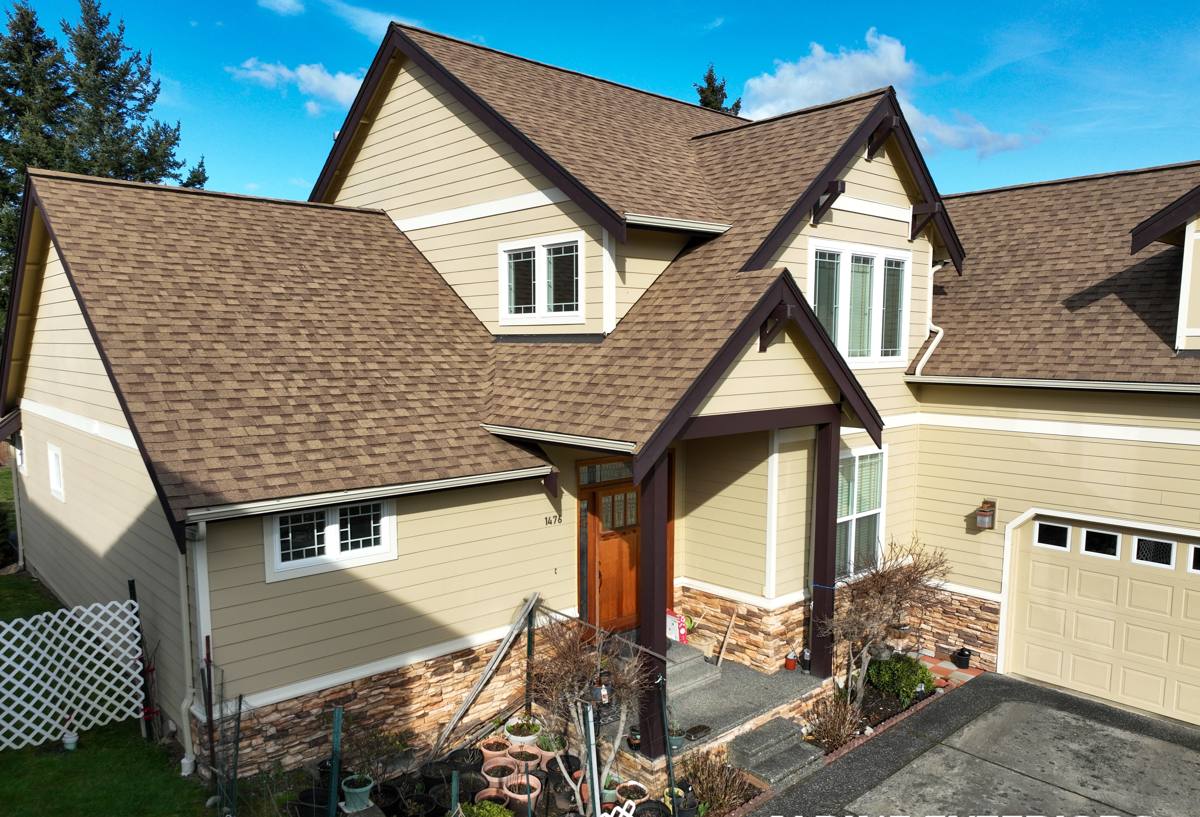
What "Custom" Actually Means for a Window Project
A lot of homeowners assume "custom" just means non-standard sizing. That's part of it, but on older Barkley homes it usually covers more ground:
- Non-standard rough openings — common in homes built or added onto before modern window sizing became standardized
- Matching sightlines — keeping grille patterns, frame profiles, and trim reveals consistent across a whole elevation, even when you're only replacing some windows now and the rest later
- Glazing selection — choosing glass coatings and gas fills based on which direction a window faces and how much weather it takes
- Specialty shapes — arched, angled, or oversized openings that off-the-shelf stock windows can't fill
- Historic or architectural matching — replicating a look on older homes without using materials that won't hold up to Northwest moisture
Custom work costs more upfront than grabbing stock sizes, but it's usually cheaper than the alternative — modifying framing to fit a stock window, which adds labor and opens up more of the wall assembly to error.
When Custom Sizing Is Unavoidable
If your home predates the mid-1990s, there's a decent chance at least a few openings are off from today's standard sizes by an inch or more in one dimension. That's enough to rule out stock windows without either resizing the opening (more invasive, more cost) or ordering custom (cleaner, usually faster).
Material and Glazing Choices That Make Sense Here
There's no single "best" window material — every option is a set of trade-offs. In a climate with salt air and long wet stretches, the trade-offs that matter most are moisture behavior, maintenance burden, and how the frame handles repeated wet-dry cycles.
| Frame Material | Moisture Behavior | Maintenance | Best Fit |
|---|---|---|---|
| Vinyl | Doesn't rot or corrode; seams can be a weak point if not installed well | Low — occasional cleaning | Most Barkley homes, budget-conscious replacement |
| Fiberglass | Very stable in wet-dry cycling, resists warping | Low | Homes wanting longevity with less flex than vinyl |
| Wood (clad exterior) | Interior wood look with a protective exterior shell; still needs proper flashing | Moderate — exterior clad is low, but any exposed wood needs attention | Historic character homes, interior-visible sightlines |
| Aluminum | Prone to condensation and thermal transfer without thermal breaks | Moderate | We generally steer homeowners away from this in our climate unless it's a thermally broken commercial-grade product |
On glazing, double-pane with a low-E coating and argon fill is the practical standard for this region — it balances cost against real performance in our humidity and temperature swings. Triple-pane adds more insulation value and sound dampening but comes at a meaningful price premium; we'll tell you honestly whether it's worth it for your specific exposure rather than upselling it across the board.
Signs Your Current Windows Are Already Losing the Fight
Whatcom County's wet season is unforgiving on aging window installations. Before you decide whether to repair, reseal, or replace, look for these signs:
- Fogging or condensation between panes (seal failure — glass unit needs replacement, not just caulking)
- Soft or discolored trim and sill wood, especially on north- and west-facing windows
- Visible gaps or daylight around the frame when the sash is closed
- Green or black growth on the sill or lower frame that returns quickly after cleaning
- Drafts you can feel even with the window latched
- Difficulty opening or closing — frames can swell and bind when moisture gets into the wood or wall cavity
- Paint or finish that's bubbling or peeling near the window perimeter, which usually points to moisture getting behind the trim
One or two of these can sometimes be addressed with resealing or spot repair. Several at once, especially moss growth combined with soft trim, usually means water has been getting behind the window assembly for a while and full replacement is the more honest recommendation.
The Installation Details That Actually Keep Water Out
The window unit itself is only part of what determines whether a job holds up through a Bellingham winter. The flashing and sealing details around it matter just as much, if not more:
Flashing and Weather Barrier Integration
Every opening gets proper flashing tape and pan flashing at the sill, integrated with the house's weather-resistive barrier so water sheds outward and down, not into the wall cavity. This is the step that gets rushed on cheap installs, and it's the one most responsible for early failures in wet climates.
Sealant Selection and Placement
Not every gap should be sealed solid. Window assemblies need a way for any incidental moisture to drain back out — sealing every joint airtight can trap water instead of keeping it out. We follow manufacturer installation specs for where sealant goes and where it deliberately doesn't.
Insulation and Air Sealing at the Rough Opening
The gap between the window frame and the rough opening gets properly insulated and air-sealed — not stuffed with excess fiberglass, which can hold moisture, but filled with a product designed for that gap.
How Our Process Works, Start to Finish
- On-site assessment — we look at each opening, check for existing water damage or soft framing, and measure for true custom fit
- Material and glazing recommendation — based on which direction each window faces and how exposed it is to weather
- Written estimate — clear pricing with no surprise add-ons once work starts
- Ordering and lead time — custom units take longer to manufacture than stock sizes; we'll give you a realistic timeline upfront
- Removal and inspection — when we pull the old window, we check the framing underneath for rot or damage before anything new goes in
- Installation with proper flashing and sealing — following the details above, not shortcuts
- Final walkthrough — operation check on every window, sealant inspection, and cleanup
If we find hidden water damage once the old window is out, we'll show you before covering anything up and talk through the repair options rather than just sealing over a problem.
Energy Efficiency Considerations for This Area
Whatcom County doesn't hit the extreme temperature swings some inland climates do, but the combination of cool, damp winters and the cost of heating through a long wet season means glazing performance still shows up on your energy bill. Low-E coatings and proper gas fills reduce heat loss through the glass, and — just as important — a well-sealed, correctly flashed installation stops the air leakage that a lot of homeowners mistake for a "bad window" when it's actually a bad install.
Why a Crew That Already Works Barkley Matters
Barkley has its own mix of home ages and construction styles, and a crew that's worked the neighborhood already has a feel for what tends to show up — where older homes typically have non-standard openings, which exposures take the worst of the driving rain, and how moss and moisture tend to behave on the lots around here. That familiarity shortens the guesswork on your estimate and means fewer surprises once we open up a wall. It also means we're a known, reachable local contractor if a warranty question comes up years down the road — not a crew that worked one job in the area and moved on.
Maintenance That Extends the Life of a New Installation
Even a correctly installed custom window benefits from basic upkeep in this climate:
- Clear moss and debris from sills and tracks each season, especially on shaded, north-facing windows
- Check exterior caulking annually for cracking or separation
- Keep gutters and downspouts clear so overflow isn't running down onto window heads
- Wipe down tracks and weep holes so drainage paths stay open
- Address any soft trim or paint failure promptly — it's cheaper to fix early than after water gets behind the frame
None of this is heavy maintenance, but skipping it is how a well-installed window ends up with avoidable problems ten years in.
If you're weighing repair versus replacement, or just want an honest read on what your Barkley home's windows actually need, we're happy to take a look. The estimate is free, there's no pressure to sign anything on the spot, and you'll get a straight answer about what's worth fixing now versus what can wait — just fill out the form below to get started.