 Bellingham
 Building Decks for Birchwood's Marine Climate
Birchwood is one of Bellingham's older, tree-lined neighborhoods, and that mix of mature landscaping and marine weather off Bellingham Bay puts real stress on outdoor structures. A deck built the way it might be in a dry inland state doesn't hold up the same way here. Whatcom County gets a long stretch of low-angle, soaking rain every fall through spring, salt-tinged air rolling in off the water, and — where trees shade a yard, which is common in Birchwood — a moss and algae season that can run most of the year. None of that is a reason to avoid building a deck. It's a reason to build one correctly for this specific climate rather than using a generic approach that works fine in Arizona and fails here in five years.
This page covers what that actually means: material choices, framing and drainage details, code basics, and the maintenance rhythm that keeps a deck looking good through a Bellingham winter instead of turning green and soft underfoot.
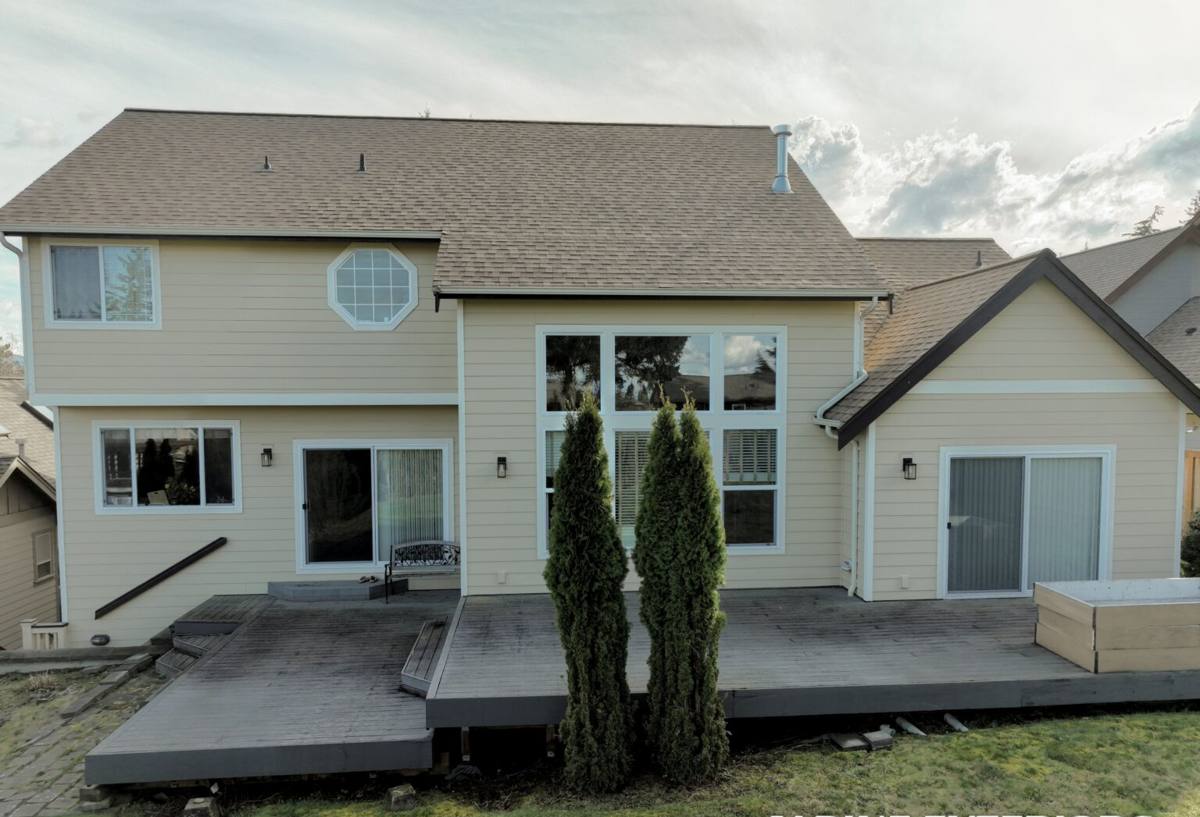
What Bellingham Weather Does to an Ordinary Deck
Salt Air and Corroding Hardware
Bellingham sits on saltwater, and marine air carries fine salt that settles on exposed metal. Standard zinc-coated screws and joist hangers can start showing surface rust within a couple of seasons in this environment, and once fasteners weaken, the whole structure is only as strong as its worst connection. This isn't a defect specific to any one brand — it's just what happens to under-rated hardware anywhere near saltwater air, and it's why fastener selection matters more here than it would fifty miles inland.
Shade, Moss, and Standing Moisture
Established trees are one of the nicer things about Birchwood, but shade plus regular rain equals moss. Moss holds moisture against wood and decking surfaces, and moisture held against a surface for months at a time is what actually causes rot, delamination, and slick, unsafe footing — the moss itself is more a symptom than the root problem. Decks built with tight board spacing or poor airflow underneath trap moisture longest and grow moss fastest, even on materials that are supposed to resist it.
Driving Rain and the House Connection
Wind-driven rain in this region doesn't just fall straight down — it gets pushed sideways into the point where a deck attaches to the house, called the ledger connection. That single joint is where the majority of serious structural deck failures start, because water gets behind the ledger board and rots the house's rim joist from the inside, often for years before anyone notices. Any deck that ties into a house here needs that connection detailed for sideways-driven rain, not just vertical rainfall.
Choosing the Right Decking Material for This Climate
There's no single "best" decking material — there's a best material for a given budget, maintenance appetite, and how much sun or shade the deck gets. Here's how the common options actually perform in Whatcom County conditions:
| Material | How It Handles Moisture & Moss | Maintenance | Typical Lifespan Here |
|---|---|---|---|
| Western red cedar | Naturally rot- and insect-resistant; still needs sealing to stay dry inside | Clean and reseal every 1-2 years, more often in full shade | 15-20+ years with upkeep |
| Pressure-treated fir/pine | Chemically treated core resists rot; surface still absorbs water and grows moss if not sealed | Annual cleaning, seal or stain every 1-2 years | 15-20 years with upkeep |
| Capped composite | Won't rot, but moss and algae can still grow on the surface film in shade | Periodic wash with deck cleaner; no staining or sealing | 25-30 year manufacturer warranties, common |
| PVC decking | Fully synthetic, most resistant to moisture absorption | Occasional wash | Similar or longer than composite, higher upfront cost |
Our honest take: in a heavily shaded Birchwood yard, we lean toward composite or PVC because they take moss pressure off you as the owner — you're not fighting a resealing schedule on top of moss cleaning. In full sun with good airflow, cedar still looks better to a lot of people and performs fine if it's maintained. We'll walk your specific lot with you rather than push one material by default.
What a Correctly Built Deck Requires
Footings Below Frost Depth
Post footings need to sit below the local frost line so seasonal freeze-thaw cycles don't heave them over time. This is a basic structural requirement everywhere, but it's one of the first things that gets shortcut on a rushed or underbid job, since it's invisible once the deck is finished. We set footings to depth and let inspections confirm it before backfilling.
Ledger Flashing — the Most Important Detail
Given how much damage a bad ledger connection can cause here, we treat this as the single highest-priority detail on any attached deck. That means proper metal flashing integrated with the house's existing water barrier, not just caulk and lag bolts, plus a gap or flashing tape system that lets any water that does get in drain back out instead of sitting against the framing.
Joist Protection and Board Spacing
Joist tape over the tops of wood joists keeps screw penetrations from becoming little wells that hold water inside the wood — a cheap step that adds years to a wood-framed deck's life. On top of that, correct board spacing (and blocking that allows airflow underneath rather than sealing the underside off) is what actually keeps a deck drying out between storms instead of staying damp for a week at a time, which is what invites moss in the first place.
Railings, Stairs, and Code Basics
Most residential decks in Washington need a guardrail once the walking surface is roughly 30 inches or more above grade, and building code generally calls for a 36-inch guardrail height with baluster spacing tight enough that a 4-inch sphere can't pass through — a rule aimed squarely at keeping small children from slipping through. Stairs have their own rise-and-run rules and typically need a graspable handrail once there are more than a few steps. These numbers are the general residential standard, but exact requirements and how they're enforced can vary by jurisdiction, which is one more reason to have someone local pull the permit and coordinate the inspection rather than guessing.
Permits and Inspections
Whether a given deck needs a permit generally comes down to its height above grade, its size, and whether it attaches to the house. Attached decks and anything with a guardrail typically require a permit and at least one inspection; small, low, freestanding platforms sometimes don't. We handle the permit application and schedule inspections as part of the job rather than leaving that step to the homeowner — it's a small piece of paperwork that protects you if you ever sell the house and a buyer's inspector asks whether the deck was permitted.
Repair, Resurface, or Rebuild?
Not every tired-looking deck needs to come out completely. Before we quote a full rebuild, we check for these signs to figure out what level of work actually makes sense:
- Soft or spongy spots in the decking — usually means water has gotten into the boards, not just the surface
- Rust streaks around fasteners or hangers — hardware corrosion from salt air, a structural concern even if the wood looks fine
- Gaps or movement at the ledger connection — the highest-priority item to inspect, given how it fails
- Persistent moss that comes right back a few weeks after cleaning — points to a drainage or airflow problem, not just a cleaning problem
- Wobble in the railing or posts — often a footing or post-base issue, not a cosmetic one
- Cracked, checked, or delaminating boards on an otherwise sound frame — a candidate for resurfacing instead of a full rebuild
If the frame and footings are sound, resurfacing with new decking can be a legitimate way to extend a deck's life for a lot less than a full rebuild. If the framing or ledger connection is compromised, patching the surface just hides the real problem.
Our Process for a Birchwood Deck Project
- On-site assessment — we look at the existing structure (if any), the yard's sun and shade pattern, drainage, and how the deck will tie into the house
- Design and material discussion — sizing, layout, railing style, and an honest conversation about material trade-offs for your specific lot
- Written estimate — a clear scope and price before any work starts, no surprise add-ons for things that should have been caught upfront
- Permit and scheduling — we handle the paperwork with the local building department and set a realistic timeline around Whatcom County's wetter months
- Build — footings, framing with proper flashing and joist protection, decking, then railings and stairs
- Final walkthrough and inspection sign-off — you see the finished work and we confirm everything passed before we call it done
Maintenance and Why a Local Crew Matters
A deck built correctly for this climate still needs a little seasonal attention — it just needs far less than one built for a drier region. This simple routine covers most of it:
- Sweep and rinse regularly through fall and winter to keep wet leaves and debris from sitting on the surface
- Wash with a deck cleaner (not a high-pressure blast, which can gouge softwood or void composite warranties) once or twice a year
- Check and reseal wood decking every 1-2 years, sooner in full shade
- Look under the deck once a year for standing water, moss buildup on joists, or any staining near the ledger board
- Keep gutters and downspouts near the deck clear so roof runoff isn't dumping extra water onto or under it
A crew that already works in Birchwood has usually already dealt with this neighborhood's tree cover, older homes with older ledger connections, and the local building department's process — that's fewer surprises for you, not a sales pitch. We're not learning Whatcom County's frost depth or the local inspector's expectations on your project; we already know them.
If you're weighing a new deck, a rebuild, or just want an honest opinion on whether your current one is salvageable, we're glad to take a look. Use the form below to request a free, no-pressure estimate.