 Bellingham
 Composite Decking Built for the Columbia Neighborhood
Columbia is one of Bellingham's older, closer-in neighborhoods, and that means a lot of the homes here have decks that have been through decades of Whatcom County weather. If you're thinking about composite decking for a house in Columbia, you're already asking the right question: not "what looks good in a showroom," but "what's going to hold up here." A deck in this part of Bellingham deals with a different set of stresses than a deck fifty miles inland — salt-laden air off the bay, long stretches of driving rain, and a moss season that can run most of the year if a surface stays shaded and damp. Composite decking, installed correctly for this specific climate, is one of the better answers to that problem. Installed wrong, it can trap moisture and cause the same headaches as a bad wood deck, just with a bigger price tag.
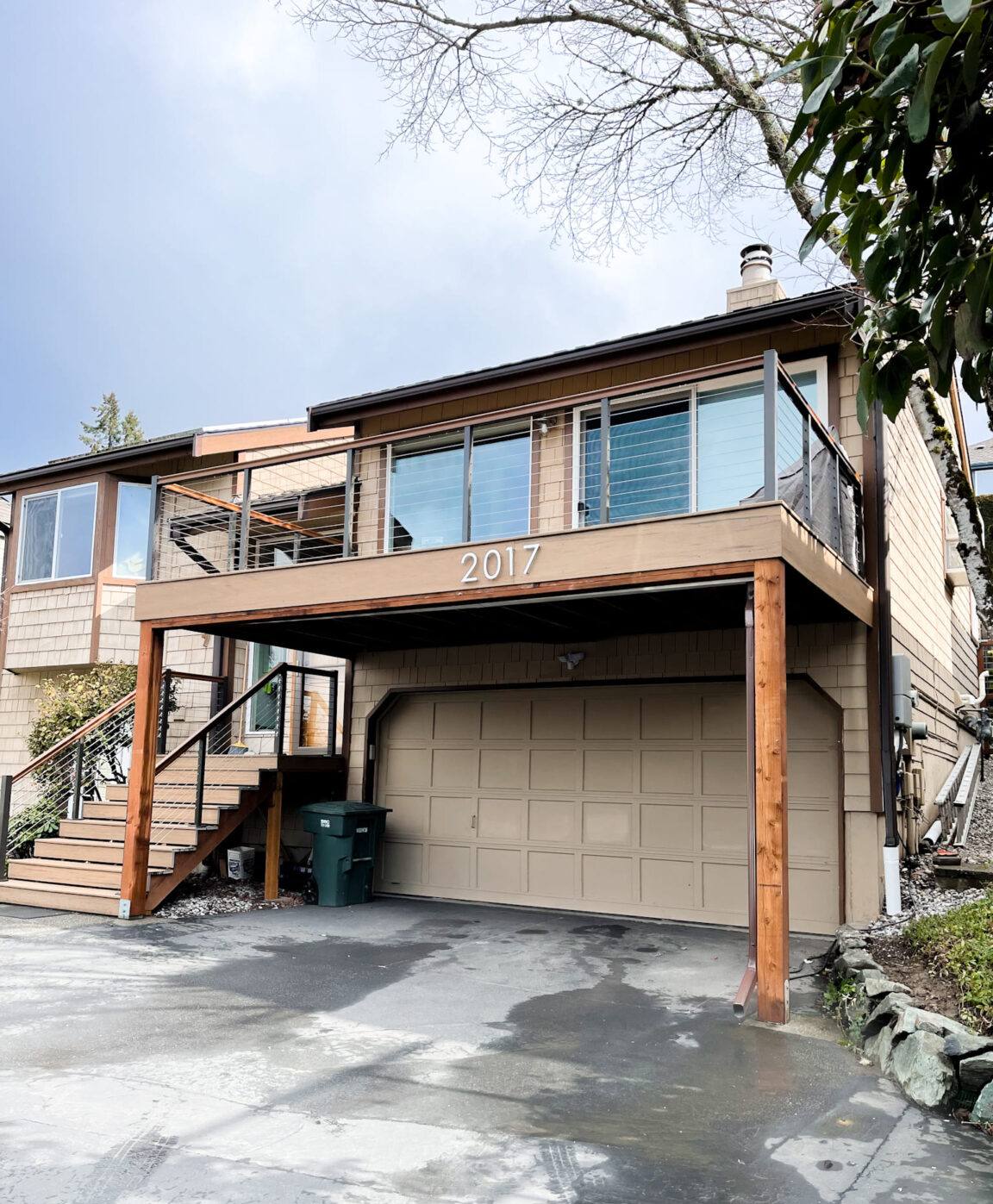
What Bellingham's Climate Actually Does to a Deck
It's worth being specific about what "coastal Pacific Northwest weather" means for decking materials, because it's not just "it rains a lot."
- Salt air: Proximity to the water means airborne salt settles on exposed surfaces, accelerates corrosion on unprotected fasteners and hardware, and can dull or discolor finishes over time.
- Driving rain: Storms here often come in sideways, which pushes water into joints, fastener holes, and the underside of boards — areas a lot of installers don't think to protect.
- Long moss season: Shade, moisture, and mild temperatures are exactly what moss and algae want. Any deck surface that doesn't drain and dry quickly becomes a moss farm, especially on the north or east side of a house.
- Freeze-thaw cycling: Whatcom County doesn't get brutal winters, but it does get repeated freeze-thaw swings, which stress any material that's absorbing moisture instead of shedding it.
None of this is unique to Columbia specifically, but it's consistent across the neighborhood because of how close it sits to the water and how many mature trees shade the older lots here. A deck design that ignores these factors will underperform no matter what brand of decking goes on top of it.
Why Composite Holds Up Better Here Than Wood — With Caveats
Wood decking isn't a bad product, but in this climate it demands a maintenance schedule most homeowners don't actually keep up with — annual cleaning, periodic sealing, and vigilance about rot at fastener points. Composite decking, particularly modern capped composite, resists moisture absorption, doesn't need sealing, and doesn't rot the way wood fibers do. That's a real advantage in a place with this much sustained dampness.
The caveat: composite is not maintenance-free, and it's not immune to moss and mildew growth on its surface — nothing that sits outside in this climate is. The difference is that composite won't rot or delaminate from that growth the way wood can, and it cleans up more predictably. We tell homeowners the truth on this rather than oversell it: composite reduces your maintenance burden and extends your structural lifespan, but you'll still want to rinse pollen, moss spores, and organic debris off the surface a couple of times a year.
Composite vs. Wood vs. PVC — Quick Comparison
| Factor | Pressure-Treated Wood | Capped Composite | PVC / Vinyl |
|---|---|---|---|
| Moisture resistance | Fair — needs regular sealing | Good — moisture-resistant cap | Very good — fully synthetic |
| Moss/algae growth | Common, can accelerate rot | Occurs but doesn't compromise the board | Occurs, cleans off easily |
| Salt air exposure | Accelerates fastener corrosion, weathering | Handles well with correct hardware | Handles well with correct hardware |
| Upfront cost | Lowest | Mid to upper-mid | Highest |
| Look/feel underfoot | Natural wood grain and warmth | Wood-look, more consistent | Uniform, plastic feel to some |
| Long-term upkeep | Annual sealing/staining recommended | Periodic washing, no sealing | Occasional washing, no sealing |
What a Correct Composite Installation Actually Involves
Most composite decking problems we get called out to fix aren't a product failure — they're an installation shortcut. In a climate like Bellingham's, the details underneath the boards matter as much as the boards themselves.
Substructure and Drainage
The framing has to be built with drainage in mind, not just load. That means proper board spacing for airflow, joist layout that avoids standing water, and a substructure height that keeps the deck surface clear of soil moisture and splash-back, especially on ground-level decks near landscaping.
Joist Protection
Composite decking is more moisture-resistant than the boards themselves would suggest if the joists underneath aren't protected. We use joist tape or an equivalent flashing method on the tops of joists to keep water from wicking into the framing lumber — the framing is still typically wood, and it's the part of the system most vulnerable to rot if it's ignored.
Fasteners and Hardware
Given the salt air here, we use corrosion-resistant, coated fasteners and hidden fastener systems rated for coastal-adjacent use. Cutting corners on hardware is one of the most common causes of premature staining, streaking, and loosening on composite decks near the water.
Board Gapping and Expansion
Composite material expands and contracts with temperature more than people expect. Gapping has to account for that movement, plus enough room for water to shed instead of pool between boards — too tight and you get standing water and moss buildup right in the seams.
Ledger and Flashing at the House
Where the deck attaches to the house is the single most common source of hidden water damage on any deck in this region. Proper ledger flashing that directs water away from the wall assembly is non-negotiable, especially with the amount of driving rain Bellingham sees.
How We Approach a Columbia Deck Project
- On-site evaluation: We look at sun exposure, drainage, existing structure (if replacing an old deck), and how close the site is to salt-air exposure or heavy tree shade — both of which affect material and hardware choices.
- Design and material selection: We walk through composite board options, colors, and railing systems suited to the home and the site conditions, and we're straightforward about trade-offs rather than upselling the most expensive line.
- Permitting: Depending on scope, height, and attachment to the structure, a City of Bellingham permit may be required. We handle that process rather than leaving it on the homeowner.
- Demo and framing: Old decking and any compromised framing come out first. We don't build new composite decking on top of framing that's already showing rot or movement.
- Installation: Joist protection, hidden fasteners, proper gapping, and correct ledger flashing — the details covered above, done the same way every time, not just when someone's watching.
- Final walkthrough: We go over basic care with the homeowner so the deck actually gets the light maintenance it needs to look good for years, not just the first season.
Choosing the Right Board for This Climate
Not all composite decking is built the same, and in a wet, moss-prone climate the differences show up faster than they would somewhere dry.
- Fully capped composite holds up best against moisture absorption and staining — worth the added cost over uncapped composite in this region.
- Darker colors show pollen and organic debris less between cleanings but can run hotter underfoot in direct summer sun — a minor trade-off worth mentioning up front.
- Textured or grooved surfaces improve slip resistance when the deck is wet, which is a real safety consideration given how often surfaces here stay damp.
- Manufacturer warranty terms vary on staining, fading, and mold resistance — we go over what's actually covered, not just the length of the warranty.
Living With Composite Decking Here: Realistic Maintenance
Composite decking cuts down maintenance significantly, but "low-maintenance" isn't "no-maintenance," especially with a moss season as long as ours.
- Rinse the surface and railing with a hose every couple of months during the wetter, shadier parts of the year.
- Sweep leaves, needles, and pollen off promptly — organic debris sitting on a damp surface is exactly what feeds moss and mildew.
- Use a soft-bristle brush and a composite-safe cleaner for moss or algae buildup — avoid pressure washers on high settings, which can damage the cap layer.
- Check railing hardware and stair connections once a year for corrosion, especially on decks closer to the water.
- Keep gutters and downspouts near the deck clear so runoff isn't dumping extra water onto the surface or framing.
What Drives Cost on a Composite Deck Project
| Cost Factor | Why It Matters |
|---|---|
| Deck size and shape | More linear footage, cuts, and framing complexity increase both material and labor |
| Height and substructure | Second-story or sloped-lot decks require more engineering and framing work |
| Board tier | Uncapped vs. fully capped composite carries a real material cost difference |
| Railing system | Composite, metal cable, or glass railing all price differently |
| Demo and disposal | Removing an old wood or failing composite deck adds labor and haul-away cost |
| Permitting | Permit fees and any required inspections add to the timeline and budget |
We give straightforward, written estimates broken down by these factors rather than a single vague number — homeowners in Columbia deserve to know what they're actually paying for.
Why It Matters to Hire a Crew That Already Works in Columbia
A lot of composite decking problems we're called to repair trace back to installers who don't build for this specific climate — crews used to drier regions who don't account for our rain volume, moss pressure, or proximity to salt air. A crew that regularly works in and around the Columbia neighborhood and greater Bellingham already knows how the local drainage patterns, tree cover, and coastal exposure affect a deck build, and builds accordingly from day one instead of learning it through a callback. That local familiarity — combined with straightforward material advice and correct installation practices — is what keeps a composite deck performing the way it's supposed to for the long haul, not just the first dry summer.
If you're considering a new composite deck or replacing an aging one in Columbia, we're happy to come take a look and give you a straightforward, no-pressure estimate — just fill out the form below.