 Bellingham
 Deck Building in Cordata: Built for the Climate You Actually Have
Cordata sits far enough inland from Bellingham Bay that people sometimes assume salt air isn't a factor here. It still is — Whatcom County's marine air moves through the whole region, and combined with our long wet season and heavy tree cover, it creates conditions that are hard on outdoor structures. A deck in Cordata doesn't fail the same way a deck in Arizona fails. It fails from the bottom up and from the inside out: fasteners corrode, ledger boards trap moisture against the house, and shaded areas under trees stay damp long after the rest of the yard has dried. Building a deck that lasts here means designing for those specific failure points from day one, not just putting up a nice-looking structure and hoping for the best.
We build and repair decks throughout Cordata and the surrounding Bellingham area, and the majority of the problems we get called out to fix trace back to the same handful of shortcuts: undersized footings, the wrong fastener metal, decking installed tight with no drainage gap, or a ledger board attached without proper flashing. None of these mistakes show up in the first year. They show up in year four or five, usually as soft spots, black staining, or a railing post that's gone spongy at the base.
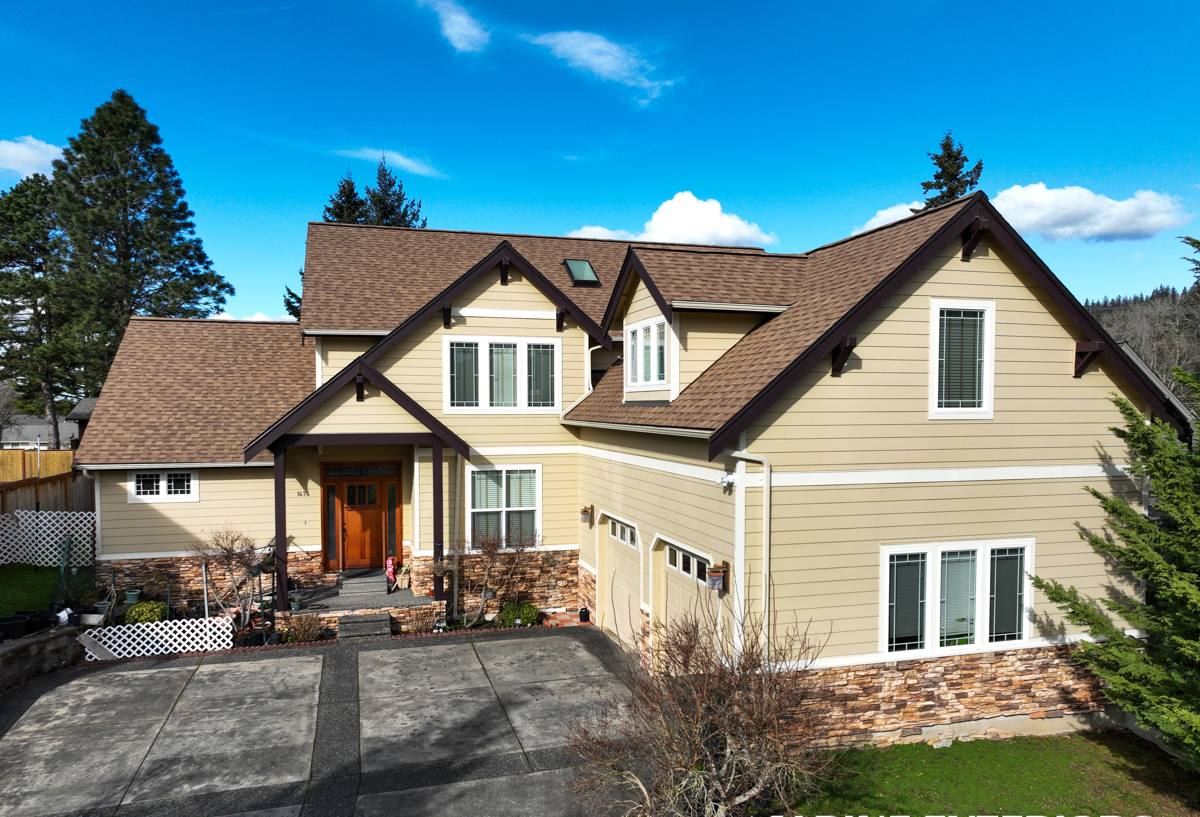
What Whatcom County Weather Does to an Outdoor Structure
Understanding the climate is the first step to building correctly. Cordata's outdoor structures deal with three compounding stresses over the course of a typical year:
Driving Rain and Standing Moisture
Bellingham gets rain in volume and in duration — it's the number of consecutive wet days, not just total rainfall, that does the damage. Wood and composite decking both need a clear path for water to drain through and away from the structure. Boards installed without gapping, or decks built with no slope away from the house, hold water against the framing far longer than the material was designed for.
Salt Air and Corrosion
Even set back from the water, Whatcom County's air carries enough salt content to accelerate corrosion on standard fasteners and hardware. Screws, joist hangers, and structural connectors that aren't rated for coastal exposure will rust, weaken, and eventually let go — often well before the wood or composite decking itself shows any wear.
Moss, Algae, and Extended Shade
Whatcom County has a genuine moss season — stretches of the year where surfaces that don't get direct sun stay damp almost continuously. Cordata's mature trees and residential lot layouts mean plenty of decks sit in partial or full shade for large parts of the day. Moss and algae aren't just cosmetic; they hold moisture against decking boards and make surfaces slick and dangerous underfoot.
What a Correctly Built Deck Actually Requires Here
A deck that's going to hold up to Whatcom County conditions needs a few things done right that aren't optional extras — they're the baseline for the climate:
| Component | What It Needs to Handle Our Climate |
|---|---|
| Footings | Sized and set below frost depth per local code, on stable soil — not just poured to a minimum depth to pass inspection |
| Ledger Attachment | Properly flashed where the deck meets the house, with a drainage gap so water doesn't wick into the wall framing |
| Fasteners & Hardware | Corrosion-resistant, rated for coastal/marine exposure — not standard interior-grade screws or hangers |
| Framing Lumber | Pressure-treated for ground or moisture contact where applicable, with cut ends re-sealed on site |
| Decking Gaps | Consistent spacing for drainage and airflow underneath, especially in shaded sections |
| Airflow Underneath | Enough clearance and ventilation below the deck so the underside can actually dry out between rains |
Skipping any one of these doesn't usually cause an obvious problem right away. It shows up years later as rot, corrosion, or a structural issue that's far more expensive to fix than it would have been to build correctly the first time.
Choosing Materials: Wood vs. Composite for Cordata Homes
Both wood and composite decking can perform well here, but they come with different maintenance realities, and we're honest with homeowners about that trade-off up front rather than after the sale.
| Pressure-Treated / Cedar Wood | Composite Decking | |
|---|---|---|
| Upfront Cost | Generally lower | Generally higher |
| Moss & Mildew Resistance | Needs regular cleaning and periodic sealing to resist staining | More resistant to staining, but still needs cleaning in shaded, damp spots |
| Maintenance Routine | Annual or biannual cleaning, periodic re-staining/sealing | Periodic washing; no staining or sealing required |
| Long-Term Look | Natural wood grain, changes character over time | Consistent color and texture, more stable appearance long-term |
| Fastener Sensitivity | Standard treated-wood hardware, still needs corrosion-resistant fasteners here | Manufacturer-specific hidden fastener systems, installed to spec |
Neither option is automatically "better" — it depends on how much maintenance a homeowner wants to take on and what the budget allows. What matters more than the brand name on the decking is whether the substructure underneath is built to handle our rain and drainage needs. A composite deck built on an undersized, poorly flashed frame will still fail; a well-built wood deck maintained on a normal schedule can last for decades.
Our Deck Building Process
Design and Planning
We start by walking the site with you, discussing how the deck will actually be used, and factoring in sun exposure, tree shade, drainage slope, and how the deck ties into the house. This is also where we talk through material options honestly, based on your budget and how much ongoing maintenance you want to do.
Permitting
Most new deck construction in the Bellingham area requires a permit, particularly for decks attached to the house or built above a certain height. We handle the permit application and coordinate inspections as part of the job, so nothing gets built that has to be torn out or corrected later.
Site Prep and Footings
We lay out the footing locations, dig to the proper depth for our soil and frost conditions, and pour footings sized for the actual load of the structure — not the minimum that happens to pass.
Framing
Ledger boards get properly flashed and gapped from the house wall. Joists and beams are sized for the span and spacing the design calls for, using treated lumber where it's in ground or moisture contact, with all hardware rated for our climate.
Decking and Fastening
Boards go down with consistent drainage gaps, proper fastening for the material chosen, and attention to how water will move off the surface and away from the house — not just pooling at the low corner.
Railings, Stairs, and Finishing
Railings and stairs are built to current code requirements for height and spacing, finished to match the rest of the structure, and checked for solid attachment before we call the job complete.
Moss Season and Long-Term Deck Care
Even a well-built deck needs some seasonal attention in Whatcom County. A few habits go a long way toward protecting the investment:
- Sweep leaves and debris off the deck surface regularly, especially in fall — trapped organic matter holds moisture and feeds moss growth
- Clean shaded areas more often than sun-exposed areas, since they stay damp longer
- Check that gaps between boards haven't filled in with debris, which blocks drainage
- Inspect the ledger board area where the deck meets the house once a year for staining or soft spots
- Re-seal or re-stain wood decking on the schedule appropriate to the product — don't wait until it's visibly gray and worn
- Look underneath the deck periodically for standing water, sagging, or signs of pests
None of this is complicated, but it does need to actually happen. A deck built correctly and maintained on a normal schedule will outlast one that was built cheaply and never checked on, even if the second one looked fine on installation day.
Permits and Local Code Requirements
Deck construction in the Bellingham area falls under local building code requirements covering footing depth, railing height, stair geometry, and structural connections to the house. These requirements exist because of exactly the kind of failures our climate can cause if a deck is undersized or improperly attached. Working with a contractor who pulls the proper permits and builds to code isn't just about avoiding a fine — it protects you if you ever sell the home, and it means the structure has actually been checked by someone other than the crew that built it.
Why Hire a Crew That Already Works in Cordata
A contractor who works regularly in this specific area already knows the drainage patterns, soil conditions, and shade challenges common to Cordata lots, rather than treating every job as a first encounter with Whatcom County weather. That familiarity shows up in small decisions — where to add an extra drainage gap, which corner of a lot tends to hold water, how much clearance to leave under a deck that's going to sit in shade most of the year. It also means faster response if something needs a look after the fact, since we're already working in the neighborhood rather than driving in from across the county.
Questions to Ask Before You Hire Anyone for Deck Work
- Will you pull the required permit and schedule inspections, or is that left to me?
- What fastener and hardware grade are you using, and is it rated for coastal/marine exposure?
- How are you flashing and gapping the ledger board where the deck meets the house?
- What's your footing depth and sizing, and is it based on my specific soil and load, or a generic minimum?
- What maintenance will this material actually require over the next 10 years, honestly?
- Can you walk me through drainage — where does water go once it hits the deck surface?
A contractor who answers these questions clearly and specifically, without hedging, is one who's actually thought through how the structure will hold up here rather than just how it will look on installation day.
Get a Free, No-Pressure Estimate
Whether you're planning a new deck, replacing one that's showing its age, or just want an honest read on whether an existing structure is holding up the way it should, we're happy to take a look. Fill out the form below and we'll set up a free estimate for your Cordata property — no pressure, no obligation, just a straight assessment of what your project actually needs.