 Bellingham
 Building Decks for Fairhaven's Waterfront Climate
Fairhaven sits close enough to Bellingham Bay that salt-laden air, wind-driven rain, and shade from mature evergreens all show up in how a deck ages here. A deck built the same way you'd build one in a drier inland climate will often show problems within a few years — corroding hardware, soft spots at the ledger, slick green film on the boards by late fall. Building for Fairhaven means treating the site's exposure as a design input from day one, not an afterthought.
This page is about custom deck construction and replacement specifically for Fairhaven homes: what the climate demands, what a correctly built deck actually involves below the surface, and how we run the job from first conversation to final walkthrough.
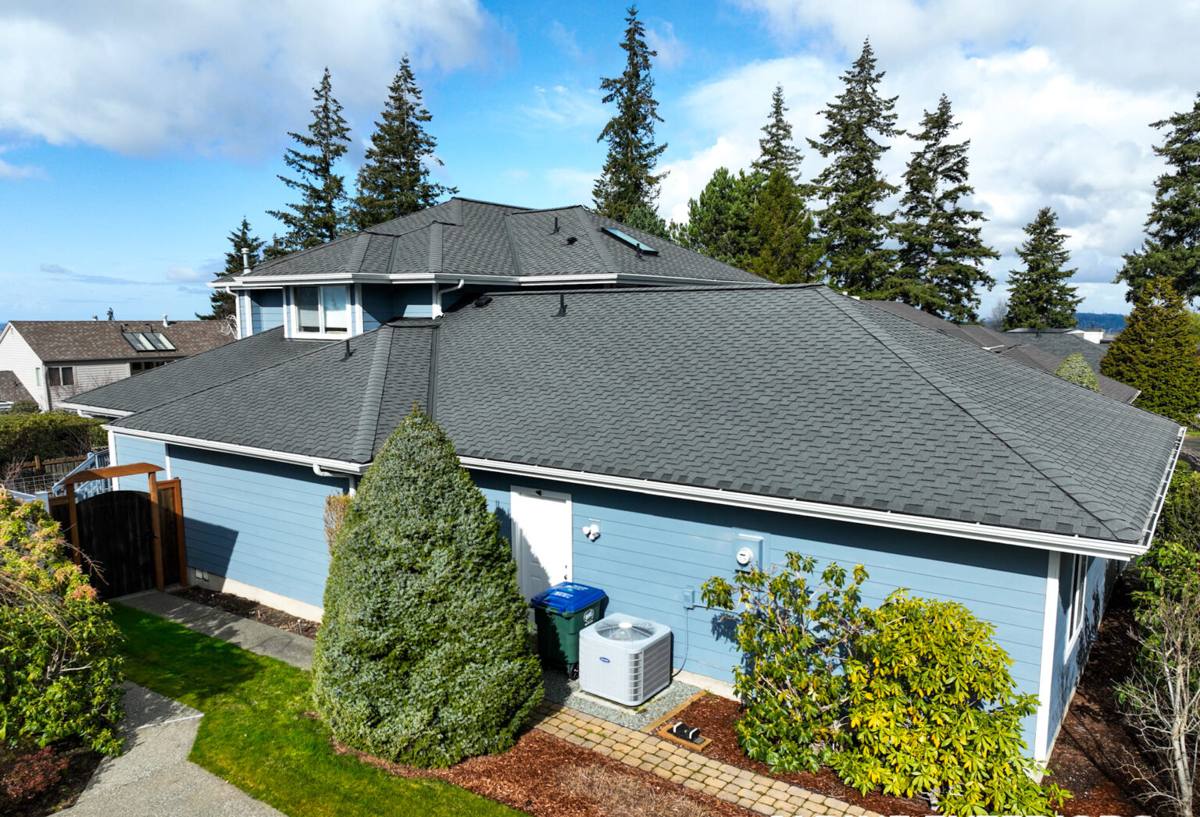
What Salt Air and Rain Do to a Deck Over Time
Three things drive most of the deck failures and premature repairs we see in this part of Whatcom County:
- Salt air corrosion — airborne salt accelerates rust on fasteners, joist hangers, and any hardware that isn't rated for coastal exposure. Once a fastener starts to rust, it weakens and can stain the surrounding wood or composite.
- Driving rain — Bellingham's rain often comes in sideways off the water, which means it gets up under railings, into end grain, and behind ledger boards in ways that straight-down rain wouldn't. Flashing and drainage details matter more here than in a sheltered inland yard.
- Long moss season — shaded, damp decks in this area can stay wet for days at a stretch through fall, winter, and spring. That extended dampness is exactly what moss and algae need to take hold, and it's also what accelerates wood rot if a deck isn't ventilated and drained properly underneath.
None of these are exotic problems — they're just the ordinary cost of building near the water in the Pacific Northwest. The fix isn't a gimmick product; it's choosing the right materials and installing them correctly the first time.
Choosing the Right Decking Material
There's no single "best" decking material — the right choice depends on how much upkeep you want to do, your budget, and how exposed the deck is to sun, shade, and moisture. Here's how the common options actually compare for a Fairhaven site.
| Material | Moisture & moss behavior | Maintenance | Typical lifespan |
|---|---|---|---|
| Pressure-treated lumber | Absorbs water if not sealed; needs a breathable finish to shed moss | Annual cleaning, re-sealing every 2-3 years | 15-20 years with upkeep |
| Cedar | Naturally rot-resistant, but still needs sealing in this rainfall | Cleaning plus periodic oil or sealant | 15-25 years with upkeep |
| Composite decking | Doesn't absorb water into the board itself, but surface can still grow algae/moss film if shaded and unwashed | Periodic washing, no staining or sealing | 25-30+ years |
| PVC decking | Fully moisture-resistant board, least prone to surface breakdown | Lowest — occasional washing | 30+ years |
We install all of these depending on what a homeowner wants. Our standard is to be honest about the trade-offs rather than push whatever has the highest margin: wood costs less up front and looks the way a lot of Fairhaven homes want, but it asks for real annual maintenance in this climate. Composite and PVC cost more initially and hold up with far less work, but they still need occasional washing — no decking material is maintenance-free once it sits under trees near the bay.
A note on fasteners and hardware
Whatever decking material you choose, the hardware underneath matters just as much. In a salt-air environment we spec stainless steel or coated fasteners and hangers rated for corrosive exposure, not the standard-grade hardware that's fine in a drier, inland yard. This is one of the most common shortcuts we see on older or budget decks in this area, and it's usually the first thing to fail — long before the decking itself.
Framing, Fasteners, and Footings — the Parts You Don't See
A deck's surface is what you notice, but its structure is what determines whether it lasts. For Fairhaven builds we pay particular attention to:
- Ledger board flashing — the connection where the deck attaches to the house is the single most common source of hidden rot. Proper flashing, sloped away from the house, keeps driving rain from working its way behind the ledger.
- Footings sized for local soil and frost conditions — footing depth and sizing follow Whatcom County's adopted building code, not a generic rule of thumb.
- Joist spacing and hanger hardware matched to the decking material, since composite and PVC boards often call for tighter joist spacing than solid wood.
- Airflow underneath the deck — decks built low to the ground or over damp, shaded soil need enough clearance and, where needed, ventilation to keep the framing from staying wet for weeks at a time.
These details don't show up in a quick look at a finished deck, which is exactly why they're worth asking about before hiring anyone.
Managing Moss, Algae, and Slip Risk
Shaded, north-facing, or tree-covered lots — common around Fairhaven — hold moisture longer, and that moisture is what feeds moss and algae growth on deck surfaces. A few design choices reduce how much of a problem this becomes:
- Board spacing and orientation that lets water drain and air move across the surface instead of pooling
- Decking profiles with grip texture where the deck sits in consistent shade
- Trimming back overhanging branches where practical, since less debris on the surface means less organic material for moss to grow on
- A cleaning schedule matched to the material — wood needs it more often than composite or PVC, but every deck in this climate needs it sometimes
No deck material is immune to moss in a long, wet Pacific Northwest fall and winter. The goal isn't zero moss ever — it's a surface that sheds water fast enough, and cleans up easily enough, that moss doesn't get a foothold that turns into a slip hazard or a maintenance headache.
Permits and Code in Bellingham and Whatcom County
Most new decks and many deck replacements in Bellingham require a building permit, and the requirements — footing depth, railing height, guard spacing, ledger attachment — are set by the adopted building code, not by preference. We handle the permit process as part of the job: submitting plans, scheduling inspections, and building to what the inspector will actually sign off on. Skipping this step is one of the more expensive mistakes a homeowner can make, since an unpermitted deck can complicate a future home sale or insurance claim.
Our Process from Design to Finished Deck
- On-site assessment — we look at sun/shade exposure, drainage, soil, and how close the site is to salt air influence, since that changes material and hardware choices.
- Material and layout conversation — we walk through the honest trade-offs between wood, composite, and PVC for your specific site and budget, not a one-size answer.
- Permit and plan submission — we prepare and submit what Bellingham/Whatcom County requires, and schedule inspections as the build progresses.
- Framing and structural work — footings, framing, ledger flashing, and corrosion-rated hardware installed to code and to the exposure of your specific lot.
- Decking, railing, and finish work — installed to the manufacturer's spec for board spacing and fastening, which matters for both appearance and drainage.
- Final walkthrough — we go over care and cleaning specific to the material you chose, so you know what upkeep to expect and when.
Maintenance Checklist for Fairhaven Decks
- Sweep off leaves, needles, and debris regularly through fall — this is the single biggest factor in moss control
- Wash the deck surface at least once or twice a year, more often in heavily shaded spots
- Check fasteners and railing hardware annually for early rust or looseness, especially near the water
- Re-seal or re-stain wood decking on the schedule the product calls for — don't wait until it looks obviously dry
- Inspect the ledger board area and any flashing after major storms for signs of water intrusion
- Keep gutters and downspouts near the deck clear so runoff isn't dumping extra water onto or under the structure
Why Hire a Crew That Already Works in Fairhaven
A deck built to a generic spec sheet can look fine on installation day and still struggle within a few seasons if it wasn't built for this specific combination of salt air, driving rain, and shade. Crews who regularly work Fairhaven and the surrounding Bellingham waterfront neighborhoods know which fastener grades hold up, which framing details actually keep the ledger dry, and where moss tends to become a real problem versus a cosmetic one. That local pattern recognition is hard to substitute with a generic checklist, and it's usually the difference between a deck that needs real repairs in five years and one that's still solid in twenty.
If you're planning a new deck or replacing an aging one in Fairhaven, we're happy to walk the site, talk through material options honestly, and put together a plan that fits your budget and your yard. Reach out for a free, no-pressure estimate using the form below.