 Bellingham
 Happy Valley's Exterior Problem Isn't Like Other Neighborhoods
Happy Valley sits close enough to Bellingham Bay and the surrounding wetlands that homes here take on a specific combination of punishment: salt-laden air moving in off the water, long stretches of driving rain pushed sideways by wind, and shaded, damp lots where moss gets a head start every fall and doesn't let go until late spring. Any one of those factors is manageable. Together, over years, they're what turns a fifteen-year siding job into a ten-year problem — paint failing early, panels cupping at the seams, moss lines creeping up from the ground and down from the eaves.
A siding installation done right in Happy Valley isn't just about picking a good-looking product. It's about detailing the job for this specific mix of exposure, using materials that were engineered to take it, and installing them the way the manufacturer actually specifies rather than the way that's fastest. That's the whole focus of this page: what a correct siding installation looks like for a Happy Valley home, and why the details matter more here than they would in a drier, more sheltered part of the county.
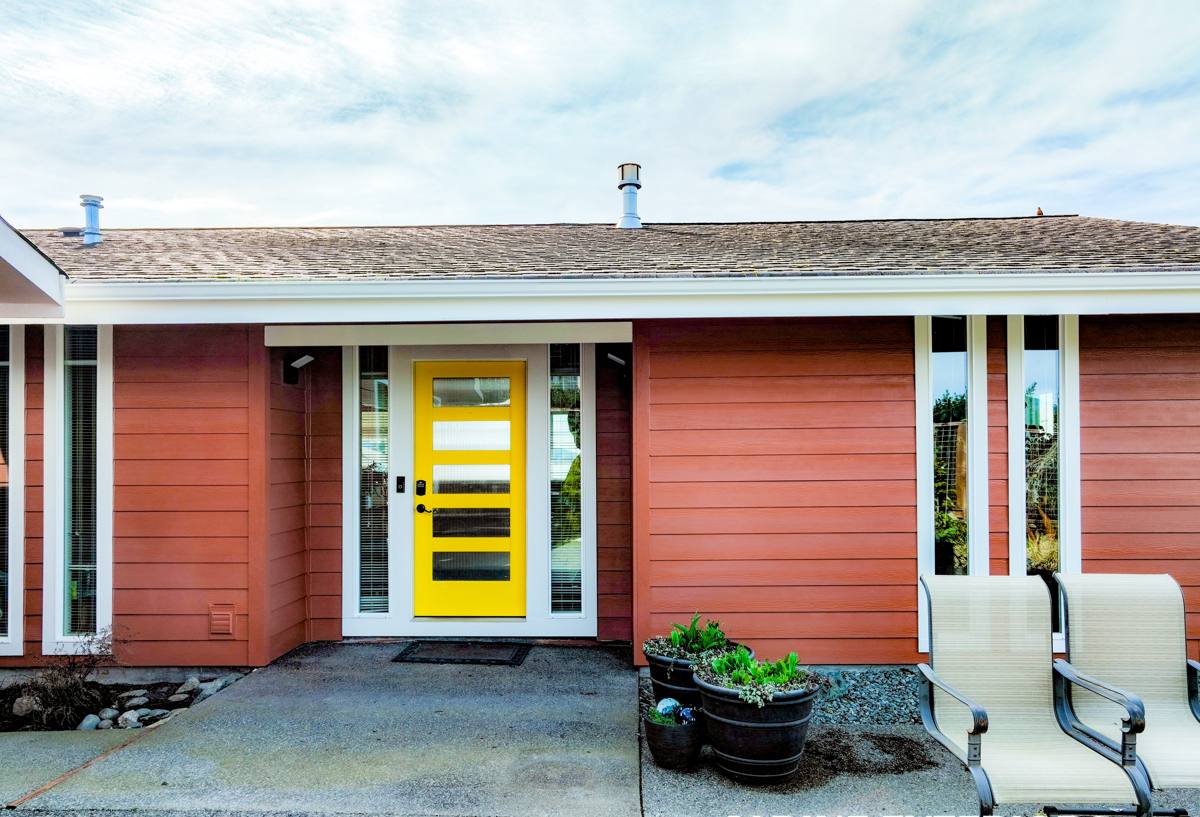
The Three Things Working Against Your Siding Here
Salt Air
Homes closer to the water deal with airborne salt that settles on every exterior surface, works into seams and fastener heads, and accelerates corrosion on anything metal — flashing, nail heads, trim fasteners. It also degrades cheaper paint finishes faster than inland exposure does, which is why the factory finish on your siding matters as much as the siding itself.
Driving Rain
Whatcom County storms don't just fall straight down — wind pushes rain sideways into wall assemblies, especially on the west and south faces of a house. That means water is being driven at seams, laps, and penetrations (windows, doors, hose bibs, vents) that a calm-weather installation might get away with under-flashing. Here, it won't.
Moss Season
Shaded lots, tree cover, and near-constant damp from fall through spring give moss and algae everything they need to colonize siding, especially on north-facing walls and anywhere water sheets down slowly instead of shedding. Moss holds moisture against the wall surface for extended periods, and on the wrong substrate that moisture retention becomes a real problem over time.
What a Correct Siding Installation Actually Involves
The material you choose matters, but a huge share of how your siding performs over the next 20-30 years comes down to what's underneath it and how the details were handled. On a Happy Valley home, we pay particular attention to:
- Weather-resistant barrier: a continuous, correctly lapped water-resistive barrier behind the siding, not just tar paper tacked up quickly
- Flashing at every penetration: windows, doors, hose bibs, light fixtures, and vents all need proper flashing that directs water back out, not into the wall cavity
- Rainscreen or drainage gap where called for: a small air gap behind the siding lets any moisture that does get in dry out instead of sitting against the sheathing
- Correct fastener type and spacing: especially important in salt air, where the wrong fastener corrodes and stains long before the siding itself fails
- Proper clearances: siding held up off decks, patios, and grade so it isn't wicking moisture from below
- Factory-finished panels installed to the manufacturer's actual instructions: gaps, caulking, and fastening all specified for a reason, not left to the crew's judgment
Skip any one of these and the siding might still look fine for a couple of years. In a climate like this one, the shortcuts show up as moisture damage, early paint failure, or moss and mildew staining well before the siding's rated lifespan is up.
Why We Install Only James Hardie Fiber Cement
We made a deliberate choice to install James Hardie fiber cement siding exclusively, and we don't install vinyl, LP SmartSide, or other fiber cement brands. That's not a marketing position — it's a standard we hold because of what we've seen hold up in this exact climate versus what struggles with it.
| Factor | James Hardie Fiber Cement | Vinyl / Engineered Wood Alternatives |
|---|---|---|
| Moisture behavior | Non-combustible, dimensionally stable, engineered HZ product lines matched to regional moisture exposure | Vinyl expands/contracts with temperature; engineered wood products rely on factory sealing at cut edges to resist moisture intake |
| Salt air / coastal exposure | ColorPlus factory finish holds up to UV and airborne salt significantly longer than field-applied paint | Vinyl can chalk and fade; wood-based products need field-painted cut edges maintained diligently or moisture gets in |
| Moss and algae | Dense fiber cement substrate doesn't feed organic growth the way wood-based products can | Engineered wood is more vulnerable if moisture reaches the wood fiber core |
| Warranty | Strong transferable warranty on both substrate and ColorPlus finish | Warranties vary widely and are often voided by common installation shortcuts |
| Fire resistance | Non-combustible | Vinyl and wood-based products are combustible |
None of this means other products are junk — vinyl is inexpensive and low-maintenance in mild climates, and engineered wood siding has real fans. But for a neighborhood dealing with salt air, driving rain, and moss season all in the same year, we'd rather put our name on a product engineered specifically for climates like this one, backed by a factory finish and a warranty structure we trust.
Our Process, Start to Finish
- On-site assessment: we look at your home's specific exposure — which walls take the most weather, where moss has already established, and what condition the existing sheathing and framing are in once old siding comes off
- Written estimate: scope, product line, color, and a clear breakdown of what's included, no surprise add-ons buried in fine print
- Tear-off and inspection: removing the old siding is when hidden rot or moisture damage shows up — we flag it before covering anything up, not after
- Barrier and flashing work: water-resistive barrier, flashing at every penetration, and drainage detailing done to spec before a single panel goes up
- Hardie installation: panels, fasteners, and joints installed per James Hardie's published instructions for this climate zone
- Final walkthrough: caulking, paint touch-up at cut edges, and a walk of the whole exterior with you before we call it done
Signs a Happy Valley Home May Need New Siding
- Paint that's peeling, bubbling, or chalking well ahead of schedule, especially on west- or south-facing walls
- Soft spots or visible warping when you press on the siding near the bottom courses or around windows
- Persistent moss or dark staining that comes back within a season of cleaning, particularly on shaded north walls
- Visible gaps, cupping, or separation at panel seams and corners
- Musty smell or moisture signs on interior walls that back up to exterior siding
- Siding that's simply aged out — most vinyl and older wood-based products are well past their realistic service life after two to three decades in this climate
What Siding Installation Typically Costs
Every home is different, and the honest answer is that price depends on square footage, how much trim and detail work is involved, how many layers need to come off, and what repairs turn up once the old siding is removed. Broad cost factors to expect a quote to reflect:
| Cost Factor | Why It Matters |
|---|---|
| Home size and wall complexity | More square footage and more corners, gables, and trim detail mean more labor |
| Tear-off scope | Removing one layer of old siding costs less than removing multiple layers or dealing with hidden rot |
| Sheathing and framing repair | Moisture damage found during tear-off has to be repaired before new siding goes on — this is common on older homes near the water |
| Product line and color | James Hardie offers multiple HZ product lines and ColorPlus finish options at different price points |
| Site access | Tight lots, steep grades, or limited staging area can affect labor time |
We'd rather walk your property and give you real numbers than throw out a ballpark that doesn't hold up once we see the actual condition of your walls.
Why Local Experience in Happy Valley Actually Matters
A crew that's worked other jobs in Happy Valley and the surrounding Bellingham neighborhoods already knows which walls on a typical lot here take the worst of the driving rain, where moss tends to establish first, and how much salt exposure to plan for based on proximity to the water. That's not something you can fully substitute with a generic checklist — it's pattern recognition built from doing the work in this specific climate, on this specific kind of lot, over and over. It shows up in small decisions: where we add extra flashing attention, which walls get a closer look during tear-off, how we sequence the job around Whatcom County's wetter months.
If your Happy Valley home needs new siding, or you're just not sure whether what's on there now is holding up the way it should, we're happy to take a look. Reach out for a free, no-pressure estimate — we'll walk the property, tell you honestly what we see, and lay out what a correct job would involve before you decide anything.