 Bellingham
 Metal Roofing for Fairhaven: A Neighborhood Shaped by the Bay
Fairhaven sits right at the edge of Bellingham Bay, and that location does more to a roof here than most homeowners expect. The neighborhood's mix of older homes and newer infill, its tree-covered lots, and its closeness to open water all combine into a specific set of demands on whatever's overhead. We've been getting more calls from Fairhaven homeowners asking specifically about metal roofing, and it's not a trend, it's a reasonable response to what this climate does to a roof year after year: salt air drifting off the bay, rain that gets driven sideways more often than it falls straight down, and a moss season that can run most months of the year on shaded, tree-lined lots.
This page is about metal roofing specifically for Fairhaven, not a general rundown of what metal roofing is. If you're weighing a metal roof for a home in this neighborhood, here's what actually matters: how the material handles this exact climate, what a correct installation looks like, and what a crew that already works this stretch of Whatcom County does differently than one pricing the job off a spec sheet.
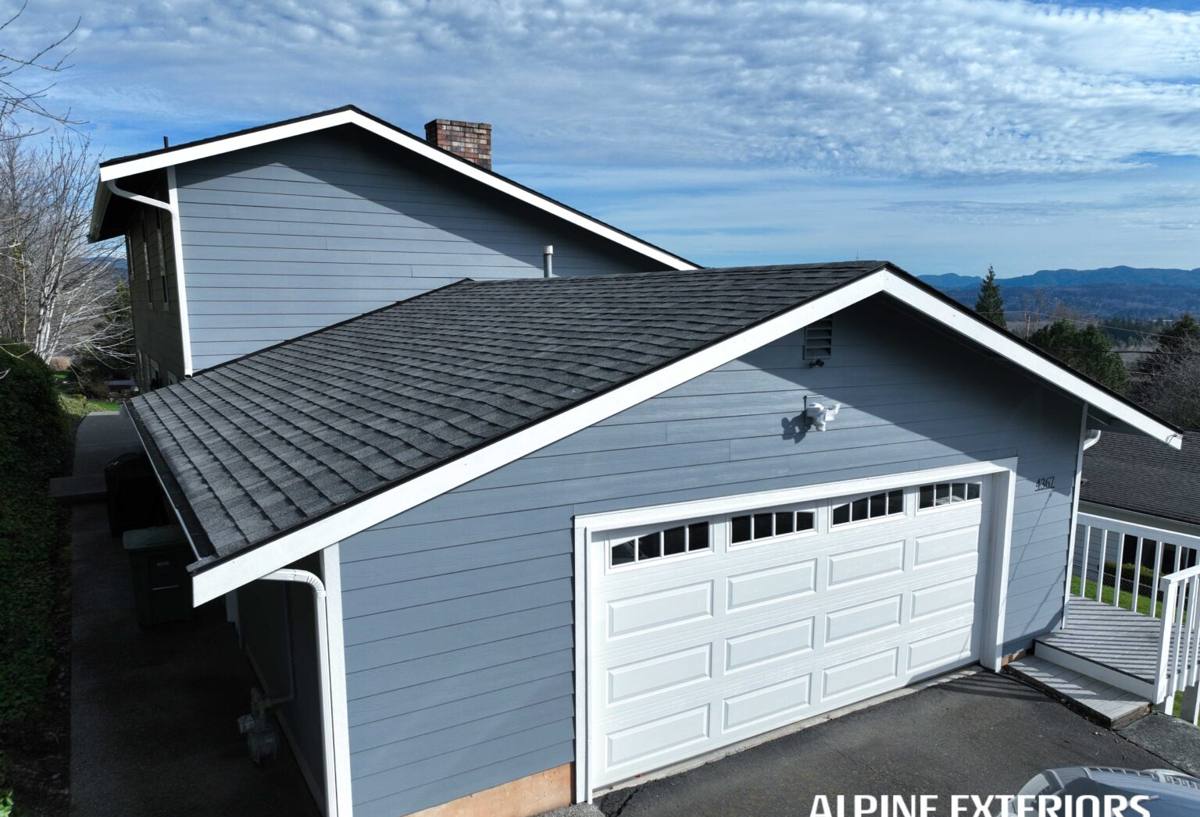
What Bellingham Bay's Climate Does to a Roof Over Time
Salt Air and Corrosion
Homes close to the water take on a steady, low-grade dose of salt-tinged air, not just during storms but as a background condition most of the year. On a roof, that exposure works on fasteners, flashing, and any metal component that isn't rated for it. It's slow and rarely dramatic, showing up years later as rust streaking at screw heads, pitted flashing, or a finish that's chalked out well ahead of its rated life. It's one of the main reasons the metal and fastener choice on a Fairhaven roof deserves more attention than the same job forty miles inland.
Wind-Driven Rain Off the Water
Fairhaven's exposure to open water means rain doesn't just fall on a roof, it gets pushed into it. Wind-driven rain works its way into valleys, around penetrations, and under lapped seams from angles a roof system built for calmer weather was never really tested against. A roof that performs fine on a sheltered inland lot can still take on water here specifically because of how wind interacts with the bay and the terrain around it.
A Long Moss and Mildew Season
Mild, damp weather and the mature tree canopy common on Fairhaven's older residential lots add up to extended moss growth, especially on shaded or north-facing roof planes. Moss holds moisture against a roofing surface long after the rest of the roof has dried, and on porous materials it can work its way under edges and lift them over time. It's one of the clearest reasons metal roofing keeps coming up in conversations with homeowners here.
Hillside Terrain and Slope
A fair amount of Fairhaven's housing sits on sloped ground rising from the waterfront, which affects roof pitch, drainage, and how water moves across a roof surface during heavy rain. Steeper pitches shed water faster, but they also put more stress on ridge, hip, and valley details, which need to be engineered for this kind of sustained, directional rainfall rather than an average annual total.
Why Metal Roofing Fits Fairhaven Homes
Metal roofing isn't the right call for every roof or every budget, but for a neighborhood dealing with sustained moisture, salt exposure, and heavy shade, it solves problems that shingle roofing has to work harder to manage.
- Moss resistance: A smooth, non-porous metal surface gives moss and algae far less to hold onto than a granulated shingle surface, which matters directly on Fairhaven's shaded, tree-covered lots.
- Water shedding: Metal panels shed wind-driven rain more effectively than a lapped shingle surface, particularly at valleys and roof-to-wall transitions when the panel system is detailed correctly.
- Longevity: A correctly installed metal roof commonly runs 40 to 60 years, well beyond a typical asphalt shingle roof, which matters if you're planning to stay in the house long-term.
- Low ongoing maintenance: Once installed correctly, a metal roof needs far less periodic upkeep than a moss-prone shingle roof on a shaded lot.
- Weight: Most metal roofing systems are lighter than shingle roofing, which is a real advantage on older Fairhaven homes where the existing framing wasn't necessarily built with a heavier roofing material in mind.
The honest trade-off is upfront cost. Metal roofing typically costs more per square than architectural shingles, and it demands a level of installation precision that a lower-skilled crew can get wrong in ways that don't show up until years later. We'll walk you through whether that cost makes sense for your specific roof and timeline rather than assuming it's the right answer for every house.
Panel Profiles: Standing Seam vs. Exposed-Fastener
Not all metal roofing is built the same way, and the difference matters more in this climate than it does somewhere drier. Standing seam panels use concealed clips and interlocking seams, with no fasteners penetrating the panel face, which gives them the best long-term resistance to wind-driven rain and salt air corrosion. Exposed-fastener panels are less expensive and quicker to install, but every screw penetration is a potential entry point for water once the gasket underneath it ages, and those exposed fasteners are the first thing salt air goes to work on. We'll explain which profile fits your roof, your budget, and how long you plan to own the home, rather than defaulting to whichever is easiest to install.
What a Correct Metal Roof Installation Involves
Metal roofing has a reputation for lasting decades, but that reputation only holds if the installation underneath the panels is done correctly. A metal roof is more forgiving of some things than shingles and far less forgiving of others, and getting the details right matters even more in a marine climate like Fairhaven's.
- High-temperature synthetic underlayment rated for sustained moisture exposure, not a minimum-code product that degrades under a metal roof's heat cycling
- Ice-and-water shield at eaves, valleys, and any low-slope transition where wind-driven rain and standing water tend to collect
- Matched metallurgy between panels, fasteners, and flashing, so dissimilar metals in contact with each other don't set up galvanic corrosion, a real risk in a salt-air environment if it's overlooked
- Panel clips that allow for thermal movement, since metal expands and contracts with temperature more than shingles do, and a system installed too rigidly will eventually buckle or loosen at the seams
- Properly lapped and sealed flashing at every valley, chimney, vent pipe, and roof-to-wall transition, the same points where most roof leaks in this climate actually start
- Adequate attic and roof deck ventilation so condensation under the panels has somewhere to go instead of collecting against the underlayment
None of these steps add much to the cost of a job relative to the panels themselves, but skipping any of them is exactly what turns a fifty-year roof into one with problems inside of ten.
Metal Roofing Cost Factors in Fairhaven
| Factor | What It Affects | Why It Matters Here |
|---|---|---|
| Panel profile (standing seam vs. exposed-fastener) | Material and labor cost | Standing seam costs more upfront but handles wind-driven rain and salt air with far less long-term maintenance |
| Roof complexity (hips, valleys, dormers) | Labor time and flashing detail | Fairhaven's older rooflines often have more transitions where wind-driven rain can work its way in |
| Tear-off vs. overlay | Substrate access and hidden repair scope | Older shake or shingle roofs this close to the bay often have moisture damage that only shows up once the old material is off |
| Panel and fastener metallurgy | Long-term corrosion resistance | Salt air exposure makes the right metal pairing matter more than it would inland |
| Site access and slope | Staging and labor time | Hillside lots common in Fairhaven can add setup time and equipment needs |
Real numbers depend on the specific roof, which is why we walk the property in person before quoting rather than pricing off square footage alone.
Repair, Recoat, or Replace?
Not every issue on an existing metal roof means starting over. A loosened fastener, a worn sealant point at a penetration, or minor cosmetic scratching in the finish can often be addressed without touching the rest of the roof. Where it gets more serious is widespread fastener failure, corrosion that's spread across multiple panels, or a panel system that was installed with the wrong flashing details from the start and has been letting moisture into the deck for years. In that case, patching individual spots usually just delays a larger project, and we'll tell you plainly which situation you're actually looking at rather than defaulting to the answer that's easiest for us.
If you're currently on an aging shingle or shake roof and considering a switch to metal, that's also a conversation worth having honestly. Metal roofing is a strong long-term investment for a lot of Fairhaven homes, but it's not automatically the right call for every budget or every timeline, and we'll say so if that's the case.
Signs a Fairhaven Roof Needs Attention
- Moss buildup on shaded or north-facing roof planes that returns quickly after cleaning
- Rust streaking at fasteners, flashing, or panel seams, an early sign of salt air exposure
- Water staining on interior ceilings near exterior walls, valleys, or chimneys
- Panels that look loose, lifted, or show visible gaps at seams and edges
- Granule buildup in gutters if the current roof is asphalt shingle nearing the end of its life
- Daylight visible through the roof deck when viewed from inside the attic
- Rising heating or cooling bills that may point to a roof assembly that's no longer sealing properly
Any one of these is worth a professional look. Caught early, most are a straightforward repair. Left alone through another wet season, several of them turn into a full replacement.
What to Check Before Hiring a Metal Roofing Contractor
- Confirm an active Washington state contractor license and current liability insurance
- Ask specifically about their metal roofing experience, not just general roofing volume, since the two trades require different skills
- Ask which panel profiles and metals they install regularly, and why they'd recommend one for your roof
- Ask how they handle hidden deck or sheathing damage discovered during tear-off
- Ask whether the same crew handles roofing, siding, windows, and decks, or if pieces get subcontracted separately
- Get a written scope that specifies underlayment, flashing, and fastener details, not just "new metal roof installed"
Why a Local Whatcom County Crew Matters
A crew that works this stretch of Whatcom County regularly sees how salt air, wind-driven rain, and moss actually behave on real roofs over a full year, not just how a panel system performs on a spec sheet. That translates into practical decisions on install day: where extra flashing attention pays off on a Fairhaven roofline, which slopes stay shaded and damp longest, and which details are worth the extra time so you're not dealing with a callback two winters later. Fairhaven's older housing stock, hillside terrain, and closeness to the bay aren't identical to conditions elsewhere in Bellingham, and a crew with real experience in the neighborhood accounts for that instead of applying a one-size-fits-all approach.
If your Fairhaven home needs a new metal roof, a repair on an existing one, or just an honest second opinion on whether metal is the right call for your house, we're glad to take a look. Reach out using the form below to schedule a free, no-pressure estimate.