 Bellingham
 Composite Decking Built for Puget's Marine Climate
Puget sits close enough to the water that homes here deal with a different set of conditions than a deck fifty miles inland. Salt-laden air off the Sound, driving rain that comes in sideways during fall and winter storms, and a moss season that can stretch from October through May all put real stress on outdoor structures. A deck that would hold up fine in a drier part of Washington can start showing problems here within a few seasons if it wasn't built with this specific climate in mind. Composite decking, installed correctly, is one of the more sensible answers to that problem — but "composite" isn't a single product, and how it's installed matters as much as what brand goes down.
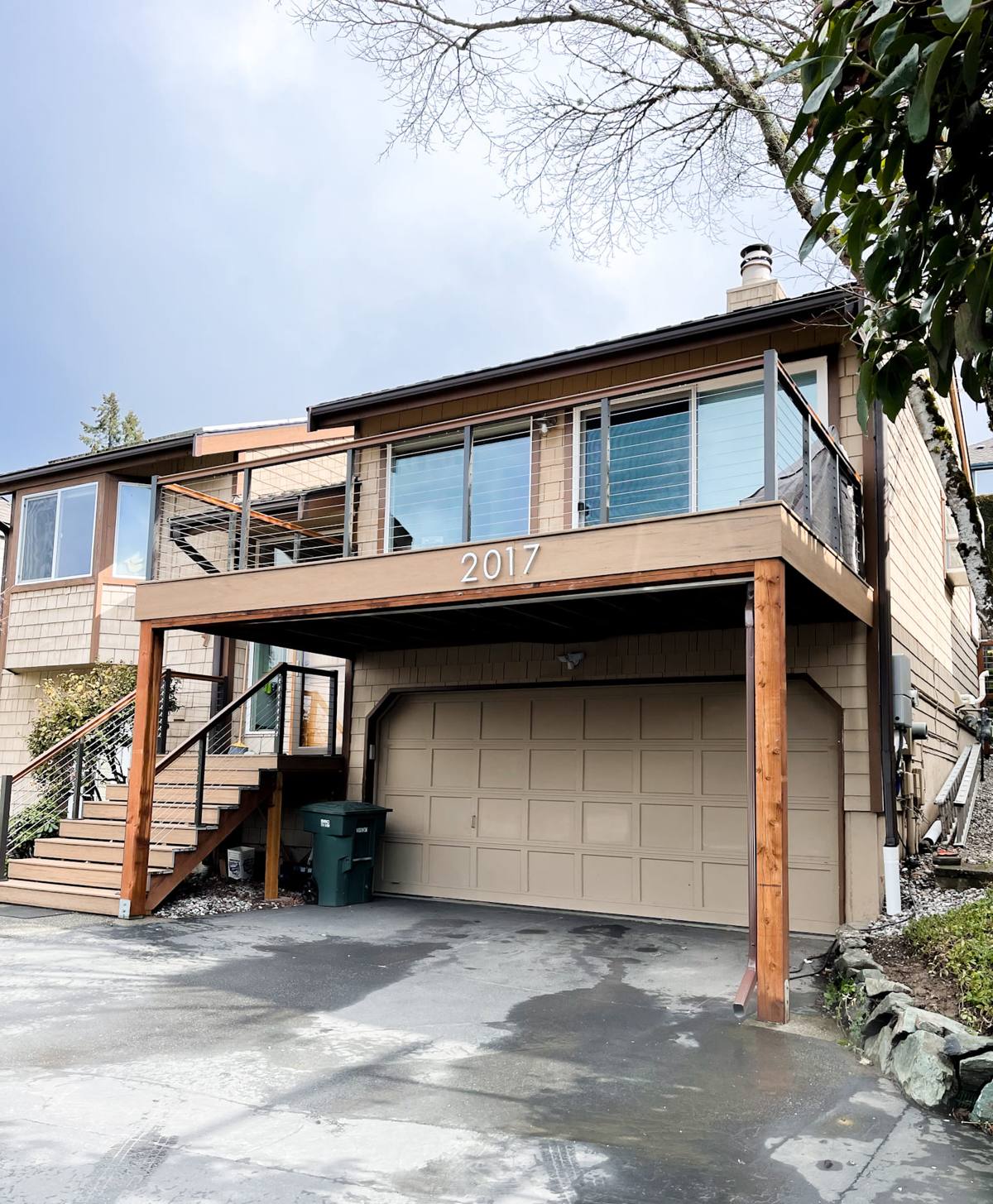
What Salt Air, Rain, and Moss Actually Do to a Deck
Salt and Moisture
Salt air doesn't just affect boats and metal railings. It accelerates corrosion on fasteners, hinges, and any exposed hardware, and it keeps wood surfaces perpetually a little damp, which is exactly the condition wood rot and fungal growth need to take hold. On a wood deck, that means more frequent refinishing and a shorter realistic lifespan before boards start to cup, split, or soften. On a poorly installed composite deck, trapped moisture underneath the boards or around fastener points can still cause problems, even though the boards themselves don't rot the way wood does.
Moss and Organic Growth
Whatcom County's wet season gives moss, algae, and lichen a long runway to establish themselves on any horizontal surface that doesn't dry out quickly. Decks that sit low to the ground, get heavy shade, or don't have enough airflow underneath tend to stay damp longer and grow moss faster — and moss holds moisture against the board surface, which compounds the problem. This is as much a design and installation issue as a maintenance issue: a deck with good drainage, spacing, and airflow will fight moss naturally, while one that traps water will need constant attention no matter what material it's built from.
Composite vs. Wood vs. PVC Decking: What Holds Up Here
Every decking material has trade-offs. In a climate like Puget's, the differences show up faster than they would somewhere drier.
| Material | Moisture Behavior | Maintenance | Typical Lifespan Here |
|---|---|---|---|
| Pressure-treated wood | Absorbs water; prone to cupping, splitting, and rot at fastener points | Annual cleaning, periodic sealing or staining | 10-15 years before major repairs |
| Uncapped composite | Resists rot but absorbs some surface moisture; more prone to staining and mold | Regular cleaning; more susceptible to moss and mildew than capped boards | 15-20 years |
| Capped composite | Moisture-resistant outer shell sheds water and resists staining | Occasional washing; low overall upkeep | 20-25+ years, backed by manufacturer warranty |
| PVC decking | Fully synthetic, essentially impervious to moisture | Lowest maintenance; can show more flex in temperature swings | 25+ years |
For most Puget homeowners, capped composite hits the right balance: it costs less than PVC, handles the marine climate better than uncapped composite or wood, and comes with a manufacturer warranty that actually reflects real-world performance in a wet environment. We install PVC on request, but for typical deck rebuilds and additions in this area, capped composite is what we recommend most often — not because it's trendy, but because the maintenance-to-performance ratio makes sense for this climate.
What a Correct Composite Deck Installation Involves
Substructure and Framing
The composite boards themselves get most of the attention, but the framing underneath is what determines whether the deck stays solid and dry. We use joist spacing appropriate to the board manufacturer's specifications — composite typically needs tighter joist spacing than wood, especially on diagonal or picture-frame layouts — and we treat or cap the joists themselves, since a rotted joist under a perfectly good composite deck is still a structural problem.
Ledger Attachment and Flashing
Where a deck attaches to the house, proper flashing is non-negotiable in a climate that sees this much driving rain. A ledger board that isn't flashed correctly will let water track behind the siding and into the wall assembly, which turns a deck project into a much bigger repair down the road. We flash every ledger connection as if the deck is going to see decades of wind-driven rain, because in Puget, it will.
Fastening and Hidden Clips
Most quality composite systems use hidden fastener clips rather than face screws, which gives a cleaner look and eliminates hundreds of small penetration points where water could otherwise work its way in. We use stainless or coated fasteners rated for coastal and marine environments — standard hardware corrodes faster here than it would inland, and a rusted fastener under a board is hard to spot until it fails.
Drainage and Airflow Underneath
This is the piece that gets skipped most often on lower-budget installs, and it's the one that matters most for moss and mold control. We grade the ground or substructure beneath the deck for drainage, leave proper gapping between boards, and make sure there's enough clearance and airflow underneath so the space can actually dry out between storms instead of staying damp for weeks at a time.
Choosing the Right Board for a Puget Property
Capped vs. Uncapped Composite
Capped composite boards have a polymer shell wrapped around a wood-plastic composite core. That shell is what resists staining, fading, and moisture absorption at the surface — the qualities that matter most in a climate with this much rain and this long a moss season. Uncapped composite is less expensive but more porous, which means more visible weathering and more susceptibility to surface mold over time. For a full-sun deck with good drainage, uncapped can be a reasonable budget option; for anything shaded or low to the ground, we steer clients toward capped boards.
Color, Heat, and Grain
Darker composite boards run hotter underfoot on sunny days and can show fading differently than lighter tones over the years, though modern capped products handle UV exposure well. In an area with as many overcast days as Puget gets, heat is less of a concern than it would be further south or inland — most homeowners here choose based on how the color complements the house and how the grain pattern looks, rather than worrying about surface temperature.
Our Process
- Site assessment. We look at drainage, sun exposure, existing structure (if any), and how the deck ties into the house — including where water currently goes when it rains.
- Design and material selection. We walk through board options, railing systems, and layout, with honest input on what will hold up given the site's exposure to weather and shade.
- Permitting. Deck projects in Whatcom County often require a permit depending on size and height — we handle that paperwork as part of the project.
- Framing and structural work. Joists, beams, footings, and ledger flashing get built to spec before a single composite board goes down.
- Composite installation. Boards are fastened with the correct clip system and spacing, with attention to drainage and airflow at every step.
- Railing, trim, and finish work. Fascia boards, stairs, and railing systems get installed and squared away.
- Final walkthrough. We go over the finished deck together, including basic care so it stays looking right through its first wet season and beyond.
Keeping a Composite Deck Clean Through the Wet Season
Composite decking needs far less upkeep than wood, but "low maintenance" doesn't mean "no maintenance" — especially with Whatcom County's moss season working against you for most of the year.
- Sweep debris such as leaves, needles, and seed pods off the deck regularly — trapped organic matter holds moisture and feeds moss growth
- Rinse the deck surface a few times a year with plain water to keep pollen and grime from building up
- Use a soft-bristle brush and a composite-safe cleaner on any moss or algae spots — avoid pressure washers on the highest settings, which can damage the board's cap layer
- Check that gaps between boards stay clear so water can drain through rather than pool on the surface
- Keep planters and furniture legs off direct contact where possible, or use pads, since constant shade and moisture under an object is where moss shows up first
- Inspect railing posts and stair connections once a year for movement, since hardware typically needs attention before the boards do
Why It Matters to Hire a Crew That Already Works in Puget
Composite decking installation isn't complicated in theory, but getting it right in this specific climate takes more than following a manufacturer's generic install guide. A crew that works in Puget regularly already knows which slopes need extra grading, how much airflow a shaded deck needs to fight moss, which fastener grades actually hold up against salt air, and how local permitting works for deck additions. That local familiarity is the difference between a deck that looks good on install day and one that still looks good in year eight, after several wet Whatcom County winters have had their say.
What Affects the Cost of a Composite Deck in This Area
| Factor | Why It Affects Cost |
|---|---|
| Board tier (uncapped vs. capped vs. premium capped) | Material cost and warranty length vary significantly between tiers |
| Substructure condition | Existing framing that needs repair or replacement adds labor and material |
| Height and railing requirements | Elevated decks need more structural work and code-compliant railing systems |
| Site access and drainage needs | Sites with poor drainage or difficult access require extra grading or prep work |
| Size and layout complexity | Picture-frame borders, angles, and multiple levels add labor time |
We give straightforward, itemized quotes rather than a single lump number, so you can see exactly what's driving the cost and where there's room to adjust the scope if needed.
If you're weighing a new composite deck or a rebuild for a Puget-area property, we're happy to walk the site, talk through material options honestly, and put together a free, no-pressure estimate using the form below — no obligation, just a clear picture of what the job actually involves.