 Bellingham
 Why Silver Beach Puts Extra Demands on Siding
Silver Beach is one of the shadier, more tree-covered residential pockets in the Bellingham area, and that setting cuts both ways. The tree canopy is part of what makes the neighborhood pleasant to live in, but it also means siding here spends more of the year damp than siding on an open, sun-exposed lot. Add in Whatcom County's driving rain, the salt-tinged marine air that moves through the region off Bellingham Bay, and a moss season that can run from fall through spring, and you have a climate that is genuinely harder on exterior materials than a lot of homeowners realize until they're dealing with the damage.
None of that means Silver Beach is a bad place to own a home with wood-look siding — it means the siding has to be chosen and installed with those conditions in mind, not against them.
Shade and Moisture Retention
Siding in full sun dries out within an hour or two of a rain event. Siding under tree cover, or on the north and west-facing walls that get shielded from direct sun, can stay damp for a day or longer after the same rain. That extended damp window is exactly what allows moss, algae, and mildew to take hold, and it's what puts constant stress on any siding material with a wood core.
Driving Rain and Wind-Driven Moisture
Storms moving in off the water don't just drop rain straight down — wind pushes it sideways into wall assemblies, especially at corners, around windows, and at the bottom courses near grade. Over years, wind-driven rain finds every gap in flashing, caulking, or overlap that wasn't detailed correctly at installation.
Moss Season
Moss doesn't just grow on roofs. On shaded siding, especially anything with a rough or absorbent surface, moss and green algae staining can establish within a couple of years and keep coming back no matter how often it's pressure-washed off, because pressure washing treats the symptom and not the moisture retention causing it.
Why We Only Install James Hardie Fiber Cement Here
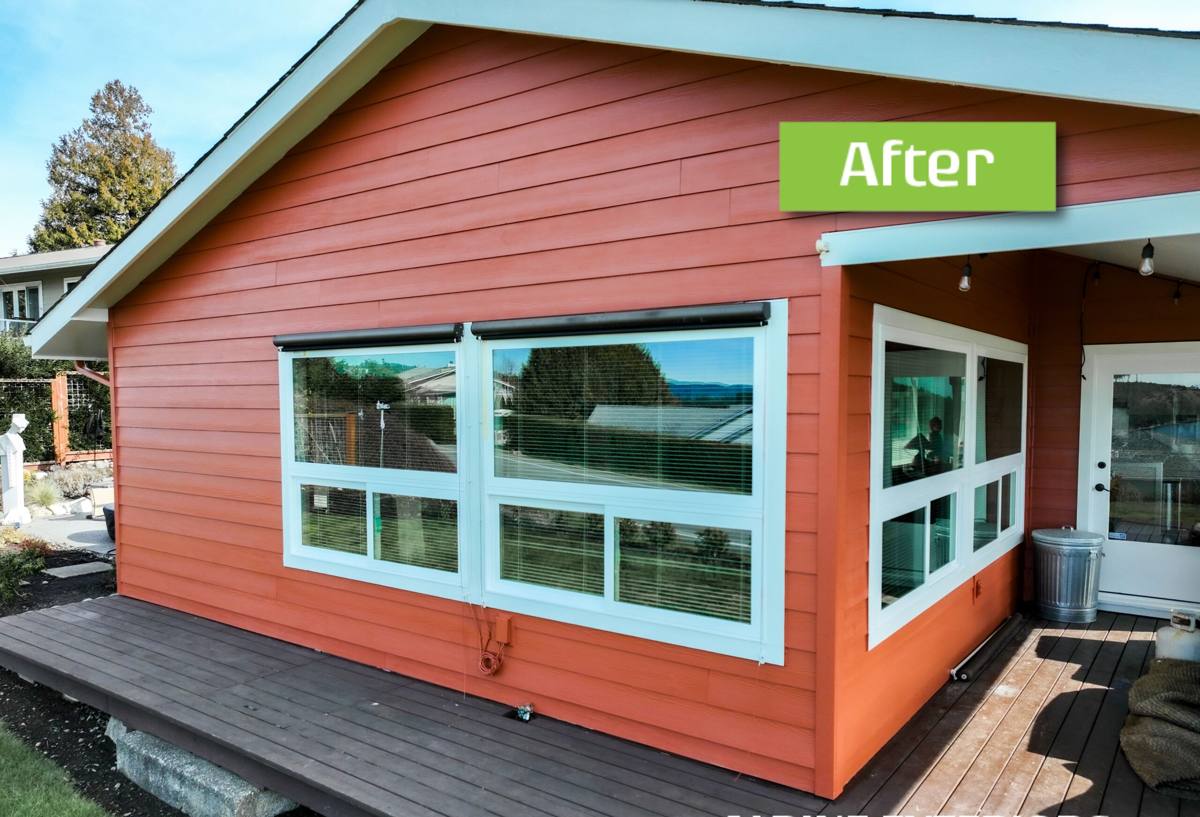
We standardized on James Hardie fiber cement siding for every home we work on, including in Silver Beach, and the reasoning is simple: it's a cement-and-cellulose composite, not a wood product, so it doesn't have a wood core to swell, rot, or feed fungal growth the way engineered wood siding can. It's also dimensionally stable, meaning it doesn't expand and contract with moisture the way wood-based products do, which matters a lot on a wall that's damp more often than dry.
Hardie's HZ5 product line is engineered for climates like ours — it's built to handle sustained moisture exposure and freeze-thaw cycling better than the standard HZ10 line meant for hotter, drier regions. For Whatcom County installs, HZ5 is the correct product, not an upsell.
The factory-applied ColorPlus finish is part of the moisture story too. It's baked on in a controlled environment rather than sprayed on site, so it resists the fading, chalking, and moisture intrusion at the paint film that field-applied paint is prone to — which matters when a house is going to spend a good chunk of the year wet.
What a Correct Installation Involves
Fiber cement is only as good as the installation behind it. A lot of the moisture problems homeowners eventually deal with in this region trace back to shortcuts taken during installation, not a flaw in the material itself.
Proper Clearance and Flashing
Hardie's own installation instructions call for specific clearances from grade, roof lines, decks, and other horizontal surfaces where water can wick up into the siding. Flashing at windows, doors, and butt joints has to be installed so water sheds outward, not into the wall cavity. Skipping or shortcutting these details is the single most common cause of moisture problems in fiber cement installs.
A Functioning Drainage Plane
Behind the siding, a proper weather-resistive barrier and drainage gap let any moisture that does get past the cladding find its way back out instead of sitting against the sheathing. On a shaded, damp lot like much of Silver Beach, this detail is not optional — it's the difference between siding that sheds incidental moisture and a wall assembly that traps it.
Fastening and Joint Treatment
Fiber cement has to be fastened per manufacturer spec — correct nail or screw type, spacing, and depth — and every cut edge needs to be sealed and painted before it goes up, since a raw cut edge is the one place the factory finish isn't protecting the material. Butt joints and seams need the right combination of flashing and caulking, not caulking alone.
Ventilation Behind and Around the Siding
Where trees crowd a wall and airflow is already limited, the installation needs to give the wall assembly every advantage it can get — trimmed clearances, unobstructed weep paths, and siding profiles installed so they aren't holding water against themselves at the overlaps.
Our Process for a Silver Beach Fiber Cement Job
- Walk-through and assessment — we look at sun exposure, tree cover, existing moisture damage, and how water currently moves off the roof and around the foundation before we talk product or price.
- Removal of the old siding — including an honest look at the sheathing underneath, since fiber cement installed over compromised sheathing just locks the problem in.
- Weather-resistive barrier and drainage plane installation — done to current best practice, not just what's required to pass inspection.
- Flashing at every penetration — windows, doors, vents, and any deck or roof intersections.
- Hardie HZ5 panel or plank installation — fastened to spec, joints and cuts sealed and touched up with matching ColorPlus product.
- Final walk-through — checking caulk lines, trim, and touch-ups before we consider the job done, and registering the manufacturer warranty in the homeowner's name.
Fiber Cement vs. the Alternatives, for This Kind of Lot
Homeowners in shaded, damp settings like Silver Beach often ask how fiber cement stacks up against the other options they see advertised. Here's the honest comparison for a lot with significant tree cover and driving-rain exposure:
| Material | Moisture/Moss Resistance | Maintenance | Fire Resistance | Realistic Lifespan Here |
|---|---|---|---|---|
| James Hardie fiber cement | Strong — no wood core, engineered HZ5 formulation for wet climates | Occasional wash; factory finish holds up for years | Non-combustible | 30+ years installed to spec |
| Engineered wood (e.g. LP SmartSide) | Weaker — wood-strand core is vulnerable if the factory seal is ever breached | Requires attentive caulk/paint upkeep on shaded walls | Combustible | Shorter in sustained damp conditions |
| Vinyl | Doesn't rot, but traps moisture behind it and can warp/fade | Low, but panels can't be spot-repaired invisibly | Combustible, can deform near heat | Variable; brittleness increases with age and cold |
| Cedar or primed spruce | Weakest in shade — needs airflow and sun to dry that this lot type often lacks | High — regular staining/painting and moss treatment | Combustible | Shortest without aggressive upkeep |
What Drives Cost on a Job Like This
Every Silver Beach property is a little different, but the same handful of factors move the price up or down on most fiber cement jobs in this kind of setting:
| Factor | Why It Matters |
|---|---|
| Condition of existing sheathing | Rot or damage found during tear-off adds repair scope before new siding can go up |
| Home size and wall complexity | More corners, dormers, and trim details mean more labor and cut waste |
| Access and tree cover | Tight lots or overhanging branches slow staging and material handling |
| Panel vs. plank profile | Lap plank, panel, and shingle-style Hardie profiles carry different material and labor costs |
| Trim and accessory scope | Fascia, soffit, and trim replacement done at the same time saves a second mobilization |
We give firm, itemized quotes after the walk-through rather than ballpark numbers over the phone, because the sheathing condition alone can change the scope significantly on a house that's had moisture sitting against it for years.
Why Hiring a Crew That Already Works Silver Beach Matters
Fiber cement installation isn't exotic, but installing it correctly on a shaded, damp, tree-lined lot is different from installing it on an open, sun-exposed one — the clearances, drainage detailing, and moss-prevention decisions all shift. A crew that's worked this specific pocket of Bellingham has already seen how water moves on these lots, which walls take the worst of the wind-driven rain, and where past installs in the area have failed.
There's also the practical side: familiarity with the City of Bellingham and Whatcom County permitting and inspection process means fewer delays, and an installer who's already built a track record locally has a real reputation on the line, not just a one-time job to finish and move on from.
Homeowner Maintenance Checklist for This Setting
Correctly installed Hardie siding needs far less upkeep than wood-based alternatives, but a shaded, damp lot still benefits from a light annual check:
- Rinse siding gently once a year to clear early moss or algae growth before it establishes, especially on north- and west-facing walls
- Keep tree branches and shrubs trimmed back a few inches from the siding to let walls dry between rain events
- Check caulking at trim, window, and door joints for cracking or gaps
- Clear gutters and downspouts before fall rains so water isn't overflowing onto the wall below
- Look at the bottom courses near grade and near decks for any staining or softness, which can signal a flashing or clearance issue worth having checked
If you're weighing a siding replacement in Silver Beach, we're happy to walk the property, look at what your walls are actually dealing with, and put together a straightforward, no-pressure estimate — use the form below to get started.